
 By admin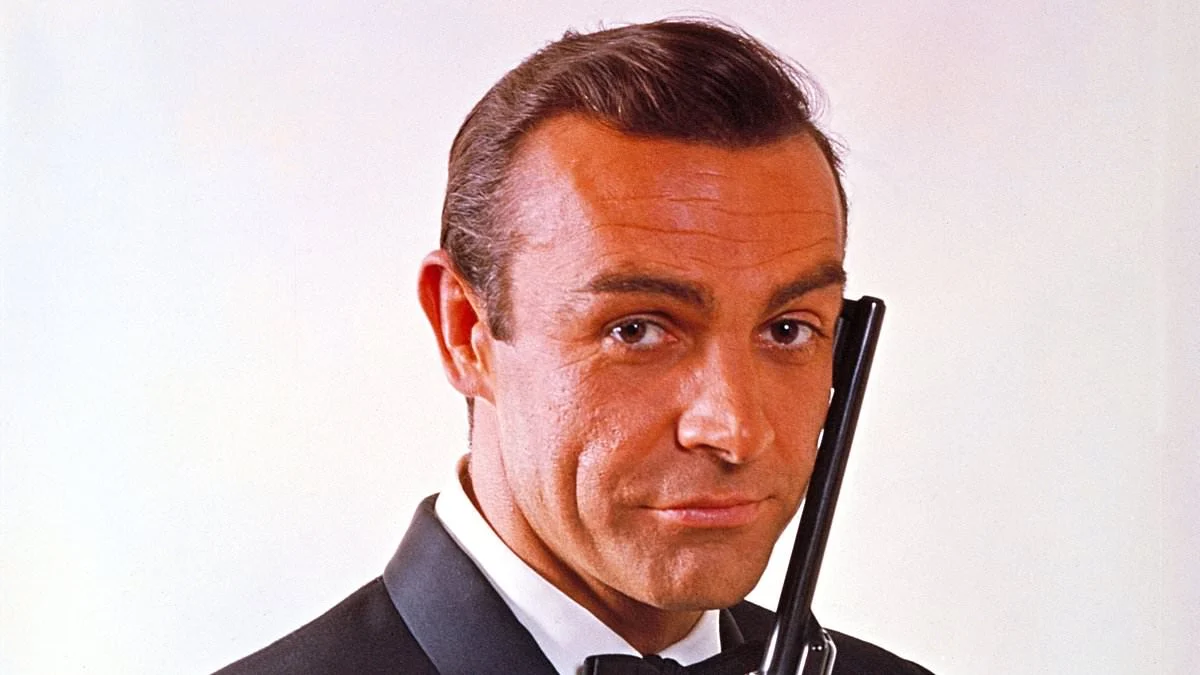
The history of the James Bond cinematic franchise is often viewed through the lens of Sean Connery’s seminal performance in 1962’s Dr. No, a role that defined the "gentleman spy" for a generation and established the Scottish actor as the definitive face of 007. However, new revelations from the family of the late Sir Roger Moore suggest that the timeline of the franchise could have looked remarkably different had contractual obligations not intervened. Geoffrey Moore, son of the legendary actor, has disclosed that his father was the primary choice for producers Albert R. "Cubby" Broccoli and Harry Saltzman long before Connery was ever cast.
While Connery is widely celebrated as the actor who launched the global phenomenon, the decision-makers at Eon Productions reportedly envisioned Roger Moore in the role from the very beginning. This historical footnote reshapes the understanding of the franchise’s early development, suggesting that the "Moore era"—noted for its humor and lightheartedness—was the original creative direction intended by the producers and the character’s creator, Ian Fleming.
The Contractual Barriers of the Early 1960s
The transition from the written word of Ian Fleming to the silver screen was a complex process fraught with casting uncertainties. According to Geoffrey Moore, the primary reason his father did not debut as James Bond in 1962 was a pre-existing commitment to television. At the time, Roger Moore was the star of The Saint, a popular mystery thriller series produced by ITC (Independent Television Corporation). Moore portrayed Simon Templar, a character who shared many characteristics with Bond, including a penchant for luxury, a sharp wit, and a knack for navigating international intrigue.
"He was pegged as the first; they had him in mind," Geoffrey Moore explained in a recent interview. "But he couldn’t get released from his contract with ITC." This contractual entanglement meant that Moore remained on the small screen throughout the 1960s, a period during which Sean Connery completed five consecutive Bond films: Dr. No, From Russia with Love, Goldfinger, Thunderball, and You Only Live Twice.
The connection between Moore and the Bond producers was not merely professional but deeply personal. Geoffrey revealed that his father was a regular social companion of Broccoli and Saltzman. The trio frequently dined and gambled together, fostering a relationship that kept Moore at the forefront of the producers’ minds even as Connery’s star rose. Furthermore, Ian Fleming himself was reportedly a fan of The Saint, seeing in Moore the physical and social attributes he had imagined for his literary creation.
A Chronology of the 007 Succession
The James Bond franchise is one of the longest-running and most successful in film history, and its survival has depended heavily on the successful transition between lead actors. The timeline of Roger Moore’s eventual ascension to the role illustrates the patience required by both the actor and the producers:
- 1962: Sean Connery debuts in Dr. No after Moore is unavailable due to The Saint.
- 1967: Connery announces his departure from the role after You Only Live Twice.
- 1969: George Lazenby takes over for a single film, On Her Majesty’s Secret Service, but fails to secure a long-term future in the franchise.
- 1971: Connery is lured back for Diamonds Are Forever with a then-record salary.
- 1973: Roger Moore finally debuts as James Bond in Live and Let Die, more than a decade after he was first considered.
Geoffrey Moore reflects on this delay as a "blessing," noting that the timing of his father’s entry into the series allowed for a necessary evolution of the character. By the early 1970s, the cultural landscape had shifted. The stoic, often brutal "hard man" persona established by Connery began to feel like a relic of the early Cold War era.
"Bond is such a great franchise because each actor is a reflection of the time," Geoffrey noted. He argued that the 1970s required a hero who was "a little less chauvinistic" and more empathetic. The writers specifically tailored scripts to Moore’s strengths, leaning into his natural "aloofness" and charm rather than attempting to replicate Connery’s rugged physicality.
The Physical and Professional Demands of the Bond Legacy
Growing up in the shadow of the 007 legacy provided Geoffrey Moore with a unique perspective on the true cost of playing the world’s most famous spy. While the role is often associated with glamour and international fame, Geoffrey emphasized the grueling nature of the production schedule and the long-term commitment required by Eon Productions.
In the modern era, the commitment has only intensified. Daniel Craig, who held the role from 2006 to 2021, often spoke of the physical toll the films took on his body. Geoffrey noted that a typical Bond contract often involves a three-picture deal, which can effectively consume six to eight years of an actor’s prime career.
"It’s a very demanding schedule," Geoffrey said. "Once filming is over, you’re going to have to promote it for the next six months. It’s a year and a half of your life per film."
Addressing long-standing rumors that he was once considered for the role himself, Geoffrey admitted that the prospect was tempting but ultimately daunting. He acknowledged that while being "Roger Moore’s son playing James Bond" would have generated significant media buzz and satisfied the "ego," the reality of the training and the commitment was a significant deterrent. "Realistically, I think I would have been able to, but I would have had to spend six months really training. It’s a big commitment. Huge."
Knightfall and the Continuation of the Moore Spy Tradition
While he may have bypassed the role of 007, Geoffrey Moore is finally stepping into the world of espionage with his debut as a leading man in the film Knightfall. In this project, Moore portrays Hugh, an MI5 agent tasked with a high-stakes mission to prevent a domestic security catastrophe. The role requires him to navigate complex professional and personal dynamics, particularly with his ex-girlfriend Ros, played by Jeanine Nerissa Sothcott.
Knightfall represents a full-circle moment for Geoffrey, who spent his childhood observing his father on various film sets. He noted that growing up around Sir Roger taught him the "basics" of the industry from a young age, though he remains acutely aware of the pressure that comes with the Moore name in the spy genre. The film is currently available on UK streaming services and is scheduled for a Blu-ray release via Miracle Media on October 26.
The Future of 007: Diversity, Gender, and Returning to Roots
As the search for Daniel Craig’s successor continues, the franchise finds itself at a crossroads. Names such as Callum Turner, Jack Lowden, and Jacob Elordi have been floated as potential candidates, yet no official announcement has been made by producers Barbara Broccoli and Michael G. Wilson.
Geoffrey Moore offered his own analysis of where the franchise should go next. While he expressed confidence in the producers’ ability to make the right choice, he suggested a return to the character’s fundamental traits. "I would go back to the beginning. Bond liked to drink and he was a marksman," he remarked, hinting that the character should maintain the core DNA established in Fleming’s novels.
One of the most contentious debates surrounding the future of the series is the possibility of a female James Bond. While some advocates argue for a gender-swapped 007 to modernize the franchise, Geoffrey Moore remains firm in his belief that the character should remain male. He suggested that instead of altering an existing icon, the industry should focus on creating new, original franchises for female leads.
"Well, if it’s a female Bond, then call her Jemima," he quipped, suggesting that a female agent should have her own distinct identity and story. He pointed to Charlize Theron’s performance in Atomic Blonde as a prime example of how women can lead successful spy films without needing to adopt the "James Bond" mantle. "I think a female Bond—a 00-whatever—should have her own story. Jemima’s own story could be she’s actually smarter… there’d be a lot more bickering, but less wars and less fighting. I think it could be an elegant one."
Statistical Impact of the Moore and Connery Eras
To understand the weight of the casting decisions discussed by Geoffrey Moore, one must look at the commercial impact of the two actors. During their respective tenures, both Connery and Moore defined the financial viability of the franchise:
-
Sean Connery Era (Official Eon Films):
- Films: 6 (Dr. No through Diamonds Are Forever, excluding Never Say Never Again).
- Global Box Office (Unadjusted): Approx. $600 million.
- Cultural Impact: Established the "gadget" and "villain lair" tropes.
-
Roger Moore Era:
- Films: 7 (Live and Let Die through A View to a Kill).
- Global Box Office (Unadjusted): Approx. $1.2 billion.
- Cultural Impact: Expanded the franchise’s global reach through humor and camp, sustaining 007 through the blockbuster era of the late 70s and early 80s.
The revelation that Moore was the original choice underscores the fact that the "suave and sophisticated" Bond was always the intended archetype. While Connery’s ruggedness was a happy accident that became a gold standard, Moore’s eventual arrival in 1973 was the fulfillment of a decade-long vision by the producers.
As the Bond franchise prepares for its next iteration, the insights provided by Geoffrey Moore serve as a reminder of the delicate balance between tradition and evolution. Whether the next Bond is a return to the "marksman" roots or a new interpretation of the modern era, the legacy of Sir Roger Moore remains a foundational pillar of the series.
