
 By admin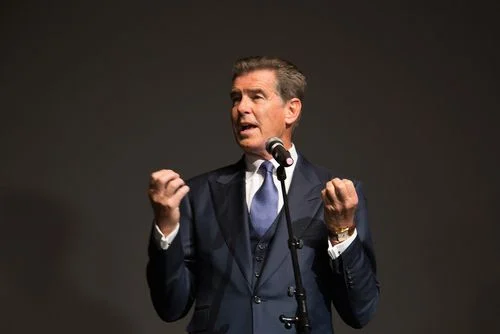
The ongoing global search for the seventh actor to portray James Bond has intensified, with former 007 star Pierce Brosnan suggesting audiences might be in for a significant surprise regarding the casting decision. Brosnan, who embodied the iconic British secret agent in four films between 1995 and 2002, indicated that rather than opting for one of the established actors frequently named in speculation, Amazon MGM Studios could choose a candidate largely unknown to the general public. This potential "left-field" approach, as articulated by the 73-year-old actor in a recent interview with The Times, marks a fascinating turn in the conversation surrounding one of cinema’s most coveted roles, particularly as the franchise enters a new era under fresh creative stewardship.
Brosnan’s remarks arrive at a pivotal juncture for the long-running spy series. While the official announcement of Daniel Craig’s successor remains pending from Amazon MGM Studios, recent comments from veteran actor Gary Oldman have fueled speculation that a decision may already have been made behind closed doors. Oldman, discussing his Slow Horses co-star Jack Lowden, claimed producers had "made their choice" but were awaiting the opportune moment for a public reveal. This confluence of insider hints and external observations underscores the intense secrecy and strategic maneuvering characteristic of Bond casting, a process that invariably captures global media attention and fan fervor.
The Enduring Mystique of Bond Casting
The selection of a new James Bond is arguably one of the most scrutinized casting decisions in modern cinema. Since Sean Connery first brought Ian Fleming’s character to life in Dr. No (1962), each successive actor has been met with a mixture of anticipation, skepticism, and eventually, acceptance. The role carries immense pressure, demanding an actor capable of embodying sophistication, ruthlessness, charm, and vulnerability, all while navigating a complex cinematic legacy. Brosnan himself understands this uniquely, having revitalized the franchise after a six-year hiatus following Timothy Dalton’s tenure. His debut in GoldenEye (1995) successfully re-established Bond for a post-Cold War audience, blending classic elements with contemporary action.
Brosnan, reflecting on the current speculation, stated he is following the developments as an ordinary audience member. He deliberately refrained from endorsing any specific candidate, humorously citing a warning from his wife about the potential for a casual comment to become an immediate headline. This caution highlights the immense weight carried by any utterance from a former Bond actor, whose opinions are instantly amplified and dissected by fans and media alike. Instead, Brosnan offered encouragement for whoever eventually inherits the role, acknowledging the profound impact such an announcement will have on their life and career.
The "Left-Field" Contention: Unknowns vs. Established Stars
The idea of producers going "left-field" by casting an unknown actor is not without precedent in Hollywood, nor in the Bond franchise itself. While a recognizable star offers immediate box office appeal and marketing leverage, an emerging talent brings a blank slate, allowing audiences to forge a new, unburdened association with 007. This could be particularly advantageous for a character as iconic and deeply ingrained in popular culture as James Bond. For an actor who will likely be identified with the role for years, potentially across multiple films, starting without the "baggage" of prior major roles could grant the creative team greater freedom to mold their specific vision of Bond.
Historically, not every Bond actor was a household name prior to their casting. George Lazenby, for instance, was a model with minimal acting experience when he took on the role for On Her Majesty’s Secret Service (1969). While his tenure was brief, it demonstrated the willingness of producers to take risks. Even Sean Connery, though a working actor, was not a global superstar when he was initially cast, and his selection was initially met with skepticism by some, including Ian Fleming himself. Daniel Craig, before Casino Royale (2006), was respected for his dramatic work but lacked the widespread blockbuster recognition often associated with such a high-profile role. His casting, a radical departure from the smooth, suave image of his predecessors, initially faced backlash but ultimately redefined Bond for a new generation.
Current speculation has gravitated towards a roster of established names, including Jack Lowden, Aaron Taylor-Johnson, Harris Dickinson, Jacob Elordi, and Callum Turner. These actors, many of whom have significant film and television credits, represent a pool of talent that aligns with the traditional casting approach of selecting an actor with a proven track record and growing public profile. However, Brosnan’s comments suggest a strategic pivot, implying that the studio might prioritize an actor’s inherent suitability for the character and the new creative direction over their existing star power. Amazon MGM’s official stance remains consistent: the search is underway, and the studio will not comment on individual candidates, maintaining the characteristic veil of secrecy until the definitive announcement.
The Gary Oldman Factor and Jack Lowden’s Renewed Spotlight
The recent intervention by Oscar-winning actor Gary Oldman has undeniably injected fresh energy into the casting discourse, particularly around his Slow Horses co-star, Jack Lowden. During an interview on Canada’s The Morning Show, Oldman expressed his hope that Lowden would secure the role, noting that the Scottish actor had been rumored to be on the shortlist. Crucially, Oldman then asserted that the producers had already "made their choice" but were holding back the official announcement.
While Oldman’s comments have been widely interpreted as a strong hint, it is vital to distinguish between industry whispers and official confirmation. Amazon MGM Studios has yet to corroborate any such claims, and screenwriter Steven Knight has also declined to confirm or deny the identity of the next 007. Lowden, a 36-year-old actor known for his nuanced performances, has indeed been a recurring name in the Bond conversation. His international profile has risen significantly through his portrayal of River Cartwright in Apple TV+’s critically acclaimed series Slow Horses, where he shares the screen with Oldman. His filmography also includes notable roles in Dunkirk, Mary Queen of Scots, and Benediction. Adding a familial connection to the Bond universe, Lowden’s wife, Oscar-nominated actress Saoirse Ronan, has expressed interest in playing a Bond villain, specifically a younger female antagonist, further intertwining their careers with the iconic franchise. Despite the increased attention, both Lowden and Amazon MGM maintain silence, leaving the industry and fans in suspense.
A New Creative Dawn: Villeneuve, Knight, and Amazon MGM’s Vision
Beyond the identity of the next Bond, several crucial pieces of the franchise’s future are already firmly in place, signaling a new creative direction. Amazon MGM Studios officially announced Denis Villeneuve as the director in June 2025, a move that immediately elevated expectations for the next installment. Villeneuve, celebrated for his visually stunning and intellectually ambitious films such as Arrival, Blade Runner 2049, and the Dune saga, brings a reputation for crafting immersive, character-driven narratives with a grand cinematic scale. A self-proclaimed "die-hard Bond fan," Villeneuve expressed his intention to honor the franchise’s traditions while forging a path for future adventures, suggesting a blend of classic Bond elements with his distinctive artistic vision.
Working alongside Villeneuve will be acclaimed screenwriter Steven Knight, officially announced in July 2025. Knight, the creative force behind the globally popular series Peaky Blinders, has a rich and diverse portfolio spanning film and television, including Taboo, SAS Rogue Heroes, and All the Light We Cannot See. His expertise in developing complex characters and intricate plots suggests a Bond narrative that could delve deeper into the psychological dimensions of the spy, while retaining the franchise’s signature action and intrigue. Knight, like other key personnel, has remained tight-lipped on casting, emphasizing his primary responsibility is to craft the character of James Bond for the screen.
Perhaps the most significant behind-the-scenes shift is the new creative control wielded by Amazon MGM Studios. For decades, the Bond films were meticulously guided by producers Barbara Broccoli and Michael G. Wilson, heirs to the legacy established by Albert R. "Cubby" Broccoli. This structure evolved in 2025 when Amazon MGM, Wilson, and Broccoli formed a joint venture, making them co-owners of the franchise’s intellectual property rights. Crucially, Amazon MGM gained creative control following the transaction’s closure in March 2025. This means the next Bond actor will not only succeed Daniel Craig but will also become the face of the first cinematic era developed under Amazon MGM’s creative leadership. This shift could usher in new approaches to storytelling, character development, and potentially, the overall tone and style of the Bond films, potentially explaining the willingness to consider a less conventional casting choice.
The Legacy of Bond: From Brosnan’s Revival to Craig’s Reinvention
Pierce Brosnan’s tenure as Bond, spanning from GoldenEye (1995) to Die Another Day (2002), was crucial in re-establishing the character’s relevance for a new generation. Taking over after a period of uncertainty, Brosnan’s Bond offered a blend of the suave sophistication of Roger Moore with a harder edge, perfectly suited for the evolving landscape of 1990s action cinema. Films like Tomorrow Never Dies (1997) and The World Is Not Enough (1999) continued this trend, proving the franchise’s enduring appeal. His portrayal successfully navigated the transition from the Cold War espionage narratives to more contemporary global threats, earning significant box office returns and critical acclaim.
Daniel Craig’s subsequent arrival in 2006 marked a dramatic reinvention, moving away from Brosnan’s more fantastical elements towards a grittier, more grounded, and emotionally complex portrayal. Casino Royale (2006) rebooted the series, presenting a Bond who was physically imposing, vulnerable, and whose narrative arc was deeply interconnected across five films, culminating in No Time to Die (2021). Craig’s era redefined expectations, challenging the traditional archetypes of the character and earning both critical plaudits and unprecedented commercial success, with films like Skyfall (2012) becoming billion-dollar blockbusters.
The challenge for the next actor is immense: how to carve out a distinct identity without simply imitating Craig’s intensity or reverting to earlier interpretations. The new Bond must establish an era that feels fresh and relevant while retaining the core essence of Ian Fleming’s creation. This imperative to balance innovation with tradition further supports Brosnan’s theory that an unexpected choice could be strategically beneficial, allowing the actor and the creative team to define a new chapter without the weight of immediate comparisons to recent, highly successful portrayals.
The Strategic Logic of an Unknown Bond
Casting a less familiar performer for such a globally recognized role offers several strategic advantages for Amazon MGM and the creative team. Firstly, it allows the new Bond to be a pure vessel for Villeneuve and Knight’s vision, unencumbered by audience expectations derived from an actor’s previous roles. This "clean slate" approach can foster a more authentic and unadulterated interpretation of 007. Secondly, it often comes with a more favorable salary structure compared to a global superstar, potentially allowing for greater investment in other aspects of production. Thirdly, an unknown actor can grow with the role, evolving into the character over multiple films, much like Sean Connery or even Daniel Craig did.
The decision to cast an unknown also underscores the confidence of the producers in the inherent strength and appeal of the James Bond brand itself. The franchise is, in many ways, bigger than any single actor. Its longevity and cultural impact ensure that audiences will flock to see the next installment regardless of the lead actor’s prior fame, provided the film delivers on quality and spectacle. This allows for a focus on the artistic integrity and long-term trajectory of the series rather than short-term star power.
The question of who becomes the next James Bond has hung over Hollywood since Craig’s emotional farewell in No Time to Die in 2021. Now, with a visionary director, a talented writer, and a powerful studio taking the creative reins, the stage is set. Whether the ultimate choice is a familiar name like Jack Lowden, another highly rumored candidate, or indeed, someone completely unexpected as Pierce Brosnan predicts, the announcement will mark a pivotal moment. Brosnan’s perspective, born from his own experience of stepping into the iconic shoes of 007, highlights the profound impact this casting decision will have, not just on the franchise, but on the life and career of the chosen actor, forever cementing their place in cinematic history. For now, the world watches and waits, alongside a former Bond, for the reveal of the next custodian of the 007 legacy.
