
 By Nila Kartika Wati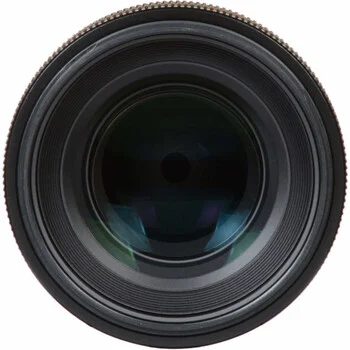
In the nuanced world of photographic optics, where every millimeter of glass and micron of coating contributes to an image’s final character, a select category of lenses stands apart. These are the apodization lenses, exemplified by models like the Sony FE 100mm f/2.8 STF GM OSS, which deliberately incorporate a disc of gray-graded glass within their optical path. This isn’t a manufacturing oversight or a marketing anomaly; it is a calculated engineering decision that sacrifices approximately two stops of light transmission to achieve what many consider the smoothest, most ethereal out-of-focus blur any lens can produce. This optical trick, first brought to market in the late 1990s, continues to fascinate and remains a distinctive, albeit niche, offering for photographers seeking unparalleled aesthetic control over their image backgrounds.
Unveiling the Apodization Element: An Optical Innovation
At its core, an apodization element is a sophisticated, radially graded neutral density filter strategically positioned at or very close to the lens’s aperture. Its design is deceptively simple yet profoundly effective: the center of the element is optically clear, allowing light to pass through at full strength, while its density gradually increases towards the edges, progressively dimming light rays that travel through the periphery of the lens. The sharp, in-focus portions of an image are left largely untouched by this element, as their clarity is primarily determined by the central, clear region of the lens. The profound and principal visible effect of apodization lives exclusively within the blurred areas of the photograph.
To comprehend its impact, consider a single, bright point of light in an unfocused background—be it a distant streetlight, a glint of sun on a metallic surface, or a decorative fairy light. A conventional lens does not render such a point as a perfect dot when it falls out of focus; instead, it transforms it into a disc, commonly known as a "bokeh ball." On a typical fast lens, these discs often exhibit a defined edge, and frequently, a brighter rim—a characteristic artifact of how the lens’s spherical aberration has been corrected. Other imperfections can compound this: molded aspherical elements, for instance, might introduce faint, concentric "onion rings" within the bokeh disc, a flaw that can appear in both premium and budget-friendly glass. Furthermore, stopping down a conventional lens typically causes these circular bokeh balls to morph into polygons, mirroring the shape of the aperture blades. When hundreds of these hard-edged, sometimes textured, discs accumulate across a busy background, the resulting blur can appear "nervous," cluttered, and distractingly compete with the primary subject for the viewer’s attention.
The apodization element precisely targets and mitigates these common bokeh imperfections. By strategically darkening the filter at the very periphery where the bokeh disc’s edge would ordinarily form, each out-of-focus highlight transitions seamlessly from a bright, luminous center to a soft, imperceptible boundary. This eliminates the harsh outlines and distracting bright rings that plague conventional lenses. Instead of stacking like distinct coins, these softened discs melt into one another, creating a fluid, painterly background. The term "apodization" itself originates from optics and signal processing, where it refers to the act of "shaving off the feet"—the small, unwanted sidelobes at the edges of a signal’s peak. Applying this principle to the light pattern drawn by a lens from a point source ensures that the background ceases to contend with the subject, instead dissolving gently behind it, providing an unparalleled sense of depth and separation.
The Technical Nuance: F-Stop, T-Stop, and the Light Equation
The exquisite blur rendered by an apodization lens comes at a distinct cost: light. To fully grasp this trade-off, it is crucial to differentiate between two photometric measurements that many photographers often conflate: the f-stop and the T-stop.
An f-stop is a purely geometric calculation, derived by dividing the lens’s focal length by the diameter of its entrance pupil. It serves as an indicator of the physical size of the lens opening and, consequently, the potential depth of field it can achieve. However, an f-stop fundamentally assumes that every photon entering the lens successfully traverses its optical elements without loss. In reality, no lens is perfectly transparent. Light is invariably absorbed or reflected by glass elements, coatings, and internal structures.
This is where the T-stop (transmission stop) becomes critical. A T-stop measures the actual amount of light that successfully passes through the lens and reaches the camera’s sensor. Cinematographers, whose work demands precise and consistent exposure across multiple shots and camera setups, exclusively rely on T-stops. A typical fast still lens rated at f/2.8 might, in practice, transmit light closer to T3.2, illustrating this inherent discrepancy.
An apodization lens dramatically amplifies this gap. The Sony FE 100mm f/2.8 STF GM OSS, for instance, possesses a true f/2.8 entrance pupil, which dictates its shallow depth of field and the expansive, wide-open blur circles it can produce. Yet, its graded apodization element, by intentionally blocking a significant amount of light near the margins, causes the lens to meter at a T-stop of 5.6. This means a photographer gains the desirable background separation characteristic of an f/2.8 aperture but must contend with an exposure equivalent to f/5.6. This represents a loss of approximately two stops of light, a deliberate exchange for the lens’s signature blur quality. Similarly, Fujifilm’s XF 56mm f/1.2 R APD, an APS-C lens, operated at a bright f/1.2 geometrically but transmitted light closer to T1.7 wide open. The transmission penalty associated with apodization lenses generally diminishes as the lens is stopped down. By around f/5.6 or f/8, the physical diaphragm effectively constricts to admit light predominantly through the apodization filter’s nearly clear central region, at which point the apodization effect and its associated light loss become negligible, causing the lens to behave much like any conventional optic.
It is a common misconception that the depth of field would also be affected by the light loss. However, depth of field is primarily governed by the physical diameter of the entrance pupil. Since the apodization element merely tints the light rather than physically shrinking the aperture, the entrance pupil size and the maximum blur circle a lens can render remain those of its geometric f-stop (e.g., f/2.8). While the graded filter’s dimming of the outermost rays might subtly alter the perceived falloff from sharp to soft compared to a conventional f/2.8, the fundamental depth of field characteristics are preserved. This reduction in light transmission, however, carries tangible practical costs. It can dim the viewfinder image on DSLR cameras, necessitate higher ISO settings in low-light conditions (precisely when a fast portrait lens is most desired), and restrict the range of safe handheld shutter speeds. Photographers are, in essence, paying a significant price in light for a very specific and refined aesthetic.
A Chronology of Smoothness: From Minolta’s STF to Modern Innovations
The journey of apodization technology from a theoretical concept to a commercial product is a testament to the persistent pursuit of optical excellence.
The Pioneer: Minolta’s Smooth Trans Focus (STF)
The concept first materialized in a production lens in 1999 with the introduction of the Minolta AF 135mm f/2.8 [T4.5] STF. Minolta coined the term "Smooth Trans Focus" (STF) to describe its unique apodization design. This lens holds a dual distinction: not only was it the first apodization lens, but it was also one of the rare autofocus-mount Minolta or Sony A-mount lenses ever produced without actual autofocus capability. The graded apodization element, with its uneven light distribution, confounded the phase-detection autofocus sensors prevalent at the time, leading Minolta to intentionally design it as a manual-focus-only lens. Further illustrating its specialized nature, the Minolta STF lens featured two diaphragms: a conventional nine-blade automatic aperture for exposure control, and a separate, ten-blade manual aperture. This manual aperture was designed to remain as circular as possible throughout its range to ensure consistently round bokeh, and its control ring was marked in T-stops to accurately reflect the light loss imposed by the apodization element. This groundbreaking lens quickly garnered a cult following for its unique rendering capabilities, a reputation that persists in the used lens market today. When Sony acquired Minolta’s camera business, it inherited this innovative design and reissued it in 2006 as the Sony A-mount 135mm f/2.8 [T4.5] STF.
Fujifilm’s APS-C Entry and Evolution
In 2014, Fujifilm broadened the accessibility of apodization technology by integrating it into a mass-market autofocus body with the release of its XF 56mm f/1.2 R APD. Designed as a premium portrait lens for the APS-C X-mount system, its apodization design was explicitly indicated by the "APD" suffix. Like its Minolta predecessor, the apodization filter presented challenges for on-sensor phase-detection pixels, forcing the APD version to fall back on slower, contrast-detection autofocus even on camera bodies equipped with phase detection. Fujifilm has since discontinued this model, replacing it with the newer XF 56mm f/1.2 R WR, which aims to achieve similar smooth rendering characteristics through refined optical design and coatings, rather than relying on the light-eating apodization element. This shift suggests a broader industry trend towards minimizing light loss while still pursuing optimal bokeh quality.
Sony’s Flagship G Master and Alternative Implementations
The most refined and technologically advanced iteration of the apodization lens arrived in 2017 with the Sony FE 100mm f/2.8 STF GM OSS. This lens marked a significant milestone as the first full-frame apodization lens capable of reliable autofocus, powered by a sophisticated Direct Drive SSM motor. It also incorporated optical stabilization (OSS) and impressive close-focusing capabilities down to 0.57 meters, allowing for quarter-life-size macro reproduction. Launched as part of Sony’s esteemed G Master line, it carried a premium price tag of $1,499. Despite its advancements, its f/2.8 geometric aperture still meters at T5.6, underscoring the fundamental trade-off of apodization.
Beyond these major manufacturers, other optical companies have also explored apodization. Venus Optics offers the manual-focus Laowa 105mm f/2 STF for full-frame systems. This f/2 lens transmits light like a T3.2 and, reminiscent of the original Minolta, pairs its apodization glass with a secondary fourteen-blade diaphragm to meticulously shape the blur.
Canon, approaching the same goal of feathered highlights on full-frame cameras, introduced the RF 85mm f/1.2 L USM DS in 2019. Rather than a discrete gray-graded disc, Canon employed a "Defocus Smoothing" (DS) coating, vapor-deposited onto specific lens elements, to achieve a similar effect by dimming light at the edges. This lens is rated around T2.2 wide open, representing approximately a stop and three quarters slower transmission than its f/1.2 geometric aperture would suggest, confirming that the principle of sacrificing light for bokeh quality can be achieved through various optical engineering pathways.
Distinguishing Apodization from Defocus Control: Nikon’s Alternative Path
It is important to differentiate apodization from Nikon’s Defocus Control (DC) lenses, as both aim to modify bokeh but through entirely different mechanisms. Nikon’s AF DC-Nikkor 135mm f/2 D and its 105mm f/2 sibling feature a distinct Defocus Control ring. This ring, unlike an apodization filter, does not involve a light-absorbing element. Instead, it mechanically shifts an internal lens group to deliberately over-correct or under-correct spherical aberration, thereby altering the rendering characteristics of the out-of-focus zones. As Nikon’s own technical explanations detail, this allows photographers to fine-tune the blur either in front of or behind the subject, optimizing one at the expense of the other, across a range of apertures from f/2 to f/5.6.
The trade-offs inherent in Defocus Control are fundamentally different from apodization. Crucially, DC lenses incur no light loss, as there is no dark filter obstructing the optical path, and they maintain normal autofocus functionality. However, DC does not produce the same perfectly feathered, rimless highlights that a graded apodization element does. Furthermore, applying excessive DC correction can inadvertently soften the in-focus subject, which photographers typically strive to keep sharp. While Defocus Control is an ingenious tool for shaping bokeh—allowing for adjustments to its character—the apodization element is designed for perfecting bokeh, creating an utterly seamless dissolution of the background, and it levies its transmission penalty accordingly.
The Enduring Niche: Why Apodization Lenses Remain Exclusive
Despite their unique optical capabilities, apodization lenses have consistently remained a niche product within the broader photographic market. Several interconnected factors contribute to their limited adoption:
- High Cost: The specialized optical elements and complex manufacturing processes involved in creating apodization lenses often translate into premium pricing. They are typically positioned as high-end, professional-grade optics.
- Significant Light Loss: The primary trade-off of apodization—the loss of one to two stops of light transmission—is a considerable practical drawback. In low-light environments, where fast lenses are often most desired, this penalty forces photographers to push ISO settings higher or employ slower shutter speeds, diminishing the very advantages a fast lens typically provides.
- Autofocus Challenges: Historically, the uneven light distribution caused by apodization elements presented difficulties for camera autofocus systems, particularly phase-detection. While modern lenses like the Sony FE 100mm f/2.8 STF GM OSS have largely overcome these issues, some third-party or older apodization lenses remain manual-focus only or exhibit slower AF performance in dim conditions.
- Specific Aesthetic Appeal: The ultra-smooth, rimless bokeh produced by apodization lenses is a highly specific aesthetic. While deeply appreciated by some portrait, fashion, and fine-art photographers, it is not universally sought after or deemed necessary by the majority of photographers.
- Competition from Conventional Fast Lenses: For most practical applications, a high-quality conventional fast prime lens (e.g., an 85mm f/1.4 or a 135mm f/1.8) can throw a background sufficiently out of focus to achieve excellent subject separation. The subtle difference in the rim of each highlight disc often becomes imperceptible once images are resized for screen viewing or standard prints, making the added cost and light penalty of apodization lenses a hard sell for many.
- Rise of Computational Photography: The advent of sophisticated computational photography techniques, particularly in smartphones, has democratized the "shallow depth of field look." While optically simulated bokeh can rarely match the organic quality of a true optical blur, its ubiquity and zero cost present a significant alternative for casual users.
An apodization lens asks photographers to make a substantial investment—both financially and in terms of light—for a refinement that typically only reveals its full impact under specific conditions: a suitable background, an appropriate aperture setting, and when viewed at a sufficient size.
The Art of Dissolution: When the Investment Pays Off
Despite these practical limitations, when the conditions align, the visual impact of an apodization lens is undeniably singular and unmatched. Point one of these specialized optics at a subject framed against dappled light filtering through leaves, a bustling city street illuminated by distant signs at night, or a string of fairy lights, and the background does not merely blur; it truly liquefies. Every individual highlight fades smoothly, edge to edge, with no harsh seams or distracting outlines between them. The resulting separation creates a profound sense of three-dimensionality, allowing the subject to emerge with a captivating presence against a dreamlike, dissolved backdrop.
For professional portrait photographers, artists, or anyone whose creative vision hinges on that specific quality of background separation and visual poetry, the "transmission tax" becomes a negligible part of the overall value proposition. While it is true that mastering fundamental photographic principles, such as effective lighting techniques, often yields more significant improvements for most portraits than any exotic prime lens, the apodization element represents a unique pinnacle of optical engineering. It is a piece of glass meticulously crafted for one purpose: to make the blur behind a subject disappear as gently and seamlessly as the laws of physics allow. In an era where computational tricks constantly evolve, the pure, optical magic of apodization stands as a timeless testament to the enduring quest for photographic perfection.
