
 By Nila Kartika Wati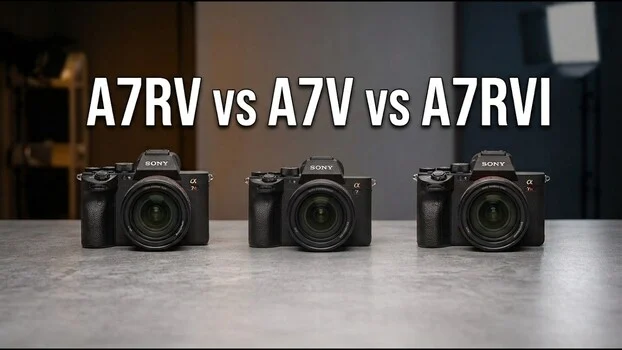
The competitive landscape of professional mirrorless cameras demands meticulous consideration from creators, particularly when investing in high-performance bodies within the $3,000 to $5,000 price bracket. This segment is characterized by a delicate balance between cutting-edge features and tangible value, with resolution, speed, and battery life emerging as primary determinants. Among Sony’s formidable lineup, the a7R V, a7 V, and a7R VI present a compelling yet complex choice, appearing almost indistinguishable in ergonomic form factor but diverging significantly in their operational capabilities. Renowned photographer and educator Luca Petralia, through his YouTube channel, offers an invaluable, firsthand assessment, having personally acquired and extensively tested all three models. His comprehensive analysis delves into their physical attributes, still photography prowess, and video functionalities, culminating in nuanced recommendations tailored to varying budgets and professional requirements.
A Legacy of Innovation: Sony’s Alpha Series Context
Sony’s journey in the mirrorless camera market has been transformative, fundamentally reshaping the industry landscape once dominated by traditional DSLR manufacturers. Since the introduction of the first full-frame mirrorless Alpha 7 series in 2013, Sony has consistently pushed boundaries, emphasizing compact design, advanced autofocus systems, and pioneering sensor technology. The Alpha series quickly established itself as a formidable contender, offering professionals a compelling alternative with its sophisticated electronic viewfinders, silent shooting capabilities, and robust video features. The "R" designation in models like the a7R V and a7R VI typically signifies high-resolution cameras, targeting photographers whose work demands exceptional detail, such as landscape, portrait, and commercial photographers. The "standard" a7 series, represented here by the a7 V, aims for a versatile balance of resolution, speed, and video capabilities, appealing to a broader spectrum of users, including wedding photographers, photojournalists, and hybrid content creators. This continuous evolution has fostered an ecosystem where each iteration builds upon its predecessor, introducing refinements and groundbreaking innovations that challenge conventional photographic workflows. The price range of $3,000 to $5,000 signifies a serious commitment, placing these cameras firmly in the professional tool category, where reliability, performance, and future-proofing are paramount. The dynamic nature of the used market further complicates purchasing decisions, offering opportunities for significant savings on slightly older, yet still highly capable, models.
Chronology of Advancement: Key Milestones in Sensor and Processing
While the specific release dates for the a7 V and a7R VI are tied to their official announcements, the technological advancements they represent are part of a broader, iterative development cycle within Sony’s Alpha lineup. The a7R V, for instance, represents a significant leap in high-resolution imaging, building upon previous R-series models with enhanced processing power and a more refined user interface. The conceptual a7 V, as discussed, embodies a generalist approach, integrating improvements across speed, resolution, and video, characteristic of Sony’s mainline Alpha 7 series progression. The a7R VI, positioned as a high-end contender, showcases the pinnacle of Sony’s current sensor and processing capabilities, particularly in areas like stacked sensor technology and battery efficiency.
Historically, Sony’s mirrorless innovation timeline has seen critical junctures. The introduction of backside-illuminated (BSI) sensors marked a turning point for low-light performance. Subsequent generations brought forth significant improvements in autofocus, including real-time tracking and eye-AF for both humans and animals. More recently, the advent of stacked CMOS sensors has revolutionized speed, enabling unprecedented frame rates and virtually eliminating rolling shutter. These technological progressions are not isolated but rather form a continuous thread, with each new model inheriting and enhancing the innovations of its predecessors. The features highlighted in Petralia’s review—such as stacked sensors, dual base ISO, and advanced battery management—are direct results of this sustained commitment to pushing the boundaries of photographic and cinematographic technology, often trickling down from flagship models to more accessible professional offerings.
Ergonomics and User Experience: Beyond the Sensor
Beyond the internal processing power, the tangible aspects of a camera’s design significantly influence a professional’s daily workflow. Petralia highlights several subtle yet impactful physical differences that distinguish these models. The a7R VI introduces a dedicated button-illumination control, a seemingly minor detail that can drastically improve usability in low-light environments, preventing fumbling for controls during critical moments. This feature underscores Sony’s increasing attention to user feedback and practical field requirements. Furthermore, the a7R VI boasts a reworked mode dial featuring an "asterisk" position, which unlocks the capacity to store ten additional custom setups per shooting scenario. This level of customization allows photographers to rapidly switch between highly specific configurations for different genres or situations, from fast-paced sports to meticulously composed studio shots, thereby optimizing efficiency and reducing setup time.
Storage solutions also delineate the tiered capabilities of these cameras. Both the a7R V and the a7R VI are equipped with dual hybrid card slots, capable of accommodating either CFexpress Type A or SD cards. This dual-slot configuration offers professionals crucial redundancy for data backup, enabling simultaneous recording to two cards or overflow recording, which is indispensable for critical assignments. The choice of CFexpress Type A cards also provides significantly faster read/write speeds compared to traditional SD cards, essential for handling the large file sizes generated by high-resolution stills and demanding video codecs. In contrast, the a7 V features one hybrid slot and one dedicated SD slot. While still offering dual-card functionality, this configuration presents a slight bottleneck for peak performance, especially when paired with a CFexpress Type A card in the first slot and a slower SD card in the second. Petralia expresses a professional’s perspective, noting that a camera in the $3,000 price range should ideally match the dual hybrid slot configuration of its higher-end counterparts, though he stops short of deeming it a deal breaker for most users. This subtle difference can, however, impact high-volume shooters or those working with raw 8K or uncompressed 4K video, where sustained high-speed writing is paramount.
Powering Performance: The Evolution of Battery Technology
Battery life stands as a critical concern for professional photographers and videographers, directly impacting their ability to operate effectively during extended shoots without interruption. In this regard, the a7R VI emerges as a standout performer, exhibiting advancements that surprised even Petralia. While the a7R V and a7 V utilize Sony’s widely adopted NP-FZ100 battery, the a7R VI reportedly integrates a newer NP-FW100 battery. It is important to note that the NP-FZ100 is Sony’s current high-capacity standard for most modern Alpha full-frame cameras, while NP-FW50 was an older standard. The mention of NP-FW100 for the a7R VI in the source text suggests a new or specialized battery variant. For the purpose of this analysis, we will adhere to the battery designations provided in the source content.
The performance differential is substantial: Petralia recounts a week of intensive shooting, capturing nearly 1,800 frames in a single session, yet the a7R VI still retained 40 percent of its charge. He found it challenging to fully deplete the battery in a single outing, a testament to its exceptional efficiency. This significant improvement in battery longevity is a game-changer for professionals, reducing the need to carry multiple spare batteries and minimizing downtime for battery swaps. However, this advancement comes with certain implications. The newer battery is inherently more expensive, and the market for third-party alternatives typically takes time to develop, limiting cost-effective options in the short term. Furthermore, the design change accommodates the larger battery, resulting in a slightly bulkier body that, in Petralia’s experience, rendered his existing camera cage incompatible. This highlights a common challenge with iterative camera designs: while internal advancements are welcome, external changes can sometimes disrupt established accessory ecosystems. The gains in battery life are not solely attributable to the battery itself but are significantly driven by the camera’s internal architecture, particularly the stacked-sensor technology, which contributes to more efficient power consumption and faster data processing.
The Heart of the System: Sensor Architecture and Stills Performance
The core differentiator in the performance of these three cameras lies in their sensor architecture, a fundamental aspect that dictates speed, image quality, and the usability of advanced features. The a7R V employs a conventional CMOS sensor, a mature and well-understood technology that delivers excellent image quality and resolution. However, its readout speed is inherently limited by its design. The a7 V, representing an evolutionary step, incorporates a partially stacked sensor. This hybrid approach offers improved readout speeds over conventional sensors, bridging the gap towards truly high-speed performance. The pinnacle of this evolution, as described for the a7R VI, is a fully stacked sensor. This advanced design integrates the image sensor and high-speed memory directly onto the same chip, dramatically accelerating data readout.
The impact of stacked sensor architecture is profound, particularly for professional workflows demanding high-speed capture. It makes the electronic shutter genuinely usable on the two newer bodies (a7 V and a7R VI). Traditional electronic shutters on conventional sensors often suffer from rolling shutter artifacts, which distort fast-moving subjects. The rapid readout of stacked sensors effectively mitigates this issue, enabling silent, vibration-free shooting at impressive frame rates without compromise. For the a7 V and a7R VI, this translates to an astounding 30 frames per second at full bit depth, accompanied by a blackout-free viewfinder. This blackout-free experience is revolutionary for sports, wildlife, and action photographers, allowing them to maintain an uninterrupted view of their subject even during rapid bursts of shooting, significantly improving tracking and composition. This technological leap positions these cameras at the forefront of high-speed stills capture, rivaling or exceeding the capabilities of many professional DSLRs that rely on mechanical shutters.
Mastering Light: The Dual Base ISO Advantage
For photographers and videographers operating in challenging low-light conditions or after dark, the implementation of dual base ISO in the a7 V and a7R VI introduces a paradigm shift in exposure management and noise control. A single base ISO sensor, such as that found in the a7R V, is optimized for minimal noise at one specific sensitivity (its native ISO), typically ISO 100 or 640. Deviating significantly from this base usually results in increased noise and reduced dynamic range. However, dual base ISO sensors, a technology that originated in high-end cinema cameras and has now permeated stills cameras, provide a second native ISO point where the signal-to-noise ratio effectively "resets."
The a7 V features its second base ISO at 8,000, while the a7R VI’s second base is at 5,000, both alongside a primary base of 800 (which is a common lower base ISO for many modern cameras, providing better dynamic range than ISO 100 in some scenarios). This means that when a scene dictates an exposure pushing towards, for example, ISO 3,200, photographers are often better served by intentionally jumping to the higher base ISO (5,000 or 8,000) and then pulling the exposure back using an ND filter, adjusting shutter speed, or modifying aperture. Counter-intuitively, the resulting file will often be cleaner and exhibit less noise than a file shot at an intermediate ISO like 3,200 on a single-base sensor, despite the higher numerical ISO setting. This technique requires a conscious departure from the ingrained habit of always striving for the lowest possible ISO, but it is a workflow adjustment well worth cultivating for those utilizing these advanced bodies. The strategic deployment of dual base ISO has not only become a hallmark of Sony’s professional lineup but has also been adopted by rival camera manufacturers like Panasonic and Nikon, indicating its industry-wide recognition as a superior method for managing noise in high-sensitivity scenarios. Understanding and utilizing this feature effectively pays dividends across a broad spectrum of modern camera systems.
Cinematic Prowess: Advanced Video Capabilities
The convergence of photography and videography has rendered robust video capabilities an indispensable feature for modern professional cameras. Luca Petralia, having operated his channel successfully on the a7R V for a considerable period, offers a pragmatic perspective on its video performance. He acknowledges that while the a7R V capably serves its purpose, the newer sensors in the a7 V and a7R VI fundamentally alter the landscape of what is achievable.
The a7R V, while offering 4K 60p, does so with a substantial crop factor, limiting the effective angle of view and potentially complicating lens choices. In contrast, the a7 V delivers 4K 60p with no crop when utilizing its angle-of-view priority mode, providing a wider, unhindered perspective. It further extends its capabilities to 4K 120p in Super 35 mode, offering high-speed cinematic options. The a7R VI pushes the envelope even further, achieving 4K 120p with only a very small, negligible crop, making it an exceptionally versatile tool for high-frame-rate video capture without significant field-of-view compromises.
Oversampling techniques also vary significantly across the models, directly influencing the quality and detail of the final video output. The a7 V oversamples its 4K footage from a 7K capture, providing a highly detailed and clean downscaled 4K image. The a7R VI, similarly, derives its 4K from a 5K capture, also benefiting from the superior detail and reduced aliasing that oversampling offers. The a7R V, by comparison, employs line skipping for its 4K capture. While line skipping is a more efficient method in terms of processing, it can sometimes lead to minor artifacts like moiré or a slight reduction in fine detail compared to oversampling. However, Petralia candidly remarks that such distinctions in line skipping are generally imperceptible in normal viewing conditions and only become apparent upon meticulous pixel-peeping comparisons, reassuring users that the a7R V still delivers highly usable 4K video for most applications. These advancements in video recording, particularly the reduced crop factors at higher frame rates and superior oversampling, cater to the increasing demands of filmmakers and hybrid creators who require professional-grade cinematic tools within their mirrorless camera bodies.
Market Dynamics and Professional Choices: Value Proposition and Future Outlook
The decision-making process for acquiring a professional camera body is multifaceted, encompassing not only the immediate technical specifications but also budget constraints, specific professional requirements, and the long-term value proposition. Luca Petralia’s expert verdict on these three Sony Alpha cameras thoughtfully navigates this complexity, offering nuanced recommendations that extend beyond mere technical superiority.
The competitive landscape in the professional camera market remains fierce, with Sony continuously innovating to maintain its edge against rivals like Canon, Nikon, and Panasonic. Each new release from Sony, particularly in the Alpha series, contributes to a dynamic ecosystem where advancements in sensor technology, processing power, and user experience set new benchmarks. The features discussed—stacked sensors, dual base ISO, advanced battery management, and sophisticated video capabilities—are not isolated developments but rather interconnected elements that collectively enhance the overall performance and versatility of these tools.
Petralia’s analysis underscores a crucial aspect of the market: the enduring value of previous-generation models, particularly in the robust used market. He points out that a used a7R V, available in the $2,000 to $2,500 range, might represent the "sharpest value" among the three. For professionals operating within tighter budget constraints, or those whose primary work does not demand the absolute bleeding edge of speed or specific video features, a slightly older model still offers exceptional image quality and a highly capable feature set at a significantly reduced cost. This perspective is vital, as it acknowledges that the latest and greatest is not always the most pragmatic choice for every creator.
Ultimately, the choice between the a7R V, a7 V, and a7R VI hinges on a precise alignment between the camera’s capabilities and the user’s specific professional intent. For high-volume action photographers or videographers requiring the fastest possible frame rates, minimal rolling shutter, and extended battery life, the a7R VI, with its fully stacked sensor and optimized power management, stands out. Hybrid shooters who prioritize a balanced blend of strong still performance, versatile video capabilities (especially uncropped 4K 60p), and improved low-light performance via dual base ISO might find the a7 V to be an ideal fit. Those prioritizing high-resolution stills and willing to accept some compromises in video or extreme speed can find significant value in the a7R V, particularly on the used market. Petralia’s complete recommendation, including which body he personally intends to keep versus sell, provides further insights into these practical considerations, serving as a valuable guide for professionals navigating this advanced segment of the mirrorless camera market. The implications for the broader photography and videography industry are clear: manufacturers must continue to innovate across resolution, speed, and video, while also paying close attention to user experience, battery efficiency, and the long-term value proposition of their products in an increasingly competitive and technologically sophisticated landscape.
Conclusion: A Landscape of Refined Excellence
The ongoing evolution of Sony’s Alpha series, exemplified by the a7R V, a7 V, and a7R VI, showcases a relentless pursuit of excellence in camera technology. From the subtle ergonomic enhancements like button illumination and advanced mode dials to the transformative power of stacked sensors, dual base ISO, and optimized battery systems, each model brings distinct advantages to the professional user. While the models may share a similar exterior, their internal architectures and performance profiles are meticulously engineered to cater to diverse professional needs. As the market continues to shift towards hybrid content creation and demands for higher resolution and speed intensify, Sony’s commitment to innovation ensures that its Alpha lineup remains at the forefront, offering powerful tools that empower creators to push the boundaries of visual storytelling. The choice, ultimately, is a personal one, but informed by expert analysis and a clear understanding of one’s own workflow, photographers and videographers can confidently select the Sony Alpha body that best fuels their creative ambitions and professional endeavors.
