
 By Nana Wu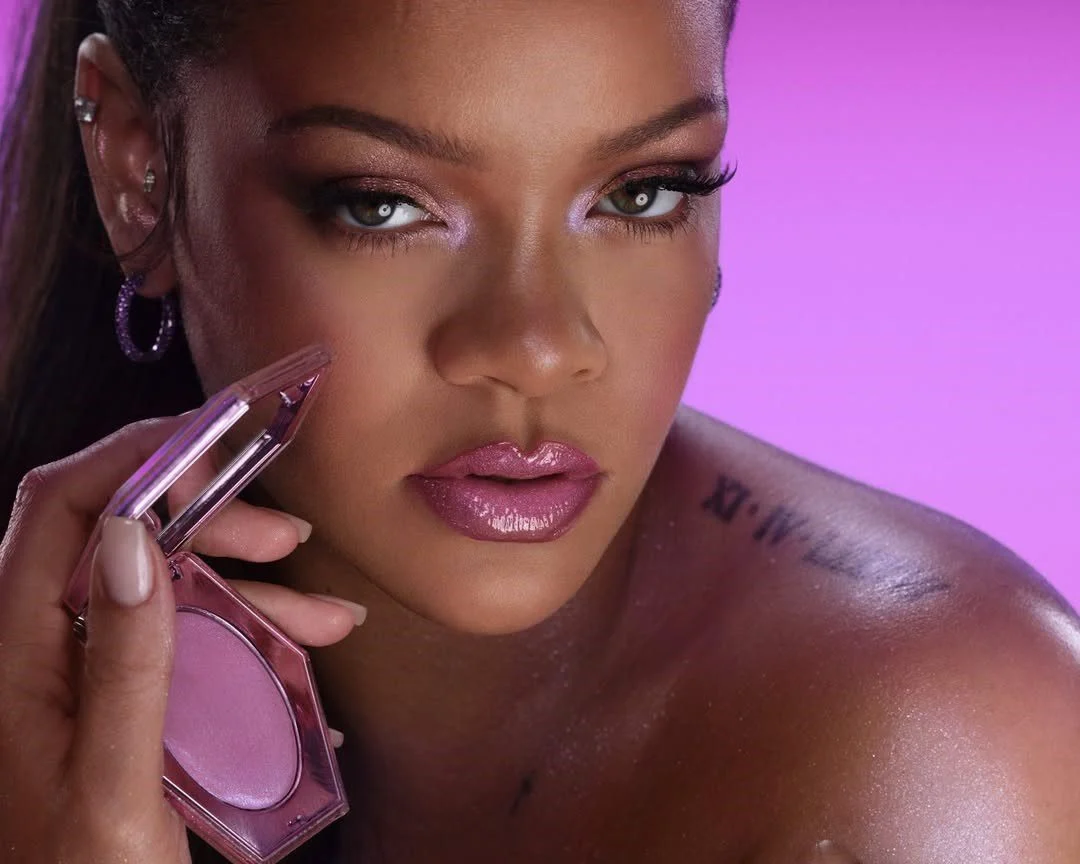
The French luxury conglomerate Louis Vuitton Moët Hennessy (LVMH) is reportedly exploring the sale of its 50% stake in Fenty Beauty, the cosmetics powerhouse it co-owns with international superstar and entrepreneur Rihanna. According to reports from Reuters, the luxury group has engaged the services of investment bank Evercore to advise on the potential transaction. This move follows a series of high-profile divestments by LVMH, signaling a significant shift in the company’s long-term strategy as it navigates a cooling global luxury market and seeks to consolidate its focus on wholly-owned core maisons.
Fenty Beauty, launched in 2017, is currently housed under LVMH’s Kendo Brands incubator, a division dedicated to developing original beauty brands. Since its inception, the brand has been a cornerstone of LVMH’s beauty portfolio, lauded for its disruptive approach to inclusivity and its rapid scaling. However, as the macroeconomic environment grows increasingly complex, industry analysts suggest that LVMH is prioritizing "cleaner" ownership structures and brands with higher synergy within its primary fashion and leather goods divisions.
The Rise and Impact of Fenty Beauty
To understand the weight of a potential sale, one must examine the transformative role Fenty Beauty has played in the cosmetics industry over the last seven years. When Rihanna and LVMH debuted the line in September 2017, it immediately challenged the status quo of the beauty market. The launch featured an unprecedented 40 shades of foundation, a move that forced legacy brands to expand their ranges to accommodate diverse skin tones—a phenomenon now widely referred to as "The Fenty Effect."
The brand’s success was near-instantaneous. Within its first month, Fenty Beauty recorded a reported $72 million in earned media value. By the end of its first full year of operation, it had generated approximately $550 million in revenue. The partnership between Rihanna’s cultural influence and LVMH’s manufacturing and distribution expertise created a blueprint for celebrity-led ventures that many have since attempted to replicate, though few with the same level of sustained commercial success.
In 2024, Fenty Beauty continues to be a formidable player in the prestige beauty space. Estimated sales for the current year are hovering around $450 million. While these figures remain strong, they represent a stabilization from the explosive growth of the brand’s early years. Current market valuations for the 50% stake held by LVMH suggest the entire brand could be valued between $1 billion and $2 billion, depending on the EBITDA multiples applied in the current high-interest-rate environment.
Chronology of LVMH’s Recent Strategic Divestments
The potential sale of Fenty Beauty is not an isolated event but rather the latest in a series of strategic exits by LVMH. Under the leadership of Chairman and CEO Bernard Arnault, the group appears to be undergoing a "portfolio cleanup" designed to shed brands that do not fit the current vision of ultra-high-end, wholly-owned luxury.
In September 2024, LVMH confirmed the sale of Off-White LLC, the streetwear brand founded by the late Virgil Abloh, to Bluestar Alliance, a brand management firm. This followed the 2019 decision to sell its stake in Stella McCartney back to the designer herself, ending a 17-year partnership. More recently, rumors have intensified regarding the potential sale of Marc Jacobs, a brand that has seen a resurgence in popularity but remains an outlier in terms of its price positioning and demographic reach compared to the group’s "crown jewel" brands.
This timeline suggests a deliberate pivot away from shared ownership and "bridge" luxury labels. By offloading these assets, LVMH is freeing up capital and management bandwidth to focus on its most profitable and prestigious entities, such as Louis Vuitton, Dior, Tiffany & Co., and Sephora.
Supporting Data: The 2024 Luxury Market Slowdown
The decision to explore a sale comes at a time when the global luxury sector is facing its toughest headwinds since the 2008 financial crisis, excluding the brief pandemic-induced shock. LVMH’s third-quarter 2024 earnings report revealed a 3% decline in organic revenue, marking a stark contrast to the double-digit growth the company enjoyed in the post-pandemic "revenge spending" era.
Several factors are contributing to this deceleration:
- The China Factor: Historically a primary engine of growth for LVMH, the Chinese market has struggled with a property crisis and weakened consumer confidence, leading to a significant drop in demand for high-end fashion and cosmetics.
- Inflation and Interest Rates: In Western markets, prolonged inflation has squeezed the "aspirational consumer"—the demographic that often fuels the sales of accessible luxury items like Fenty Beauty lip glosses or entry-level leather goods.
- Normalization of Beauty Growth: While the "Lipstick Index" (the theory that consumers buy small luxuries like makeup during downturns) remains somewhat relevant, the prestige beauty market is becoming oversaturated with celebrity brands, leading to intensified competition and higher customer acquisition costs.
By considering a sale now, LVMH may be looking to capitalize on Fenty Beauty’s still-robust valuation before any potential further softening of the retail market.
The "La Beauté Louis Vuitton" Factor
A key indicator of LVMH’s future direction in the beauty sector is the recent internal focus on "La Beauté Louis Vuitton." This new venture, led by legendary makeup artist Pat McGrath, signals a shift toward integrating beauty directly into the group’s flagship maison. Unlike Fenty Beauty, which operates as a standalone brand under an incubator, La Beauté Louis Vuitton is designed to be a direct extension of the Louis Vuitton brand identity, emphasizing craftsmanship, high-fashion innovation, and sustainability.
Internal reports suggest that the initial reception to this project has been exceptionally positive. By moving beauty "in-house" for its major brands, LVMH can ensure total control over brand equity and capture 100% of the margins, rather than splitting profits with a celebrity partner. This move toward "maison-centric" beauty mirrors the strategies of competitors like Chanel and Hermès, who maintain tightly controlled, wholly-owned cosmetics and fragrance divisions.
Inferred Reactions and Stakeholder Perspectives
While neither LVMH nor Rihanna’s representatives have issued formal statements regarding the Evercore appointment, industry insiders have begun to speculate on the motivations of the parties involved.
For Rihanna, the potential sale of LVMH’s stake presents several possibilities. She could seek a new partner, such as a private equity firm, to buy out LVMH, or she could potentially look to take a larger ownership stake herself, following the path of Stella McCartney. Rihanna’s business empire is multifaceted; she remains the head of Savage X Fenty (lingerie) and Fenty Skin, and she recently launched Fenty Hair. Consolidating her brands under a different corporate structure might allow for greater cross-brand synergy that was not possible under the Kendo incubator.
For LVMH, the move is seen by analysts as a "disciplined" financial decision. "LVMH is a master of timing," says one luxury retail analyst. "They know when a brand has reached its peak within their specific ecosystem. If they feel they have extracted the maximum strategic value from the partnership, they will not hesitate to recycle that capital into a higher-growth area."
Broader Impact and Industry Implications
The potential sale of Fenty Beauty has significant implications for the broader beauty and luxury landscape. First, it serves as a bellwether for the "celebrity brand" era. If the most successful celebrity beauty brand in history is being shopped around by the world’s largest luxury group, it suggests a cooling of corporate appetite for such partnerships. Investors may now prioritize brands with "founder-led" longevity over those reliant on "influencer-led" momentum.
Second, the involvement of Evercore suggests that the deal will be handled with high levels of scrutiny regarding valuation. Potential suitors could include beauty conglomerates like L’Oréal, Estée Lauder, or Coty, although antitrust issues might arise given their existing market dominance. Private equity firms, particularly those with a history in consumer goods like Advent International or Blackstone, may also see an opportunity to take Fenty Beauty to its next stage of global expansion, particularly in untapped markets in Africa and Southeast Asia.
Finally, the sale would mark the end of an era for Kendo Brands. As the incubator’s most successful graduate, Fenty Beauty’s departure would leave a significant hole in the division’s revenue. This may prompt LVMH to look for the "next Fenty," or it may signal a winding down of the incubator model in favor of the aforementioned in-house maison developments.
Conclusion: A New Chapter for Fenty and LVMH
As LVMH and Evercore begin the process of evaluating bids or exploring private sale options, the luxury world will be watching closely. The outcome of this deal will define the valuation of celebrity-driven enterprises for years to come and will clarify LVMH’s roadmap for the late 2020s.
Fenty Beauty remains a cultural icon and a financial powerhouse. Whether it continues its journey under the umbrella of a different conglomerate or moves toward independent operation, its legacy as the brand that changed the face of inclusivity is secure. For LVMH, the move is a testament to the company’s ruthless efficiency in portfolio management—a strategy that has kept it at the pinnacle of the global economy for decades. As the luxury market enters a period of "normalization," LVMH is once again proving that it is willing to shed its most famous collaborations to protect its core heritage and ensure long-term stability.
