
 By Nila Kartika Wati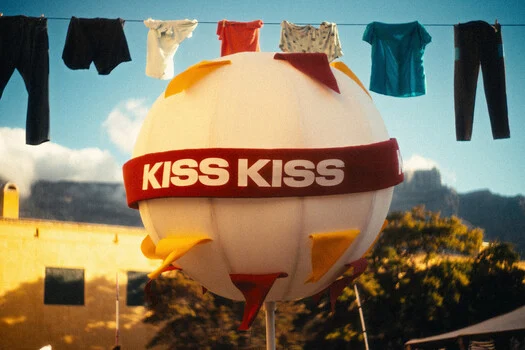
In an age dominated by near-psychic autofocus systems and clinically perfect optics, the rationale behind embracing vintage glass might seem counterintuitive. While a vintage Canon FD SSC can indeed be acquired for significantly less than a contemporary G Master Prime, the true impetus for this growing trend extends beyond mere cost-effectiveness, residing instead in an elusive quality: character. This pursuit of distinct aesthetic signatures is reshaping how photographers and filmmakers approach image creation, prioritizing unique visual voices over unblemished technical perfection.
The Renaissance of Retro Optics: A Quest for Character
Modern lens manufacturing strives for optical transparency, sharpness across the frame, minimal chromatic aberration, and outstanding flare resistance. These attributes, while technically superior, can sometimes lead to a homogenized visual aesthetic. In stark contrast, vintage lenses, often products of older optical designs and manufacturing tolerances, possess inherent "quirks" that are now highly coveted. These can manifest as distinctive flares that paint the frame with light, textured and often swirly out-of-focus backgrounds (bokeh), or a gentle softness that imbues images with a dreamlike, often described as "cinematic," quality.
One of the most emblematic pieces of vintage glass to exemplify this character-driven resurgence is the 58mm Helios 44-2. This Soviet-era lens, a derivative of the legendary Carl Zeiss Biotar 58mm f/2, has garnered a cult following precisely for its imperfections. Its signature swirly bokeh, particularly noticeable at wider apertures, transforms backgrounds into a painterly vortex, a stark departure from the smooth, often sterile bokeh of many modern lenses. Beyond its unique out-of-focus rendition, the Helios 44-2 is also known for its distinctive flare characteristics, which can range from wild, colorful streaks to subtle, ethereal glows when light hits the front element at specific angles.
The appeal of such optics is no longer confined to hobbyists or experimental photographers. In recent years, vintage Soviet glass, including variants like the 85mm Helios 40-2, has seen prominent use in major motion pictures. Films such as Matt Reeves’ The Batman (2022) and Denis Villeneuve’s Dune: Part Two (2024), both lauded for their visually distinctive styles, integrated these character-rich lenses into their cinematographic arsenals. For instance, Greig Fraser ASC, ACS, cinematographer for The Batman and Dune, has openly discussed his preference for lenses that introduce a certain "organic imperfection" to the digital image, believing they add texture, mood, and a timeless quality that modern, clinically perfect lenses might diminish. This trend signifies a deliberate artistic choice by top-tier filmmakers to break away from the perceived sterility of pristine digital capture, opting instead for optics that tell a more nuanced visual story. For large-scale cinema applications, these lenses are often "rehoused" into modern cinema-grade barrels, allowing them to interface seamlessly with professional camera systems while retaining their unique optical signatures.
The Helios 44-2: A Legacy of Soviet Engineering
To understand the widespread adoption of the Helios 44-2, it’s essential to delve into its historical and technical context. Produced in vast quantities across various Soviet factories from the 1950s through the 1990s, the Helios 44 series was initially bundled with Zenit SLR cameras. Its optical formula, a Double Gauss derivative, was heavily influenced by the pre-war German Carl Zeiss Biotar 58mm f/2, a design celebrated for its sharpness and pleasant bokeh. The Soviet adaptation, while not always matching the build quality or coating sophistication of its German progenitor, managed to replicate the desirable optical characteristics, particularly the "swirly bokeh" effect, which is a consequence of optical aberrations (specifically field curvature and spherical aberration) becoming more pronounced towards the edges of the frame at wider apertures.
The lens typically features an M42 screw mount, making it highly adaptable to a wide array of modern mirrorless camera systems with inexpensive "dumb adapters" that simply bridge the physical mount difference without electronic communication. This ease of adaptation, coupled with its historical abundance, has kept the Helios 44-2 incredibly affordable, often available for under $100, making it an accessible entry point for photographers curious about vintage optics. Its 58mm focal length offers a slightly longer-than-standard perspective on full-frame sensors, while on APS-C cameras, it translates to roughly an 87mm equivalent, ideal for portraits. Early versions often feature an eight-blade aperture diaphragm, contributing to smoother out-of-focus highlights. Some later versions also feature a "de-clicked" aperture ring, a design choice that proves invaluable for videographers seeking seamless exposure transitions.
Field Test: Capturing Cape Town’s "Kiss Kiss" Event with a Helios 44-2
To truly appreciate the practical application and aesthetic output of the Helios 44-2, a recent field test at a uniquely Cape Town event, "Kiss Kiss," provided an ideal proving ground. This event, featuring a DJ set by the acclaimed electronic music duo Basement Jaxx, was staged within the historic confines of the Castle of Good Hope.
Setting the Historic Stage: The Castle of Good Hope
The Castle of Good Hope, South Africa’s oldest colonial building, dates back to 1666. Initially constructed by the Dutch East India Company (VOC) as a maritime replenishment station, this pentagonal fort has witnessed centuries of Cape Town’s history, serving various roles from military stronghold to administrative center. Today, it stands as a national monument, its robust stone walls and intricate architecture offering a compelling juxtaposition of heritage and contemporary culture. Hosting a modern electronic music festival within such a venerable structure creates a potent atmosphere, blending the echoes of the past with the vibrant pulse of the present. This "old meets new" theme resonated perfectly with the photographic endeavor: pairing a vintage lens with a cutting-edge digital camera body.
The "Kiss Kiss" Experience: A Chronology of Image-Making
The photographer’s toolkit for this assignment comprised a trusty Sony a7 IV mirrorless camera, known for its advanced sensor and robust low-light capabilities, paired with the Helios 44-2 via a standard K&F M42 to FE dumb adapter. This setup leverages the modern camera’s technological aids, such as focus peaking and magnified view, to facilitate precise manual focusing—a critical skill when working with vintage glass that lacks autofocus.
The event unfolded chronologically, offering diverse lighting conditions and creative opportunities.
Daytime Aesthetics: Embracing Softness and Manual Focus
As the sun graced the early hours of the festival, the Helios 44-2 demonstrated its ability to render images with a pleasing, almost ethereal softness. This characteristic, often considered a flaw in modern optics, became an intentional artistic choice. Navigating the manual focus amidst the dynamic crowd at the Castle grounds presented its own set of challenges and rewards. The vibrant scene, dotted with beer tents and an eclectic mix of attendees, provided ample subjects. A particularly memorable moment involved observing heads of cabbage, part of the event’s "produce" theme, transform into impromptu volleyballs as the festive mood intensified. Capturing these spontaneous interactions with manual focus required heightened concentration and anticipation, forcing a slower, more deliberate photographic approach that contrasted sharply with the rapid-fire capture afforded by modern autofocus systems.
Thematic Elements: Produce Parade and Doves
The "produce" theme extended into a colorful parade marching through the grounds, featuring individuals adorned as oversized tomatoes and doves. The spectacle offered rich visual fodder. A particularly thrilling sequence involved the release of real doves from the stage. Photographing these fast-moving birds with manual focus required a blend of patience, timing, and a deep understanding of the lens’s depth of field. The resulting images, while perhaps not critically sharp on every feather, conveyed a sense of dynamic energy and artistic impression that transcended mere technical perfection.
Twilight and Nighttime Creativity: Harnessing Flares and Texture
As the sun began its descent, casting long shadows across the historic ramparts, the Helios 44-2 revealed another facet of its unique character: its distinctive flare patterns. The de-clicked aperture ring, a feature on many Helios variants or easily modifiable, proved invaluable. This allowed for subtle, stepless adjustments of the aperture, enabling the photographer to precisely control the intensity and character of the flares. Small shifts from f/2 to f/4 could transform wild, "crazy rings" of light into delicate rainbow fringes, responding to the ambient and concert lighting. The overhead concert lights, now fully engaged as darkness enveloped the Castle, provided abundant opportunities for creative flair (pun intended), turning potential optical "defects" into intentional artistic elements that enhanced the atmospheric quality of the images.
Finally, the photographer experimented with shutter drag, a technique involving longer shutter speeds to introduce motion blur. When combined with the Helios 44-2’s inherent optical qualities—its unique rendering of light and its textured bokeh—the resulting images acquired a deeply "filmic" quality. This approach emphasized the lens’s ability to create textured, impressionistic visuals that prioritize mood and movement over clinical detail, further underscoring how its "imprecise" characteristics can be a boon for creative expression.
Navigating Imperfection: Challenges and Rewards
While the Helios 44-2 offers immense creative potential, it is far from a technically perfect lens. Even an exceptionally well-preserved copy will present challenges that modern optics have largely eliminated. Sharpness, particularly wide open and towards the edges of the frame, does not measure up to contemporary standards. Flare resistance is minimal, and chromatic aberrations (color fringing) can be pronounced in high-contrast situations. Variability in manufacturing quality between different production runs and factories also means that "copy variation" is a significant factor, with some lenses performing better than others.
However, these very "quirks" and "gremlins" are precisely why many photographers and filmmakers embrace the Helios 44-2. The journey of understanding and mastering its specific characteristics becomes an integral part of the creative process. It forces a more considered approach, encouraging experimentation and a deeper engagement with light and composition. The lens demands patience and practice, rewarding the user with a distinct visual signature that is impossible to replicate with modern, clinically corrected glass.
Ultimately, the worth of a lens like the Helios 44-2 is not measured by its technical specifications against a laboratory benchmark, but by its capacity to inspire creativity and facilitate a unique artistic vision. If it allows a photographer to prioritize the joy of a creative challenge and achieve a desired aesthetic that transcends mere technical perfection, then its value is undeniable.
The Broader Implications: A Shifting Paradigm in Imaging
The burgeoning popularity of vintage lenses, exemplified by the Helios 44-2, signifies a broader shift in the photographic and cinematic landscape. This trend has several key implications:
-
Re-evaluation of "Image Quality": The emphasis is moving from purely objective metrics (sharpness, resolution, lack of distortion) to subjective aesthetic qualities (character, mood, emotional resonance). This encourages a more artistic and less technical discourse around image creation.
-
Democratization of Unique Aesthetics: Vintage lenses, often affordable and widely available, allow photographers and filmmakers on tighter budgets to achieve distinctive looks that might otherwise require expensive, specialized cinema lenses or extensive post-production work. This accessibility fosters greater creative diversity.
-
Technological Synergy: The advent of mirrorless camera systems has been a significant catalyst for the vintage lens movement. Features like electronic viewfinders (EVFs), focus peaking, and in-body image stabilization (IBIS) make manual focusing and using older, non-stabilized lenses far more practical and enjoyable than they ever were on traditional DSLRs.
-
Growth of Niche Markets: The demand for vintage optics has spurred growth in secondary markets, online communities, and specialized services. Companies like IronGlass and GL Optics have emerged, offering professional rehousings of classic photographic lenses into robust cinema housings, catering directly to the film industry’s desire for these unique optical signatures.
-
A Counter-Movement to Algorithmic Perfection: In an era where computational photography and AI are increasingly defining "perfect" images, the embrace of vintage lenses represents a counter-movement. It is a deliberate choice to introduce humanistic "imperfection," to celebrate the optical idiosyncrasies that give an image soul and differentiate it from the algorithmically optimized output.
The Helios 44-2 stands as a testament to the idea that sometimes, the most compelling artistic tools are not the newest or the most technologically advanced, but those that offer a distinct voice, a creative challenge, and a tangible connection to the history of image-making. Its enduring appeal underscores a fundamental truth: in the pursuit of art, character often trumps clinical perfection, opening new avenues for visual storytelling in the digital age.
