
 By Nila Kartika Wati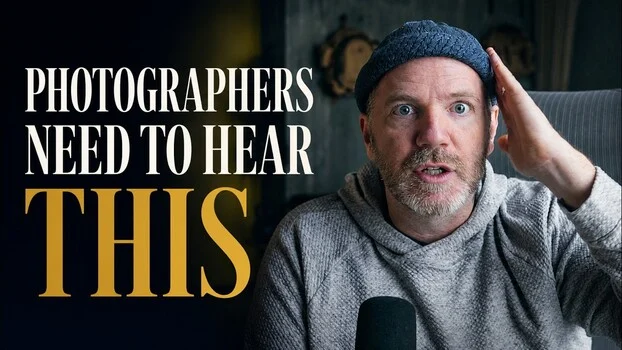
In an industry often romanticized by grand travel and viral fame, the stark realities of building a sustainable photography career are frequently obscured. Veteran photographer Justin Mott, with over two decades of professional experience spanning commercial assignments, editorial work, and fine art, offers a refreshing and often uncomfortable dose of truth for both aspiring amateurs and seasoned professionals. Through his coaching, Mott meticulously dissects the silent saboteurs of photographic growth: money, gear, and the pervasive influence of social media. His insights underscore a critical pivot in understanding when these elements serve as tools and when they become detrimental distractions, ultimately reshaping how photographers invest their time and resources behind the camera.
The Amateur’s Foundation: Prioritizing Artistic Purity Over Premature Profit
Mott’s guidance for amateurs begins with a direct, uncompromising warning: do not allow the pursuit of money to derail your photographic journey, especially in its nascent stages. The allure of monetizing a passion can be powerful, but Mott argues that chasing income too early can fundamentally "cloud your vision, slow you down, and push you toward paths you don’t need to explore yet." This perspective challenges a common contemporary narrative that encourages immediate commercialization of creative endeavors.
The economic realities of professional photography, as Mott points out, often diverge sharply from beginner’s expectations. Contrary to popular belief, the vast majority of working photographers are not accumulating significant wealth or acquiring luxury assets like vacation homes. Even highly coveted assignments from prestigious outlets such as National Geographic or The New York Times, while offering invaluable exposure and experience, frequently come with compensation far lower than what aspiring photographers might imagine. For instance, while a feature assignment for a major publication might pay several thousand dollars, this sum often needs to cover extensive travel, equipment costs, post-production, and potentially weeks or months of work, leading to an hourly rate that can be surprisingly modest.
Mott advocates for an extended period in what he terms the "pure phase" – a crucial window during which an amateur can focus solely on artistic development, experimentation, and the discovery of a unique style and vision, free from commercial pressures. This period allows for genuine self-discovery and the cultivation of a distinctive photographic voice, which he argues is far more valuable for long-term success than premature attempts at commercial viability. Data from industry surveys consistently shows that photographers who develop a strong, recognizable style tend to command higher rates and attract more desirable clients in the long run, validating Mott’s emphasis on foundational artistic development.
Beyond the Digital Echo Chamber: Reclaiming Time from Fleeting Validation
A significant portion of Mott’s advice targets habits that consume an amateur’s valuable time without yielding substantial returns for artistic growth. He firmly asserts that "viral fame, contest wins, and Instagram praise aren’t goals worth chasing." In an age dominated by social media metrics, the hours photographers spend meticulously crafting posts, analyzing engagement, and "farming likes" are, in Mott’s view, hours unequivocally diverted from the fundamental disciplines of photography: learning color theory, mastering light, refining composition, and honing storytelling abilities.
The psychological draw of instant validation on platforms like Instagram is undeniable. Studies on social media use have highlighted the dopamine feedback loop associated with likes and comments, creating a powerful incentive for continuous engagement. However, Mott argues that this digital gratification rarely translates into tangible career advancement or artistic improvement. While a robust online presence can be a tool for marketing, an overreliance on superficial metrics can lead photographers to prioritize popular aesthetics over genuine artistic exploration, potentially stunting the development of a unique perspective. The fleeting nature of viral content means that even widespread recognition often dissipades quickly, leaving little lasting impact on a photographer’s portfolio or professional standing.
Equally blunt is Mott’s stance on "Gear Acquisition Syndrome" (GAS), his shorthand for the relentless urge to upgrade cameras and lenses. This common affliction among photographers is often fueled by aggressive marketing campaigns from manufacturers and the perception that better equipment inherently leads to better photographs. Mott’s antidote is refreshingly simple and pragmatic: "buy something used that fits your budget, learn it inside and out, and don’t buy again for years." This approach emphasizes mastery over equipment rather than continuous acquisition.
The financial implications of GAS are substantial. A professional-grade camera body can cost upwards of $3,000 to $7,000, with specialized lenses often adding thousands more. By resisting the constant upgrade cycle, photographers can redirect these considerable funds toward more impactful investments. Mott explicitly suggests allocating leftover money to "education, workshops, or photography books rather than another body or lens." This shift in investment strategy prioritizes knowledge and skill development, which have a far greater return on investment for a photographer’s long-term growth than marginal improvements in sensor technology or lens aperture.
Mott also draws a critical distinction between "learning from the famous" and "learning from the best." He warns that platforms like YouTube, driven by algorithms, tend to reward "well-produced episodes over well-produced photographs." This means that popular tutorials might prioritize entertainment value, charismatic presentation, or easily digestible tips over profound insights rooted in deep photographic expertise. The implications are clear: content creators who excel at video production and audience engagement may gain significant viewership, even if their own photographic work lacks depth or originality.
Vetting Expertise: A Critical Lens on Learning Sources
In an era saturated with online content and self-proclaimed experts, Mott’s advice on vetting learning sources is particularly pertinent. He suggests a practical filter that can be applied immediately: "study photographers who have books, and to actually read the resumes and portfolios of anyone teaching you." This recommendation encourages a rigorous approach to selecting mentors and educational resources.
The act of publishing a photography book often signifies a substantial body of work, a cohesive artistic vision, and a level of peer recognition that transcends fleeting online popularity. Books require curation, critical review, and a significant investment of time and resources, serving as a robust testament to a photographer’s craft and enduring relevance. Similarly, examining a teacher’s resume and portfolio provides tangible evidence of their experience, achievements, and the quality of their own photographic output.
Mott’s filter is direct: "Pull up the work of the person offering advice before you absorb their lessons. If their images don’t move you, their tutorials probably won’t move your photography either." This simple yet powerful directive places the onus squarely on the student to critically evaluate the source of information. This mirrors a broader shift in the digital age, where the "barrier to publishing a lesson has collapsed," and consequently, "the responsibility for vetting the teacher has moved entirely onto the student." In an ecosystem where anyone can create and disseminate content, discerning genuine expertise from superficial guidance becomes a crucial skill for any aspiring photographer. This critical approach safeguards against wasting time and resources on ineffective or misleading instruction, ensuring that learning efforts are channeled towards truly impactful guidance.
The Professional’s Imperative: Sustainable Practice and Financial Acumen
Mott’s insights extend beyond the amateur realm, offering equally challenging advice for established professionals. He urges amateurs to heed these professional warnings, recognizing that the pitfalls of the industry often begin to manifest as one transitions from learning to earning. The initial money warning, for instance, carries over with amplified significance: professionals should "hold out on chasing income as long as you responsibly can," because the "self-discovery you skip is hard to recover once client work fills your calendar." This emphasizes that the artistic groundwork laid in the "pure phase" is irreplaceable and should not be prematurely sacrificed for commercial expediency.
For working professionals, Mott stresses the importance of honestly valuing their work – neither overvaluing nor undervaluing it. He candidly acknowledges that photography, unlike many other industries, "has no tidy industry standard to reference" when it comes to pricing. This absence of a universal benchmark means that "pricing becomes an ongoing experiment shaped by the market and your own trial and error." Professional photographers must continuously adapt their pricing strategies based on their unique skill set, niche, market demand, and the economic landscape. This requires a keen understanding of production costs, perceived value, and competitor pricing, combined with a willingness to adjust and learn from experience.
When the tangible rewards of social media, such as "likes," cease to translate into actual income, Mott advises a two-step process: first, to "vent if you must," acknowledging the frustration, and then to "look inward and decide whether you need to improve your work, lower your fees, or both." This introspective approach encourages self-assessment and strategic adjustment rather than external blame or passive resignation. It forces professionals to critically evaluate their product (their photography) and their market positioning (their pricing) in response to real-world feedback.
The Uncomfortable Truth: Financial Discipline and Business Acumen
Perhaps the most challenging section for many working photographers is Mott’s candid discussion on financial planning and long-term security. He provocatively notes that many photographers might "look down on their corporate friends’ desk jobs," yet those friends often possess fundamental financial safeguards like 401(k)s and "a realistic shot at retiring on time." This comparison serves as a stark reminder of the often-overlooked financial fragility inherent in a freelance creative career.
Mott directly challenges photographers to conduct a personal financial audit: "search how much you’ll need to retire at your target age and compare it to what you’ve actually saved." The disparity, he suggests, is often sobering. He highlights a critical behavioral inconsistency: photographers who might "drop $10,000 on gear without blinking rarely put the same amount into savings." This points to a prevalent issue within the creative community where investment in tools for the craft often outweighs investment in personal financial security. Data on self-employed individuals consistently shows a significant gap in retirement savings compared to those in traditional employment, underscoring the urgency of Mott’s advice.
Beyond personal savings, Mott delves into the "unglamorous business side" of photography, emphasizing the necessity of treating oneself as a legitimate small business. This encompasses establishing professional infrastructure: branded invoices for a consistent brand image, a robust tax system for compliance and efficiency, an organized archive system for managing assets, standard contracts for legal protection, and, critically, healthcare planning. For freelancers, the absence of employer-provided benefits makes proactive healthcare planning an absolute necessity. Neglecting these fundamental business elements not only creates legal and financial vulnerabilities but also hinders professional growth and client trust.
Finally, Mott touches upon the critical role of self-promotion, acknowledging "why the hustle never stops." In a competitive market, continuous self-promotion and networking are not merely optional extras but essential components of sustaining a photography business. This ongoing effort ensures visibility, attracts new clients, and maintains relevance in an ever-evolving industry. While the full depth of his advice on self-promotion requires direct engagement with his content, the underlying message is clear: the artistic pursuit must be paired with diligent business practices and strategic marketing for long-term viability.
Justin Mott’s comprehensive guidance, spanning two decades of practical experience, offers a vital counter-narrative to the prevailing trends in the photography world. By challenging photographers to prioritize artistic integrity, financial prudence, and genuine skill development over superficial metrics and material acquisitions, he provides a roadmap for sustainable growth. His emphasis on extending the "pure phase" for amateurs and instilling robust business acumen in professionals ultimately suggests that a measured, thoughtful approach pays off far longer than most photographers might initially anticipate. His insights are a compelling call to action for anyone serious about forging a meaningful and enduring path in photography.
