
 By Jia Lissa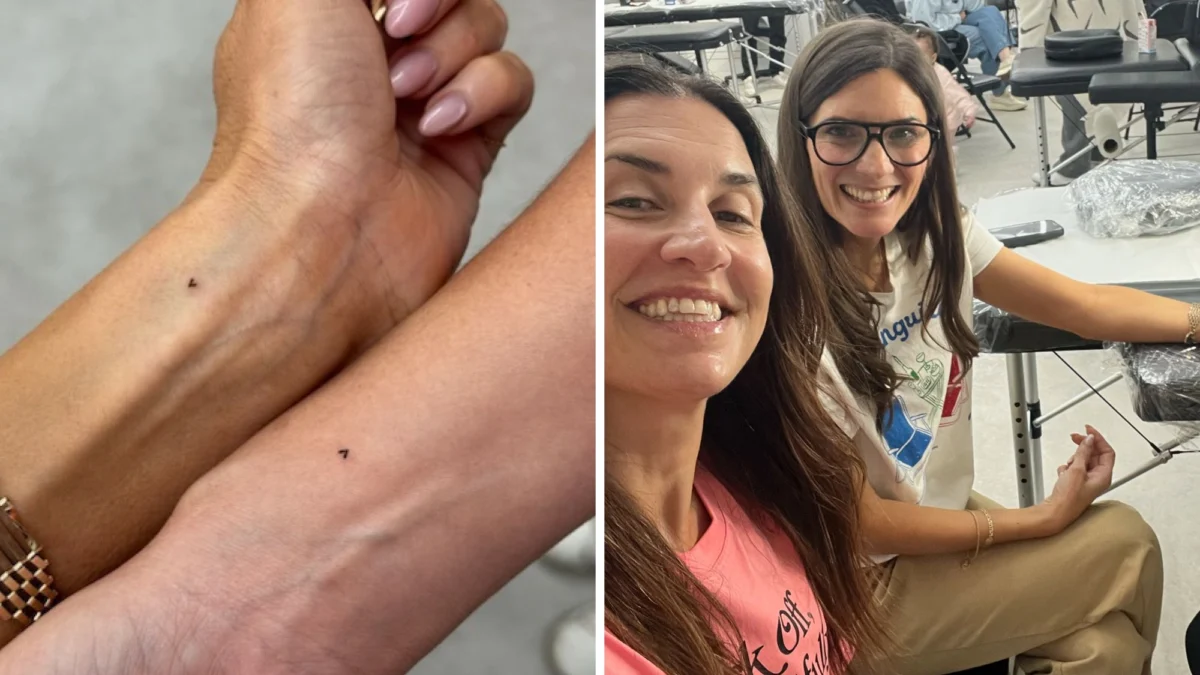
The desire to commemorate enduring friendships with lasting symbols is a sentiment as old as human connection itself. For two women celebrating a significant milestone, this desire manifested in a matching micro-tattoo – a delicate heart inked onto each of their inner wrists. What began as a thoughtful gesture to mark five decades of friendship and their approaching 50th birthdays, however, unexpectedly devolved into a cautionary tale about the intricacies of tattoo artistry, pigment longevity, and the often-overlooked science behind seemingly simple body art. This is the story of how a cherished symbol of sisterhood, meticulously planned and executed, all but vanished, prompting an investigation into why such delicate designs can fail and what lessons can be learned for future tattoo enthusiasts.
A Milestone Marked by Matching Ink
The journey began with a long-held aspiration. For years, best friends Leah and the author, who had grown up together in London but were now separated by continents – one residing in Florida for the past five years – envisioned a shared artistic declaration of their bond. As their 50th birthdays loomed, the idea of "twin tattoos" emerged as the perfect tribute. While acknowledged as potentially predictable, the act felt liberating and even a touch rebellious, a deliberate step outside their ordinary routines to create something uniquely their own.
After months of curating tattoo inspiration on Instagram, the duo settled on a design that resonated with their shared history and desire for subtle symbolism: matching micro-freckle hearts rendered in a soft brown ink. The chosen placement on the inner wrists was deliberate, intended to serve as a constant, quiet reminder of their friendship during everyday activities like typing, cooking, or navigating the demands of family life.
The Pursuit of Delicate Artistry
With the author scheduled to fly into London for Leah’s birthday celebration, the friends selected a fine-line tattoo boutique in the fashionable district of Soho. The studio had garnered positive reviews, and despite its premium pricing – a considerable £100 (approximately $135 USD) per tattoo – the friends presumed this reflected a high standard of service and artistry. The studio’s clientele, which included celebrities, and its portfolio of delicate designs further solidified their choice.
The day of the appointment, however, presented an unexpected twist. The author, having recently undergone a painful ultrasound facial treatment, approached the tattoo session with a degree of apprehension. She requested Leah go first, who had already arrived and was informed of a change in their scheduled artist. The originally booked artist, whose experience and Instagram portfolio had been meticulously vetted, was no longer available, and they would be seen by someone else. While this deviation from their plan was frustrating, the studio’s strong reputation and specialization in micro and fine-line tattoos led them to believe the outcome would still be satisfactory, regardless of the assigned artist.
During Leah’s session, she reassured the author that the process felt akin to "being gently scratched by a cat," a description that seemed manageable, especially in contrast to the author’s recent painful facial experience. When it was the author’s turn, she reported feeling minimal discomfort, attributing it perhaps to having already reached her pain threshold for the day.
Upon completion of both tattoos, the artist applied a quick-drying liquid plaster and advised them to reach out if any issues arose or if a touch-up was needed in the coming weeks.
The Vanishing Act: A Week of Disbelief
Back in Florida the following week, the author found herself repeatedly glancing at her wrist, a subtle anxiety building as she observed the tiny heart-shaped scab. She worried that once it flaked off, the delicate ink would be gone. Her fears, unfortunately, proved to be well-founded. Exactly one week after the appointment, as she prepared for bed, she noticed her new tattoo had vanished. A closer inspection, even with her glasses, confirmed its absence. Her husband’s amused confirmation of its invisibility only amplified her astonishment.
The experience, so unexpected and baffling, prompted her to share her "disappearing tattoo tale" on Instagram. She questioned whether this was an isolated incident, what she might have done wrong, and if others had encountered similar phenomena. The response was overwhelming; a flood of similar stories poured in, revealing a shared experience among many who had opted for delicate, micro, or fine-line tattoos.
A Chorus of Disappearing Ink: Shared Experiences Emerge
The author’s post resonated deeply, sparking a wave of anecdotal evidence from others who had faced similar fates:
- One individual described a small cat face tattoo where the tiny heart-shaped nose became infected, resulting in the heart falling off, leaving only the outline.
- Another lamentably shared, "Mine floated off in the bath!"
- A person who had their anniversary date tattooed on their finger reported it falling off in patches after two weeks, leaving a look akin to a hastily drawn Biro pen mark.
- A poignant anecdote detailed a matching "I ❤️ NYC" tattoo with a friend, where the apple symbol on one individual’s tattoo "fell off," leaving a hole as their skin rejected the red dye.
- Even a tattoo from 30 years prior, a small ladybug on a big toe, had reportedly faded to a mere black dot, a testament to the longevity challenges some designs face.
Unpacking the Science: Why Did the Ink Disappear?
The author’s initial intuition during the tattooing process had been a nagging suspicion that the artist’s technique felt "a little off." The lack of significant pain, she now realized, was an early indicator that the needle might not have penetrated the skin deeply enough. This realization, coupled with the subsequent disappearance of the tattoo, led to an investigation into the underlying causes.
The Critical Role of Needle Depth in Fine-Line Tattoos
Pilar Zurita, a seasoned fine-line artist at NYC’s Atelier Eva, provided crucial insights. While acknowledging that micro and fine-line tattoos are generally less painful due to the use of exceptionally thin needles, she elaborated on the critical importance of proper needle depth. Zurita explained that in cases like the author’s, the artist might have been tattooing too close to the skin’s surface, a common attempt to prevent ink spreading or "blowing out." However, this superficial application means the pigment doesn’t reach the dermis, the layer where ink is meant to be permanently held.
"I believe the artist was tattooing too close to the surface in an attempt to prevent the ink from spreading or blowing out," Zurita stated. "And because the needle didn’t reach the proper layer of skin, the pigment couldn’t hold."
The author also recalled the artist repeatedly going over the same area. Zurita confirmed that this could exacerbate the issue. "It takes a lot of skill to find the perfect depth," she noted. "Going over the same spot too many times, even if done superficially, likely overworked the skin, creating a heavy scab that took all the ink with it once it healed."
The Impact of Artist Anxiety and Studio Practices
Sarah Gaugler, a tattoo artist with nearly two decades of experience in delicate designs, suggested that the last-minute artist swap could have contributed to the problem. "When an artist feels rushed or anxious, the needle may stay too shallow, placing the ink solely in the epidermis (the outer layer of the skin)," Gaugler explained. "If ink sits only in the epidermis, it remains in the scab that forms and then flakes away with that scab during healing." This aligns with the experience of the author and Leah, who were unexpectedly assigned a different artist on the day of their appointment.
Age as a Factor? Dermatological Perspectives
The author, a beauty editor by profession, initially considered her age as a potential contributing factor. At 50, she wondered if her skin’s reduced elasticity and slower healing capabilities might have played a role. However, Dr. Mona Gohara, a board-certified dermatologist who also received her first tattoo at 50, dispelled this concern.
"It is true that as we age, collagen production decreases, skin becomes thinner and less elastic, and wound healing can be somewhat slower, and those changes may influence how skin responds to tattooing and heals afterward," Dr. Gohara explained. "But a disappearing tattoo is more likely to involve technique, pigment depth, and location than simply turning 50."
Similarly, the tattoo’s small size was initially suspected as a culprit. Gaugler, however, refuted this, emphasizing that the artist’s technique and depth were the primary issues. "If a tattoo disappears entirely during the peeling phase, the cause rests with the artist’s technique and depth rather than the size of the artwork," she stated. "For tiny tattoos, yes, there is definitely a limit to how small a design can be before it blurs over time, however, your specific tattoo size would be perfectly fine. Tiny, fine-line tattoos can heal beautifully and last a lifetime when placed with proper precision."
The Significance of Tattoo Placement
The artist’s guidance on placement—avoiding the immediate wrist crease—was sound. Zurita concurred, highlighting that the wrist crease is a high-movement area that can compromise a tattoo’s longevity. She generally recommends placement "a couple of inches below the wrist." However, she also noted the inherent challenges of tattooing the inner wrist. "The inner wrist is a beautiful placement, but it takes a lot of skill to find the perfect depth," Zurita added. "The artist has to balance preventing fading with avoiding a blowout, especially since the skin there is so thin and subject to constant movement."
Lessons Learned and Future Plans
A few days after the author’s tattoo vanished, Leah’s also disappeared. The studio issued full refunds to both friends, but their desire to commemorate their milestone with ink remained. They are now planning a second attempt, approaching the process with a newfound understanding and a revised strategy.
The Fading Phenomenon of Brown Tattoo Ink
A significant factor in their decision for round two is the deliberate avoidance of brown ink. While aesthetically pleasing for its softer appearance and its trending status, brown ink presents challenges for micro and fine-line tattoos. Gaugler explained that brown ink is a blend of primary pigments (typically blue, red, and yellow). Over time, exposure to daylight and sunlight, which acts like a laser, breaks down these pigments.
"Because yellow and red pigments have much weaker chemical bonds than pure carbon [black], the sun breaks them down first," Gaugler elaborated. "Your immune system easily cleans up those broken, tiny pieces and carries them away. That is why a brown tattoo can eventually appear patchy as the colors vanish."
Zurita consistently recommends classic black ink for micro and fine-line tattoos, stating, "it heals much more solidly and holds up better over time." Marina Molist, another NYC-based fine-line artist, exclusively uses black ink, asserting, "It’s easier for the body to accept and retain black ink than other colors."
The Paramount Importance of Artist Experience
Looking back, the most significant misstep was accepting the last-minute artist substitution. Despite having specifically booked a senior artist with micro-design expertise, they allowed the studio manager to assign a more junior artist, assuming the studio’s reputation guaranteed consistent quality. The fact that they were paying the studio’s minimum fee, regardless of the artist, reinforced this assumption. However, as Molist points out, "Money shouldn’t be the main reason why you pick an artist. I always see tattoos as an investment—they will stay on your skin forever, so you might as well pick the artist who best fits your style and preferences."
For their next attempt, Leah and the author intend to meticulously research their chosen artist, prioritizing portfolios that showcase healed tattoos rather than just fresh ones. "Anyone can make a fresh tattoo look good," Pilar Zurita emphasizes, "but healed work shows the artist’s real skill and technical depth."
Optimal Aftercare for Delicate Tattoos
While the initial disappearance of their tattoos was beyond their control, the friends are committed to enhanced aftercare for their next session. Gaugler advocates for a more traditional approach for fine-line and micro work, recommending letting the skin breathe and applying a thin layer of unscented, lanolin-free A&D ointment two to three times daily for the first one to two weeks. This method, she explains, eliminates the potential risks associated with medical adhesives and spray-on plasters, which can cause blistering, rashes, and even pull ink out. Furthermore, "second skin" products can create a warm, moist environment conducive to bacterial growth and infection.
Dr. Gohara also stressed the importance of hydration and sun protection for optimal healing. "Staying hydrated directly affects your skin health and healing," she stated. "Once the skin has healed, be diligent about sun protection because UV exposure can contribute to fading."
The widespread engagement with the author’s Instagram reel confirms that the experience of tattoo trauma is far from uncommon. However, as the experts underscore, meticulous attention to artist experience, proper technique, appropriate ink selection, and diligent aftercare can significantly increase the likelihood of achieving beautiful, lasting micro and fine-line tattoos that serve as enduring testaments to cherished memories and relationships.
