
 By Nana Wu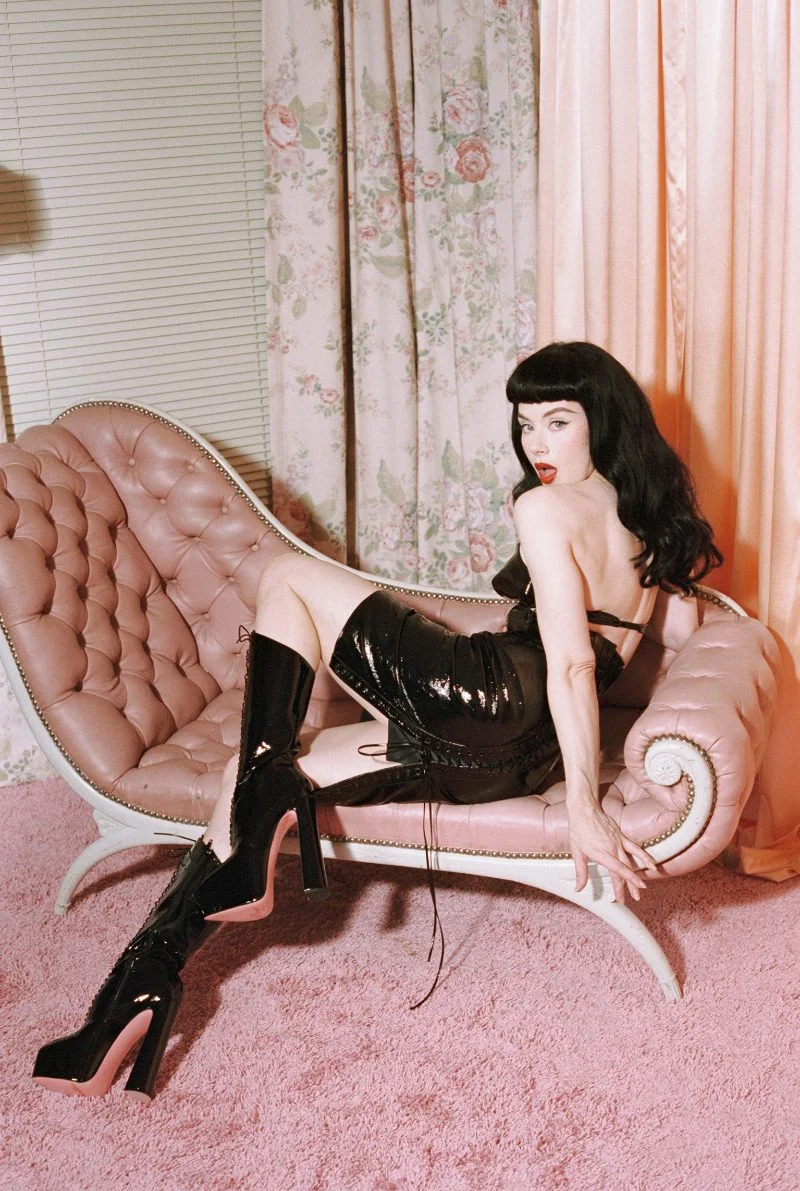
The Los Angeles-based footwear powerhouse Jeffrey Campbell has officially announced a landmark partnership with the estate of Bettie Page to debut a limited-edition capsule collection that bridges the gap between mid-century pin-up aesthetics and contemporary high-fashion construction. Scheduled for a global release on March 12, the collection comprises a curated selection of footwear and apparel that seeks to honor the "Queen of Pinups" not merely as a passive subject of the lens, but as a pioneering creative director of her own image. This collaboration represents a rare strategic move for Jeffrey Campbell, a brand that historically eschews frequent corporate partnerships in favor of independent, trend-setting designs. By securing exclusive access to the Bettie Page archives, the design team has developed a series of products that replicate the specific dimensions, materials, and nuances of the garments and shoes that defined Page’s career in the 1950s.
Historical Context and the DIY Legacy of Bettie Page
To understand the significance of this collaboration, one must look at the historical impact of Bettie Page on the fashion industry. Emerging in the 1950s, Page became a cultural icon whose influence transcended the pin-up genre. Unlike many of her contemporaries, Page was known for a distinct "do-it-yourself" (DIY) approach to her professional wardrobe. She famously styled herself, applied her own makeup, and cut her own bangs—a hairstyle that remains synonymous with her name seventy years later.
Crucially, Page was a designer in her own right. She conceived and sewed many of her own swimsuits and lingerie sets, recognizing that the commercially available garments of the era did not always align with the visual narrative she wished to project. Perhaps most significantly for this collaboration, she commissioned custom-made black leather heels featuring exaggerated heights and specific silhouettes that would eventually become her visual signature. These "fetish heels," as they were termed in the underground fashion circles of the time, provided the structural foundation for the poses that made her a household name.
The Jeffrey Campbell collection is built upon this foundation of self-sovereignty. By focusing on the fact that Page was the architect of her own aesthetic, the brand aligns its modern identity—one rooted in bold, individualistic expression—with Page’s historical precedent.
Archive Access and the Creative Process
The development of the capsule collection was characterized by an unprecedented level of cooperation between the brand and the Bettie Page estate. Mark Roesler, Page’s long-time agent and a prominent figure in the management of legendary celebrity estates, was the catalyst for the project. Roesler approached Jeffrey Campbell with the intent of finding a partner capable of translating Page’s vintage sensibilities into a modern retail context without losing the "edge" that defined her work.
According to estate representatives, the brand was granted exclusive access to private archives, including vintage photographs, personal correspondence, and, most importantly, original pieces of clothing and footwear owned by Page. Brigitte Campbell, the creative director of Jeffrey Campbell, described the process of handling these artifacts as a "surreal" experience that shifted the design team’s perspective from viewing Page as a myth to viewing her as a technician of fashion.
The design process involved meticulous "reverse-engineering." The team utilized Page’s actual physical measurements and referenced the specific pitch and curvature of her vintage heels to ensure the new collection remained authentic to her silhouette. This technical rigor allowed the brand to move beyond mere "retro-inspired" fashion and into the realm of historical recreation, albeit with modern materials and manufacturing standards.
Technical Specifications of the Footwear and Apparel
The footwear component of the collection is the primary focus, featuring a range of pumps, platforms, and "sky-high" heels. Several specific design choices distinguish these pieces from standard Jeffrey Campbell offerings:
- Anatomical Accuracy: The shoes are built using vintage references that mirror the exact height and arch tension found in Page’s personal footwear. This results in a dramatic verticality that reflects the pin-up poses of the 1950s.
- Signature Color Palette: While the primary aesthetic leans toward the classic black leathers associated with Page’s more daring shoots, the collection incorporates "pink soles." This design element is intended to symbolize what the brand calls "soft feminine power," providing a visual contrast to the aggressive silhouettes of the heels.
- Branding and Authenticity: Each shoe features a logo drawn directly from Bettie Page’s personal signature. Furthermore, to maintain the exclusivity of the release, every style is hand-numbered. Production runs are strictly limited, with only 30 to 60 pieces manufactured for each style.
The apparel side of the capsule expands the narrative into Page’s broader wardrobe. A standout piece is a lace-up leather dress, which draws direct inspiration from the "fetish-wear" shoots that, while controversial in the 1950s, are now recognized as foundational moments in the history of alternative fashion. Additionally, the collection includes a "bullet bra," a garment that defined the mid-century silhouette. The Jeffrey Campbell version stays true to the original cone-shaped construction, a shape that is inseparable from the iconography of the era.
Strategic Market Positioning and Exclusivity
The decision to limit production to such small quantities (30 to 60 pieces per style) reflects a shift in the luxury and "indie-luxury" markets toward extreme scarcity. In an era dominated by mass-produced fast fashion, Jeffrey Campbell is positioning this collaboration as a "collector’s event." By hand-numbering the items, the brand transforms footwear into a form of wearable art, appealing to both fashion enthusiasts and collectors of Bettie Page memorabilia.
The brand’s internal structure also plays a role in the collection’s ethos. As a predominantly women-led company with a staff of fewer than 20 people, Jeffrey Campbell operates with a level of agility and creative freedom that larger conglomerates often lack. Brigitte Campbell noted that the company’s size allows them to take risks on niche collaborations that might not appeal to a mass-market audience but resonate deeply with a dedicated subculture. This "loved by few than liked by many" philosophy echoes Page’s own career, which thrived in the niche markets of pin-up magazines and private collectors long before she was embraced by the mainstream.
Official Statements and Industry Reactions
The collaboration has garnered positive responses from both the estate and industry analysts. Mark Roesler emphasized that the collection is a fulfillment of Page’s own creative ambitions. "She took great pride in designing everything; it was part of the modeling and really important to her," Roesler stated in a press release. He further suggested that if Page were alive today, she would find the collection to be a faithful representation of her personal style.
Brigitte Campbell’s reflections on the project highlight the emotional and professional weight of the partnership. She noted that the "nuanced details" found in the physical archives—details often lost in grainy vintage photographs—were the most enlightening part of the process. For the design team, the goal was to honor the "real person" behind the pin-up myth, acknowledging the labor and intent behind the images that continue to circulate in the public consciousness.
Industry observers suggest that this collaboration could signal a broader trend of "heritage-fetish" fashion, where brands look beyond the surface-level aesthetics of the past to explore the technical and structural elements of vintage subcultures. By focusing on the "fetish" aspects of Page’s wardrobe, Jeffrey Campbell is tapping into a market segment that values the intersection of historical rebellion and modern craftsmanship.
Timeline of the Collaboration and Launch
The timeline for the Jeffrey Campbell x Bettie Page collaboration follows a strategic path from archival research to digital launch:
- Early Phase: Mark Roesler of the Bettie Page estate approaches Jeffrey Campbell to propose a partnership based on the brand’s reputation for bold footwear.
- Design Phase: The Jeffrey Campbell creative team spends months studying the archives, taking measurements of original footwear, and selecting materials that balance vintage looks with modern durability.
- Production Phase: Small-batch manufacturing begins, with each item being hand-numbered and quality-checked by the boutique L.A. team.
- Announcement Phase: In late February, the brand begins teasing the collection through social media and fashion press, emphasizing the March 12 release date.
- Launch: The collection is set to debut exclusively on Jeffreycampbellshoes.com on March 12, with no current plans for a wider retail distribution, further cementing the "drop" as a high-exclusivity event.
Broader Implications for Fashion and Female Empowerment
Beyond the commercial aspects, the Jeffrey Campbell x Bettie Page collection touches on themes of female agency in the fashion industry. The 1950s was a decade characterized by rigid gender roles and heavy censorship; yet, within that framework, Bettie Page managed to carve out a space where she held significant creative control.
By highlighting Page’s roles as a stylist, designer, and creative director, this collaboration reframes her legacy for a 21st-century audience. It suggests that her enduring popularity is not just a result of her physical appearance, but a result of her ability to curate a brand that felt authentic and self-empowered. As Brigitte Campbell noted, modern women-led companies owe a debt of gratitude to pioneers like Page who exercised "liberties and freedoms" in an era that sought to limit them.
As the March 12 launch approaches, the fashion world remains focused on how this blend of historical reverence and limited-edition retail will perform. If successful, it may pave the way for more "archival-first" collaborations that prioritize the technical history of fashion icons over mere celebrity endorsements. For now, the Jeffrey Campbell x Bettie Page capsule stands as a meticulously crafted tribute to a woman who was, in every sense, her own greatest creation.
