
 By Nila Kartika Wati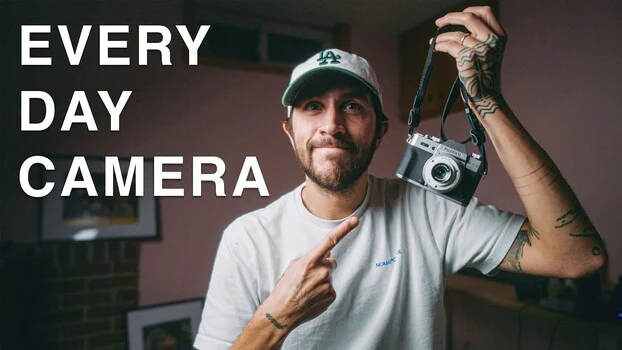
Photographers often grapple with a fundamental question: what constitutes the ideal everyday camera? Beyond the labyrinth of specifications and marketing hype, the answer, as illuminated by photographer and content creator Chris Tellez, hinges on a concise list of profoundly practical considerations: the device’s physical size, its weight, the emotional and financial cost should it be lost or stolen, and critically, the sheer enjoyment derived from editing its captured files. In an industry frequently dominated by technical roundups that dictate purchasing decisions, Tellez offers a refreshing, candid perspective, steering his audience not toward a specific model, but toward an introspective journey to define their own photographic needs and preferences for a daily shooter. His extensive video exploration, published on his popular YouTube channel, meticulously unpacks the strengths and weaknesses of various cameras he has personally integrated into his life over the past one to two years, ranging from accessible older mirrorless bodies to high-end full-frame Leicas and nostalgic film options.
The Evolution of the Everyday Camera and Tellez’s Philosophy
The landscape of personal photography has undergone a seismic shift over the past two decades. The early 2000s saw the dominance of bulky Digital Single-Lens Reflex (DSLR) cameras, offering superior image quality but often at the cost of portability. The subsequent rise of mirrorless technology brought lighter, more compact bodies with advanced features, while simultaneously, smartphones emerged as ubiquitous imaging devices, revolutionizing casual photography with their convenience and instant sharing capabilities. It is within this dynamic context that Chris Tellez initiates his discussion, positing the smartphone as the undeniable, most common "best bet" for everyday photography. This acknowledgement serves as a crucial baseline, framing his subsequent recommendations for dedicated cameras as alternatives for those seeking specific advantages beyond what a phone can offer.
Tellez’s methodology diverges sharply from conventional gear reviews. Instead of a technical comparison of sensor sizes, megapixel counts, or autofocus speeds in controlled environments, he emphasizes the lived experience of carrying and using a camera day-in and day-out. His focus on factors like "how much it hurts if it gets stolen" injects a rarely discussed but highly relevant psychological and financial dimension into the buying guide, particularly for cameras that represent significant investments. This approach resonates with a growing segment of photographers who prioritize usability, portability, and the sheer joy of the photographic process over benchmark statistics. His goal is to empower viewers to articulate their own priorities, recognizing that the "best" camera is profoundly subjective and deeply intertwined with individual lifestyle and creative workflow.
Spotlight on Value: The Fujifilm X-T10
Leading Tellez’s surprisingly favored recommendations for sheer value is the Fujifilm X-T10. Released in 2015, this APS-C mirrorless camera, equipped with a 16-megapixel X-Trans CMOS II sensor, quickly became a darling among enthusiasts for its retro-inspired aesthetics, intuitive controls, and most notably, Fujifilm’s renowned color science and film simulations. Tellez frequently pairs his X-T10 with a diminutive 7Artisans 28mm f/2.8 manual lens, highlighting its ultra-compact profile, though he admits his primary lens for the system is the highly regarded Fujifilm 35mm f/2, affectionately known as a "Fujicron" due to its compact size and fast autofocus.
The X-T10, despite its older sensor and less advanced autofocus system compared to contemporary models, holds its own in Tellez’s assessment. He makes a compelling argument that for everyday shooting, the occasional missed focus is rarely catastrophic, unlike in professional scenarios such as fast-paced sports or wedding photography. This leniency allows the camera’s strengths — particularly Fujifilm’s distinctive color rendering and a suite of film simulations that mimic classic film stocks like Velvia, Astia, and Classic Chrome — to shine through, minimizing the need for extensive post-processing. While acknowledging the X-T10’s older sensor means it doesn’t offer the latest Fujifilm "recipes" or sensor technology, he points out that newer bodies in the same compact form factor provide access to these advancements, should a user prioritize them. For its exceptional balance of price, size, and image quality in the used market, the X-T10 stands out as Tellez’s top recommendation for most people looking to enter the dedicated camera ecosystem without a substantial investment. Current market analysis shows that a well-maintained X-T10 body can be acquired for approximately $300-$500, making it an incredibly accessible entry point into the Fujifilm system.
Balancing Aspiration and Practicality: Nikon Zf and Leica Q
The video then transitions to discussing cameras that represent a different tier of investment and capability, often involving compromises between aspiration and practical everyday use. The Nikon Zf, a full-frame mirrorless camera launched in late 2023, holds a special place for Tellez, as it was instrumental in building the foundation of his YouTube channel. Its retro-inspired design, reminiscent of Nikon’s classic film cameras, combined with a modern 24.5-megapixel BSI CMOS sensor and advanced autofocus capabilities, positions it as a highly attractive option for enthusiasts seeking a blend of classic aesthetics and cutting-edge performance. Tellez expresses deep admiration for the full-frame files it produces, known for their exceptional dynamic range and low-light performance. However, he is remarkably candid about its primary drawback for everyday carry: its size. Once paired with most full-frame lenses, the Zf can become cumbersome, defeating the purpose of a compact daily shooter. His practical solution involves pairing it with a small, lightweight prime lens such as the Nikon 28mm f/2.8, which helps maintain a more manageable footprint without sacrificing the full-frame advantage. This exemplifies Tellez’s core tenet: the lens choice is often as critical as the body in shaping the everyday photographic experience.
Moving further up the premium spectrum, Tellez delves into the Leica Q. He notably acquired this full-frame, fixed-lens compact camera by trading in a Leica SL2, indicating a deliberate choice for a more specialized and portable experience. The Leica Q series (the original Type 116, Q2, and Q3 all feature fixed 28mm f/1.7 lenses, with varying megapixel counts from 24MP to 60MP) is celebrated for its unparalleled build quality, minimalist design, and the distinctive "Leica look" of its images. Tellez is unflinchingly honest about its imperfections: continuous autofocus performance is subpar, battery life is notoriously short, and the exorbitant price tag (a new Leica Q3 can exceed $6,000) instills a palpable anxiety, particularly when navigating less secure environments like "sketchy alleys in Poland." Despite these drawbacks, he highlights its strengths: single-point autofocus is reliable, its macro mode proves genuinely useful in professional contexts like weddings, and a practical tip involves using more affordable Lumix batteries as a cost-effective alternative to Leica-branded ones. The Leica Q caters to a niche market of discerning photographers who prioritize the unique user experience, optical quality, and brand prestige above all else, often accepting its limitations as part of its character.
The Unsung Hero: The 40mm Focal Length
A recurring motif throughout Tellez’s recommendations, and a point he strongly emphasizes, is the versatile 40mm focal length. He champions it as a "sweet spot" for everyday photography, a sentiment echoed by a growing number of photographers seeking a single, versatile lens for their walkaround kit. The 40mm occupies a unique position between the wider, more expansive field of view offered by a 35mm lens—often favored for documentary and reportage photography—and the tighter, more isolating perspective of a 50mm lens, traditionally associated with portraiture.
The practical advantages of a 40mm lens are manifold. It is wide enough to capture the context of a scene or the expanse of a room, yet simultaneously tight enough to isolate a subject without requiring the photographer to physically back up excessively. This balance makes it incredibly adaptable for a vast array of situations, from street photography and environmental portraits to travel and casual everyday moments. For individuals contemplating a one-lens kit, Tellez argues that experimenting with a 40mm prime before committing to other focal lengths can be an invaluable exercise, potentially saving them the expense and frustration of purchasing multiple lenses only to discover a preference for one. This focal length embodies Tellez’s broader point that the lens significantly shapes the everyday photographic experience, often as much as, if not more than, the camera body itself. This explains why he consistently pairs each camera on his list with a specific, compact prime lens, underscoring the symbiotic relationship between lens and body in achieving an optimal daily setup. The enduring popularity of compact 40mm lenses across various manufacturers, from the Canon EF 40mm f/2.8 STM "pancake" to more exotic manual focus options, underscores its perceived utility among a wide spectrum of photographers.
Embracing Legacy and Simplicity: Canon 60D and Konica Big Mini
Tellez’s exploration extends beyond the latest mirrorless offerings to embrace older, more robust, and often overlooked options. He presents the Canon 60D, a mid-range DSLR released in 2010, paired with the Canon 40mm f/2.8 pancake lens, as a genuine and compelling recommendation for those who still appreciate the tactile experience of a DSLR, complete with the satisfying "slap" of a mirror. Despite its age, the 60D offers substantial advantages for everyday use: it features a single SD card slot (simpler than dual-slot setups), boasts exceptionally long battery life thanks to its optical viewfinder, and carries a low replacement cost in the used market. These attributes make it Tellez’s preferred camera for situations where the risk of theft or damage is high, offering a reliable workhorse without the financial anxiety associated with premium gear. The 60D’s 18-megapixel APS-C sensor, while not cutting-edge, produces excellent images, and its durable construction and extensive lens ecosystem make it a highly practical choice for budget-conscious photographers. Used Canon 60D bodies can typically be found for $200-$400, offering immense value.
Venturing into the realm of analog photography, Tellez includes the Konica Big Mini, a series of compact 35mm point-and-shoot film cameras produced in the late 1980s and early 1990s, often featuring a fixed 35mm f/2.8 lens. While he admits these cameras have seen a significant price increase in the vintage market due to their cult status and the resurgence of film photography, he emphasizes their undeniable "fun factor." Their pocketable size, automatic operation, and the unique aesthetic of film capture contribute to a distinct photographic experience. The Konica Big Mini’s simple interface and reliable performance make it an accessible entry point for those curious about film photography without the complexities of manual controls. Its popularity is a microcosm of a broader trend where photographers are seeking slower, more deliberate, and aesthetically distinct photographic processes, often embracing the serendipity and imperfections inherent in film.
Beyond the Gear: The Importance of Post-Processing and Personal Preference
Tellez’s pragmatic approach extends beyond hardware into the realm of post-processing. He touches upon the editing profiles and presets he employs to achieve Fujifilm-style colors even when shooting with other camera systems. This highlights a crucial aspect of modern photography: while camera hardware provides the raw material, the final aesthetic often comes to fruition in the editing stage. This demonstrates that a photographer’s vision and workflow are not solely dictated by the camera brand but can be cultivated through consistent post-processing techniques. By sharing these insights, Tellez subtly reinforces his overarching message: the goal isn’t just to buy a camera, but to craft a complete photographic experience that aligns with one’s personal style and preferences. He also delves into which cameras he would least recommend and why, often due to their poor value proposition or significant compromises in practical use, further cementing his commitment to honest, experience-based advice.
Implications for Photographers and the Camera Market
Chris Tellez’s candid analysis carries significant implications for both photographers and the broader camera market. Firstly, his methodology challenges the industry’s traditional emphasis on constantly upgrading to the latest model with incremental technical improvements. By highlighting the enduring value and practical utility of older, more affordable cameras like the Fujifilm X-T10 and Canon 60D, he advocates for a more sustainable and economically sensible approach to gear acquisition. This perspective is particularly relevant in an era where technological advancements often outpace genuine user needs.
Secondly, Tellez’s focus on intangible factors like "fun to edit files" and "how much it hurts if it gets stolen" underscores a shifting consumer mindset. Photographers are increasingly prioritizing the holistic user experience, emotional connection to their tools, and peace of mind over purely quantifiable metrics. This pushes manufacturers to think beyond mere specifications and consider the human element in camera design and marketing. The success of retro-styled cameras like the Nikon Zf and Fujifilm’s X-series is a testament to this demand for cameras that offer both modern performance and an enjoyable, nostalgic user experience.
Finally, the rising influence of content creators like Tellez on platforms like YouTube cannot be overstated. Their ability to provide authentic, long-term user reviews, stripped of corporate marketing language, offers a valuable counter-narrative to traditional product reviews. This democratization of information empowers consumers to make more informed decisions based on real-world experiences rather than idealized marketing portrayals. In essence, Tellez’s guide isn’t just about cameras; it’s a manifesto for thoughtful consumption and a celebration of the personal journey in photography. As he concludes his video, revealing his actual choice for his upcoming trip to Poland, the true takeaway isn’t the specific camera, but the rigorous, self-aware process that leads to that choice – a process every photographer can, and perhaps should, undertake.
