
 By Nila Kartika Wati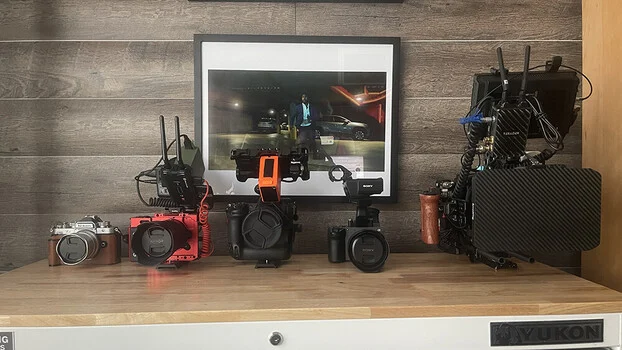
Professional filmmakers consistently navigate a complex ecosystem of specialized cameras, each designed for particular tasks, fueling an enduring desire for a singular, highly versatile "everyday camera." This pursuit represents a significant convergence point in camera technology, where the robust capabilities of dedicated cinema cameras meet the ergonomic efficiencies of modern mirrorless systems. The ideal apparatus would seamlessly transition between high-stakes commercial productions with full crews and nimble, solo-operated documentary or personal projects, embodying a perfect balance of advanced features, portability, and adaptability.
The Evolving Landscape of Camera Design and Filmmaker Needs
The history of camera development has largely been one of specialization. For decades, still photography and motion picture capture existed on parallel, distinct technological paths. Cinema cameras were large, film-based behemoths, while still cameras focused on capturing single moments. The digital revolution, particularly in the early 2000s, began to blur these lines. The introduction of DSLRs with video capabilities, like the Canon 5D Mark II in 2008, democratized filmmaking, allowing photographers to dabble in motion. This initial convergence, however, came with significant compromises in terms of video-specific features, audio quality, and ergonomic design for continuous video capture.
Over the past decade, the market has seen a rapid acceleration in hybrid camera development, alongside the emergence of more compact, yet feature-rich, digital cinema cameras. Manufacturers like RED, ARRI, Sony, Canon, and Nikon have pushed boundaries in sensor technology, internal recording capabilities, and processing power. Despite these advancements, a gap persists between the capabilities of a dedicated cinema camera (known for its robust I/O, advanced monitoring tools, and specialized video codecs) and a highly portable hybrid mirrorless camera (valued for its excellent stills, strong autofocus, and compact form factor). This segmentation, while serving diverse market needs, perpetuates the multi-camera dilemma for many professionals. The constant technological churn, with new models and features appearing annually, often leaves filmmakers investing in multiple systems to cover the breadth of their professional requirements, each with its own set of advantages and limitations.
Key Demands for a Truly Versatile Cinema Camera
The blueprint for this aspirational "dream camera" can be distilled into a series of critical features, each addressing specific pain points and workflow efficiencies for contemporary filmmakers.
1. Integrated Ergonomics and Monitoring:
A built-in Electronic Viewfinder (EVF) is paramount. While external EVFs offer flexibility, an integrated unit significantly reduces the camera’s profile, enhances stability for handheld shooting, and provides a clear, bright view crucial in diverse lighting conditions. Many cinema cameras omit this, expecting users to rig external solutions, which adds bulk and complexity. The optimal design would emulate cameras like the Nikon Z9, offering a comfortable, low-profile viewing experience. Complementing this, a versatile LCD screen capable of tilting straight back in line with the lens is highly preferred. While articulating screens offer front-facing views for vlogging, the ability to tilt back provides a more natural viewing angle for operators positioned behind the camera, reducing neck strain and improving focus confirmation. The ideal would be a hybrid design, similar to some Sony implementations, offering both tilt and articulation.
2. Core Cinematography Workflow Tools:
Built-in Neutral Density (ND) filters are a non-negotiable feature for efficiency. The ability to quickly adjust exposure via internal NDs, rather than fumbling with screw-on filters or a matte box, drastically speeds up production, especially in run-and-gun scenarios or dynamic lighting environments. This feature, common in many professional video cameras, simplifies rigging and lightens the overall kit. Essential exposure monitoring tools such as False Color and Waveforms are also critical. These visual aids allow for precise exposure control, ensuring optimal dynamic range capture and preventing highlight clipping or shadow crushing, which is vital for post-production flexibility. Integrating these tools directly into the camera’s monitoring system eliminates the need for external monitors for basic exposure checks. Furthermore, with the growing popularity of anamorphic lenses, in-camera anamorphic desqueeze options (e.g., 1.3x, 1.5x, 1.8x, 2x, and custom ratios) are essential for accurate framing and composition directly on set, without relying on external monitoring solutions.
3. Robust Audio Integration:
Professional video demands professional audio. A camera capable of recording at least four channels of audio, ideally with 32-bit float internal recording for maximum dynamic range and post-production flexibility, is highly sought after. Even 24-bit channels would represent a significant improvement over typical hybrid camera limitations. Crucially, these channels should be accessible via built-in XLR ports (mini-XLR acceptable for size constraints), complete with phantom power. This allows for direct connection of professional microphones, booms, and lavaliers, streamlining audio workflow and ensuring high-fidelity sound capture without external recorders, which is particularly vital for documentary work or single-operator setups where separate sound recording is impractical. Many current cinema cameras compromise on audio, often requiring external preamps or recorders.
4. Advanced Image Capture and Processing:
A 6K resolution sensor is increasingly seen as the sweet spot for modern productions. While 4K is standard for delivery, 6K provides ample resolution for reframing, digital stabilization, or creating 4K masters with superior detail, all without the excessive file sizes and processing demands associated with 8K. This balance optimizes post-production workflows. Internal Raw video recording, while not always necessary for every project, offers unparalleled flexibility in color grading and exposure recovery. Its inclusion in a dream camera ensures maximum image latitude when required, eliminating the need for external recorders for raw capture. A full-frame sensor is generally preferred for its wider field of view in cramped spaces, shallower depth of field capabilities, and improved low-light performance. While Super 35 remains a viable format, especially with speed boosters, a native full-frame sensor simplifies lens choices and offers a distinct aesthetic advantage. Finally, Open Gate recording, though not universally utilized, provides maximum sensor area for various aspect ratios, particularly beneficial for vertical video productions or specialized anamorphic workflows, offering greater flexibility in post-production for diverse deliverables.
5. Seamless Connectivity and Workflow:
Reliable autofocus capabilities have evolved significantly and are now considered essential, even for professional video. While manual focus remains the preferred method for controlled narrative filmmaking, robust autofocus systems (e.g., subject tracking, eye AF) are invaluable for dynamic situations, solo operators, or when a dedicated focus puller is not available. This mitigates human error and allows actors greater freedom of movement. A comprehensive remote control application, akin to RED’s Control app, is also vital. This allows for wireless monitoring and control via a smartphone or tablet, reducing the need for additional rigged monitors and enhancing agility on smaller sets. For integration into larger productions, dual video outputs (SDI and/or HDMI) capable of independent control are critical. This allows simultaneous feeding of signals to a wireless transmitter, external monitor, video village, or 1st AC, overcoming a common limitation of many mirrorless cameras that struggle to integrate as A-cams in multi-crew environments. Timecode synchronization, whether via a dedicated BNC port or a robust wireless Bluetooth solution like Nikon’s UltraSync BLUE integration, is non-negotiable for multi-camera shoots, ensuring effortless post-production syncing.
6. Physical Design and Power Management:
The physical size of this ideal camera is a delicate balance. It must be small enough for comfortable handheld use on casual outings, yet large enough to be easily rigged with professional accessories for larger productions. A form factor similar to the Canon C70 or slightly larger than a Nikon Z9, striking a middle ground between compact mirrorless cameras and bulkier cinema cameras, is often cited. This size allows for built-in features like NDs without becoming unwieldy. Ample 1/4"-20 mounting points directly on the camera body are crucial for attaching accessories (monitors, microphones, handles) without requiring a full camera cage, further streamlining setup and reducing bulk. Lastly, excellent battery life, capable of sustaining a full production day on two to three batteries, is fundamental for operational efficiency. An integrated V-mount plate with multiple power outputs for accessories would further consolidate power management, making the entire rig more compact and efficient.
Current Market Landscape and Engineering Hurdles
While almost every feature on this extensive wishlist exists in isolation across various camera models, their simultaneous integration into a single body remains an elusive goal. Manufacturers face significant engineering challenges, primarily related to heat dissipation, power consumption, and overall physical size. Packing a large sensor, multiple audio inputs, internal NDs, dual video outputs, and powerful processing into a compact form factor without overheating or becoming excessively heavy is complex. Each feature adds to the internal component count, increasing heat generation and power draw, which in turn necessitates larger batteries and more robust cooling systems, potentially compromising the desired compact design.
For instance, the Canon EOS C70 excels in audio and built-in NDs but lacks a built-in EVF and flexible LCD. The Nikon Z9 offers an excellent EVF, robust stills, and good hybrid video but is limited by a single audio input and HDMI-only output. RED’s Komodo provides raw video and advanced I/O but sacrifices audio quality and requires extensive rigging. The Nikon Z R, while compact and capable of raw, struggles with ergonomics when rigged and has limited audio inputs.
The Canon EOS C80 comes remarkably close to this ideal, featuring a 6K full-frame sensor, built-in NDs, four channels of audio via mini-XLR, BNC timecode, internal raw, and simultaneous SDI and HDMI outputs. Its weight is also comparable to a Z9. However, it notably lacks a built-in EVF and the ability to tilt the LCD straight back, falling short on critical ergonomic aspects. This highlights the intricate trade-offs manufacturers must make, often prioritizing specific market segments or technical capabilities over a truly universal solution. Industry analysts suggest that manufacturers strategically segment their product lines to maximize sales across different user bases (e.g., hybrid users, documentary filmmakers, large-scale production houses), rather than creating a single "do-it-all" camera that might cannibalize sales from other specialized models.
The Enduring Quest for Convergence
The continuous pursuit of the perfect, all-encompassing cinema camera underscores a fundamental shift in filmmaking practices. The rise of hybrid content creators, the demand for leaner production workflows, and the need for tools that scale effortlessly from solo projects to multi-crew environments all contribute to this aspiration. While a truly universal camera might forever remain a moving target due to evolving technology and diverse creative demands, the persistent articulation of such a wishlist pushes manufacturers to innovate towards greater integration and efficiency. The ongoing convergence of features, coupled with advancements in material science and thermal management, suggests that future camera designs will continue to bridge the gap between specialized tools, bringing filmmakers closer to the reality of a single, versatile camera that can truly do it all.
