
 By Nila Kartika Wati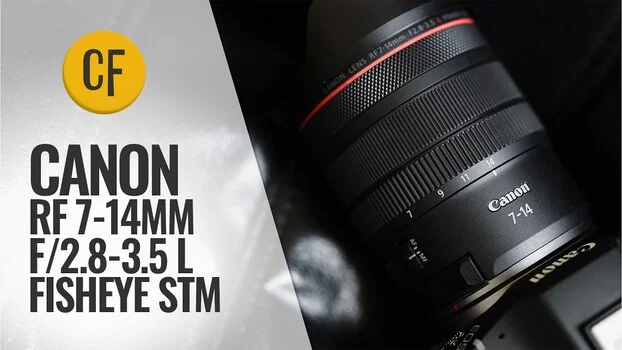
Canon has officially introduced a groundbreaking addition to its rapidly expanding RF mirrorless lens lineup: the RF 7-14mm f/2.8-3.5 L Fisheye STM. This highly specialized optic, capable of an extraordinary 190-degree field of view at its widest setting, represents a significant development for photographers and videographers seeking to push the boundaries of extreme wide-angle imaging. Priced at approximately $1,900, the lens firmly establishes itself in the professional and serious enthusiast segment, inviting a crucial consideration of its application frequency versus its substantial investment. Its arrival underscores Canon’s commitment to building a comprehensive and innovative ecosystem for its full-frame mirrorless R-series cameras.
The lens’s unveiling has been met with considerable interest, particularly after comprehensive testing by renowned photography expert Christopher Frost. Frost’s detailed walkthrough, conducted on a Canon EOS R5 and an EOS R6 Mark III, meticulously dissected the lens’s performance across various parameters, confirming its "L" series pedigree in optical quality and build. The core appeal of the RF 7-14mm lies in its unique ability to transition between two distinct fisheye perspectives: a dramatic circular fisheye at 7mm, encompassing an astounding 190 degrees, and a full-frame diagonal fisheye at 14mm, which fills the entire sensor with a less extreme but still highly distorted view. This versatility, combined with a relatively bright maximum aperture, opens new avenues for creative expression in specialized photographic genres.
A Deep Dive into Optical Design and Performance
The engineering behind a lens capable of a 190-degree field of view is inherently complex. Traditional rectilinear lenses strive to keep straight lines straight, a principle that becomes increasingly challenging at wider angles. Fisheye lenses, by design, embrace and utilize barrel distortion to achieve their expansive views. The Canon RF 7-14mm f/2.8-3.5 L Fisheye STM manages this intricate balance with impressive optical integrity. At its widest 7mm focal length on a full-frame sensor, it projects a distinct circular image onto the sensor, a characteristic of classic circular fisheyes. This 190-degree view means the lens effectively "sees" slightly behind the photographer, offering an immersive, almost panoramic sphere of vision compressed into a circular frame. Zooming to 14mm transforms this into a full-frame diagonal fisheye, where the image fills the sensor from corner to corner, presenting a more conventional yet still highly distorted wide-angle perspective.
The variable maximum aperture, ranging from f/2.8 at 7mm to f/3.5 at 14mm, is a critical specification. The f/2.8 aperture at the widest setting is particularly advantageous for low-light scenarios, including astrophotography. The ability to gather significant light, even with such a wide field of view, allows for shorter exposure times when capturing star trails or the Milky Way, minimizing star movement and noise. For interior photography or event coverage in dimly lit venues, this aperture helps maintain lower ISO settings, preserving image quality. Furthermore, the lens boasts an impressively short minimum focus distance of just 15 cm (approximately 5.9 inches). This feature fundamentally transforms the creative potential of the fisheye, allowing photographers to position subjects extremely close to the front element, exaggerating their size and distortion against a sweeping, distorted background. This creates a compelling sense of immersion and unique visual narratives that are difficult to achieve with other lens types.
Christopher Frost’s testing highlighted the lens’s commendable image quality across the frame. At 7mm and f/2.8, the center exhibited exceptional sharpness and contrast, a hallmark of L-series optics. Importantly, corner performance, often a weak point for extreme wide-angle and fisheye designs, was reported as excellent from the outset, improving further when stopped down to f/4. Diffraction, the optical phenomenon that causes a slight softening of detail at very small apertures, began to manifest around f/11, a typical behavior for most lenses. At 14mm and f/3.5, the lens maintained its high standards, with central sharpness already at its peak and impressive corner-to-corner clarity sustained down to f/8.
Aberration control is another area where the RF 7-14mm f/2.8-3.5 L Fisheye STM excels. Flaring, which can be a significant issue for lenses with bulbous front elements and wide fields of view, was minimal in Frost’s observations. Coma, an aberration that causes point light sources (like stars) to appear as comet-like smears, was nearly absent at 7mm, reinforcing the lens’s suitability for astrophotography. The lens also demonstrated the ability to produce strong, well-defined sun stars when stopped down to f/16 and f/22, adding another aesthetic tool for landscape and architectural photographers. A practical note from Frost for videographers was the recommendation to disable in-body image stabilization (IBIS) when using this lens, as it could introduce an undesirable wobble effect into video footage, particularly when combined with the extreme wide-angle perspective.
Build Quality, Ergonomics, and Advanced Features
True to Canon’s "L" series designation, the RF 7-14mm f/2.8-3.5 L Fisheye STM showcases robust build quality designed to withstand demanding professional use. While the lens body is constructed from high-grade plastic, it possesses a solid, premium feel, a common characteristic of modern L-series lenses where advanced composites are utilized for durability and weight reduction. The lens mounts securely to the camera via a metal mount, ensuring a reliable connection. Crucially, it features extensive weather-sealing, including a rear gasket, making it resilient against dust and moisture – an essential attribute for outdoor and adventure photographers who might deploy this lens in challenging environments. Despite its sophisticated optics and durable construction, the lens remains remarkably lightweight at 476 grams, contributing to a balanced camera setup, especially when paired with Canon’s compact mirrorless bodies.
Ergonomically, the lens incorporates several thoughtful features that enhance usability. A notable bonus is the rear drop-in filter slot. Fisheye lenses, with their highly convex front elements, typically cannot accommodate traditional screw-in filters. The drop-in filter system, located at the rear of the lens, allows photographers to easily use neutral density (ND) or gel filters for exposure control, creative effects, or to manage reflections. This is a significant advantage, particularly for long-exposure photography or video work where precise light management is paramount. The lens also includes a dedicated auto/manual focus switch, a customizable focus limiter button for enhanced control over autofocus range, and a smooth, rubberized zoom ring.
A particularly innovative feature is the zoom ring’s integrated limiter. This allows users to either lock the lens exclusively to the 7mm circular fisheye position or restrict the zoom range to 9-14mm. The latter setting is especially useful for APS-C (crop sensor) shooters who desire only full-coverage diagonal fisheye images, as 7mm on an APS-C sensor would result in an even more extreme crop of the circular image. The autofocus system, powered by an STM (Stepping Motor) motor, proved to be fast, silent, and accurate in Frost’s tests. STM motors are renowned for their smooth and quiet operation, making them ideal for video recording where distracting autofocus noise can be problematic. This ensures precise focus acquisition without compromising audio quality.
Historical Context and Canon’s RF Strategy
Fisheye lenses have a storied history, initially finding applications in scientific fields such as meteorology, astronomy, and surveillance due to their ability to capture an entire hemisphere of vision. Over time, their unique perspective transitioned into the realm of artistic and creative photography, evolving from what was once considered a novelty into a legitimate tool for distinctive visual storytelling. Early fisheye designs were often complex and expensive, and their widespread adoption by mainstream photographers was limited. However, as optical manufacturing advanced and digital post-processing capabilities improved (allowing for de-fisheye correction, for example), their creative potential became more accessible.
The introduction of the RF 7-14mm f/2.8-3.5 L Fisheye STM aligns perfectly with Canon’s aggressive strategy for its RF mount ecosystem. Since the launch of the EOS R system in 2018, Canon has rapidly expanded its native RF lens lineup, prioritizing high-performance, technologically advanced optics that fully leverage the shorter flange distance and wider mount diameter of the mirrorless system. This allows for new optical designs that are often smaller, lighter, and optically superior to their DSLR counterparts. The "L" series, or "Luxury" series, represents Canon’s top-tier professional lenses, characterized by superior optics, robust construction, and advanced features. The inclusion of a specialized fisheye lens in this elite category signals Canon’s intent to offer a comprehensive suite of tools for every photographic discipline, from mainstream portraiture and landscape to niche creative applications. This lens, therefore, is not merely an isolated product but a strategic piece within Canon’s broader vision for solidifying its leadership in the mirrorless market. The pairing with flagship bodies like the EOS R5 (known for its high-resolution sensor and advanced video capabilities) and the EOS R6 Mark III (offering high-speed performance and robust video features) demonstrates the professional-grade intent behind this specialized optic.
Creative Applications and Broader Implications
The RF 7-14mm f/2.8-3.5 L Fisheye STM transcends the "novelty" label often associated with fisheye lenses, repositioning itself as a powerful instrument for creative expression. Its combination of an ultra-wide field of view and an extremely close minimum focus distance of 15 cm unlocks a plethora of unique photographic and videographic opportunities. Imagine capturing the dynamic energy of a skateboarder with the lens mere inches from the board, distorting the subject dramatically against a sweeping, immersive background that includes the entire skatepark. This exaggerated perspective draws the viewer directly into the action.
In architectural and real estate photography, the ability to "swallow" an entire room or capture a vast interior space in a single frame is invaluable. This reduces the need for multiple stitched panoramas and provides a unique, encompassing view that can be particularly engaging for virtual tours or immersive content. For music photographers working in tight venues, the lens allows for capturing the full stage, band members, and even parts of the audience in a single, dynamic shot, creating an intimate yet expansive feel.
Beyond traditional photography, the lens holds significant implications for emerging media formats. Its ultra-wide field of view makes it highly suitable for virtual reality (VR) and 360-degree content creation, where capturing immersive environments is key. For videographers, particularly those creating content for social media or platforms optimized for vertical viewing, the lens’s capabilities are enhanced by the "open gate" video option available on higher-end Canon bodies. Open gate recording utilizes the full sensor area, preserving the entire image circle instead of cropping to standard aspect ratios like 16:9. This provides maximum flexibility in post-production, allowing creators to reframe, stabilize, or extract vertical content without sacrificing resolution or composition. The full circular image offers unparalleled freedom for creative cropping and aspect ratio adjustments.
The lens, therefore, rewards deliberate composition rather than casual snapshots. Its unique perspective demands a thoughtful approach to framing and subject placement to leverage its distortion for artistic effect. The integration of the rear drop-in filter system further empowers creators, allowing them to manage exposure and reflections even on an optic whose bulbous front element precludes the use of standard screw-in filters. This level of control is crucial for achieving professional-grade results in challenging lighting conditions or for specific aesthetic goals.
Competitive Landscape and Value Proposition
In the niche market of fisheye lenses for Canon RF mount, the primary comparison worth weighing is the Laowa 8-15mm f/2.8. The Laowa lens, also available for Canon RF, offers a similarly versatile zoom range and a constant f/2.8 aperture, often at a significantly lower price point. However, Canon’s RF 7-14mm f/2.8-3.5 L Fisheye STM distinguishes itself with several key advantages that justify its premium cost for specific users.
Firstly, the Canon lens offers robust autofocus capabilities powered by its STM motor, a stark contrast to the manual-focus-only nature of the Laowa. For dynamic subjects, action photography, or video work, autofocus is an undeniable advantage. Secondly, the Canon features integrated rear drop-in filter support, a critical feature for professional workflows involving light control. The Laowa typically requires external filter holders or gel filters taped to the rear element, which is less convenient. Thirdly, the Canon lens boasts a smaller and lighter body, enhancing portability and balance. Optically, Christopher Frost’s analysis suggests the Canon offers higher overall sharpness, particularly in the corners, and superior control over flaring. Furthermore, the Canon lens benefits from Canon’s advanced weather-sealing, providing greater durability and reliability in adverse conditions. Finally, the Canon lens offers a slightly wider angle at 7mm and a closer minimum focus distance of 15 cm, extending its creative range even further.
Frost himself identified the price as the only significant "downside" to the Canon RF 7-14mm f/2.8-3.5 L Fisheye STM. His recommendation, therefore, comes with a pragmatic condition: this is a lens for those who will genuinely utilize its unique capabilities frequently enough to justify the investment. For professional photographers specializing in real estate, action sports, concert photography, or immersive content creation, or for serious enthusiasts committed to exploring extreme wide-angle creativity, the Canon lens offers an unparalleled combination of optical performance, build quality, and advanced features. For others, the more budget-friendly manual focus alternatives might suffice.
In conclusion, the Canon RF 7-14mm f/2.8-3.5 L Fisheye STM is more than just a new lens; it is a statement about Canon’s vision for the future of professional imaging. It represents a sophisticated tool designed for creative pioneers, pushing the boundaries of perspective and immersion in both still photography and video. Its combination of extreme wide-angle views, impressive optical quality, robust construction, and user-friendly features positions it as a significant, albeit specialized, addition to the Canon RF ecosystem, promising to unlock new dimensions of visual storytelling for those willing to embrace its unique capabilities.
