
 By Nila Kartika Wati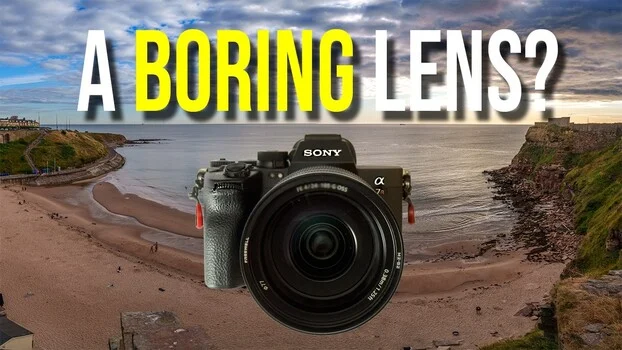
For two years, a workhorse lens has quietly delivered exceptional results for many photographers, yet its story remained largely untold—until now. The Sony FE 24-105mm f/4 G OSS, often overshadowed by its faster, more prestigious G Master siblings, rarely commands the spotlight in enthusiast discussions. This silence, however, speaks volumes not about the lens’s capabilities, but about a prevailing culture within the photographic community that often prioritizes specifications and branding over practical, real-world utility. This narrative is now being challenged, most notably by photographer Jason Row, who, after extensive use, passionately champions the lens’s enduring relevance, particularly when paired with high-resolution bodies like the Sony a7R V.
The Unsung Workhorse: A Deeper Look at the Sony FE 24-105mm f/4 G OSS
Introduced in October 2017, the Sony FE 24-105mm f/4 G OSS was designed as a versatile, all-in-one zoom for Sony’s full-frame E-mount system. Positioned within Sony’s "G" series, it offers a step up in optical quality and build from basic kit lenses, without reaching the pinnacle (and price point) of the "G Master" line. Its constant f/4 aperture across the entire 24-105mm zoom range makes it a highly flexible tool for a wide variety of photographic genres, from landscapes and portraits to street photography and travel.
Key specifications of the lens underscore its practical design philosophy. It comprises 18 elements in 17 groups, including four aspherical elements and three extra-low dispersion (ED) glass elements to combat aberrations and ensure sharpness. The inclusion of Optical SteadyShot (OSS) image stabilization provides up to approximately 4.5 stops of shake reduction, a crucial feature for handheld shooting in less than ideal lighting conditions. Weighing around 663 grams (23.4 oz), it strikes a commendable balance between optical performance and portability, a factor that Row emphasizes in his assessment. Its modest 77mm filter thread is also a common size, simplifying accessory management for many photographers.
Upon its release, the 24-105mm f/4 filled a crucial gap in Sony’s nascent full-frame mirrorless lens lineup, offering a single lens solution that covered many popular focal lengths. While not as "fast" as its f/2.8 counterparts, its constant f/4 aperture provided consistent exposure and depth-of-field control across the zoom range, a significant advantage over variable aperture zooms. Its market position was clear: a premium, yet accessible, general-purpose lens for advanced amateurs and professionals seeking a lightweight, versatile option. However, the subsequent proliferation of G Master lenses, with their larger apertures and often superior optical benchmarks, gradually relegated the f/4 zooms to a seemingly lesser status in the collective consciousness of the gear-focused community.
Jason Row’s Field Test: Practicality Over Perception
Jason Row, a photographer known for his insightful YouTube content under the handle @rowtography, recently took to the scenic estuary town of Tynemouth, at the mouth of the River Tyne, to articulate his comprehensive defense of the Sony 24-105mm f/4. Paired with his high-resolution Sony a7R V camera, Row systematically dismantles the common objections leveled against this lens, grounding his argument in the realities of his shooting style.
The primary criticisms Row acknowledges are familiar refrains in camera forums: "It’s old technology," "It’s not a G Master lens," and "It doesn’t open to f/2.8." He readily concedes these points as factual statements regarding the lens’s specifications and market positioning. However, his subsequent explanation highlights a crucial divergence between theoretical performance metrics and practical application. For Row, these perceived shortcomings simply do not translate into limitations for the way he captures images.
His counter-argument begins with the practical considerations of weight and portability. Hauling the heavier "holy trinity" of f/2.8 zoom lenses—typically comprising a 16-35mm f/2.8, a 24-70mm f/2.8, and a 70-200mm f/2.8—across challenging terrain, such as a headland at sunrise, is a physically demanding endeavor. The combined weight and bulk of these lenses can quickly lead to photographer fatigue, potentially impacting creativity and the willingness to explore. The 24-105mm f/4, by contrast, offers a substantial focal range in a single, relatively lightweight package, making it an ideal companion for long walking days, travel, and general-purpose photography where every gram counts. This practical advantage often translates directly into more images captured, simply because the photographer is more inclined to keep the camera ready and the lens mounted.
The Depth-of-Field Fallacy and Modern Solutions
One of the most compelling sections of Row’s analysis addresses the perceived disadvantage of an f/4 aperture compared to f/2.8, particularly concerning depth of field (DoF) and background separation. He astutely points out that aperture is only one variable in the complex equation of DoF, which is equally influenced by focal length, subject distance, and sensor size.
By demonstrating the lens’s capabilities at its longer end, 105mm, Row illustrates how strategic positioning can effectively "close the gap" on faster lenses. By zooming to 105mm and increasing the distance between himself and his subject, while maintaining the same framing, he achieves significant background compression. This compression, combined with the wider field of view at 105mm compared to 70mm, creates a pleasing subject isolation that rivals, and sometimes even surpasses, what might be achieved with a 24-70mm f/2.8 at its maximum aperture, depending on the specific shooting scenario. He vividly demonstrates this effect with a flower, showing the distinct difference in background blur between 70mm and 105mm, both shot wide open at f/4. This practical insight underscores that photographers can often achieve desired aesthetic outcomes by understanding the interplay of photographic principles, rather than solely relying on the widest available aperture.
Furthermore, Row tackles the low-light performance debate by leveraging advancements in digital imaging technology. He argues that the single stop difference between f/4 and f/2.8, which would typically necessitate doubling the ISO sensitivity in low light, is now easily managed with modern noise reduction tools. Software like DxO PhotoLab and Adobe Lightroom, equipped with sophisticated AI-driven denoising algorithms, can effectively clean up image noise with minimal loss of detail. This capability dramatically reduces the pressure to shoot at ultra-low ISOs, making f/4 lenses far more viable in challenging lighting conditions than they once were. The a7R V’s robust high-ISO performance further enhances this, providing a clean baseline for post-processing.
The Quiet Revolution in Camera Technology
Row’s video serves as a practical illustration of a broader, yet often underappreciated, shift within the photography industry: the increasing ability of camera bodies to absorb tasks that traditionally demanded expensive, specialized glass. This technological evolution has significantly elevated the performance floor for mid-tier lenses like the 24-105mm f/4.
-
High-Resolution Sensors: The Sony a7R V, with its formidable 61-megapixel full-frame sensor, exemplifies this trend. Such high pixel density allows for considerable cropping flexibility in post-production without sacrificing overall image quality, effectively extending the reach of a lens or allowing for reframing. This means a photographer can capture a wider scene with the 24-105mm and then crop into a specific detail, achieving a result comparable to what might have once required a longer, heavier telephoto lens. The sheer detail captured by these sensors also contributes to the perception of sharpness, even from lenses that might not be at the absolute top tier optically.
-
In-Body Image Stabilization (IBIS): Modern camera bodies feature highly effective IBIS systems. The a7R V’s 5-axis stabilization offers up to 8 stops of compensation, a groundbreaking advancement. This means photographers can handhold their cameras at significantly slower shutter speeds than previously possible, compensating for the "slower" f/4 aperture in low light. For instance, a shot that might have required a 1/60th of a second shutter speed with a non-stabilized lens could now be captured cleanly at 1/8th of a second or even slower, effectively negating much of the low-light disadvantage of an f/4 lens compared to an f/2.8 lens without stabilization.
-
AI-Driven Denoising: As mentioned, the advancements in software-based noise reduction are revolutionary. Tools like DxO DeepPRIME XD and Lightroom’s AI Denoise leverage machine learning to intelligently differentiate between image noise and actual detail, allowing for unprecedented levels of noise suppression while preserving fine textures. This means that an image shot at ISO 6400 with an f/4 lens can often be cleaned up to a quality level previously associated with ISO 1600 or 3200, effectively giving photographers "extra stops" of light without needing a physically faster lens.
These combined technological leaps within the camera body mean that a lens like the 24-105mm f/4 can now comfortably handle situations that once unequivocally demanded a fast prime or a "holy trinity" zoom. This changes the value proposition entirely, prompting photographers to question whether the premium for a G Master lens is truly necessary for their output, or if it’s partly driven by the allure of the "badge on the barrel."
The Evolving Ecosystem: Lens Choices in a Maturing Market
The concept of the "holy trinity" of f/2.8 zooms originated in the DSLR era, when camera bodies offered less robust high-ISO performance and often lacked in-body stabilization. In that context, fast apertures were critical for low-light shooting and achieving shallow depth of field. As mirrorless systems have matured and camera technology has advanced, this paradigm has begun to shift.
The market has responded with a greater diversity of high-quality lenses. Alongside Sony’s own offerings, third-party manufacturers like Sigma and Tamron have introduced compelling alternatives, often at more accessible price points. For example, Tamron’s compact and fast f/2.8 zooms (like the 20-40mm f/2.8 mentioned by Row) offer a different balance of speed and portability. Sigma’s "Contemporary" line, which includes lenses like the 100-400mm, provides excellent performance at a fraction of the cost of first-party professional telephotos.
This expanded ecosystem empowers photographers to build kits tailored to their specific needs and budgets, rather than feeling pressured to conform to an expensive, established standard. The value proposition is no longer solely about achieving the absolute best optical performance in laboratory tests, but about finding the optimal balance of performance, weight, cost, and versatility that facilitates actual image creation in the field.
Beyond Stills: The 24-105mm as a Video Powerhouse
Jason Row also delves into the Sony 24-105mm f/4’s utility as a video tool, revealing several clever operational details that enhance its versatility for filmmakers and content creators. One particularly insightful technique he employs is mapping the C3 button on his a7R V to activate APS-C crop mode. In video, this transforms the full-frame 24-105mm into an approximate 24-160mm f/4 equivalent (with a 1.5x crop factor). This extended reach is genuinely useful, allowing for tighter framing, cinematic background compression, and seamless transitions within a single lens. It effectively provides the functionality of a second, longer zoom lens without requiring a lens change, which is invaluable in run-and-gun video scenarios.
He also touches upon the lens’s single stabilization mode, contrasting it with the dual modes often found on dedicated telephoto lenses like his Sigma 100-400mm. While a single mode is generally effective for general shooting, specialized modes (e.g., for panning) can offer advantages in specific video situations. Row also notes that while the 24-105mm is excellent for general video, its weight makes it a "touch heavy" for extended gimbal work compared to lighter, more compact options like the Tamron 20-40mm f/2.8, which he specifically acquired for such tasks. This highlights the nuanced decision-making process involved in assembling a multi-purpose kit.
For low-light video, where an f/4 aperture might still be limiting, Row pairs the 24-105mm with a fast prime, the Sony 85mm f/1.8. This combination demonstrates a pragmatic approach to kit building: using a versatile zoom for most situations and supplementing it with a specialist prime for specific, demanding tasks like extreme low light or achieving ultra-shallow depth of field. This strategy allows photographers to achieve professional results without investing in a complete suite of expensive G Master lenses. He further showcases his pragmatic approach by demonstrating a five-image HDR bracket and discussing the possibility of an HDR panoramic, leveraging the camera’s capabilities to expand dynamic range.
Budget, Badge, and Beyond: Reconsidering "Professional" Gear
The closing thoughts from Jason Row resonate deeply with a sentiment many photographers quietly share but seldom articulate publicly. In a market saturated with specialist lenses, often adorned with premium branding like "G Master" or "L series," these lenses have increasingly become a badge of honor, signaling a photographer’s commitment to the craft and their investment in top-tier equipment. Row, however, candidly questions whether the majority of photographers genuinely need these ultra-premium lenses.
His purchasing decisions are rooted in practical financial realities. He explicitly states that he opted for the Sigma 100-400mm over Sony’s telephoto equivalent because it was more affordable. This blunt admission about tight budgets for many shooters is a refreshing counterpoint to the often aspirational and high-spending discussions prevalent in photographic circles. It underscores that for many, financial constraints are a primary driver of gear choices, and smart, cost-effective alternatives can deliver equivalent real-world results.
Row’s perspective on sharpness further reinforces this pragmatic view. He contends that if a print looks sharp from edge to center at a decent viewing size, then the act of "pixel peeping" at 100% magnification on a computer screen becomes largely irrelevant. This challenges the obsession with microscopic sharpness tests that often dominate online reviews, advocating instead for a focus on the final output and its intended viewing context. The true measure of a lens, in this view, is its ability to produce compelling images that meet the photographer’s needs, not its score on an arbitrary sharpness chart. For travel, casual shooting, and demanding long walks, the lighter, more versatile kit often triumphs, precisely because it’s the gear that remains on the camera when the light turns perfect, and the moment presents itself.
Implications for Photographers and the Industry
Jason Row’s advocacy for the Sony 24-105mm f/4 G OSS is more than just a lens review; it’s a commentary on the evolving landscape of digital photography and the changing definition of "professional" gear.
-
Democratization of Quality: The advancements in camera bodies have democratized access to high-quality imaging. What once required a substantial investment in the fastest, most expensive glass can now be achieved with more moderately priced lenses, thanks to features like advanced IBIS, high-resolution sensors, and sophisticated computational photography tools. This allows more photographers to produce excellent work without breaking the bank.
-
Shift in Priorities: For a growing segment of photographers, priorities are shifting from absolute optical perfection (often measurable only in laboratory conditions) to practical utility, portability, and value. The ability to carry a lighter bag, cover a broad focal range with a single lens, and mitigate technical limitations through in-camera and post-processing solutions is becoming increasingly important for those who shoot in diverse, real-world environments.
-
Manufacturer Response: This trend might prompt manufacturers to reconsider their product segmentation. While G Master lines will always cater to the absolute top tier, there may be an increasing emphasis on developing high-quality, versatile f/4 zooms or compact, feature-rich primes that offer an optimal balance of performance and practicality. The success of third-party manufacturers in this space demonstrates a clear market demand.
-
Future Trends: The trajectory suggests continued integration of AI into camera systems, further enhancing capabilities like denoising, autofocus, and computational photography. This will likely reduce the reliance on purely optical solutions for certain challenges, empowering even more affordable lenses to deliver impressive results.
In conclusion, Jason Row’s detailed walkthrough of Tynemouth, showcasing the Sony FE 24-105mm f/4 G OSS, provides a compelling argument for reassessing our perceptions of photographic equipment. It underscores that while technical specifications and brand prestige hold a certain allure, the true measure of a tool lies in its practical application and its ability to facilitate the creation of meaningful images. The 24-105mm f/4, far from being an outdated relic, stands as a testament to the enduring value of well-engineered versatility, proving that in the hands of a skilled and pragmatic photographer, it remains a formidable and relevant instrument in the modern photographic arsenal.
