
 By admin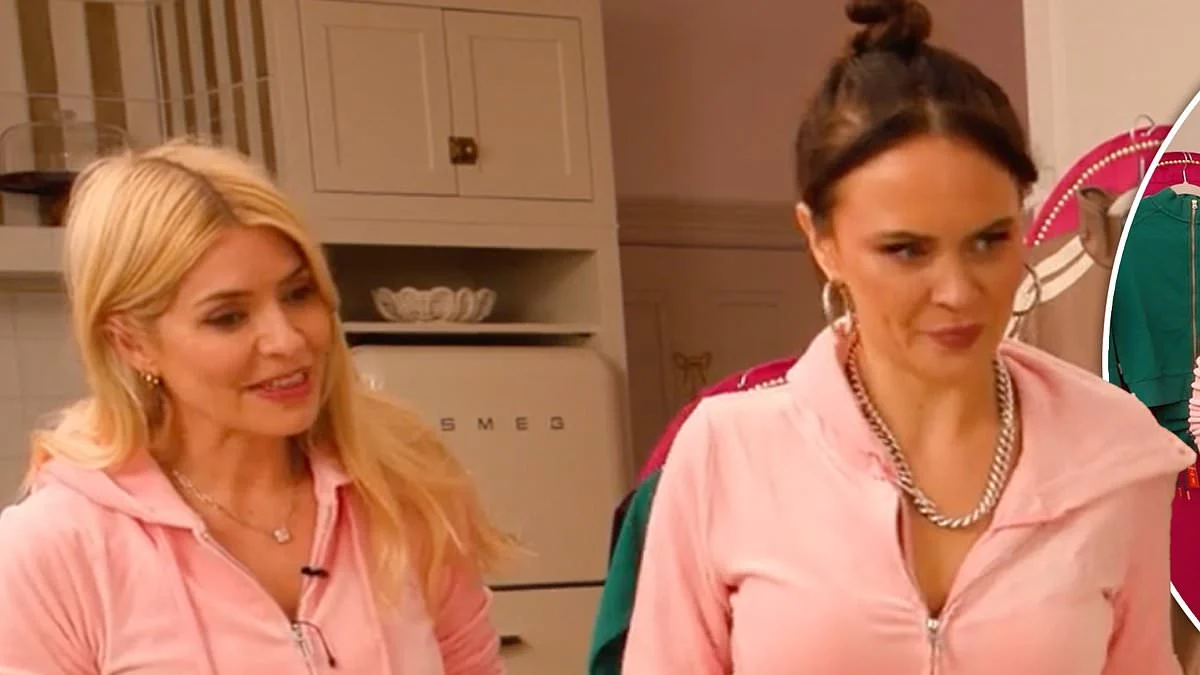
Holly Willoughby, the veteran British television presenter, has utilized the latest installment of her new YouTube series, Together, to address the long-standing impact of 1990s beauty standards on her self-perception. In a candid conversation with Irish comedian Joanne McNally, the 45-year-old broadcaster explored the psychological legacy of the "waif era," a period in fashion history dominated by ultra-thin models, most notably Kate Moss. This revelation marks a significant moment in Willoughby’s gradual return to the public eye, as she pivots from traditional terrestrial television to a self-produced digital format that allows for more intimate, long-form discourse.
The discussion took place during the latest episode of Together, released on Friday, as Willoughby and McNally, 43, engaged in a lighthearted yet poignant session of trying on various tracksuits. The conversation shifted toward body shapes when Willoughby reflected on the aesthetic pressures of her youth. "We grew up in a time of Kate Moss waif, so that was not my friend growing up," Willoughby remarked, referring to the fashion industry’s preference for extreme slenderness during the late 20th century. McNally echoed these sentiments, noting that during their formative years, possessing curves was often framed as a "horrifying thing."
The Historical Context of the Waif Aesthetic and Heroin Chic
To understand the weight of Willoughby’s comments, one must look back at the fashion landscape of the early to mid-1990s. This era saw a departure from the "supermodel" look of the 1980s—characterized by the athletic, statuesque figures of Cindy Crawford and Naomi Campbell—toward a more gaunt, angular, and fragile appearance. This trend, frequently labeled "heroin chic," was personified by Kate Moss.
Moss became a lightning rod for controversy throughout her career, particularly following a 2009 interview with Women’s Wear Daily (WWD), where she famously stated, "Nothing tastes as good as skinny feels." The comment was widely condemned by health experts and eating disorder charities, who argued that such rhetoric glamorized self-starvation and contributed to body dysmorphia among young women. By referencing this era, Willoughby highlights a generational struggle where biological reality—such as having a "curvy bottom," as she described it—conflicted with the prevailing cultural ideal of the time.
The dialogue between Willoughby and McNally also touched upon the modern inversion of these standards. McNally noted that the current "ideal" body type, often associated with the Kardashian family and the rise of cosmetic procedures like the Brazilian Butt Lift (BBL), is the polar opposite of the 1990s waif. "That’s what the Kardashians are using all those waist trainers to have and putting in all those BBLs," McNally observed, highlighting how fashion cycles frequently move from one extreme to another, often leaving women feeling inadequate regardless of the era.
Willoughby’s Long-Standing Privacy Regarding Weight and Diet
The decision to speak openly about body insecurity is a departure for Willoughby, who has historically maintained a strict policy of not discussing her diet or exercise routines in detail. This stance became a point of public interest in 2017 when she debuted a noticeably slimmer physique. Despite intense tabloid speculation, Willoughby refused to provide specific details about her weight loss journey.
In a 2018 interview with Prima magazine, she explained the ethical reasoning behind her silence. "I don’t want to encourage eating disorders. I try not to focus too much on my appearance," she stated. "As long as I’m being healthy, that’s good enough for me. I’m quite active and I try not to let the way I look be the main focus because it’s not the important thing."
By framing her current reflections through the lens of historical fashion trends rather than personal dieting habits, Willoughby maintains her commitment to healthy discourse while acknowledging the external pressures that shaped her self-image. Her admission that she prefers clothes that accentuate her waist because she perceives her "bum as big" serves to humanize a figure who has been a mainstay of British "glamour" lists for two decades.
A Chronology of Transition: From This Morning to YouTube
The launch of the Together series represents a strategic shift in Willoughby’s career following a tumultuous 18-month period. The timeline of her departure from mainstream daily television is marked by several high-profile events:
- May 2023: Willoughby’s long-term co-host on This Morning, Phillip Schofield, resigned from ITV after admitting to an "unwise but not illegal" relationship with a younger male colleague. The scandal placed Willoughby under intense media scrutiny regarding her knowledge of the affair.
- October 2023: Willoughby abruptly announced her departure from This Morning after 14 years. The decision followed the emergence of a serious security threat involving a plot to kidnap and murder her. Gavin Plumb was later convicted and sentenced to life imprisonment for the conspiracy.
- Early 2024: After a period of relative seclusion, Willoughby returned to host Dancing on Ice, signaling a slow re-entry into broadcasting.
- May 2024: Willoughby launched her YouTube channel and the Together series, moving away from the rigid structure of live morning television toward a lifestyle-and-interview format.
The move to YouTube allows Willoughby to control her narrative and the pacing of her content. The series has already demonstrated a broad emotional range. While the latest episode focused on fashion and body image, previous installments have included a high-profile culinary segment with actor Stanley Tucci and a deeply emotional interview with Ellen Roome, a mother whose 14-year-old son, Jools Sweeney, died in 2022. During the Roome interview, Willoughby was seen visibly moved to tears, a display of vulnerability that contrasts with the often-manicured presentation of daytime TV.
Analytical Perspective: The Performance of Digital Rebranding
The success of Willoughby’s digital pivot is supported by early viewership data. The debut episode of Together garnered approximately 41,000 views within its first 24 hours, notably outperforming other established digital launches, such as Richard Osman’s The Rest is Entertainment, which saw 29,000 views on a concurrent release day. Within its first week, Willoughby’s channel amassed over 110,000 views, indicating a strong appetite among her existing fanbase for more "authentic" and less scripted content.
Industry analysts suggest that Willoughby is following a path blazed by other veteran presenters who have found liberation in independent digital platforms. By hosting her own show, she avoids the editorial constraints of a major network and the immediate pressure of Nielsen-style overnight ratings.
In a recent interview with the Daily Mail’s Katie Hind, Willoughby expressed a newfound resilience regarding public opinion. "I know I’m not everyone’s cup of tea. I know that and that’s fine. I don’t want to try to convince people if they don’t want to watch," she said. She attributed this shift in perspective to the trauma of her stalking ordeal, stating, "I don’t fear what people think. I’ve had real fear, I know what that’s like. Your perspective changes after something like that."
Implications for Media and Celebrity Culture
Willoughby’s reflections on the "waif era" contribute to a broader cultural reckoning with the fashion industry’s past. As conversations around mental health and body positivity become more mainstream, public figures are increasingly looking back at the 1990s and 2000s with a critical eye. The "heroin chic" aesthetic is now widely viewed through the lens of its health implications rather than its artistic merit.
Furthermore, Willoughby’s transition highlights the changing nature of celebrity longevity. In previous decades, the end of a stint on a flagship show like This Morning might have signaled the twilight of a career. Today, the "creator economy" offers a second act where presenters can build direct-to-consumer brands. For Willoughby, this involves blending the high-production values of her ITV years with the conversational, "behind-the-scenes" feel that YouTube audiences crave.
By discussing her insecurities alongside a comedian like Joanne McNally, Willoughby effectively bridges the gap between a distant "perfectionist" celebrity and a relatable contemporary. The dialogue regarding tracksuits and body shapes is not merely a fashion segment; it is a calculated effort to deconstruct the "Holly Willoughby" brand and rebuild it on a foundation of shared experience and historical context.
As the Together series continues, it is expected to serve as a barometer for how traditional British media icons can successfully navigate the complexities of the digital age while addressing the personal and professional scars left by decades in the limelight. Willoughby’s journey from the "waif era" insecurities of her youth to the self-governance of her mid-40s reflects a wider societal shift toward transparency and the rejection of impossible standards.
