
 By Nila Kartika Wati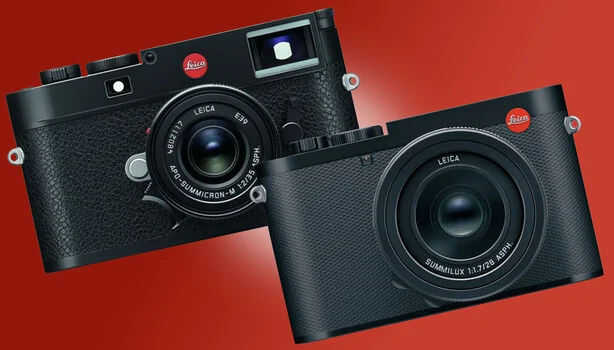
For decades, Leica has been synonymous with its fully manual rangefinder cameras, a system rooted in technology first introduced in 1954, revered by purists and legendary photographers alike. In recent years, a conspicuous surge of interest has emanated from younger generations of YouTubers and social media influencers, who frequently feature Leica M-series cameras – both digital and film variants – in their content, extolling their virtues and contributing to a widespread perception of immense demand for these "antiquated" systems. Influencers routinely wax lyrical about Leica M cameras as the quintessential tool for street and travel photography, a symbol of artistic credibility. However, a recent revelation from Leica’s corporate leadership paints a starkly different picture of the brand’s commercial landscape, challenging this popular narrative.
The Surprising Sales Revelation
This week, Andrea Pacella, Leica’s Vice President of Global Marketing and Communications, delivered surprising news during an interview with Digital Camera World, confirming that the fixed-lens Q series sells "twice as much, or even more, than the entire M system." This disclosure underscores a significant shift in consumer preference within the high-end camera market: the Leica model most people now purchase is an autofocus compact camera, rather than the manual-focus icon upon which the brand’s formidable legacy was meticulously built. Pacella further emphasized the robust demand for the Q series, stating that Leica sells every unit it can manufacture, indicating a product line operating at peak capacity and popularity. This revelation necessitates a deeper examination of the factors contributing to the Q series’ unexpected dominance and the underlying dynamics influencing the premium camera segment.
A Legacy Redefined: The M-System’s Enduring Appeal and Market Realities
The Leica M system, with its distinctive rangefinder focusing mechanism and manual operation, represents a profound connection to photography’s historical roots. Since Oskar Barnack’s original 35mm camera prototype in 1913, evolving into the M3 in 1954, Leica rangefinders have been the tools of choice for masters like Henri Cartier-Bresson, Robert Frank, and Garry Winogrand, shaping photojournalism and street photography. This heritage imbues the M-series with an almost mythical status, fostering a powerful emotional resonance among photographers. The perceived surge in interest, heavily amplified by digital platforms, often showcases influencers romanticizing the deliberate, tactile experience of manual focus and aperture control, positioning the M camera as a tool for "mindful" photography. Yet, despite this cultural veneration, the sales figures suggest that aspirational engagement does not always translate into new unit purchases of the M-system.
The Evolving Landscape of Entry into the Leica Ecosystem
A significant factor contributing to the perceived demand for M cameras not aligning with new unit sales lies in the changing accessibility of the M system itself. The market has witnessed a proliferation of third-party M-mount lenses, with new brands consistently emerging, offering optical performance that rivals or closely approximates genuine Leica equivalents at a fraction of the cost. This expansion of affordable M-mount optics has democratized entry into the M system.
Furthermore, the robust secondary market for Leica M bodies has profoundly impacted new sales. Many aspiring Leica owners, particularly those influenced by social media, are not investing in the latest M11-P, which can cost upwards of $10,400 for the body alone, before adding lenses. Instead, they are increasingly turning to platforms like Facebook Marketplace and specialized used camera dealers to acquire older digital M models, such as a 17-year-old M9 or a 14-year-old M240. The prices for these older models have become more accessible in recent years, as original owners upgrade to newer iterations, creating a healthy supply of well-maintained used cameras. This dynamic allows enthusiasts to join the "desirable Leica tribe" for an initial outlay as low as $3,000 when paired with a third-party M-mount lens, a stark contrast to the $20,000+ required for a new M11-P with a couple of contemporary Leica prime lenses. While this phenomenon undeniably expands the user base and reinforces the M-system’s cultural cachet, it simultaneously diverts potential new M camera and lens sales away from Leica’s direct revenue streams.
The Ascendancy of the Q Series: Practicality Over Purism
While the legendary M rangefinder undoubtedly remains the symbolic heart of the Leica brand, embodying its historical commitment to optical excellence and minimalist design, the Q series has surpassed it in commercial success for a confluence of practical and economic reasons. The Q series, first introduced in 2015 with the Leica Q (Typ 116), represented a strategic departure for Leica, offering a full-frame sensor paired with a fixed, high-quality autofocus lens (typically a 28mm f/1.7 Summilux). This blend of cutting-edge technology and Leica’s signature aesthetic immediately resonated with a broader segment of photographers seeking convenience without compromising image quality or brand prestige.
Detailed Cost Comparison: M System vs. Q System
The economic argument for the Q series is compelling. Consider a direct comparison for a new setup:
-
Leica M System:
- Leica M11-P Body: ~$10,400
- Leica Summicron-M 35mm f/2 ASPH. Lens: ~$4,000
- Leica APO-Summicron-M 50mm f/2 ASPH. Lens: ~$9,000
- Total for a basic M kit (body + 2 lenses): ~$23,400
-
Leica Q System:
- Leica Q3 (fixed Summilux 28mm f/1.7 lens): ~$7,350
- Total for a complete Q kit: ~$7,350
This comparison reveals a staggering savings of approximately $16,050 when opting for the Q3 over a new M11-P with two versatile prime lenses. This substantial price difference makes the Q series an undeniably more accessible premium option for many consumers, especially when considering it as a primary travel or everyday camera system.
Beyond the initial investment, the Q series also offers a unique antidote to "Gear Acquisition Syndrome" (GAS). With a fixed-lens design, once a photographer acquires a Q camera, the temptation to constantly upgrade or purchase additional lenses is significantly mitigated. This singular focus allows users to concentrate on the act of photography rather than the endless pursuit of new equipment, a common challenge for modular systems like the M.
The Practical Advantages Driving Q Sales
The primary reason for the Q series’ commercial triumph over the M system is rooted in practical utility rather than purely emotional or nostalgic appeal. While Leica’s marketing for the M system emphasizes a "focused, conscious creative process" unhindered by "technical complexity," many modern photographers prioritize features that streamline and enhance the shooting experience across a wider array of scenarios.
-
Autofocus: The Q series boasts fast, contemporary autofocus capabilities, significantly simplifying the process of achieving sharp images, particularly in dynamic situations or when shooting wide open at large apertures like f/1.4. Attempting to accurately capture a moving subject, such as a child, at f/1.4 with a manual-focus M11, presents a considerable challenge that the Q series effortlessly overcomes. This feature alone expands the Q’s versatility for family photography, candid street shots, and reportage.
-
Image Stabilization: Integrated image stabilization in the Q series allows for handheld shooting in low-light conditions without the necessity of a tripod, a crucial advantage for travel photography or capturing ambient scenes. Achieving sharp, blur-free images with subject movement in low light using an unstabilized M camera handheld is a far more demanding task.
-
Weather Sealing: The Q2 and Q3 models carry an IP52 rating, signifying protection against dust ingress and dripping water at up to a 15-degree tilt. While not designed for torrential downpours, this level of sealing provides peace of mind in light drizzle or dusty environments, enabling photographers to capture moments in conditions that would be ill-advised for a more exposed M system. This resilience translates directly into expanded shooting opportunities.
-
Electronic Viewfinder (EVF) and WYSIWYG: The Q’s electronic viewfinder provides a "what you see is what you get" (WYSIWYG) experience, accurately displaying exposure, depth of field, and composition before the shutter is pressed. Advanced features like a live histogram can be displayed within the EVF, offering maximum control and instant feedback. A significant bonus of the Q’s EVF is its sophisticated focus assist capabilities in manual focus mode, which many users find indispensable for critical focusing, especially with shallow depth of field, often preferring it over the M’s traditional rangefinder patch.
-
Macro Capabilities: All Q models incorporate a macro setting, activated by a simple twist of the lens barrel’s macro ring. While most M lenses have a minimum focusing distance of 0.7 meters (2.3 feet), the Q3 can focus as close as 17 cm (6.7 inches), and the Q3 43 at 27 cm (10.6 inches). This macro functionality dramatically expands the camera’s utility for capturing intricate details, food, or close-up portraits, a dimension largely absent from the traditional M system.
-
Video Capabilities: The Q series offers robust video recording features, with the Q3 capable of up to 8K resolution. While video may not be the primary reason individuals purchase a Leica, its inclusion provides versatility for a broader range of content creators who require hybrid photo-video capabilities, a feature entirely absent from the classic M rangefinder.
Strategic Implications and the Future of Leica
The sales data revealed by Andrea Pacella carries significant strategic implications for Leica. It suggests that while the M system remains an invaluable pillar of the brand’s identity and a powerful marketing tool through its aspirational appeal, the company’s commercial future, and arguably its financial health, increasingly hinges on products like the Q series that blend traditional Leica quality with modern photographic conveniences.
This trend compels Leica to carefully consider its product development trajectory. The M system, while cherished, faces inherent limitations when compared to contemporary mirrorless cameras, lacking autofocus, in-body stabilization, weather sealing (in most models), and video. The introduction of the M EV1, a concept that integrates an electronic viewfinder into an M-mount body, represents a tentative step towards modernizing the M experience. However, as the article notes, it addresses only one of the many practical advantages offered by the Q, still lacking autofocus, stabilization, comprehensive weather sealing, and macro capabilities. This suggests a potential internal struggle or strategic debate within Leica: how to evolve the M system without alienating its purist base, while simultaneously catering to the demands of a market that increasingly values convenience and versatility.
The success of the Q series also places Leica firmly within the burgeoning market of high-end compact cameras. In an era where smartphones have largely supplanted entry-level point-and-shoots, a niche has emerged for premium compacts that offer superior image quality, tactile controls, and a fixed, high-quality lens, catering to photographers seeking a portable yet powerful single-camera solution. The Q system excels in this segment, offering a compelling blend of portability, advanced features, and iconic brand appeal.
Conclusion: Balancing Heritage with Modernity
The revelation that Leica’s Q series is outselling its legendary M rangefinders by a significant margin is a testament to the evolving priorities of the modern photographer. While the M system continues to hold a revered place in photographic history and enthusiast culture, appealing to those who value a deliberate, manual approach to photography – particularly for static scenes or zone-focused street photography – the Q series addresses the broader market’s demand for practicality, versatility, and advanced features. Its blend of fast autofocus, image stabilization, weather sealing, an intuitive EVF, macro capabilities, and video recording, all within a compact, premium form factor, makes it an exceptionally well-rounded tool for diverse photographic needs, from family moments to dynamic travel scenes.
As an owner of both systems, the author acknowledges the enduring charm of the M system, yet underscores the practical advantages of the Q. The stark cost difference further solidifies the Q’s position as a more accessible entry point into high-end Leica photography for many. This commercial success story for the Q series signals a critical juncture for Leica, challenging the company to continue innovating and adapting while preserving the essence of its brand identity. The direction epitomized by the M EV1, borrowing elements from the Q, indicates a willingness to bridge the gap between tradition and modernity. Ultimately, the market has spoken: practicality and convenience, coupled with legendary Leica quality, are currently overshadowing emotion and nostalgia in the premium camera segment. The future trajectory of Leica will undoubtedly be defined by how effectively it navigates this evolving landscape, ensuring its legacy endures not just in memory, but in its commercial success.
