
 By Nana Wu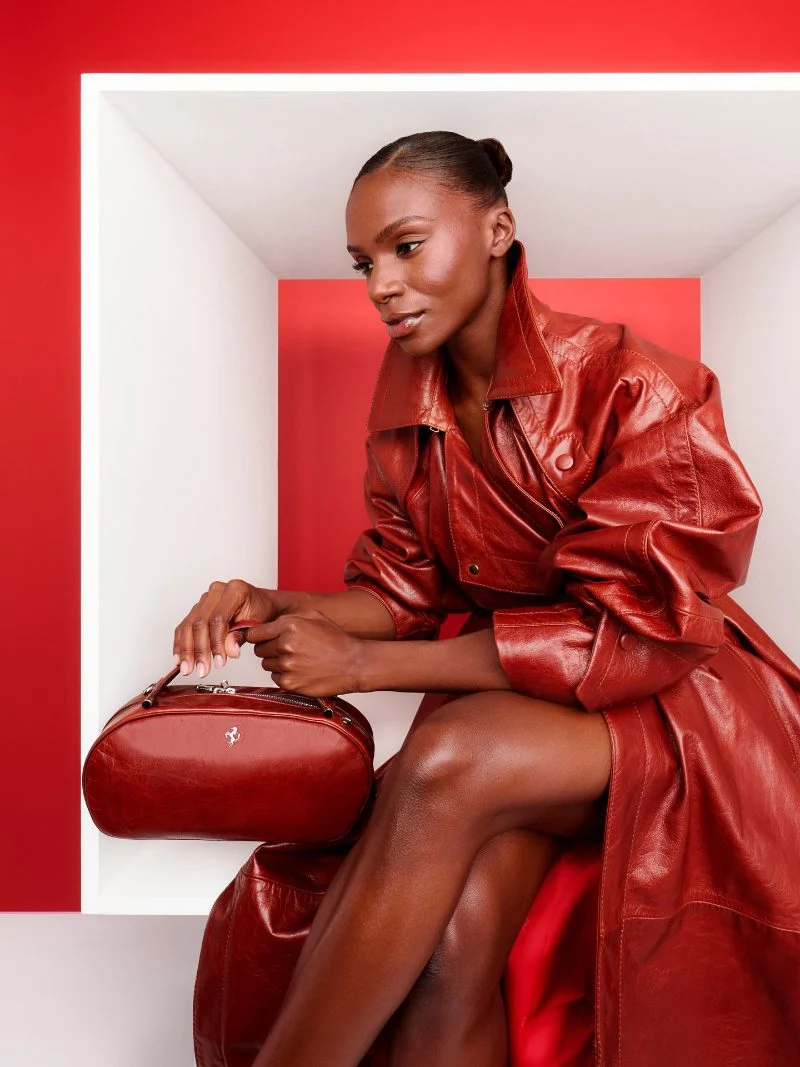
The Italian luxury manufacturer Ferrari is significantly accelerating its presence in the global high-fashion sector with the launch of its latest accessories campaign, centered on the newly unveiled Dino Bag. Featuring British Olympic medalist and world-renowned sprinter Dina Asher-Smith, the campaign serves as a strategic milestone in the brand’s transition from a legendary automotive manufacturer to a comprehensive luxury lifestyle house. Shot by the acclaimed fashion photographer Rankin, the campaign highlights the Dino Bag, a collection that draws direct aesthetic inspiration from Ferrari’s storied automotive heritage, specifically the aerodynamic silhouettes of its vintage sports cars. This release marks a pivotal moment for Ferrari Style, the brand’s fashion division, which has been under the creative leadership of Rocco Iannone since its inception.
The Design Philosophy of the Dino Bag
The Dino Bag is not merely an accessory but a structural homage to the mid-century design language that defined Ferrari’s most iconic vehicles. Named after the "Dino" series of sports cars—originally conceived in the 1960s as a tribute to Enzo Ferrari’s son, Alfredo "Dino" Ferrari—the bag mimics the organic, sinuous curves of the vehicles that bore the same name. The collection is characterized by a distinctive curved silhouette, a departure from traditional boxy handbag designs, reflecting the fluid lines of a chassis designed for speed and wind resistance.
Ferrari has introduced the Dino Bag in a versatile range of sizes and formats to cater to a diverse luxury clientele. The lineup includes a compact mini version designed for evening wear, a functional crossbody tote for daily utility, and a classic bowling style that offers a larger volume for travel or professional use. Each piece is crafted using premium Italian leathers and features hardware that subtly references the mechanical components of a Ferrari engine. The integration of high-performance materials, such as carbon fiber accents and specialized stitching, underscores the brand’s commitment to technical excellence.
A High-Performance Collaboration: Dina Asher-Smith and Rankin
To communicate the synergy between athletic precision and luxury craftsmanship, Ferrari enlisted Dina Asher-Smith as the face of the Dino Bag campaign. Asher-Smith, Britain’s fastest woman and a prominent figure in international track and field, embodies the attributes of speed, power, and elegance that Ferrari seeks to project. Her involvement signals Ferrari’s intent to align with figures who represent peak human performance, mirroring the brand’s reputation for peak mechanical performance.
The campaign’s visual identity was shaped by Rankin, a photographer known for his bold, high-energy portraits and his ability to capture movement. The imagery focuses on the interplay between the human form and the sculptural qualities of the Dino Bag. By utilizing dramatic lighting and dynamic poses, the campaign moves away from the static nature of traditional luxury advertising, instead opting for a sense of momentum that aligns with Ferrari’s core identity.
Chronology of Ferrari’s Fashion Evolution
The emergence of the Dino Bag is the result of a multi-year strategic pivot that began in the late 2010s. Ferrari’s leadership recognized that the "Prancing Horse" logo possessed a brand equity that extended far beyond the automotive world.
-
June 2021: The Maranello Debut
Ferrari officially launched its high-end fashion line with a spectacular runway show held inside its factory in Maranello, Italy. Under the direction of Rocco Iannone—who previously held senior roles at Giorgio Armani and Pal Zileri—the brand presented 52 looks that blended industrial aesthetics with high-fashion tailoring. The runway itself was an active assembly line, emphasizing the connection between the craft of car-making and the craft of dressmaking. -
2022: Establishing a Presence
Following the debut, Ferrari began securing its place on the official Milan Fashion Week calendar. The collections evolved to include sophisticated ready-to-wear pieces, including trench coats made from technical fabrics, silk separates featuring archival prints, and outerwear that utilized recycled materials. -
2023: Global Retail Expansion
The brand shifted its focus toward physical retail, opening flagship boutiques in the world’s major fashion capitals. This included a significant presence in Milan and London, as well as a dedicated showroom in New York’s SoHo district. These spaces were designed to offer an immersive brand experience, moving away from the "merchandise" feel of traditional car-branded shops toward a high-end boutique atmosphere. -
2024: The Accessories Push
Recognizing that leather goods and accessories are the primary drivers of profit in the luxury sector, Ferrari launched the Dino Bag campaign to anchor its accessories division. This move places Ferrari in direct competition with established heritage houses like LVMH and Kering-owned brands.
Creative Direction: The Vision of Rocco Iannone
The success of Ferrari’s fashion lane is largely attributed to Rocco Iannone’s ability to translate "fast luxury" into a wearable aesthetic. Iannone has consistently avoided the pitfalls of "logomania," opting instead for subtle references to Ferrari’s DNA. His designs often incorporate the signature "Rosso Corsa" (racing red) and "Giallo Modena" (yellow), but they do so through sophisticated color blocking and high-quality textiles rather than overt branding.
Iannone’s philosophy centers on the concept of "The Ferrari Way of Life." In interviews regarding the Dino Bag, Iannone has emphasized that the goal is to create products that possess the same longevity and timelessness as the cars. The Dino Bag, with its vintage-inspired yet futuristic shape, serves as a bridge between Ferrari’s historical legacy and its contemporary aspirations.
Strategic Analysis: Beyond the Automotive Market
Ferrari’s aggressive expansion into fashion is a calculated business move aimed at diversifying revenue streams. While the company remains highly profitable through its automotive sales—maintaining a strict limit on production to preserve exclusivity—the fashion sector allows the brand to engage with a broader demographic, including younger consumers and a growing female audience who may not yet be in the market for a supercar but desire the brand’s prestige.
Industry analysts note that Ferrari is following a "brand extension" model similar to that of Hermès or Armani, where the core product (in this case, cars) serves as the pinnacle of a pyramid, supported by high-margin lifestyle products like handbags and apparel. By controlling the design, manufacturing, and distribution of these goods, Ferrari ensures that its brand integrity remains intact, avoiding the dilution that often occurs with third-party licensing deals.
Retail Infrastructure and Accessibility
The Dino Bag collection is currently available through Ferrari’s dedicated luxury boutiques in Milan and London, as well as its high-concept showroom in New York. The brand has also announced plans for further retail expansion, with new stores slated for major Asian markets, particularly in China and Japan, where appetite for Italian luxury remains robust.
For the global market, Ferrari has integrated the Dino Bag into its sophisticated e-commerce platform. The online store provides detailed specifications for each bag, including the type of leather used, dimensions, and the specific automotive inspirations behind the designs. This digital-first approach ensures that the brand can reach its international "Ferraristi" (enthusiasts) regardless of their proximity to a physical flagship store.
Broader Impact and Implications for the Luxury Industry
The rise of Ferrari Style represents a significant shift in how heritage industrial brands approach the lifestyle market. Unlike other automotive brands that produce lower-tier merchandise, Ferrari is positioning itself as a legitimate competitor in the "Quiet Luxury" and "Hard Luxury" segments. This move challenges the traditional boundaries of the fashion industry, proving that a brand rooted in mechanical engineering can successfully pivot to artisanal craftsmanship.
The Dino Bag campaign, specifically, highlights the importance of storytelling in modern luxury. By naming the bag after a beloved historical car and utilizing a world-class athlete like Dina Asher-Smith, Ferrari is not just selling a leather product; it is selling a narrative of speed, heritage, and excellence.
Future Outlook
As Ferrari continues to build out its fashion vision, the Dino Bag is expected to serve as a "hero product" that anchors future collections. The brand’s trajectory suggests an upcoming focus on sustainable luxury, with rumors of bio-based leathers and carbon-neutral manufacturing processes being integrated into the accessories line.
With the fashion division gaining momentum and the Dino Bag receiving positive early reviews from fashion critics and collectors alike, Ferrari is proving that its expertise in aerodynamics and engineering can be seamlessly translated into the world of high-end tailoring and leather goods. The "Prancing Horse" is no longer confined to the racetrack or the highway; it is now a formidable presence on the runway and in the wardrobes of the global elite. Through the Dino Bag, Ferrari has successfully navigated the transition into a new lane, ensuring that its legacy of Italian excellence continues to evolve for a new generation of luxury consumers.
