
 By admin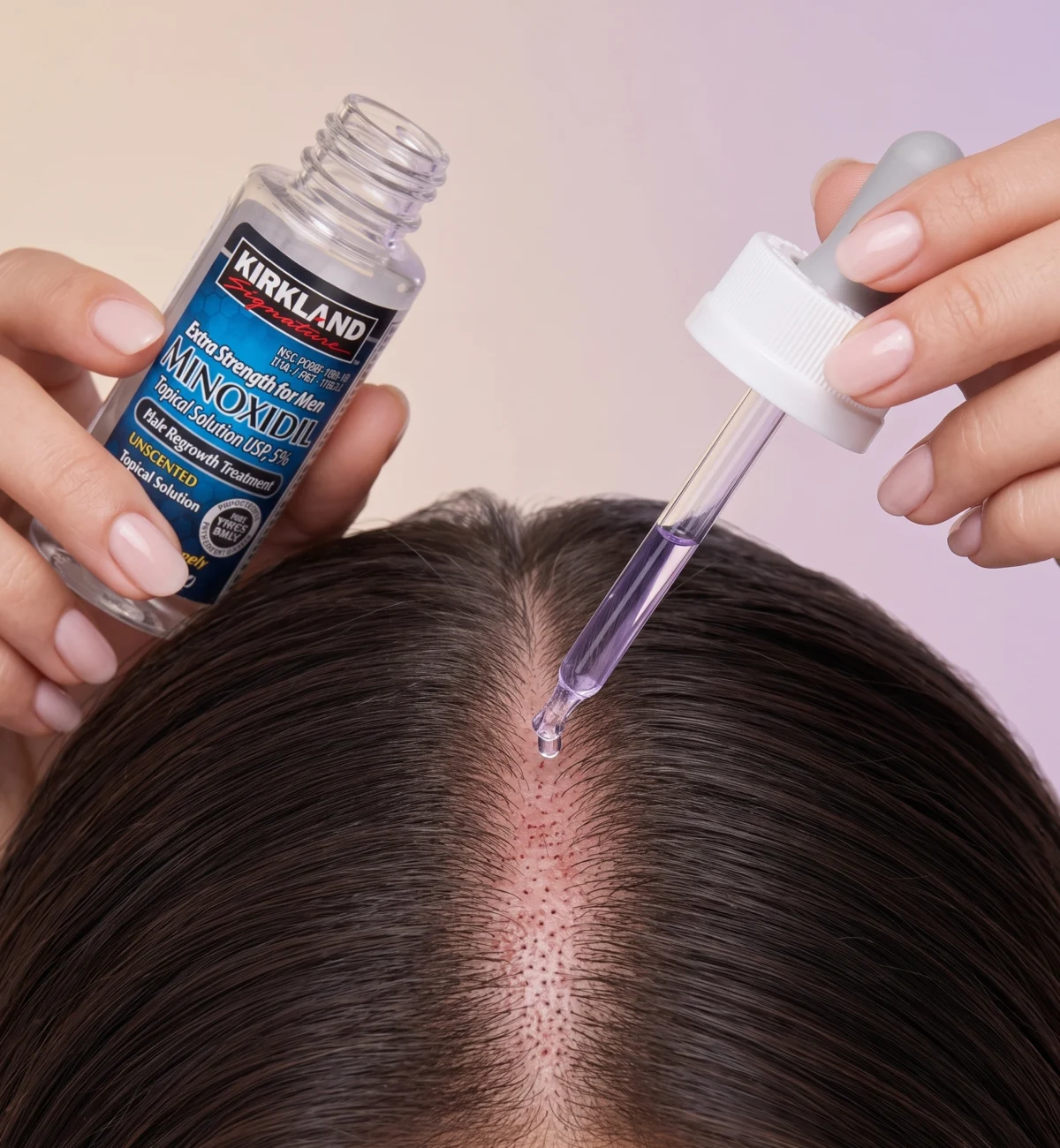
Microneedling, a minimally invasive technique employing a handheld roller or pen adorned with fine needles, is emerging as a significant contender in the field of hair regrowth therapies. Unlike many anecdotal or trend-driven scalp treatments, microneedling possesses a robust foundation in clinical trials, demonstrating its efficacy, particularly when used in conjunction with topical minoxidil. This sophisticated approach leverages the body’s natural healing mechanisms to stimulate dormant hair follicles and enhance the effectiveness of established hair loss treatments.
The Science Behind Microneedling’s Hair Growth Stimulation
The core principle of microneedling for hair growth lies in its ability to induce a controlled wound-healing response. When the fine needles create microscopic punctures across the scalp, the skin perceives these as minor injuries. In response, the body initiates a cascade of biological processes, releasing vital growth factors such as platelet-derived growth factors (PDGF) and vascular endothelial growth factor (VEGF). These signaling molecules play a crucial role in the hair follicle cycle.
Specifically, these growth factors can encourage hair follicles that have entered a resting phase (telogen) to transition into the active growth phase (anagen). Furthermore, they can help to revitalize miniaturized follicles, often a hallmark of androgenetic alopecia (pattern baldness), by improving blood flow to the dermal papilla – the critical structure at the base of the follicle responsible for hair production.
Beyond the release of growth factors, the micro-channels created by microneedling offer a significant pharmacokinetic advantage. They create a permeable pathway into the dermis, allowing topical medications like minoxidil to be absorbed more efficiently. This enhanced absorption is a key factor in why the combination therapy has shown superior results compared to minoxidil alone.
It is important for individuals considering microneedling to cultivate realistic expectations regarding the timeline for results. The hair growth cycle is inherently slow, with individual hairs progressing through anagen, catagen (transitional), and telogen phases over several months. Visible new hair growth typically requires follicles to complete at least one full growth cycle. Therefore, patience and consistent adherence to treatment protocols are paramount.
Clinical Evidence: A Consistent Pattern of Superiority
A growing body of scientific literature underscores the efficacy of microneedling, particularly when integrated with minoxidil. Multiple randomized controlled trials have investigated this combination, consistently reporting outcomes that surpass those achieved with minoxidil monotherapy.
One notable pilot study, published in the Journal of Cosmetic Dermatology, compared weekly microneedling sessions combined with twice-daily topical minoxidil against twice-daily minoxidil alone in 100 men diagnosed with androgenetic alopecia. After a 12-week treatment period, the group utilizing microneedling alongside minoxidil demonstrated statistically significant improvements in hair count across all measured parameters, including both objective assessments by investigators and subjective evaluations by patients.
Further reinforcing these findings, a separate randomized, single-observer blinded trial concluded that the synergistic effect of weekly microneedling and minoxidil significantly outperformed minoxidil alone in terms of hair count and patient satisfaction. While the researchers acknowledged that the improvement might not be immediately cosmetically dramatic on its own, the enhanced efficacy was undeniable.

A more recent randomized controlled trial provided quantitative evidence of microneedling’s impact. This study revealed that incorporating four weekly microneedling sessions into a minoxidil regimen resulted in nearly double the increase in hair density compared to minoxidil treatment in isolation. Crucially, this study also documented a measurable increase in hair shaft diameter, suggesting a restoration of hair quality alongside quantity.
The evidence extends to female hair loss as well. A comprehensive network meta-analysis examining various minoxidil combination therapies identified microneedling paired with minoxidil as the most effective treatment combination specifically for women experiencing hair loss. This finding is particularly significant, as effective non-surgical options for female pattern hair loss are continually sought.
The consistent pattern emerging from these studies is clear: while microneedling may offer some benefit when used in isolation, its true potential is unlocked when it acts as a catalyst for established treatments like minoxidil. The practice of using microneedling as a standalone therapy, while not entirely devoid of benefit, significantly underestimates its capacity to amplify results when combined strategically.
Differentiating Microneedling Devices: From Home Rollers to Professional Treatments
The landscape of microneedling tools encompasses a range of options, each offering distinct characteristics in terms of precision, ease of use, and treatment intensity. Understanding these differences is crucial for selecting the appropriate device for at-home or professional use.
-
Manual Derma Rollers: These are the most accessible and affordable options for at-home use. They typically feature needle depths ranging from 0.25mm to 1.5mm. While suitable for beginners and general scalp stimulation, their primary limitation lies in the inconsistency of pressure and coverage. The effectiveness can vary significantly based on the user’s technique and the uniform distribution of needle penetration across the scalp.
-
Electric Microneedling Pens: Offering a more advanced at-home solution, electric pens provide adjustable needle depths, commonly ranging from 0.25mm to 1.0mm. Their key advantage is the vibrating motion, which ensures a more consistent needle depth and penetration across the treatment area. While requiring a higher initial investment, they facilitate more uniform and predictable treatment sessions.
-
In-Office Electrodynamic Devices: These are sophisticated, professional-grade devices typically used by dermatologists and licensed practitioners. They can achieve needle depths up to 2.5mm, allowing for more intensive treatments for stubborn or advanced thinning. These treatments are often integrated with other topical therapies administered during the session itself, maximizing the therapeutic impact under expert supervision.
Establishing a Safe and Effective At-Home Microneedling Routine
For individuals opting for at-home microneedling, a structured and meticulous approach is essential to maximize benefits and minimize risks. Clinical protocols generally advocate for a weekly treatment schedule using a 0.5mm to 1.0mm needle roller, followed immediately by the application of minoxidil. Deviating from this frequency or depth is not associated with enhanced results and can elevate the likelihood of scalp irritation and damage.
Step 1: Preparing the Scalp and Equipment
Essential Supplies: Clean, dry hair and a thoroughly disinfected derma roller. Disinfection is paramount and involves soaking the needle head in 70% isopropyl alcohol for at least 10 minutes prior to each use.

Procedure: Section the hair to ensure complete exposure of the scalp in the targeted areas, typically the crown and frontal hairline where hair thinning is most commonly observed.
Rationale: A clean scalp and sterile equipment are fundamental to preventing microbial contamination of the micro-punctures, thereby significantly reducing the risk of infection.
Step 2: Implementing a Consistent Rolling Pattern
Required Tools: A derma roller and the application of light to moderate pressure.
Method: Systematically roll the device over each section of the scalp in four distinct directions: vertically, horizontally, and along both diagonals. Execute four to six passes in each direction, continuing until a mild, uniform redness appears across the treated area.
Common Pitfall: The urge to apply excessive pressure in an attempt to "force" results. Overly aggressive rolling can lead to increased bleeding, prolonged downtime, and potential scarring without yielding any superior outcomes. The objective is a subtle, pinpoint redness, not overt bleeding.
Step 3: Immediate Application of Minoxidil
Necessary Product: A topical minoxidil solution or foam.
Application: Apply the minoxidil directly after microneedling while the micro-channels remain open. Allow the medication to dry completely before styling hair or lying down.
Significance: This step is widely credited in clinical trials for significantly amplifying treatment efficacy. The open micro-channels facilitate deeper penetration of minoxidil into the scalp, thereby enhancing its therapeutic action.
Step 4: Post-Treatment Care and Weekly Repetition
Cleaning Protocol: After use, thoroughly wash the derma roller with soap and water, followed by another disinfection soak in alcohol. Store the roller dry. The entire microneedling routine should be repeated once weekly.

Critical Error: Neglecting disinfection between sessions. A derma roller that has come into contact with compromised skin can harbor bacteria. Reusing an unsterilized roller substantially elevates the risk of serious infection.
Setting Expectations: Timeline and Potential Side Effects
The inherent slowness of the hair growth cycle dictates that visible results from microneedling are not instantaneous. Clinical studies typically measure significant improvements between 12 to 24 weeks of consistent treatment. Therefore, a commitment of at least three months of weekly sessions is advisable before definitively assessing the therapy’s effectiveness. To accurately track progress, regular photographic documentation of the same scalp area under consistent lighting conditions is recommended, as gradual changes can be subtle to the naked eye.
Mild scalp tenderness and a faint redness lasting for a few hours post-treatment are considered normal side effects. However, persistent pain, the presence of pus, or redness extending beyond two days are indicative of an adverse reaction and necessitate discontinuing the treatment and consulting a dermatologist.
Furthermore, for individuals experiencing hair loss, it is prudent to investigate potential underlying nutritional deficiencies that may be contributing to the problem. Correcting such deficiencies in conjunction with microneedling can often lead to more robust outcomes than microneedling alone.
Comparative Analysis: Microneedling Versus Other Hair Growth Modalities
Microneedling stands out with a stronger evidentiary basis compared to many trending DIY hair growth methods. Scalp massagers, for instance, have shown some evidence of promoting hair thickness through increased blood flow, achieved via consistent daily pressure, rather than controlled micro-injury. The inversion method, which also relies on enhanced blood flow, currently lacks the rigorous controlled trial data supporting microneedling or even scalp massage.
When considering professional in-clinic procedures, scalp mesotherapy injections represent a different delivery mechanism. This treatment involves injecting vitamins and medications directly into the scalp. However, the scientific evidence supporting mesotherapy for hair growth is generally considered less substantial than that for microneedling combined with minoxidil. For a comprehensive overview of medical and procedural hair regrowth options, including minoxidil, finasteride, and Platelet-Rich Plasma (PRP) therapy, further detailed analyses are available.
Contraindications for Microneedling Therapy
Certain individuals should avoid microneedling or consult with a dermatologist before commencing treatment. These include individuals with active scalp infections, active flare-ups of psoriasis or eczema in the treatment area, a history of keloid scarring, or those currently taking anticoagulant medications.
Microneedling may also not be the most appropriate initial treatment for hair loss patterns that clearly indicate hormonal or autoimmune causes, such as rapidly widening part lines or sudden patchy shedding. These conditions often require a specific diagnosis and targeted medical intervention before any topical or mechanical treatments can be effective. Pregnant individuals are advised to consult their obstetrician before using minoxidil.
Frequently Asked Questions
Q1: How frequently should a derma roller be used for hair growth?
A1: Clinical trials consistently demonstrate efficacy with weekly usage. More frequent application does not accelerate follicle response and increases the risk of skin barrier compromise and irritation.

Q2: What needle length is optimal for hair growth microneedling?
A2: Most studies utilize needle lengths between 0.5mm and 1.0mm. Longer needles are best managed by trained professionals due to increased risks of bleeding, scarring, and infection without additional hair growth benefits.
Q3: Can microneedling be used without minoxidil?
A3: While some studies show modest benefits from microneedling alone, head-to-head comparisons consistently reveal superior results when microneedling is combined with minoxidil. Omitting minoxidil means foregoing significant potential gains.
Q4: Is microneedling safe for colored or chemically treated hair?
A4: Yes, microneedling targets the scalp skin, not the hair shaft, and therefore does not interact with color or chemical treatments. However, it is advisable to avoid treatment on a recently relaxed or permed scalp until any chemical irritation has fully subsided.
Q5: Will microneedling address receding hairlines as effectively as thinning crowns?
A5: Microneedling can be applied to both areas, but efficacy tends to be higher where some follicle activity persists. Completely bald areas or hairlines that have been hair-free for extended periods may respond less predictably than areas with miniaturized but still present hairs.
Q6: When can I expect to see results from microneedling?
A6: Meaningful improvements are typically observed between 12 and 24 weeks of consistent weekly treatment. A minimum trial period of three months is recommended before evaluating its effectiveness.
In conclusion, microneedling, when employed consistently and in conjunction with minoxidil, presents a compelling and clinically validated approach to hair regrowth. Its mechanism of action, rooted in stimulating the body’s natural healing processes and enhancing topical absorption, offers a tangible advantage over many less-substantiated scalp treatments. Adherence to a safe, meticulous routine and realistic expectations regarding the timeline for results are critical for maximizing its potential.
Sources
[List of sources would be included here in a published article]
Disclaimer: This article is intended for informational purposes only and does not constitute professional medical advice. Individuals considering any new hair loss treatment, especially those with pre-existing scalp conditions or who are on medication affecting bleeding or healing, should consult with a qualified dermatologist or trichologist.
