
 By admin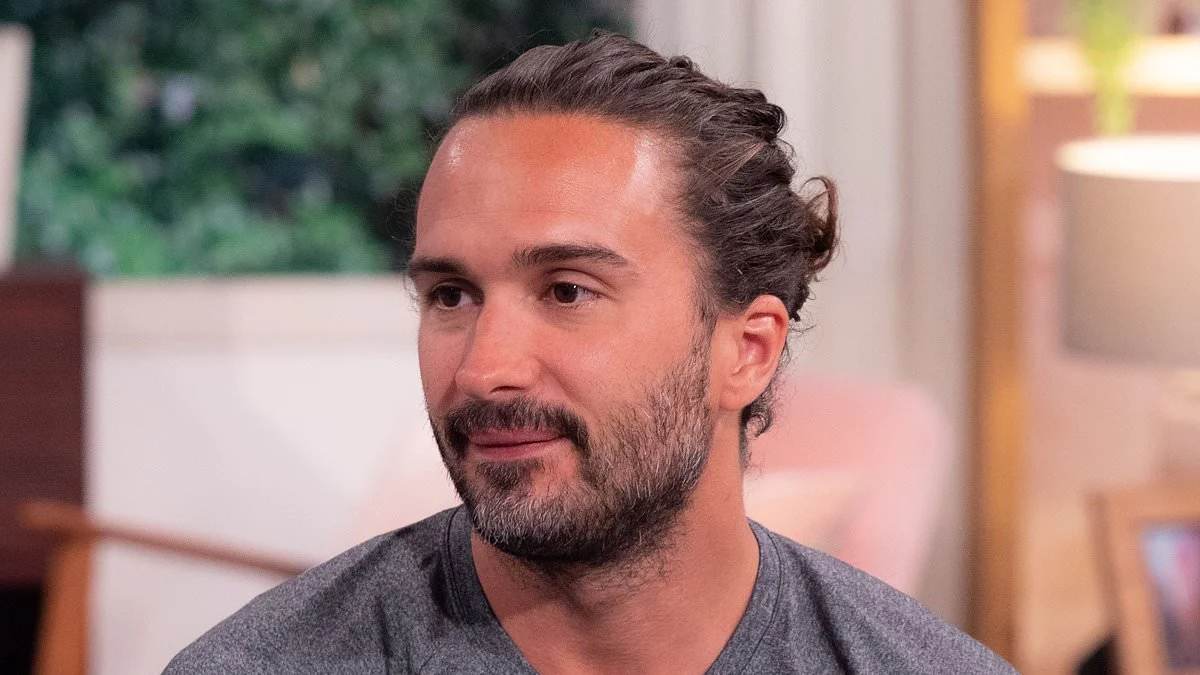
Joe Wicks, the globally recognized fitness entrepreneur known as The Body Coach, has provided a remarkably candid assessment of his mental health, admitting that his rigorous daily exercise routine serves as a vital emotional regulator to prevent him from reacting aggressively toward his four young children. Speaking during a recent public question-and-answer session, the 40-year-old fitness advocate detailed the profound psychological motivations behind his lifestyle, explaining that the physical exertion is less about aesthetic maintenance and more about breaking a cycle of domestic volatility he witnessed during his own turbulent childhood. Wicks, who rose to unprecedented prominence during the COVID-19 pandemic with his "PE with Joe" series, shares four children—Indie, 8, Marley, 6, Leni, 4, and Dusty, 2—with his wife, Rosie. He confessed that the daily pressures of parenting "stress him out so much" that without the morning outlet of exercise, he fears he would replicate the "shouting and screaming" behaviors of his parents.
The Psychological Intersection of Fitness and Parenting
The admission from Wicks highlights a growing discourse regarding the role of physical activity in managing parental burnout and emotional dysregulation. For Wicks, the stakes of his morning workout are deeply personal, rooted in a desire to avoid the "aggressive" tendencies he associates with his upbringing. He described a childhood marked by his father’s long-term heroin addiction and his mother’s struggles with severe mental health issues, including obsessive-compulsive disorder (OCD) and eating disorders. By exercising before his children wake up, Wicks explained that he enters the domestic space as a "calm dad," intentionally distancing himself from the image of his mother slamming doors or his father’s unpredictable behavior.
"The message I always share now is that exercise is about mental health," Wicks stated during the session. "It’s about boosting your mood into being confident and energized and being a good parent and being patient." This shift in messaging reflects a broader evolution in the fitness industry, moving away from purely cosmetic goals toward a holistic "wellness" model where mental resilience is the primary product. Wicks emphasized that while humans are naturally inclined to conserve energy, the "hard" work of exertion is a necessary tool for maintaining healthy interpersonal relationships.
A Chronology of Childhood Trauma and Professional Evolution
To understand Wicks’ current perspective, it is necessary to examine the timeline of his public disclosures regarding his family history. While he initially built his brand on the "Lean in 15" concept—focused on quick meals and high-intensity interval training (HIIT)—the last several years have seen him pivot toward advocacy for mental health awareness.
In 2022, Wicks collaborated with the BBC for a documentary titled Joe Wicks: Facing My Childhood. The film served as a pivotal moment in his career, transitioning him from a fitness instructor to a voice for those affected by parental substance abuse and mental illness. In the documentary, Wicks revisited the trauma of his youth, recalling how he felt "upset, confused, and lost" while witnessing his father, Gary, struggle with addiction. One of the most poignant revelations in the film involved the "code words" used in the household; Wicks recalled that when his father said he was "going to the shop for milk," it was a signal that he was leaving to purchase drugs.
The documentary also featured a confrontation between Joe and Gary, where the elder Wicks expressed immense guilt for the "constant lying and denying" that defined Joe’s formative years. Joe’s mother likewise struggled with her own set of challenges, leaving Joe with his father for periods of time while she sought treatment for her mental health. Wicks has previously noted that as a child, he did not fully comprehend the clinical nature of his parents’ struggles, simply viewing his father as an addict and his mother as someone with an intense preoccupation with cleaning.
The Social Media Paradox and Body Image Vulnerability
Despite his status as a fitness icon with millions of followers, Wicks also used the recent Q&A to address a surprising struggle: a decline in his own self-confidence. At 40, he admitted to experiencing the lowest levels of body confidence in his life, attributing this shift to the influence of social media algorithms. This revelation provides a rare look into the "influencer paradox," where even those at the pinnacle of the industry feel inadequate when compared to the hyper-curated and often chemically enhanced physiques found on platforms like Instagram and TikTok.
Wicks specifically called out the prevalence of "testosterone and peptides" in the fitness community. He noted that seeing younger creators with "amazing bodies" achieved through pharmacological means has skewed the public’s—and his own—perception of what constitutes a "normal" or "healthy" physique. Despite being physically strong and capable of performing heavy squats and weighted pull-ups, Wicks expressed frustration that his body does not "grow" in the same way as those using performance-enhancing substances.
"It does change your view of what is normal," Wicks remarked. He urged his audience to remain focused on the "basics"—sleep, exercise, and nutrition—and to resist the "vision of what you think is health and fitness" that is often artificial. This critique of the modern fitness landscape aligns with growing concerns from health experts regarding muscle dysmorphia, or "bigorexia," a condition where individuals become obsessed with the idea that they are not muscular enough, often driven by social media comparisons.
Supporting Data: The Science of Exercise and Emotional Regulation
The link Wicks makes between exercise and reduced aggression is supported by a wealth of clinical data. Physical activity is known to stimulate the production of endorphins and dopamine, which act as natural mood lifters. Furthermore, exercise reduces levels of the body’s stress hormones, such as adrenaline and cortisol. For parents dealing with the chronic stress of raising young children, these physiological changes can be the difference between a measured response and an emotional outburst.
Research published in the journal Mental Health and Physical Activity suggests that even short bouts of exercise can significantly reduce symptoms of anxiety and improve executive function, which includes the ability to self-regulate and control impulses. For Wicks, the "morning workout" serves as a form of preventative therapy. By "burning off" latent frustration before his children wake, he effectively resets his nervous system, allowing him to navigate the chaotic environment of a household with four children under the age of seven.
Furthermore, the concept of "breaking the cycle" is a recognized psychological goal for individuals who grew up in households with Adverse Childhood Experiences (ACEs). Studies by the Centers for Disease Control and Prevention (CDC) indicate that ACEs, such as parental substance abuse or mental illness, can have long-term impacts on an individual’s health and parenting style. Wicks’ conscious decision to use exercise as a tool for patience is a textbook example of a "proactive coping mechanism" used to mitigate the risk of intergenerational trauma.
Broader Implications for the Fitness Industry and Public Health
Wicks’ transparency has significant implications for how fitness is marketed to the public. For decades, the industry has relied on "before and after" photos and the promise of a "beach body" to drive engagement. Wicks is part of a shifting vanguard that prioritizes the "internal" transformation. His admission of low self-confidence further humanizes the struggle for fitness, suggesting that the mental battle is never truly won, even for the experts.
Public health advocates suggest that Wicks’ message could be particularly influential for men, who are statistically less likely to seek traditional mental health support. By framing exercise as a tool for "being a better dad" rather than just "getting six-pack abs," Wicks taps into a powerful paternal motivation that may resonate more deeply with his demographic.
The reaction from the fitness community and the public has been largely supportive, with many praising Wicks for his honesty regarding the "dark side" of the social media algorithm. His comments serve as a warning to both consumers and creators about the psychological toll of constant comparison. As Wicks continues to navigate his 40s, his platform appears to be evolving into a space for discussing the complexities of aging, parenting, and the ongoing work required to maintain mental equilibrium in an increasingly digital and demanding world.
Conclusion and Future Outlook
Joe Wicks remains a central figure in the UK’s health landscape, but his recent comments suggest a man who is increasingly focused on the legacy of his character rather than the metrics of his business. By identifying exercise as his primary defense against the "nightmare" he believes he would otherwise become, he has reframed the daily workout as an act of service to his family.
As he moves forward, Wicks’ emphasis on "the basics" and his rejection of the "unnatural" standards of the social media elite may signal a new chapter for The Body Coach brand—one that is rooted in the gritty, often stressful reality of modern fatherhood and the lifelong journey of healing from childhood wounds. His story continues to serve as a high-profile case study in the power of physical movement to not only transform the body but to safeguard the emotional well-being of the next generation.
