
 By admin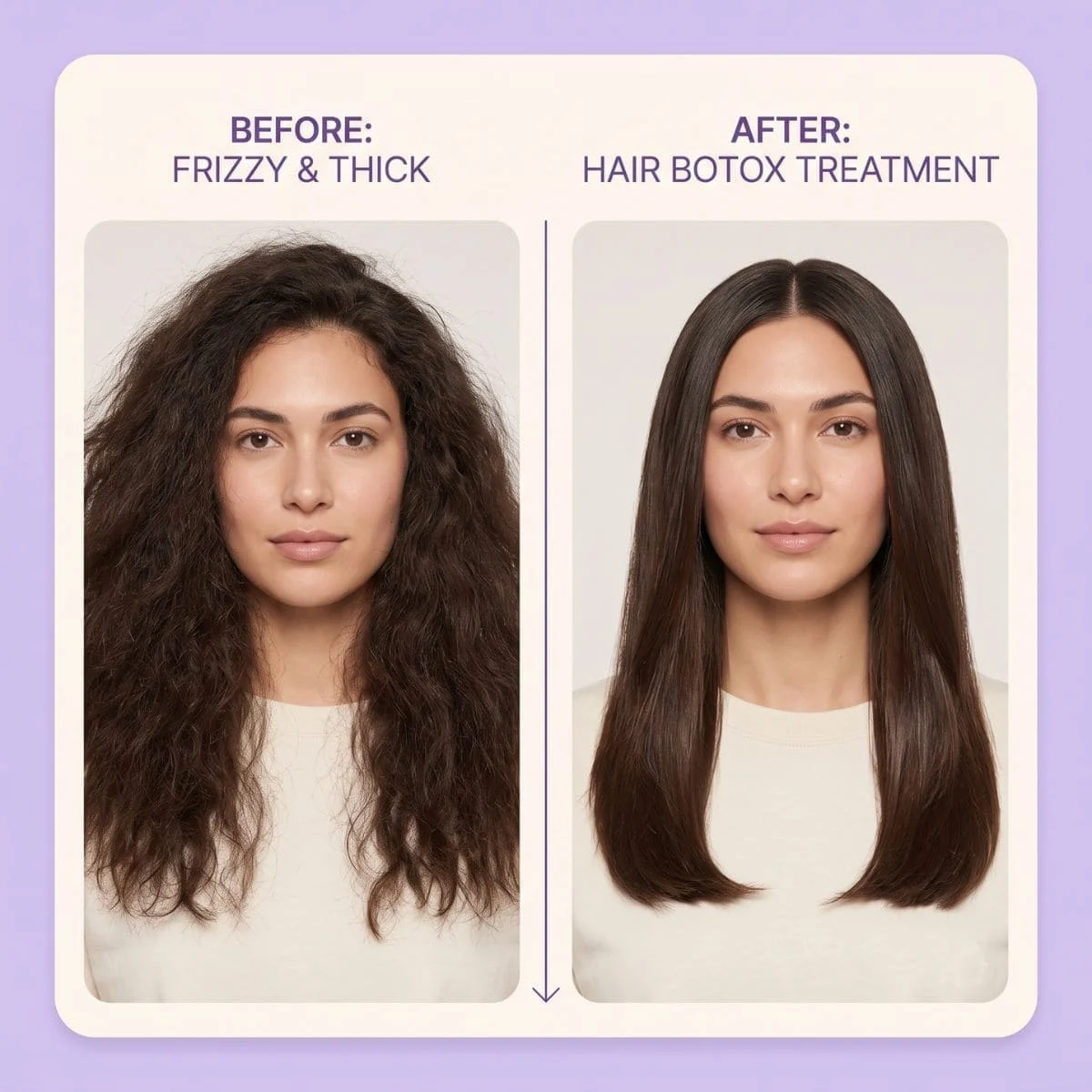
Hair botox, a popular deep-conditioning treatment, has taken the beauty industry by storm, promising smoother, shinier, and frizz-free hair. However, the name itself often leads to confusion, as it contains no botulinum toxin and involves no injections. This innovative treatment, primarily composed of amino acids, collagen, and vitamin B5, works by coating and filling the hair shaft to improve its texture and appearance. Unlike traditional keratin treatments that rely on formaldehyde and heat-activated chemical bonding, hair botox offers a gentler approach. This comprehensive guide aims to demystify hair botox, detailing its ingredients, contrasting it with keratin treatments, identifying ideal candidates, outlining the salon process, and comparing its efficacy and cost against other popular smoothing and glossing services.
What Exactly is Hair Botox Treatment?
Hair botox is a salon-based or at-home treatment designed to revitalize hair by addressing damage and frizz. Its core components include a sophisticated blend of amino acids, hydrolyzed collagen, hyaluronic acid, and vitamin B5. These elements work synergistically to coat the exterior of the hair shaft and to temporarily fill microscopic gaps and imperfections caused by damage. The mechanism of action focuses on the surface and immediate sub-surface layers of the hair, specifically targeting the cuticle. This approach differs significantly from treatments that aim to rearrange the hair’s internal protein structure. Stylists often describe hair botox as a deeply conditioning treatment rather than a chemical one, emphasizing its restorative properties.
The application process typically involves applying the formula to clean, damp hair. Following application, the hair is processed under controlled heat for approximately 30 to 45 minutes. This thermal exposure facilitates the formula’s absorption into the hair cuticle, leading to its closure. The result is a smoother surface and a noticeable reduction in frizz, all without altering the hair’s natural curl pattern or texture.
Crucially, hair botox does not involve the alteration of disulfide bonds, which are the primary structural components of hair responsible for its shape. Consequently, the effects of hair botox are temporary. Most individuals can expect to see a smoother, glossier finish with a reduction in frizz ranging from 30 to 40 percent. It’s important to note that this treatment does not produce the pin-straight, humidity-proof results associated with permanent chemical relaxers. For those who have recently colored their hair, hair botox is generally considered gentle enough to be applied after the color has fully set, typically after a waiting period of one to two weeks.
Hair Botox vs. Keratin Treatment: A Tale of Two Smoothing Methods
While both hair botox and keratin treatments aim to achieve smoother, shinier hair, the underlying scientific principles and ingredient profiles are vastly different, leading to distinct outcomes and safety considerations. The overlap in promised results is precisely why these treatments are often confused by consumers.
Keratin Treatment: The Chemical Reshaping Approach
Traditional keratin treatments, often referred to as Brazilian blowouts or keratin smoothing treatments, employ a chemical process to alter the hair’s structure. The key active ingredient is formaldehyde or formaldehyde-releasing compounds, such as methylene glycol. Under high heat, these substances form chemical bonds with the keratin in the hair. This process effectively seals the hair cuticle, leading to prolonged smoothness and frizz reduction that can last anywhere from three to six months, depending on hair type and aftercare.
However, the use of formaldehyde in these treatments raises significant health concerns. A cross-sectional study published in the Journal of the American Academy of Dermatology revealed that several Brazilian keratin treatment products tested contained formaldehyde levels up to five times higher than the established safe limit. Furthermore, a separate review documented instances of allergic contact dermatitis and facial swelling directly linked to repeated exposure to these chemical straighteners. The potential health risks associated with formaldehyde exposure have led to increased scrutiny and the development of alternative smoothing treatments.

Hair Botox: The Gentle Conditioning Alternative
In stark contrast, hair botox bypasses the use of formaldehyde altogether. This is its primary selling point and a major differentiator from keratin treatments. By avoiding formaldehyde, hair botox cannot chemically force curly or coarse hair into a permanently straight state. Instead, it functions more like an intensive, restorative conditioning mask than a structural straightening service.
It is also important to note that some formaldehyde-free alternatives marketed alongside or as substitutes for hair botox, such as cysteine and glyoxylic acid smoothing treatments, are not automatically risk-free. Research into the safety of glyoxylic acid as a formaldehyde replacement in semipermanent straightening is ongoing. A concerning medical case report even linked a formaldehyde-free straightening product to a documented instance of acute kidney injury. This serves as a crucial reminder that the label "formaldehyde-free" does not inherently guarantee safety across all chemical alternatives available on the market. While hair botox itself was not implicated in that specific case, it underscores the importance of inquiring about the full ingredient list from your stylist before undergoing any chemical or quasi-chemical service.
Furthermore, hair botox should be clearly distinguished from older texture modification services like perms. Perms utilize a true chemical reaction to add curl by altering the hair’s internal bonds. Hair botox and perms sit on opposite ends of the spectrum of hair texture services: one smooths, the other curls, and neither is a direct substitute for a keratin treatment.
Comparative Analysis: Hair Botox Beyond Keratin
The beauty industry frequently uses overlapping terminology for hair treatments, which can lead to consumer confusion. Understanding the distinct functions of treatments like Olaplex, glosses, glazes, and toners is crucial for making informed decisions and avoiding unnecessary expenses or disappointing salon visits.
Olaplex, for instance, is fundamentally a bond-builder. Its primary function is to repair broken disulfide bonds within the hair structure, which are often damaged during chemical processes like coloring or straightening. It is frequently incorporated into color or keratin services to mitigate damage rather than serving as a standalone smoothing treatment or a replacement for hair botox.
Glosses, glazes, and toners, on the other hand, are primarily color-depositing treatments. Their main objectives are to enhance shine and correct or refine hair tone. While they can improve the overall appearance and vibrancy of hair, they do not possess the capacity to smooth texture or significantly reduce frizz in the way that hair botox does. Salons may sometimes perform these services in conjunction with smoothing treatments, but their individual purposes are distinct.
Identifying the Ideal Candidate for Hair Botox
Hair botox is most beneficial for individuals whose hair exhibits dryness, frizz, or mild damage resulting from color treatments or excessive heat styling. It is a particularly popular choice for those with thick or coarse hair that tends to hold onto frizz regardless of haircutting techniques. The treatment’s ability to smooth and condition makes it an effective solution for managing such hair types.

Additionally, hair botox is a suitable option for color-treated hair that requires a boost in shine and manageability between salon visits. Unlike some clarifying treatments that can strip artificial color, hair botox is generally color-safe and does not alter the existing hue.
However, hair botox may not be the optimal choice for individuals with very fine hair. The coating effect of the treatment can potentially weigh down thin strands, making them feel heavy rather than lighter or more voluminous. For those with fine hair, lighter leave-in treatments or specialized volumizing products might be more appropriate. Hair styling guides for fine hair often recommend lightweight products over heavy ones to maintain lift and body.
Furthermore, if the primary goal is permanent straightening of tightly curled hair, hair botox is not the appropriate solution. In such cases, keratin treatments or chemical relaxers are more effective options designed to achieve significant and long-lasting straightening.
The Hair Botox Salon Experience: A Step-by-Step Breakdown
A typical hair botox appointment is a relatively straightforward process, generally taking between 60 to 90 minutes to complete, with the duration depending on the length and density of the client’s hair.
Step 1: Clarifying Wash
The process begins with a thorough wash using a clarifying shampoo. This initial step is crucial for removing any product buildup, excess oil, and impurities from the hair. A clean, product-free canvas ensures that the hair botox formula can penetrate the hair shaft evenly and effectively.
Step 2: Formula Application
Following the wash, the hair botox solution is carefully applied to the hair. The application is typically done section by section, starting from the mid-shaft and extending down to the ends. Importantly, the formula is generally avoided near the scalp, as it is not designed for root application and its benefits are primarily targeted at the hair shaft itself.
Step 3: Processing Under Heat
Once the formula has been evenly distributed, the hair is covered, often with a processing cap. It is then placed under a heat source, such as a hood dryer or a heat cap, for approximately 30 to 45 minutes. This controlled heat exposure is essential for allowing the beneficial ingredients in the formula to penetrate the hair cuticle and work their magic.

Step 4: Partial Rinse and Blow-Dry
After the processing period, a portion of the product is rinsed out of the hair, while a residual amount is left in to continue its conditioning action. The hair is then thoroughly blow-dried. To seal the cuticle and lock in the newfound shine and smoothness, the hair is typically finished with a flat iron. This final step helps to ensure that the treatment’s effects are maximized.
Cost and Longevity of Hair Botox Results
The financial investment for an in-salon hair botox treatment can range from $80 to $300. This price variation is influenced by several factors, including the length and thickness of the client’s hair, the specific salon’s pricing structure, and its geographical location. Longer or denser hair typically incurs higher costs. For those seeking a more budget-friendly option, at-home hair botox kits are available for $30 to $60. However, it is important to note that the evenness of application and the longevity of results from at-home kits often do not match those achieved through professional salon application.
The visible results of hair botox generally last for approximately 8 to 12 weeks. As the treatment wears off, it does so gradually. This slow fade is attributed to the natural shedding of hair and the continuous growth of new hair. Unlike some keratin treatments that can result in a distinct demarcation line as they grow out, hair botox typically fades more seamlessly, avoiding harsh lines of regrowth.
Addressing Common Misconceptions and FAQ
Is hair botox safe for color-treated hair?
Yes, in most cases, hair botox is considered safe for color-treated hair. The formulation does not typically contain bleach or strong oxidizers, which are the components that can strip artificial color. However, it is advisable to wait one to two weeks after a recent coloring service before applying hair botox to allow the color to fully set.
Can hair botox replace a keratin treatment?
Hair botox cannot replace a keratin treatment if the primary objective is permanent straightening. While hair botox effectively smooths and conditions the hair without altering its internal structure, it does not possess the chemical power to flatten tight curls. Keratin treatments, on the other hand, are designed for more significant structural changes and longer-lasting straightening.
Does hair botox contain formaldehyde?
No, hair botox formulations are explicitly designed without formaldehyde or formaldehyde-releasing chemicals. Their efficacy stems from ingredients like amino acids, collagen, and vitamins, distinguishing them from traditional keratin smoothing treatments.
How often should hair botox be repeated?
Most individuals find that repeating the hair botox treatment every 8 to 12 weeks is ideal, coinciding with the gradual fading of its effects. Repeating the treatment too frequently on already healthy hair is unlikely to cause damage but may be unnecessary if the hair is maintaining its smoothness effectively.

Can hair be washed immediately after a hair botox treatment?
No, immediate washing is not recommended. Stylists typically advise waiting at least 48 hours, and sometimes up to 72 hours, after the treatment. This waiting period allows the formula to fully bond with the hair shaft before exposure to water and shampoo.
Will hair botox make curly hair straight?
Hair botox will loosen and smooth the existing curl pattern and significantly reduce frizz. However, it will not achieve the same degree of straightening as a keratin treatment or a chemical relaxer, as its mechanism of action does not involve breaking and reforming the hair’s internal bonds.
In conclusion, hair botox is an excellent choice for those seeking enhanced smoothness, shine, and repair without undergoing a drastic chemical restructuring of their hair. For individuals aiming for a more profound and longer-lasting straightening effect, a keratin treatment remains the superior option. Consulting with a qualified hairstylist to assess the hair’s current condition and clarify desired outcomes is paramount before selecting between these treatments. Bringing a visual reference of the desired texture and inquiring about the specific active ingredients in the proposed formula can further ensure a successful salon experience.
Sources:
- Journal of the American Academy of Dermatology
- PubMed Central (PMC) articles on chemical hair straighteners and kidney injury.
Disclaimer: Individual hair results can vary significantly based on natural hair type, texture, density, and overall condition. It is always recommended to consult with a licensed hairstylist before undergoing any significant hair treatments, especially those involving chemical alterations or dramatic changes in length. The visual representations in accompanying imagery may depict styled results that require professional tools and products to replicate.
