
 By Nila Kartika Wati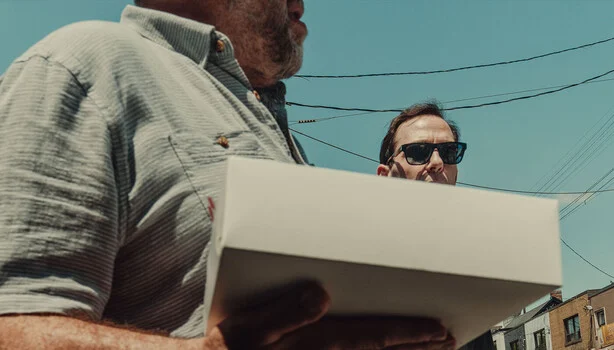
The landscape of street photography, a genre historically celebrated for its candid capture of everyday life and spontaneous moments, is currently undergoing significant scrutiny within the photographic community. What began as an accessible and popular art form, requiring minimal specialized equipment and offering boundless subjects in local environments, has increasingly been characterized by a perceived homogenization of visual styles and a proliferation of formulaic imagery. This trend, largely amplified by the pervasive influence of social media platforms, has ignited a discussion among photographers, critics, and enthusiasts regarding the genre’s artistic integrity, creative trajectory, and even its fundamental definition.
The Rise of Predictable Tropes in Digital Street Photography
Street photography’s appeal has always stemmed from its democratic nature. Unlike genres requiring extensive travel or expensive studio setups, it thrives in urban and even local settings, making it accessible to a broad spectrum of practitioners. The advent of digital cameras and smartphones further democratized the practice, leading to an explosion in its popularity. However, this accessibility, combined with the dynamics of online sharing, has inadvertently fostered a visual monoculture.
Observers note a growing predictability in the imagery frequently encountered across social media feeds. Recurring motifs include individuals walking through dramatic shafts of light, reflections captured in puddles or storefronts, subjects perfectly framed by architectural elements or interacting with large posters, and the ubiquitous "grabbing hand" compositional device. Even seemingly random, hip-level shots of people walking towards the camera, often devoid of discernible narrative or unique action, have become commonplace. This phenomenon suggests a shift from original exploration to the replication of successful visual patterns.
Data from platforms like Instagram reveals the scale of this trend. Hashtags associated with street photography often feature millions of posts, many exhibiting these very tropes. While precise statistics on visual repetition are challenging to quantify, qualitative analysis by photography educators and critics frequently points to a high degree of stylistic conformity. This raises questions about the distinction between learning fundamental photographic techniques and merely imitating popular aesthetics for social media validation.
Historical Context and the Digital Shift
Historically, street photography flourished through the lens of masters like Henri Cartier-Bresson, Garry Winogrand, and Robert Frank, who captured fleeting moments with profound human insight and unique artistic vision. Their work was characterized by an acute sense of observation, an ability to distill complex narratives from ordinary scenes, and a relentless pursuit of the "decisive moment." The essence was discovery – exploring the world with an unburdened curiosity, reacting instinctively to unforeseen interactions, and creating images that felt deeply personal and often challenging.
The transition from film to digital photography, coupled with the exponential growth of online communities and social media platforms in the 21st century, marked a significant turning point. Digital cameras made shooting virtually limitless and instant, removing the economic constraints of film and development. Social media, particularly platforms like Instagram, then provided an unprecedented global stage for sharing work, offering immediate feedback and opportunities for recognition.
This timeline illustrates the evolution:
- Mid-20th Century: Golden age of traditional street photography, emphasizing candid, observational work, often with a documentary edge. Masters worked largely independently, driven by personal vision.
- Late 20th Century: Continued evolution, with diverse styles emerging, but still largely individualistic and less influenced by mass online trends.
- Early 2000s: Rise of digital photography, lowering barriers to entry. Increased experimentation but still a focus on individual expression.
- 2010s Onwards: Explosion of social media. Platforms become primary distribution channels, leading to rapid dissemination of trends, peer influence, and the development of "viral" visual styles. YouTube tutorials and influencer culture begin to heavily shape photographic practice, sometimes prioritizing replication over innovation.
The Influence of Social Media and the "Tribe" Mentality
The current state of affairs is intricately linked to the mechanics of social media. Platforms reward engagement, and certain visual styles consistently garner likes and shares. This creates a feedback loop where aspiring photographers, observing the success of these predictable images, are incentivized to replicate them. The desire to "belong to a cool street photography tribe," as one observer put it, can overshadow the intrinsic motivation for creative exploration.
This phenomenon transforms the act of photography from a curious engagement with the world into a "Pokémon scavenger hunt" – a search for pre-defined visual elements that align with popular online templates. Rather than discovering and creating, photographers may inadvertently become collectors of generic visual "stamps," driven by external validation rather than internal artistic impulse. The consequence is a potential erosion of originality, as the pursuit of belonging often clashes with the development of a unique artistic voice.
The Debate Over "Rules" and Genre Definitions
Adding another layer to this complex discussion is the contentious issue of genre rules and definitions. Within online forums and photography groups, self-appointed "gatekeepers" frequently assert rigid criteria for what constitutes "proper" street photography. These often include stipulations such as:
- Candidness: Subjects must be unaware of the photographer; asking for permission is deemed "not proper."
- Human Element: Images must feature people; interesting storefronts, architecture, or empty streets are often excluded.
- Lens Choice: Long lenses are discouraged in favor of wider focal lengths, implying a need for physical proximity to subjects.
- Direct Gaze: A subject looking directly at the camera is frequently deemed disqualifying.
Critics argue that such prescriptive rules stifle creativity and fail to acknowledge the historical breadth and artistic freedom that has characterized the genre. Many renowned photographers, including those celebrated for their "street" work, often photographed subjects beyond candid human interactions – architecture, details, landscapes, and even posed portraits that captured the essence of urban life. They were driven by what piqued their curiosity, not by a checklist of genre requirements.
This rigid categorization stands in stark contrast to other photographic genres. Landscape photographers rarely debate whether a mountain is "tall enough" to qualify, nor do wildlife photographers dispute the authenticity of an animal based on its urban interactions. Yet, street photography forums frequently devolve into protracted arguments over whether a photograph qualifies as street, documentary, urban, or environmental portraiture.
The fundamental question, according to many, should not be about strict labels, but about the intrinsic quality of the image: Does it work? Is it interesting? Does it tell a story or evoke a sense of wonder? The utility of overly defined categories in judging artistic merit is increasingly being questioned.
Addressing the Challenge: Fostering Originality and Soul
The prevailing sentiment among those observing the trends is a call for a return to authenticity and personal vision. While documenting everyday life holds value, the sheer volume of images produced today, particularly those replicating common tropes, raises questions about their lasting impact or future significance. While documentation alone might have sufficed decades ago when photography was less ubiquitous, contemporary images are increasingly expected to transcend mere recording.
Many veteran photographers and educators propose that compelling street photographs often achieve at least one of three objectives:
- They evoke emotion: The image resonates on a human level, stirring feelings in the viewer.
- They tell a story: There is a narrative suggested, inviting the viewer to interpret or imagine what is unfolding.
- They make the viewer stop and explore: The composition, light, or subject matter is so engaging that it commands prolonged attention and invites deeper contemplation.
The most impactful street photographs often achieve all three simultaneously. These are the images that are remembered, that immerse the viewer, and that possess a discernible "soul."
To counter the drift towards formulaic photography, a fundamental shift in approach is advocated. Instead of asking "What should a street photographer photograph?" by consulting social media trends, practitioners are encouraged to ask: "What am I genuinely interested in?" This inward-looking question shifts the focus from external validation to internal curiosity, fostering a more honest and personal photographic journey.
Implications for the Future of Street Photography
The ongoing debate has significant implications for the future direction of street photography. If the genre continues to be dominated by replicated trends and rigid definitions, there is a risk of artistic stagnation. However, the critical discussion itself represents an opportunity for evolution and renewal.
The challenge lies in balancing the democratic accessibility of street photography with the imperative for artistic innovation. Photographers are increasingly encouraged to explore overlooked elements of the urban environment: the intricate details of shopfronts, the geometry of architectural forms, the subtle nuances of human gestures, layers of light and shadow, and vibrant colors. These subjects, often bypassed by those hunting for pre-programmed tropes, offer fertile ground for unique expression.
Ultimately, the goal for many is to move beyond mere categorization and external expectations. As photographers mature, their interest often shifts from adhering to perceived rules to exploring the street as a dynamic canvas for personal expression. This involves cultivating a photographic practice driven by genuine curiosity, aiming to create images that feel honest, personal, and imbued with the photographer’s unique perspective. It is in this pursuit of authentic vision that the true "soul" of street photography is believed to reside, ensuring its continued relevance and artistic vitality in an ever-evolving visual world.
