
 By admin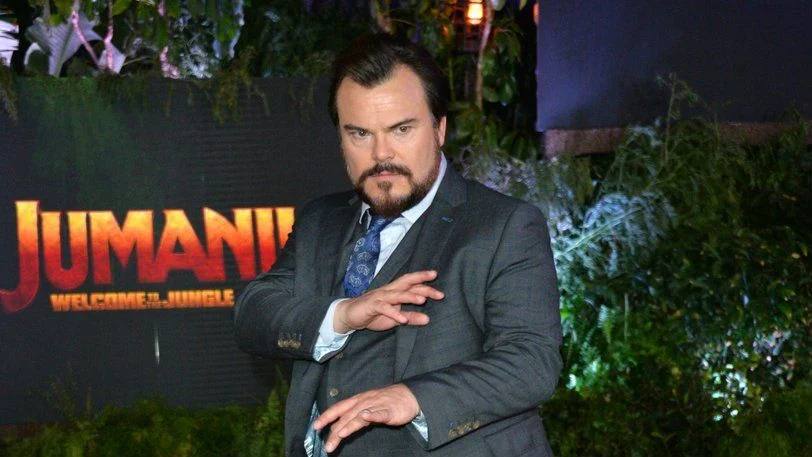
In a candid revelation that offers a rare glimpse into the formative years of two comedic titans, Jack Black has openly discussed an unexpected period of profound self-doubt he experienced early in his career, nearly leading him to abandon acting entirely. The catalyst for this existential crisis was none other than his fellow actor and comedian, Maya Rudolph, whose extraordinary talent, encountered during their shared time at the Crossroads School for Arts & Sciences in Santa Monica, left Black questioning his own suitability for a career in Hollywood. This surprising insight, brought to light during an appearance on Amy Poehler’s "Good Hang" podcast in 2025, underscores the often-unseen struggles even the most celebrated artists face and the serendipitous ways in which careers can be shaped by unexpected influences.
Crossroads School for Arts & Sciences: A Crucible of Creativity
The Crossroads School for Arts & Sciences, founded in 1971, has long stood as a beacon of progressive education in Santa Monica, California, renowned for its rigorous academic curriculum combined with a vibrant arts program. Its alumni roster reads like a who’s who of Hollywood, boasting names such as Kate Hudson, Zooey Deschanel, Jonah Hill, and Emily Rossum, among many others. The school’s philosophy emphasizes critical thinking, creative expression, and a supportive, collaborative environment, making it an ideal breeding ground for young, aspiring performers.
It was within this hallowed environment that Jack Black, already a budding theatrical talent, and Maya Rudolph, a prodigious newcomer, crossed paths. Black, born in 1969, was a few years Rudolph’s senior (Rudolph was born in 1972), meaning their high school years overlapped during a crucial period of artistic development for both. Before Rudolph’s arrival, Black was considered one of the standout performers in Crossroads’ esteemed theater department, enjoying a degree of confidence in his abilities that was soon to be challenged. The school’s emphasis on improvisation, a cornerstone of its drama curriculum, was where their paths most significantly converged, and where Black’s internal struggle began.
The Genesis of Self-Doubt: Confronting Rudolph’s Natural Brilliance
Black vividly recounted the moment Rudolph joined his improv class, an event that irrevocably shifted his perception of his own talent. Speaking with Far Out Magazine prior to his podcast appearance, and later elaborating on "Good Hang," Black described Rudolph’s presence as instantly captivating. "She was just so funny and gifted and relaxed," he recalled, noting her effortless command of comedic timing and character work. This natural ease stood in stark contrast to Black’s own experience, where he often felt he had to work harder, to push and strain, to achieve similar results.
His internal struggle was so profound that he drew a dramatic comparison to the legendary composers Antonio Salieri and Wolfgang Amadeus Mozart. In this analogy, Black cast Rudolph as the divinely gifted prodigy, Mozart, whose genius flowed effortlessly, while he saw himself as Salieri, the diligent and talented but ultimately overshadowed craftsman. This comparison, while perhaps hyperbolic in its self-deprecation, powerfully illustrates the psychological impact of witnessing what appears to be unadulterated, innate talent. For a young artist still finding his voice, such an encounter can be both inspiring and deeply unsettling, prompting an intense period of introspection and self-assessment. The perceived gap between his own abilities and Rudolph’s seemingly innate comedic prowess led Black to question whether he truly possessed the raw talent required to make a mark in the highly competitive entertainment industry.
A Creative Hiatus: Nearly a Year Away from Improv
The crisis of confidence Black experienced was not fleeting. He revealed on Amy Poehler’s podcast that the overwhelming sense of inadequacy caused him to withdraw from performing improv for nearly an entire year. This hiatus was a significant period for a young actor who had previously found joy and validation in the spontaneous art form. During this time, Black likely grappled with fundamental questions about his artistic path. Was his passion enough? Could hard work truly compensate for what he perceived as a lack of natural genius?
This period of withdrawal, though challenging, may have inadvertently served as a crucible for Black’s unique comedic persona. While he stepped back from improv, he continued to cultivate his love for music, a passion that would later culminate in the formation of the internationally successful comedy-rock duo Tenacious D. It’s plausible that this time away from direct competition in improv allowed him to explore other facets of his creativity, ultimately contributing to the distinct, high-energy, and often musical style that would define his later career. His eventual return to performance, armed with a renewed sense of purpose and a more refined understanding of his own strengths, marked a crucial turning point, demonstrating resilience in the face of profound artistic doubt. His subsequent career, characterized by a blend of physical comedy, expressive voice work, and musicality, is a testament to his ability to overcome this early hurdle and forge a path uniquely his own.
Maya Rudolph’s Perspective: An Unintended Mentor
Ironically, while Jack Black wrestled with his self-worth in the shadow of Rudolph’s talent, Rudolph herself viewed Black as a pivotal figure in her own artistic development. This reciprocal influence highlights the complex and often subconscious ways in which artists shape each other’s journeys. Rudolph has consistently credited Black with playing a major role in launching her career, particularly by introducing her to the world-renowned improvisational comedy troupe, The Groundlings.
The Groundlings, established in 1974, is one of Los Angeles’ most prestigious and influential improv theaters and schools, known for its rigorous training program and as a direct pipeline to Saturday Night Live. Alumni include comedic legends like Will Ferrell, Kristen Wiig, Melissa McCarthy, and Lisa Kudrow. For a young, aspiring comedian like Rudolph, gaining entry to and thriving within The Groundlings was a monumental step. Black, already familiar with the L.A. comedy scene, took Rudolph to her first live performance at The Groundlings when she was still a teenager. This exposure was transformative, sparking Rudolph’s interest in pursuing improv professionally.
Rudolph has often spoken about how Black "changed my life," detailing how he actively encouraged her creativity, coached her for improv competitions, and helped her gain confidence as a young performer. This mentorship, coming from someone who was simultaneously questioning his own abilities because of her, adds a rich layer of irony and humanity to their shared history. Black’s encouragement and direct guidance provided Rudolph with the foundational support and strategic direction she needed to navigate the competitive world of professional comedy. Her eventual success at The Groundlings directly led to her breakthrough as a cast member on Saturday Night Live in 2000, where she became known for her versatile character work and celebrity impressions, cementing her status as one of the most talented comedians of her generation.
A Friendship Forged in Comedy and Music
Beyond their individual career trajectories and the complex dynamic of mutual influence, Black and Rudolph’s friendship was built on a shared passion for both comedy and music. Long before Jack Black became the iconic, high-octane frontman of Tenacious D, he and Rudolph bonded over a mutual admiration for artists like Bobby McFerrin. McFerrin, known for his innovative vocal techniques, improvisation, and hit song "Don’t Worry Be Happy," represented a unique blend of musicality and playful creativity that resonated deeply with both teenagers. Their shared appreciation for such artists underscored a deeper connection—a mutual understanding of the joy and freedom found in artistic expression, whether through humor or melody.
This enduring friendship has now spanned decades, witnessing both stars ascend to become celebrated comedians, actors, and entertainers in Hollywood. Black’s filmography includes blockbuster hits like School of Rock, Kung Fu Panda, Jumanji, and The Super Mario Bros. Movie, showcasing his range from family-friendly animation to live-action comedies. His work with Tenacious D has garnered critical acclaim and a dedicated fanbase, demonstrating his prowess as a musician and performer. Rudolph, similarly, has carved out an illustrious career with memorable roles in films such as Bridesmaids, Idiocracy, and Grown Ups, alongside her iconic run on SNL and acclaimed voice work in animated features. Both have earned numerous accolades, a testament to their enduring talent and the unique contributions they’ve made to the entertainment industry.
Broader Implications: The Universality of Artistic Doubt and the Power of Connection
The shared history of Jack Black and Maya Rudolph offers profound insights into the nature of artistic development and the often-unseen struggles that precede monumental success. Their story is a powerful reminder that self-doubt is a universal experience, even for those destined for greatness. It highlights how the internal narratives artists construct about their own abilities can be intensely personal and sometimes at odds with external perceptions. Black’s momentary retreat from improv underscores the vulnerability inherent in creative pursuits, where one’s talent is constantly measured, often against others who appear to possess effortless gifts.
Furthermore, their journey exemplifies the serendipitous and often reciprocal nature of mentorship and influence. Black’s early encouragement of Rudolph, even as he questioned himself, demonstrates how acts of kindness and guidance can have unforeseen, transformative impacts. Conversely, Rudolph’s perceived talent, while initially causing Black’s self-doubt, ultimately pushed him to re-evaluate his own path and perhaps to define his unique artistic identity more clearly, distinct from hers.
Their enduring friendship, built on shared artistic passions, speaks to the deep bonds forged in the formative years of creative exploration. It illustrates that success in Hollywood is rarely a solitary endeavor, but often the result of a complex web of connections, mutual support, and the unexpected ways in which individuals inspire and challenge each other. The Black-Rudolph narrative serves as a compelling case study of how early encounters, even those fraught with personal struggle, can ultimately shape and enrich the careers of future icons, leaving an indelible mark on the landscape of popular culture. Their story is a testament not only to their individual talents but also to the intricate, often paradoxical, human connections that underpin artistic achievement.
