
 By Nila Kartika Wati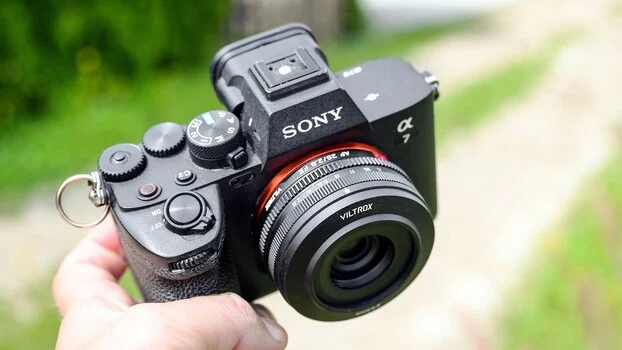
The landscape of modern photography has been continuously reshaped by advancements in mirrorless technology, leading to smaller, lighter camera bodies that demand equally compact and capable optics. In this evolving environment, the introduction of a full-frame pancake lens, particularly one offering autofocus capabilities for Sony E-mount at an approximate price point of $200, represents a significant development. The Viltrox 26mm f/2.8 EVO Edition FE, a recent offering from the Chinese manufacturer, aims to address a specific niche: providing an ultra-portable lens that transforms a professional full-frame Sony camera body into something resembling a high-end point-and-shoot. While such an ambitious combination of features and affordability typically implies substantial compromises, early assessments suggest that the Viltrox 26mm f/2.8 gives up surprisingly little, far less than its modest price and diminutive size might initially suggest.
The Rise of Viltrox and the Pancake Lens Trend
Viltrox, a brand that has steadily gained prominence in the photographic accessories market, has carved out a reputation for producing cost-effective lenses and adapters, particularly for mirrorless systems. Unlike many ultra-budget third-party manufacturers that primarily offer manual-focus lenses, Viltrox has consistently invested in developing autofocus (AF) capabilities, positioning itself as a viable alternative to more expensive first-party and established third-party options like Sigma and Tamron. This strategy has resonated well with a growing segment of photographers seeking accessible entry points into various focal lengths and apertures without sacrificing the convenience of autofocus.
The concept of a "pancake" lens is not new; it dates back decades, with early examples appearing on rangefinders and later on DSLRs and mirrorless cameras. Defined by their exceptionally thin profile, pancake lenses are designed for ultimate portability and discretion. Their appeal lies in their ability to keep the overall camera-lens footprint as small as possible, making the setup less conspicuous and easier to carry for extended periods. Historically, achieving a truly compact design, especially for full-frame sensors, presented significant optical and mechanical challenges. The short flange distance of mirrorless systems, however, has opened new avenues for designers, allowing for smaller lens elements and more compact constructions than typically feasible with DSLR designs. For Sony’s E-mount, which boasts a very short flange distance, the potential for such compact optics is particularly high. The Viltrox 26mm f/2.8 EVO Edition FE directly taps into this long-standing desire for minimalist, high-performance optics, aligning with a broader industry trend towards miniaturization in photography gear.
Design, Build Quality, and Ergonomics
Jacek Sopotnicki, a respected voice in the photography community, recently provided a comprehensive walkthrough of the Viltrox 26mm f/2.8 EVO Edition FE, highlighting it as the pancake lens he had been anticipating for his Sony kit. His observations align with Viltrox’s established reputation for build quality within its price segment. The lens exhibits a compact and lightweight construction, a hallmark of pancake designs, making it an ideal companion for travel and everyday carry. The physical controls, specifically the focus and aperture rings, operate with a smooth fluidity, offering a tactile experience that belies the lens’s affordability.
Modern lens design increasingly incorporates features that enhance usability and future-proofing. The Viltrox 26mm f/2.8 is equipped with a USB-C port located on the lens mount, facilitating convenient firmware updates directly by the user. This feature is crucial for ensuring compatibility with future camera body iterations and for addressing any potential performance refinements post-launch. Furthermore, the inclusion of a rubber gasket around the mount indicates a degree of weather-sealing, providing a welcome layer of protection against dust and moisture—a vital consideration for outdoor and travel photography.
One minor ergonomic detail noted by Sopotnicki pertains to the aperture ring, which lacks a locking mechanism. While not a critical flaw, it suggests a user habit worth developing: setting the aperture to a higher value, such as f/11 or f/16, before switching the camera to ‘A’ (Aperture Priority) mode. This precautionary step helps prevent unintentional aperture changes during active shooting, particularly when handling the camera or moving through crowded environments. Completing the travel-friendly design is a magnetic lens cap that securely snaps onto the front element, offering both convenience and protection. The inclusion of a 43mm filter thread on the lens hood, a detail often overlooked in reviews, further enhances its versatility by allowing for the attachment of various filters without needing to remove the hood. This thoughtful design element provides added utility for photographers who regularly use polarizers, neutral density filters, or protective UV filters.
Optical Performance: Balancing Portability with Image Quality
The true test of any lens lies in its optical performance, and for a lens priced at around $200, the Viltrox 26mm f/2.8 EVO Edition FE demonstrates an impressive balance of strengths and manageable weaknesses. Sopotnicki’s evaluation highlights several key characteristics:
- Sharpness and Contrast: At its widest aperture of f/2.8, the lens delivers impressive center sharpness and strong contrast, a crucial factor for many genres of photography, particularly street and documentary work where the subject is often centrally framed. However, consistent with the challenges of compact wide-angle designs, sharpness and contrast show a noticeable drop-off towards the corners of the frame. While this is a common characteristic even in much more expensive lenses, it’s a trade-off that users must acknowledge. For general photography, where the primary subject often resides in the central region, this characteristic may be less of a concern. For landscape or architectural photography requiring corner-to-corner sharpness, stopping down the aperture would be necessary, though complete resolution of corner softness might remain elusive.
- Chromatic Aberration: Purple fringing, a form of chromatic aberration, is observed and appears to be quite persistent, even when stopping down to f/4 or f/5.6. This optical artifact manifests as colored halos around high-contrast edges. While modern post-processing software can effectively mitigate most chromatic aberrations, its stubborn presence suggests that users will likely need to incorporate correction steps into their workflow.
- Distortion and Vignetting: Barrel distortion is present, as is common with wide-angle lenses, but it is described as "tidy." This implies that the distortion is consistent and easily correctable using lens profiles available in editing software. Similarly, vignetting, the darkening of image corners, is quite pronounced and extends deep towards the center of the frame, persisting even at f/8. However, its soft nature makes it relatively easy to correct in post-production, or even to embrace as an aesthetic choice for certain moody effects.
- Flare and Focus Breathing: Against harsh light sources, the Viltrox 26mm f/2.8 flares readily. Traditionally, lens flare is considered an optical flaw, but many contemporary photographers, including Sopotnicki, have learned to harness it creatively. During a portrait session with his sons, he intentionally incorporated warm, sunny flares into his compositions, transforming a potential weakness into a distinct stylistic feature. Similarly, focus breathing—the change in focal length (and thus field of view) as the lens focuses—is visible. Rather than viewing it as a defect, Sopotnicki leans into it as a "semi-anamorphic effect," suggesting an artistic interpretation for what might otherwise be considered a technical imperfection. This adaptability highlights a growing trend among photographers to embrace the unique characteristics, or "character," of a lens rather than solely pursuing clinical perfection.
- Bokeh and Astro Performance: Despite its modest f/2.8 aperture on a 26mm full-frame lens, the Viltrox manages to produce bokeh that is described as "rounder and smoother" than anticipated. This is a pleasant surprise, as wide-angle lenses, especially those with smaller apertures, often struggle to achieve pleasing background separation. The ability to create a reasonably smooth out-of-focus background adds to the lens’s versatility for environmental portraits and close-up work. However, its limitations for astrophotography are noted; Sopotnicki states he would not recommend it as an astro lens, likely due to a combination of its f/2.8 aperture (which is relatively slow for demanding night sky photography), potential coma, and corner sharpness issues.
- Close-Focus Performance: The close-focus capabilities of the lens stand out, delivering sharp results at f/2.8 when shooting subjects up close. When stopped down to f/4, it further produces pleasant background separation, making it suitable for capturing detailed close-ups with a subtle depth-of-field effect.
Autofocus: A Pleasant Surprise at the Price Point
The inclusion of reliable autofocus in such a compact and affordable full-frame lens is arguably one of the Viltrox 26mm f/2.8’s most significant achievements. Tested on a Sony a7 IV, the autofocus system proved reliable, exhibiting minimal "hunting"—the phenomenon where the lens repeatedly searches for focus. While the motor is audible and not the fastest on the market, these characteristics are often acceptable for the target applications of this lens, such as street photography, travel, and casual everyday shooting, where absolute speed and silence are not always paramount. The fact that it maintains reliability on a sophisticated body like the a7 IV underscores its functional utility for a wide range of users. This performance is particularly noteworthy given the typical trade-offs associated with budget-friendly third-party lenses, where AF speed and accuracy are often the first to be compromised.
The "Invisibility Angle" and Broader Market Implications
The Viltrox 26mm f/2.8 EVO Edition FE aligns perfectly with a significant shift in photographic trends: the increasing desire for "invisibility." For years, street and travel photographers have been steadily downsizing their gear, moving away from large, imposing camera setups towards equipment that blends into the environment rather than announcing itself. This trend is driven by several factors:
- Discretion in Street Photography: A smaller camera profile fundamentally changes how subjects react to the photographer. A large camera can be intimidating, leading to self-consciousness or even hostility. A compact setup, by contrast, can make the photographer appear less professional or threatening, fostering more natural interactions and allowing for more candid captures. This "invisibility" enables photographers to work faster and get closer to their subjects without altering the scene.
- Travel Portability: For travel photographers, weight and bulk are critical considerations. Heavy, cumbersome gear can deter photographers from bringing their camera at all, or make long days of exploration physically taxing. A pancake lens dramatically reduces the overall volume and weight of a full-frame kit, making it a more appealing companion for extended trips and spontaneous adventures.
- Everyday Carry (EDC): The concept of an "everyday carry" camera has gained traction, with photographers wanting a capable system that is always with them, ready to capture life’s fleeting moments. This lens transforms powerful full-frame bodies like the Sony a7 IV, a7 III, or the highly compact a7C II into something that visually reads more like a high-end compact camera rather than a professional rig. This makes it ideal for personal projects, casual outings, and documenting daily life without the added psychological burden of carrying a "serious" camera.
This lens is clearly built for a specific user base: full-frame Sony owners who desire a highly portable, affordable, and optically competent lens for personal projects, everyday carry, and informal shooting, rather than demanding paid professional work where ultimate optical perfection and maximum aperture might be non-negotiable. Its character, including the propensity for flare and visible focus breathing, further suits a particular style of shooting—one that is loose, spontaneous, and unbothered by clinically perfect corner-to-corner performance. This approach prioritizes the capture of moments and the artistic expression over technical faultlessness.
Competitive Landscape and Value Proposition
Within the Sony E-mount ecosystem, a direct native equivalent to the Viltrox 26mm f/2.8 at this price point is virtually nonexistent. Sony offers compact full-frame primes like the FE 28mm f/2 or the Zeiss-designed FE 35mm f/2.8 ZA, but these are significantly more expensive. Other third-party manufacturers like Sigma and Tamron offer excellent lenses, but their compact offerings usually come at a higher price or a different focal length. Samyang (Rokinon) provides a range of compact autofocus primes, but Viltrox often undercuts them on price while still delivering reliable AF. This positions the Viltrox 26mm f/2.8 EVO Edition FE in a unique and highly competitive space, offering an unprecedented value proposition for a full-frame autofocus pancake lens.
Conclusion: A Strong Compromise for the Discerning Photographer
Jacek Sopotnicki’s candid assessment acknowledges that the Viltrox 26mm f/2.8 EVO Edition FE is not without its imperfections. Its corner sharpness, chromatic aberration, and vignetting are notable, and its autofocus motor is audible. However, the lens earned a rare distinction: instead of being returned to the manufacturer or relegated to a shelf, it has found a permanent spot in his camera bag. This speaks volumes about its practical utility and overall appeal.
For approximately $200, photographers who prioritize extreme compactness, lightweight design, strong center sharpness, reliable autofocus, and a lens that maintains a low-key profile on a full-frame Sony body will find the Viltrox 26mm f/2.8 EVO Edition FE to be an exceptionally strong compromise. It’s a lens that doesn’t just fill a gap in the market; it actively enables a specific, increasingly popular style of photography that values discretion, spontaneity, and creative character over absolute technical perfection. Its arrival signifies a further democratization of full-frame mirrorless photography, making highly portable and capable systems more accessible than ever before. The detailed breakdown of its performance, as demonstrated by Sopotnicki, provides invaluable insight into where this unique pancake lens truly shines and where its inherent compromises lie.
