
 By Nila Kartika Wati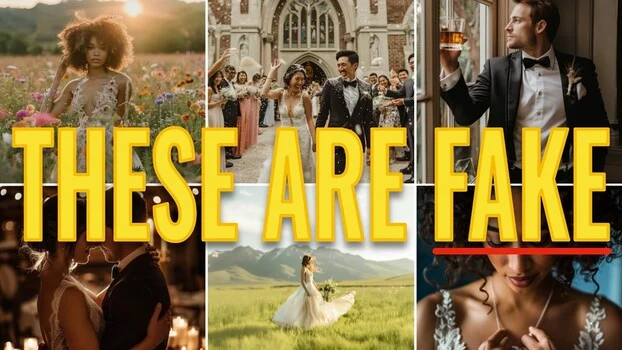
Couples are increasingly posting videos accusing their wedding photographers of secretly using artificial intelligence (AI), creating a significant rift within the professional photography community and generating confusion that makes it harder for engaged couples to find trustworthy vendors. This emergent controversy places working photographers on the defensive regarding tools they already rely upon, necessitating a nuanced discussion on the role of AI in creative professions. John Branch IV Photography, a prominent voice in the industry, has directly addressed this growing concern, advocating for a critical distinction between generative and assistive AI to clarify the debate and re-establish client trust.
The Rise of AI in Creative Fields and Photography’s Historical Adaptations
The current apprehension surrounding AI in photography is not an isolated incident but rather a specific manifestation of a broader societal anxiety regarding the rapid advancement of artificial intelligence. In recent years, generative AI models like DALL-E, Midjourney, and ChatGPT have democratized content creation, enabling users to produce images, text, and even videos with unprecedented ease and speed. This accessibility, while innovative, has also raised fundamental questions about authenticity, intellectual property, and the very definition of human creativity across various industries, from journalism to graphic design and, inevitably, photography.
Photography itself has a long history of technological disruption, each phase initially met with skepticism and accusations of diminishing the craft. The introduction of autofocus in cameras, for instance, was once derided by purists who believed it negated the photographer’s skill in manual focusing. Similarly, the transition from film to digital photography faced strong resistance, with critics arguing that digital sensors lacked the "soul" or dynamic range of film and that digital manipulation was "cheating." Even the advent of Photoshop and advanced editing software prompted debates about altering reality versus artistic enhancement. In each instance, however, the new technology eventually became an indispensable tool, seamlessly integrated into professional workflows and expanding creative possibilities. This historical context is crucial for understanding the current AI debate; it suggests that the core challenge often lies in distinguishing legitimate technological advancement from practices that genuinely undermine artistic integrity or ethical boundaries.
Deconstructing AI: Generative vs. Assistive
At the heart of John Branch IV’s compelling argument is the critical need to differentiate between two distinct categories of AI: generative and assistive. This distinction is paramount for both photographers and clients to engage in an informed discussion and avoid the pitfalls of conflating disparate technologies under a single, often fear-inducing, "AI" label.
Generative AI, as Branch defines it, refers to algorithms capable of creating entirely new content or significantly altering existing content to produce something that did not originally exist. In the context of wedding photography, this includes highly controversial applications such as:
- Face Swaps or Alterations: Changing a subject’s facial expression, swapping faces between individuals, or even generating new faces entirely.
- Invented Backgrounds: Fabricating entirely new backdrops or composites that were not present in the original scene.
- Fabricating Entire Scenes: Generating entire wedding photos from minimal inputs, such as a couple’s selfie or a text prompt, without any actual photography having taken place.
- Marketing Material Creation: Photographers reportedly pulling images from online databases to generate their own marketing shots, raising significant ethical and copyright concerns.
Branch is unequivocally against the use of generative AI in professional wedding photography, viewing it as a practice that can erode authenticity, mislead clients, and allow individuals with "no artistic training" to "churn out work and chase money" without genuine skill or effort. The ethical implications are substantial, potentially leading to situations where clients receive images that bear little resemblance to the actual events or participants of their wedding day. The legal landscape around copyright and ownership of AI-generated content is also nascent and complex, adding another layer of risk.
Assistive AI, on the other hand, is where Branch "plants his flag." This category encompasses tools designed to streamline and enhance existing photographic workflows by automating repetitive or time-consuming tasks that photographers would otherwise perform manually. Assistive AI "learns how you already edit and appl[ies] it faster, moving the same sliders you’d move in Lightroom by hand." Examples of assistive AI include:
- Smart Culling: Algorithms that analyze a batch of photos to identify sharp images, closed eyes, or duplicate shots, helping photographers select the best images more quickly.
- Initial Color Correction and Tonal Adjustments: AI models that apply a consistent look or baseline edits based on a photographer’s established style, significantly reducing the initial editing time.
- Noise Reduction and Sharpening: Advanced algorithms that intelligently reduce image noise or enhance sharpness without introducing artifacts.
- Object Removal and Retouching: Tools like Lightroom’s enhanced removal capabilities, which can intelligently erase distractions (e.g., stray hairs, power lines, minor blemishes) that once required extensive manual cloning or healing.
Branch frames assistive AI not as a replacement for skill or craft, but as a means of "reclaiming time." He illustrates this by detailing his workflow: an initial AI-powered pass for consistent color tones, followed by meticulous manual fine-tuning, straightening, and cleaning up distractions. The ability to remove an unwanted object in seconds rather than 30-40 minutes allows photographers to dedicate more time to the creative aspects of their work or to achieve a healthier work-life balance.
Industry Reactions and Client Confusion
The divergence in opinion within the photography community is stark. One camp, often characterized as "purists," adamantly insists that any use of AI, even assistive tools, fundamentally compromises the integrity of a "real" photographer’s work. This perspective often echoes historical resistance to new technologies, viewing automation as a threat to human skill and authenticity. They argue that the art of photography lies not just in capturing the image but in the painstaking manual process of post-production.
Conversely, a growing number of photographers, led by voices like Branch, embrace assistive AI as an essential evolution of their craft. They argue that ignoring such tools is akin to rejecting modern camera technology in favor of archaic methods. They emphasize that the creative vision and final artistic decisions remain firmly with the photographer, while AI merely handles the more laborious, repetitive tasks. Branch points out the inconsistency of purists who "swear by continuous eye AF and shoot in aperture priority," yet draw the line at editing tools, failing to recognize that autofocus, face detection, and eye tracking are themselves forms of AI-powered processing embedded directly in modern cameras.
This industry split inevitably trickles down to engaged couples, creating significant confusion and eroding trust. When clients hear the generic term "AI," their imaginations often gravitate towards the most sensational examples of generative AI they’ve seen on social media—swapped faces, invented scenes, or fabricated realities. Without clear communication from photographers, this void is filled with suspicion, making it challenging for couples to discern which photographers employ AI responsibly and which might engage in questionable practices.
A Brief Timeline of AI Integration in Photography
The journey of AI in photography, while seemingly a recent phenomenon, has roots stretching back decades:
- Early 1990s: Basic AI elements began to appear in consumer cameras, primarily in the form of rudimentary autofocus systems and programmed exposure modes that made "decisions" based on scene analysis.
- Early 2000s: With the rise of digital photography, editing software like Photoshop introduced "content-aware" features, which used algorithms to intelligently fill in gaps or move pixels, a precursor to modern generative AI. Face detection algorithms also became common in consumer cameras.
- Mid-2010s: More sophisticated AI began to power features like advanced noise reduction, intelligent sharpening, and improved object recognition in professional editing suites. Dedicated AI-powered culling software (e.g., Narrative Select) and initial editing services (e.g., Imagen AI, ShootProof AI) started to emerge, specifically targeting high-volume photographers like those in the wedding industry.
- Late 2010s – Present: The explosion of large language models and advanced generative adversarial networks (GANs) led to the development of highly capable generative AI tools. This period saw the integration of AI into broader image manipulation tools, allowing for complex tasks like sky replacement, advanced object removal, and even the creation of entirely new image elements with relative ease, sparking the current ethical debate.
John Branch IV’s Workflow and Business Justification
Branch’s practical application of assistive AI is grounded in both efficiency and a commitment to maintaining creative control. His workflow demonstrates a balanced approach:
- Culling: For major events like weddings, Branch insists on culling his own images. He argues that AI "can’t know the quirky, meaningful frames from the day"—the candid glance, the subtle interaction, the imperfect but emotionally resonant shot that only a human photographer, present at the event, can truly identify. However, for smaller, less emotionally nuanced shoots like engagement sessions or portraits, he may leverage AI culling for speed.
- First-Pass Edit: This is where assistive AI plays a significant role. After culling, AI tools can apply a consistent color grade, tonal adjustments, and other baseline edits that align with Branch’s established style across an entire gallery. This significantly reduces the initial time spent on repetitive tasks, ensuring a uniform look.
- Manual Fine-Tuning: Following the AI’s first pass, Branch meticulously reviews and fine-tunes every image himself. This involves straightening horizons, making precise cropping decisions, cleaning up minor distractions (like stray hairs or small blemishes), and ensuring that the creative vision for each photograph is perfectly realized. His retouching demo highlights this restraint, focusing on subtle enhancements without "reshaping a face," aligning with client expectations for natural-looking images.
Branch is candid about the "business question" driving his adoption of assistive AI. As a solo photographer managing "25-plus weddings a year with a family," the sheer volume of post-production work can be unsustainable. Spending "20 hours per gallery" becomes an untenable burden, impacting work-life balance and overall business viability. His philosophy is clear: "the business should serve the photographer, not the other way around." By leveraging assistive AI, he can achieve faster, more consistent turnaround times—a benefit that most modern couples increasingly desire. In an era where social media drives instant gratification, quicker delivery of high-quality images is a significant competitive advantage.
Supporting Data and Market Trends
The demand for efficiency in post-production is not anecdotal. Industry surveys consistently show that professional photographers spend a substantial portion of their working hours on editing. Data suggests that, on average, a wedding photographer might spend anywhere from 20 to 40 hours post-processing a single wedding gallery, depending on the number of images and the level of detail. With multiple weddings per month, this quickly accumulates into hundreds of hours. Assistive AI tools, by automating even a fraction of this time, offer a compelling solution to a significant operational challenge.
The market for AI-powered creative tools is also expanding rapidly. Reports indicate that the global market for AI in media and entertainment, which includes photography, is projected to grow significantly, reaching billions of dollars in the coming years. This growth underscores the increasing integration of AI across creative workflows, making it an inevitable part of the industry’s future.
Furthermore, client expectations for delivery speed have evolved. In the age of digital sharing and social media, couples often desire to see and share their wedding photos much sooner than in previous decades. While quality remains paramount, a faster turnaround time without compromising artistic integrity is a significant selling point.
The Imperative of Communication and Transparency
Perhaps the most actionable takeaway from Branch’s discussion is the critical importance of communication. It is no longer sufficient for photographers to simply use AI; they must be able to explain its role transparently and clearly to their clients. A photographer who can articulate the difference between "generative versus assistive AI" and describe their workflow—"I use AI to do a first pass on tones, then hand-check every image"—empowers clients with a clear, accurate picture. Conversely, a photographer who merely mentions "AI" risks allowing the client’s imagination to "fill the gap with the worst thing they saw on TikTok."
To foster trust, photographers should consider:
- Clear Contract Language: Including clauses that explain the use of assistive AI in their post-production process.
- Open Dialogue: Proactively discussing their editing techniques during consultations, explaining how AI enhances efficiency and consistency without replacing their artistic vision.
- Portfolio Transparency: Showcasing their work and demonstrating the consistency achieved with their methods, which may include AI assistance.
- Educational Content: Helping to educate clients on the nuances of AI in photography.
Broader Impact and Implications for the Industry
The ongoing debate about AI in wedding photography carries significant implications for the industry’s future:
- Standardization vs. Innovation: The industry will need to grapple with establishing ethical guidelines for AI use. Professional organizations may need to develop clear standards distinguishing acceptable assistive tools from problematic generative practices.
- Evolution of Skill Sets: Photographers’ skills will likely evolve. While artistic vision and photographic technique remain paramount, proficiency in curating and overseeing AI tools, along with strong communication skills, will become increasingly vital. The role might shift from purely manual execution to that of an "AI conductor," directing technology to serve artistic ends.
- Consumer Education: There is a growing need for broader consumer education regarding AI. Clients need to understand the practical applications and ethical boundaries of AI in creative services to make informed hiring decisions.
- Competitive Landscape: Photographers who responsibly integrate assistive AI may gain a competitive edge through improved efficiency, consistency, and client satisfaction. Conversely, those who misuse generative AI risk severe reputational damage and legal repercussions.
The discussion initiated by John Branch IV is not merely about technology; it is about the future of a creative profession, the ethical responsibilities of artists, and the fundamental importance of trust in client relationships. As AI continues its inexorable march into every facet of life, the wedding photography industry stands at a critical juncture, tasked with embracing innovation while fiercely safeguarding the authenticity and integrity that define its art. The ultimate line, as Branch suggests, will be drawn not just by the tools photographers choose, but by the transparency and integrity with which they wield them.
