
 By Nana Wu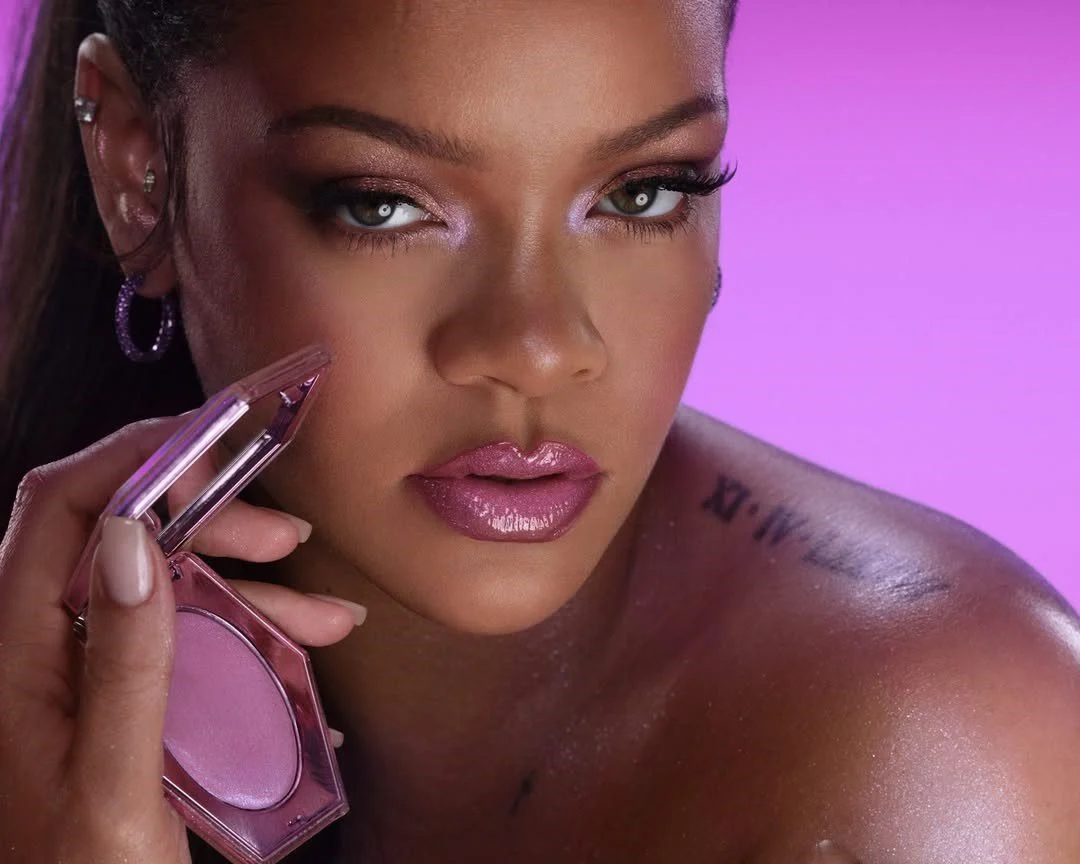
LVMH Moët Hennessy Louis Vuitton, the world’s leading luxury products group, is reportedly exploring a potential divestment of its 50 percent stake in Fenty Beauty, the cosmetics powerhouse co-owned by global superstar Robyn Rihanna Fenty. According to reports from Reuters and sources familiar with the matter, the French conglomerate has engaged the services of investment bank Evercore to advise on a possible transaction. The move marks a significant potential shift for one of the most successful celebrity-led brand partnerships in the history of the beauty industry.
Fenty Beauty was launched in 2017 under LVMH’s Kendo Brands incubator, a division specifically designed to develop and scale beauty brands for the group’s Sephora retail chain. Since its inception, the brand has been a cornerstone of LVMH’s selective retailing and beauty portfolio, credited with fundamentally altering the cosmetic landscape through its commitment to inclusivity. However, as the luxury sector faces a more complex macroeconomic environment and a cooling of consumer demand in key markets such as China and North America, LVMH appears to be recalibrating its long-term strategy to prioritize wholly-owned heritage maisons over shared-ownership ventures.
The Evolution and Impact of Fenty Beauty
Fenty Beauty’s entry into the market in September 2017 was nothing short of a paradigm shift. Debuting with 40 shades of its Pro Filt’r Soft Matte Longwear Foundation, the brand addressed a long-standing gap in the industry: the lack of high-quality products for diverse skin tones, particularly for women of color. This phenomenon, later dubbed the "Fenty Effect," forced established beauty giants to expand their own shade ranges to remain competitive.
The brand’s success was immediate. Within its first few weeks of operation, Fenty Beauty recorded $100 million in sales. By the end of its first full year, it had generated approximately $550 million in revenue. Unlike many celebrity brands that rely solely on the fame of their founder, Fenty Beauty was lauded for its product innovation, sleek packaging, and sophisticated digital marketing strategies that leveraged Rihanna’s massive social media following.
As of 2024, Fenty Beauty continues to be a high performer within the Kendo portfolio. Financial analysts estimate the brand generated roughly $450 million in sales over the last fiscal year. Given current market multiples for high-growth beauty assets, the brand is estimated to be valued between $1 billion and $2 billion. Despite this strong performance, the reported exploration of a sale suggests that LVMH may believe the brand has reached a level of maturity where the group’s incubator-style support is no longer the primary driver of growth.
A Timeline of Growth and Strategic Milestones
The trajectory of Fenty Beauty and its relationship with LVMH provides context for the current considerations regarding a stake sale:
- 2016: LVMH’s Kendo division signs a deal with Rihanna to develop a beauty line, reportedly paying an upfront sum to secure the partnership.
- September 2017: Fenty Beauty officially launches in 1,600 stores across 17 countries, including a massive rollout at Sephora.
- 2018: The brand expands into the "Stunna" lip category and body care, solidifying its position as a full-service beauty house.
- 2020: Launch of Fenty Skin, expanding the brand’s footprint into the skincare category, which typically commands higher margins and stronger customer loyalty.
- 2021: Forbes officially declares Rihanna a billionaire, noting that the bulk of her wealth (approximately $1.4 billion at the time) was derived from her 50 percent stake in Fenty Beauty.
- 2022-2023: Continued expansion into new international markets and the launch of Fenty Hair, further diversifying the brand’s reach.
- Late 2024: Reports emerge that LVMH has tapped Evercore to explore a sale of its stake, coinciding with a broader divestment trend within the conglomerate.
LVMH’s "Portfolio Cleanup" and Strategic Divestment
The potential sale of Fenty Beauty does not occur in a vacuum. Under the leadership of Chairman and CEO Bernard Arnault, LVMH has recently engaged in a series of strategic divestments and structural changes. This "portfolio cleanup" appears aimed at shedding assets that are either lower-growth, less synergistic with the group’s core luxury identity, or involve complex shared-ownership structures.
In late 2024, LVMH completed the sale of Off-White, the streetwear label founded by the late Virgil Abloh, to Bluestar Alliance. While Off-White had been a cultural juggernaut, its positioning in the volatile "high-end streetwear" segment reportedly no longer aligned with LVMH’s focus on timeless luxury. Similarly, the group previously sold its stake in Stella McCartney back to the designer herself, ending a long-term partnership as the group focused on its larger, wholly-owned fashion houses.
Market speculation also continues to surround the future of Marc Jacobs within the LVMH portfolio. While the brand has seen a resurgence in popularity due to its "Tote Bag" and "Heaven" lines, it has long been rumored as a candidate for a spin-off or sale. By streamlining its holdings, LVMH can reallocate capital and executive focus toward its "powerhouse" brands—Louis Vuitton, Dior, Tiffany & Co., and Sephora—which consistently deliver the highest margins and most stable long-term growth.
The Shift toward Wholly-Owned "Maisons"
A key driver in the potential decision to exit Fenty Beauty may be LVMH’s preference for total control over its intellectual property. While joint ventures like Fenty have proven lucrative, they lack the "maison" structure that Arnault favors, where LVMH controls 100 percent of the brand’s heritage, production, and distribution.
A recent internal success story highlighting this preference is the debut of La Beauté Louis Vuitton. Led by legendary makeup artist Pat McGrath, this new line is an in-house venture directly tied to the Louis Vuitton brand. Unlike Fenty Beauty, which operates as a standalone entity under Kendo, La Beauté Louis Vuitton is integrated into the core craftsmanship and sustainability narrative of the flagship house. The line has been touted internally as a significant success, demonstrating that LVMH can generate high-end beauty growth through its existing luxury assets rather than relying on external celebrity partnerships.
Financial Analysis and Market Implications
The beauty sector remains one of the most resilient segments of the luxury market, but it is not immune to the "normalization" of growth following the post-pandemic boom. According to recent earnings reports, LVMH’s Selective Retailing division—which includes Sephora—has remained a bright spot, but the broader Fashion & Leather Goods division has seen a deceleration.
Selling a 50 percent stake in a brand valued at up to $2 billion would provide LVMH with significant liquidity. This capital could be used to fund further acquisitions in the ultra-luxury space or to invest in the digital transformation of its core brands. For Rihanna, a sale could mean several things: she might seek a new private equity partner, or she could potentially look to buy out LVMH’s stake to gain full control of the empire she built, similar to the path taken by Stella McCartney.
However, industry analysts note that Fenty Beauty’s infrastructure is deeply intertwined with LVMH. The brand utilizes LVMH’s supply chain, logistics, and, most importantly, its preferred placement within Sephora. Any separation would require a complex transition period to ensure the brand’s operational stability is not compromised.
Inferred Reactions and Industry Sentiment
While LVMH and Rihanna’s representatives have not issued formal statements regarding the Reuters report, industry reaction has been one of cautious observation. Analysts at major financial institutions suggest that the move is a logical step for a conglomerate that historically prioritizes the "hard luxury" of its heritage brands.
"LVMH is a group that thrives on exclusivity and absolute control," noted one retail equity analyst. "Fenty Beauty is a massive success, but it is essentially a high-volume consumer brand. There is a fundamental difference between the business model of a celebrity-led beauty line and the business model of a heritage house like Dior or Celine. LVMH may feel that the capital tied up in Fenty could be more effectively deployed in their ‘forever’ brands."
Conversely, the beauty industry views the potential sale as a litmus test for the "celebrity brand" era. If LVMH—the most sophisticated operator in luxury—is looking to exit its most successful celebrity partnership, it may signal that the market for such brands is maturing, and the barriers to sustained, long-term growth are becoming higher.
Future Outlook for the Fenty Empire
Regardless of the outcome of the LVMH evaluation, Fenty Beauty’s place in history is secure. It redefined the standards of the beauty industry and proved that a celebrity could build a multi-billion-dollar enterprise through genuine innovation rather than mere endorsement.
If a sale proceeds, the most likely buyers would be large-scale private equity firms with experience in consumer goods, such as Blackstone or KKR, or perhaps another beauty conglomerate like Estée Lauder Companies or L’Oréal, though the latter might face antitrust scrutiny given their already dominant market shares.
The transition would also raise questions about the future of Rihanna’s other ventures with LVMH. While the Fenty fashion house (launched in 2019) was shuttered in 2021, the Savage X Fenty lingerie line continues to operate with backing from various investors, including LVMH-affiliated L Catterton. The outcome of the Fenty Beauty deal will likely dictate the future trajectory of the entire "Fenty" ecosystem and its long-term relationship with the world’s most powerful luxury group.
As the luxury market continues to navigate a period of strategic realignment, the potential divestment of Fenty Beauty serves as a clear indicator of LVMH’s commitment to its core identity: a collection of historic maisons defined by heritage, craftsmanship, and total group ownership. For the beauty world, it marks the end of an era and the beginning of a new chapter for one of its most influential brands.
