
 By Jia Lissa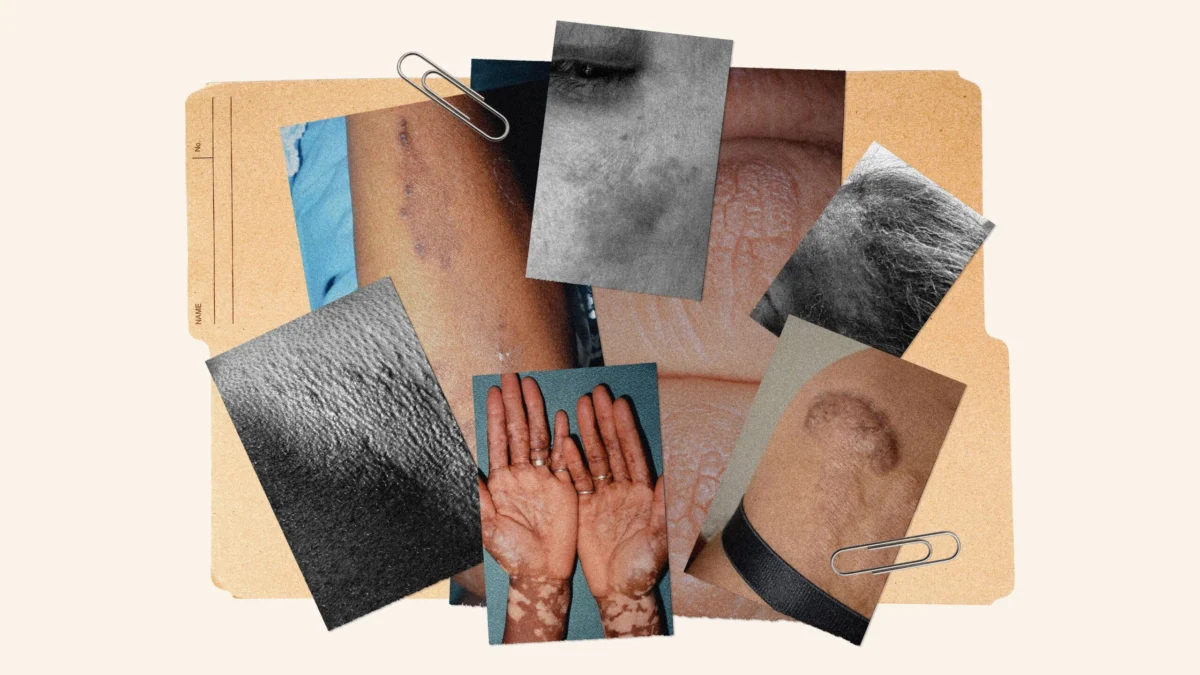
The experience of searching for information about a skin concern online and finding images that don’t accurately reflect one’s own complexion is a familiar frustration for many individuals with Black and brown skin. This lack of visual representation can lead to confusion and anxiety when trying to identify and understand dermatological conditions, which often present differently on melanated skin compared to lighter skin tones. Recognizing this disparity, dermatologists and advocacy groups are working to bridge the knowledge gap and ensure that skin of color receives the attention and care it deserves.
A significant challenge in dermatology has been the historical underrepresentation of diverse skin tones in medical literature and educational materials. This has often resulted in a diagnostic and treatment gap for individuals with darker complexions. For instance, a 2025 medical article published in the Journal of the European Academy of Dermatology and Venereology highlighted that conditions such as post-inflammatory hyperpigmentation and melasma are not only more prevalent but also frequently more severe in individuals with skin of color. This underscores the critical need for increased awareness and specialized knowledge within the dermatological community.
In response to this persistent issue, Dr. Susan C. Taylor, a board-certified dermatologist based in Philadelphia, established the Skin of Color Society in 2004. This organization is dedicated to educating healthcare providers and the public about dermatological health specifically related to skin of color. Dr. Taylor has observed that as the nation’s population becomes increasingly diverse, dermatologists are encountering and treating a broader spectrum of skin conditions that either occur more frequently, present uniquely, or require tailored approaches in Black individuals and other people of color.

"Since establishing the Skin of Color Society, we have made terrific inroads in terms of understanding skin of color a little bit better and prioritizing skin of color," Dr. Taylor stated. She further noted that this collective effort has spurred the development of lectures, conferences, and increased representation in mainstream dermatology textbooks, all focusing on melanated skin.
To further enhance understanding and provide accessible resources, this article offers a comprehensive guide to common skin conditions affecting darker skin tones, detailing their identification and treatment.
Understanding Melanin and Its Role in Skin Health
Melanin is the primary pigment responsible for determining skin color. It exists in two main types: eumelanin, which imparts brown and black hues, and pheomelanin, responsible for red and yellow tones. While the hashtags #melanin and #melaninqueen on social media platforms often associate "melanin-rich skin" with darker complexions, Dr. Jenna Lester, a board-certified dermatologist in San Francisco, clarifies that most individuals possess a balance of both melanin types. The variation in skin color arises from the relative proportions of eumelanin and pheomelanin. Generally, individuals with darker skin tones have a higher concentration of eumelanin. "So it’s not that people with dark skin have more melanin; they just have more of a different type of melanin," Dr. Lester explained.
Melanin is produced by specialized cells called melanocytes, located in the lower layers of the skin. These melanocytes package melanin into structures known as melanosomes, which are then transferred to surrounding skin cells. Beyond pigmentation, melanin, particularly eumelanin, offers a degree of protection against sun damage by absorbing ultraviolet (UV) radiation, thus reducing the risk of sunburn.

Why Skin Conditions Manifest Differently on Darker Skin
The higher prevalence of eumelanin in Black and brown skin significantly influences how various dermatological conditions appear. This increased pigment can alter the visual presentation of inflammation, injury, and disease. For instance, post-acne marks that might appear as redness (erythema) on lighter skin can present as brown or even purplish discoloration on darker skin. Dr. Esther Henebeng, a board-certified dermatologist with U.S. Dermatology Partners Fairfax, elaborates, "So if the photo that you’re seeing online is a stock photo on white skin, but when you look in the mirror, and you see Black skin, you might not identify the issue." This visual discrepancy highlights the challenge many face when seeking self-diagnosis or information online.
Pigmentation Conditions
Post-Inflammatory Hyperpigmentation (PIH)
Post-inflammatory hyperpigmentation (PIH) occurs as a consequence of skin injury, which can stem from various sources including acne, burns, insect bites, or other forms of trauma. Dr. Michelle Henry, a board-certified dermatologist in New York City, notes that due to the abundance of brown pigment in melanated skin, the likelihood of developing PIH after an injury is higher. "Those little melanosomes are full of pigments, and they’re so full that they’re almost bursting," Dr. Henry explained. "So that means anything can bump them and cause them to leak." This leakage of pigment results in hyperpigmentation, manifesting as dark spots or marks in the affected area, commonly seen after pimples have healed.
- Signs and Symptoms: On darker skin, PIH can range from discrete dark spots to broader areas of discoloration. Dr. Henebeng suggests a key differentiator for PIH is its correlation with the site of injury. "Wherever you get the pimple, [PIH] will usually be there, so you’ll have that correlation that something happened to the skin in that spot or area," she stated. Unlike melasma or vitiligo, PIH typically fades over time.
-
Treatment: Dr. Uchenna Okereke, a board-certified dermatologist in Massachusetts, emphasizes the significant role of sunscreen in managing hyperpigmentation. "Consistent use of sunscreen is really the first step in treating hyperpigmentation," Dr. Okereke advised. "Sunscreens with physical blockers like zinc oxide and titanium dioxide help block harmful UV rays from the sun, which will prevent worsening of dark marks." Other beneficial ingredients include glycolic acid, cystamine, kojic acid, azelaic acid, and alpha-arbutin. Consultation with a dermatologist is recommended to determine the most suitable treatment plan.

- Topicals Faded Brightening & Clearing Gel: This product, formulated with kojic acid and licorice root, is a popular over-the-counter option for addressing discoloration.
- CeraVe Resurfacing Retinol Serum: An Allure Best of Beauty Award winner, this serum contains niacinamide and retinol, known for their skin-renewing properties.
Melasma
Melasma is a chronic pigmentary disorder characterized by irregular, lacy patches of discoloration, often described as a "mask of pregnancy." Dr. Corey L. Hartman, a board-certified dermatologist, previously explained that in individuals with melasma, pigment-producing cells become overstimulated, leading to increased pigment production and darker patches. Dr. Lester added, "those pigment-producing cells are stimulated to create more pigment, resulting in darker discoloration."
While often associated with hormonal fluctuations during pregnancy or menopause, melasma can affect individuals of any age and gender. Dr. Henebeng pointed to genetics as another contributing factor, noting that a family history of melasma increases an individual’s risk.
- Signs and Symptoms: Melasma typically appears as darkened patches on the forehead, cheeks, and upper lip. These characteristic locations can help distinguish it from other pigmentation issues, though a dermatologist’s diagnosis is crucial for confirmation.
-
Treatment: For some, melasma patches may resolve on their own. However, persistent cases often require treatment. Sunscreen remains foundational, as UVA and UVB rays, along with visible light, can exacerbate melasma. Dr. Taylor stressed the importance of blocking these wavelengths to prevent darkening and improve the efficacy of treatments. Prescription topical medications, such as Tri-Luma (containing hydroquinone, tretinoin, and fluocinolone acetonide), are often recommended for their potent lightening effects.

- SkinCeuticals Discoloration Defense Serum: This serum contains a blend of kojic acid, tranexamic acid, and niacinamide to target discoloration.
- Melé Even Dark Spot Control Serum: An affordable option, this serum incorporates niacinamide and pro-retinol.
- Chemical peels can also be an effective treatment for lightening melasma pigmentation.
Vitiligo
Vitiligo is an autoimmune condition where the body’s immune system attacks melanocytes, leading to a loss of skin pigment. This results in the formation of white or lighter patches on the skin. Dr. Yolanda Lenzy, a board-certified dermatologist in Chicopee, Massachusetts, explained that inflammatory T-cells are responsible for this attack. While the exact cause is unknown, a combination of genetic predisposition and autoimmune triggers is suspected. Dr. Hope Mitchell, a board-certified dermatologist in Ohio, noted that vitiligo can affect anyone, regardless of race, age, ethnicity, or gender, and is neither contagious nor life-threatening.
On darker skin, the loss of pigment is particularly noticeable, which can lead to significant psychosocial distress and stigmatization for affected individuals.
- Signs and Symptoms: Vitiligo typically presents as distinct white patches on various parts of the body. These patches do not resolve on their own.
- Treatment: Treatment often begins by addressing any underlying autoimmune conditions. Dr. Lenzy has found success with tacrolimus ointment, a non-steroidal anti-inflammatory. Ruxolitinib 1.5% (Opzelura), a JAK inhibitor cream, is another recommended prescription topical. Sun protection is paramount, as the depigmented skin is more susceptible to sunburn. Dr. Mitchell also advises stress management, as stress can trigger inflammatory responses that exacerbate pigment loss. Phototherapy, or light therapy, is another treatment option available in a clinical setting.
Scarring and Growth Conditions
Keloids

Keloids are an overgrowth of scar tissue that form raised, dense, and hard lumps on the skin. They can develop after any skin injury, including acne, piercings, or surgical incisions. Dr. Elizabeth Kiracofe, a board-certified dermatologist in Chicago, stated that keloids are particularly common in individuals with skin of color, with those of African descent being at the highest risk. Genetic factors are believed to play a significant role, as familial cases often follow an autosomal-dominant inheritance pattern.
- Signs and Symptoms: Keloids typically begin at the site of a skin injury and can be accompanied by itching or pain. Their size and location can also lead to aesthetic concerns or discomfort with movement.
- Treatment: While complete prevention of recurrence is challenging, keloids are treatable. Options include steroid injections, surgical removal, laser therapy, and cryotherapy (freezing the keloid). Post-treatment, dermatologists often recommend combination therapies, such as steroid injections or creams following surgical excision.
Dermatosis Papulosa Nigra (DPN)
Dermatosis papulosa nigra (DPN) is a benign condition characterized by the growth of small, dark, mole-like lesions, predominantly on the face, particularly around the cheeks and eyes. Often referred to colloquially as "Morgan Freeman spots," these growths are generally symmetrical.
- Signs and Symptoms: DPN lesions are flat-topped or slightly elevated, darkly pigmented, and symmetrically distributed on the face. They differ from skin tags, which are typically flesh-colored and attached by a stalk, usually appearing in skin folds. DPN often has a familial component, suggesting a genetic predisposition. While harmless, individuals may opt for removal for cosmetic reasons.
- Treatment: The primary treatment for DPN is electrodesiccation, a procedure performed under local anesthesia. A specialized electrode uses a high-frequency electric current to "dry up" the tissue. The treated lesions will darken temporarily before eventually falling off. While removal is permanent, new growths can develop over time.
Pseudofolliculitis Barbae (PFB)
%2520-%2520310%2520-%2520276.JPG)
Pseudofolliculitis barbae (PFB), commonly known as razor bumps, is an inflammatory condition triggered by hair removal methods like shaving. Dr. Henry explained that PFB is more prevalent in individuals with darker skin due to the curved shape of hair follicles, which encourages hair to curl back into the skin. This can lead to ingrown hairs and subsequent inflammation. While often associated with men’s facial hair, PFB can also affect women in areas such as the face, groin, and bikini line.
- Signs and Symptoms: PFB typically appears on areas where hair is removed and presents as small, pimple-like bumps, often accompanied by ingrown hairs. These can manifest as a rash-like cluster, causing irritation and itching.
-
Treatment: For sensitive areas, shaving in the direction of hair growth and using a sharp, multi-blade razor can help. Depilatory creams are another option, though caution is advised to avoid sensitive areas. Chemical exfoliants like glycolic or salicylic acid in serums can also improve the appearance of razor bumps and ingrown hairs by exfoliating the skin and preventing trapped hairs.
- Kiehl’s Ingrown Hair & Tone-Correcting Intimate Drops: This formula contains alpha-hydroxy acids and salicylic acid to exfoliate and address ingrown hairs.
- Fur Ingrown Eliminator Serum: This serum combines salicylic acid with soothing aloe vera.
Hair and Scalp Conditions
Traction Alopecia
Traction alopecia is a form of hair loss caused by prolonged pulling on the hair, often from tight hairstyles such as braids, weaves, cornrows, and high ponytails. This constant tension can lead to permanent damage to the hair follicles. Dr. Henry noted that this affects both natural and chemically relaxed hair.

- Signs and Symptoms: Symptoms include hair loss and thinning, particularly along the hairline, as well as scalp tenderness, pain, and pimple-like bumps in the affected areas.
- Treatment: The primary treatment involves discontinuing the hairstyles that cause tension. Dr. Lenzy recommends rotating hairstyles to give the scalp a break. Addressing scalp inflammation with topical anti-inflammatories or intralesional steroid injections can also be beneficial. Low-dose minoxidil may be used to thicken remaining hairs, and platelet-rich plasma (PRP) therapy is being explored for its potential to slow progression and reduce inflammation.
Central Centrifugal Cicatricial Alopecia (CCCA)
Central centrifugal cicatricial alopecia (CCCA) is a form of scarring hair loss that typically begins at the crown of the head and spreads outward. The precise cause remains unknown, though certain hair-care practices and hairstyles have been implicated. Dr. Lester noted that CCCA can occur even in individuals who have always used low-tension hairstyles and avoided chemical treatments, suggesting a complex etiology beyond styling choices. CCCA is the most common form of scarring hair loss in Black women, characterized by the destruction of hair follicles by inflammatory cells, leading to scar tissue formation.
- Treatment: Accurate diagnosis, often involving a biopsy, is crucial. Scarred areas generally do not regrow hair. However, controlling inflammation and employing treatment options can encourage the growth of any remaining stunted hairs. Treatments may include oral antibiotics (used for their anti-inflammatory properties), topical corticosteroids, minoxidil, and potentially nutraceuticals. In severe cases, oral metformin, tofacitinib, or adalimumab may be prescribed. Early and aggressive treatment is recommended to prevent further progression.
Seborrheic Dermatitis
Seborrheic dermatitis is an inflammatory condition of the skin caused by an overgrowth of Malassezia yeast, a fungus naturally present on the skin. Dr. Nina Desai, a board-certified dermatologist, noted that it is commonly seen in Black women, particularly those who wash their hair less frequently when wearing protective styles, leading to yeast overgrowth. Other triggers include stress, heat, and harsh detergents.

- Signs and Symptoms: On the scalp, it often manifests as dandruff, characterized by scaling and mild inflammation. More severe cases can present as red patches with greasy scales in oily areas of the scalp, face, chest, and back.
-
Treatment: For scalp seborrheic dermatitis, antifungal shampoos containing ingredients like ciclopirox or ketoconazole are recommended. Over-the-counter options are available, but it’s advisable to consult a dermatologist for prescription-strength treatments. Salicylic acid can also help remove scales.
- DermaZinc Shampoo: This shampoo contains zinc pyrithione for its antifungal properties.
- Neutrogena T/Sal Scalp Build-Up Control Therapeutic Shampoo: This product uses salicylic acid to address flaking and build-up.
Conditions That May Signal Underlying Health Concerns
Acanthosis Nigricans (AN)
Acanthosis nigricans (AN) is a skin condition characterized by velvety, darkened, and thickened patches, most commonly found in skin folds like the armpits, groin, and neck. Dr. Mitchell highlighted that AN is more prevalent in individuals with darker skin and can be distressing, sometimes mistaken for dirt or poor hygiene. The presence of AN can indicate underlying health issues such as obesity, insulin resistance, diabetes, thyroid disease, or polycystic ovary syndrome (PCOS). Addressing these underlying conditions is often the primary step in managing AN.
- Signs and Symptoms: In addition to the characteristic dark, thickened patches, AN may involve itching, odor, and the presence of skin tags.
-
Treatment: Treatment for AN is often multi-faceted. Antibacterial cleansers and topical medications like clindamycin can help manage odor and secondary infections. Topical or oral retinoids and exfoliating creams containing ingredients like salicylic acid, glycolic acid, lactic acid, and hydroquinone can help improve skin texture and color.

- Drunk Elephant T.L.C. Framboos Glycolic Night Serum: This serum combines glycolic and lactic acids for exfoliation.
- La Roche-Posay Glycolic B5 10% Pure Glycolic Acid Serum: This serum contains glycolic acid and tranexamic acid to address discoloration.
Skin Cancer
Acral Lentiginous Melanoma
Individuals with darker skin tones are more susceptible to skin cancers in areas not typically exposed to the sun, such as the palms, soles of the feet, and under the nails. This specific type is known as acral lentiginous melanoma.
- Signs and Symptoms: This melanoma can begin as a discolored patch of skin or a dark streak under the nails. Despite being less common in Caucasians, studies, including a 2019 report by the CDC and American Cancer Society, indicate poorer survival rates for Black individuals diagnosed with melanoma compared to white individuals. This underscores the importance of vigilance for people of color in monitoring these areas for new or changing dark spots or streaks.
- Treatment: Treatment for acral lentiginous melanoma depends on its severity but often involves surgical removal of the affected mole or lesion. Further monitoring is crucial to ensure no recurrence or spread. Radiation therapy and immunotherapy are also utilized as treatment modalities.
FAQs About Skin Conditions on Black and Brown Skin
What skin conditions are most common on dark skin?
A 2025 study indicated that disorders of pigmentation are among the leading dermatologic concerns in populations with darker skin tones. This category includes conditions like melasma, post-inflammatory hyperpigmentation, and vitiligo.
How to find a dermatologist specializing in skin color?
While seeking a dermatologist of the same skin color can be comforting, the most critical factor is finding a physician experienced with the specific condition you are facing. Online platforms like ZocDoc allow filtering by condition. Recommendations from friends and family who have navigated similar dermatological issues can also be invaluable. For those specifically seeking Black dermatologists, resources such as Allure’s Black dermatologist directory and the Black Derm Directory on Instagram are available.

Are laser treatments safe on dark skin?
Laser treatments can be effective for conditions like hyperpigmentation and keloids, but their safety on darker skin tones has historically been a concern due to their mechanism of targeting melanin. However, advancements in laser technology have introduced safer options. Lasers such as Aerolase Neo Elite and Lumenis’ Splendor X, which utilize a specific 1064 nm Nd:YAG laser, are considered safer for darker skin. This technology delivers heat beneath the epidermis without damaging the melanin or the epidermis itself, thus minimizing the risk of post-inflammatory hyperpigmentation and scarring, which can be more pronounced in Black and brown skin.
The growing awareness and dedicated efforts within the dermatological community are crucial steps toward ensuring that all individuals, regardless of their skin tone, have access to accurate information, proper diagnosis, and effective treatment for their dermatological concerns.
