
 By admin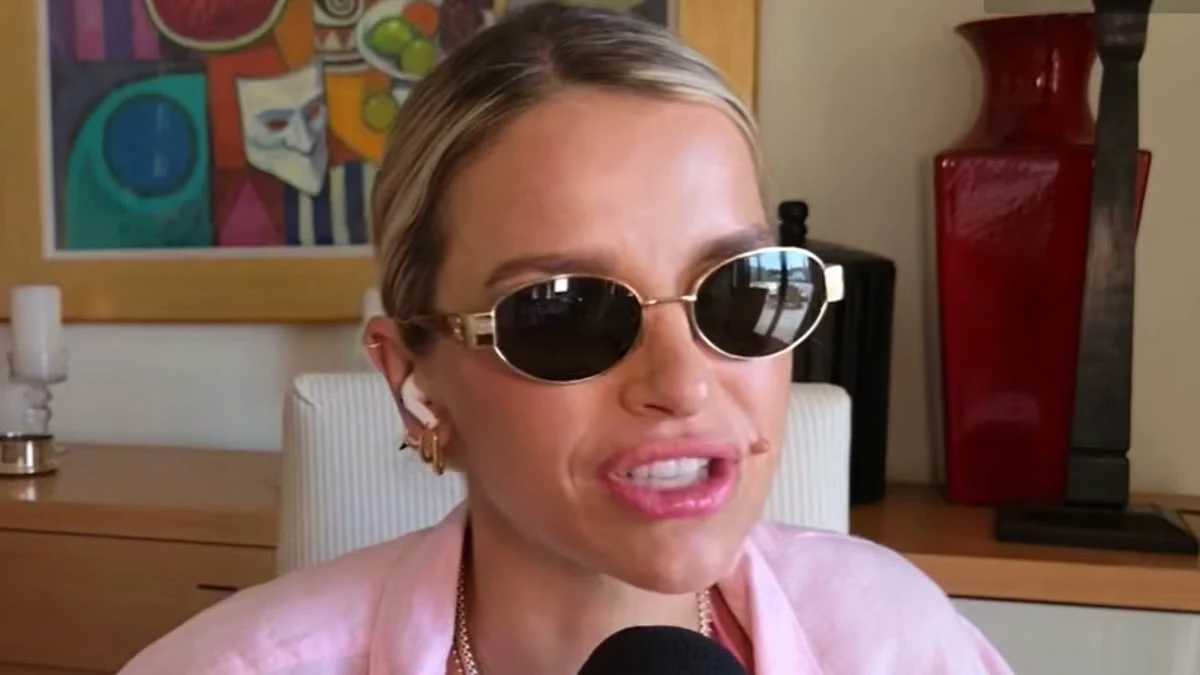
The public discourse surrounding British media personality Katie Price and her recent marriage to Lee Andrews has intensified following pointed remarks from Irish television presenter and podcaster Vogue Williams. In a recent episode of the widely popular "My Therapist Ghosted Me" podcast, which Williams co-hosts with comedian Joanne McNally, the 40-year-old media figure expressed her perspective on Price’s long and often tumultuous history of romantic involvements. Williams, who is currently pregnant, characterized the situation as a "shame," suggesting that Price appears not to have gleaned necessary lessons from her previous high-profile relationships, which have frequently ended in public acrimony.
The friction between the two parties has escalated over several weeks, evolving from generalized commentary into a direct confrontation involving Lee Andrews, Price’s current husband. The dispute originated when Williams initially voiced her reluctance to engage with Andrews’ public persona, citing concerns over his credibility and his alleged penchant for disseminating "fabricated stories." This critique has since broadened to include Price herself, specifically regarding her conduct toward former partners and the recurring patterns visible in her personal life.
The Context of the Conflict: Podcast Disclosures and Public Criticism
During the podcast discussion, Williams and McNally delved into the subject of a new documentary focused on Katie Price’s life and career. While Williams admitted to not having viewed the documentary in its entirety, she noted the inherent interest in hearing the perspectives of Price’s former associates and spouses. She specifically referenced Alex Reid, the former MMA fighter to whom Price was married from 2010 to 2011, noting that while some of Price’s past partners may not have treated her with kindness, the lack of kindness appeared to be mutual in many instances.
The core of Williams’ critique rests on the observation that Price’s history is marked by volatile public disputes with a succession of partners, including singer Peter Andre, Alex Reid, Kieran Hayler, and most recently, Carl Woods. Williams suggested that the recurring nature of these conflicts indicates a failure to adapt or learn from past experiences. "I just find it a shame that it doesn’t seem that she has learned from things that happened in her past because of what’s currently going on," Williams stated, referring to Price’s current marital dynamics with Andrews.
A Chronology of the Dispute
The timeline of this celebrity feud reveals a rapid escalation driven largely by social media interactions and podcast segments. The conflict can be traced back to several key milestones:
- Initial Critique: Vogue Williams first addressed Lee Andrews on her podcast, describing him as a "con artist" and accusing him of attempting to manipulate public perception through "bullsh*t" narratives. She expressed a distaste for being "dragged down to his level," suggesting a lack of intellectual depth on his part.
- The "Clout Chaser" Accusation: Following these remarks, Lee Andrews utilized his Instagram platform to retaliate. He tagged both Williams and McNally in a series of posts, accusing the former of being a "clout chaser"—a term used to describe individuals who seek fame by associating with or attacking more prominent figures. Andrews claimed he had no prior knowledge of Williams and had to search for her identity online.
- The "Name and Shame" Threat: Andrews subsequently announced his intention to "name and shame" approximately 60 individuals within the celebrity world who he claimed had been "slating" him. He promised a live exposé at 10:00 p.m. UK time, specifically targeting what he described as "fake boxers, sneaky DJs, famous-for-nothing presenters, and desperate exes."
- The Direct Message Exchange: In a move to de-escalate the tension with humor, Williams sent a direct message to Andrews, which she read aloud on her podcast. Referencing her pregnancy and the need for early sleep, she requested that he move his "pulling apart" session to 8:00 p.m. so she would not miss her mention.
- The Ambiguous Resolution: Andrews responded to the message with a mix of levity and vague warnings. While he congratulated Williams on her pregnancy, he noted that "a few other things" were coming her way, though he claimed they would not be "detrimental."
Data and Background: Katie Price’s Relationship History
To understand the weight of Williams’ criticisms, it is necessary to examine the historical data regarding Katie Price’s public relationships. Price, a former glamour model who transitioned into a reality television star and author, has been a fixture of the British tabloids for over two decades. Her relationship history is frequently cited as a case study in high-profile romantic volatility.
- Peter Andre (2005–2009): Perhaps her most famous relationship, the pair met on the reality show I’m a Celebrity… Get Me Out of Here! Their marriage was documented in various reality series and ended in a highly publicized divorce that remains a point of media reference today.
- Alex Reid (2010–2011): Price married the cage fighter in Las Vegas shortly after her split from Andre. The marriage lasted less than a year and was followed by a series of legal and public disputes.
- Kieran Hayler (2013–2021): This marriage was marked by multiple instances of infidelity and public reconciliations before eventually ending in a protracted divorce process.
- Carl Woods (2020–2023): An on-and-off relationship characterized by numerous breakups and public arguments played out across social media platforms.
The frequency of these high-stakes separations provides the factual basis for Williams’ assertion that Price’s interpersonal patterns remain unchanged despite years of public scrutiny.
The Role of Lee Andrews in the Current Narrative
Lee Andrews’ entry into Price’s life has introduced a new variable into this long-standing media narrative. Unlike some of Price’s previous partners who hailed from the entertainment or sports industries, Andrews has faced significant skepticism from media commentators regarding his motives and background.
Williams’ description of Andrews as a "con artist" reflects a broader sentiment among certain segments of the media who question the authenticity of his public image. Conversely, Andrews’ defense—that he is a victim of a coordinated effort by "celebrity goons" to tarnish his reputation—highlights the defensive posture often taken by those entering Price’s inner circle. The "clout chasing" accusation leveled at Williams is a common rhetorical device in digital-age feuds, designed to invalidate the critic’s motives by framing them as purely opportunistic.
Analysis of Media Implications
This feud illustrates several significant trends in modern media and celebrity culture. First, the shift from traditional print tabloids to podcasts and social media as the primary venues for celebrity disputes is evident. Podcasts like "My Therapist Ghosted Me" provide a platform for long-form, unfiltered commentary that can be instantly picked up by news outlets, creating a rapid feedback loop.
Second, the conflict underscores the "economy of attention" that sustains the careers of reality television personalities. For figures like Katie Price and Lee Andrews, public controversy—even when negative—serves to maintain relevance and drive engagement. For Vogue Williams, engaging in such discourse provides relatable, high-stakes content for her audience, though she has expressed a desire to avoid the "low-level" nature of the exchange.
The psychological aspect of Williams’ critique—that Price "hasn’t learned"—taps into a common public fascination with the repetitive nature of celebrity behavior. From a journalistic perspective, these events are not merely gossip but are indicative of how personal brands are managed, defended, and occasionally undermined in a hyper-connected digital environment.
Official Responses and Future Outlook
While Katie Price has not issued a formal, long-form statement regarding Williams’ specific comments on her relationship history, her husband’s active engagement on Instagram serves as the de facto response from their camp. Andrews’ decision to use laughing emojis on the podcast’s promotional posts suggests a strategy of dismissiveness, attempting to frame the criticism as humorous rather than damaging.
Joanne McNally, Williams’ co-host, has been equally vocal, pointing out the perceived hypocrisy in Andrews’ "clout chasing" accusations. McNally highlighted that Andrews reportedly set up a "Cameo" account (a platform where celebrities sell personalized video messages) shortly after his marriage to Price, which she argued was a clear example of capitalizing on newfound fame.
As the feud continues to unfold, the focus remains on whether the "name and shame" campaign promised by Andrews will materialize with substantive allegations or if it will remain a rhetorical threat used to maintain media momentum. For Vogue Williams, the focus remains on her professional commitments and her pregnancy, even as she continues to provide a platform for the critique of what she views as a concerning pattern of behavior in the public eye.
In summary, the exchange between Vogue Williams and the Price-Andrews camp is more than a simple celebrity spat; it is a reflection of the ongoing tension between media commentators and the subjects of reality-based fame. It highlights the complexities of public reputation, the enduring nature of personal history in the digital age, and the ways in which modern celebrities navigate the thin line between private life and public performance.
