
 By admin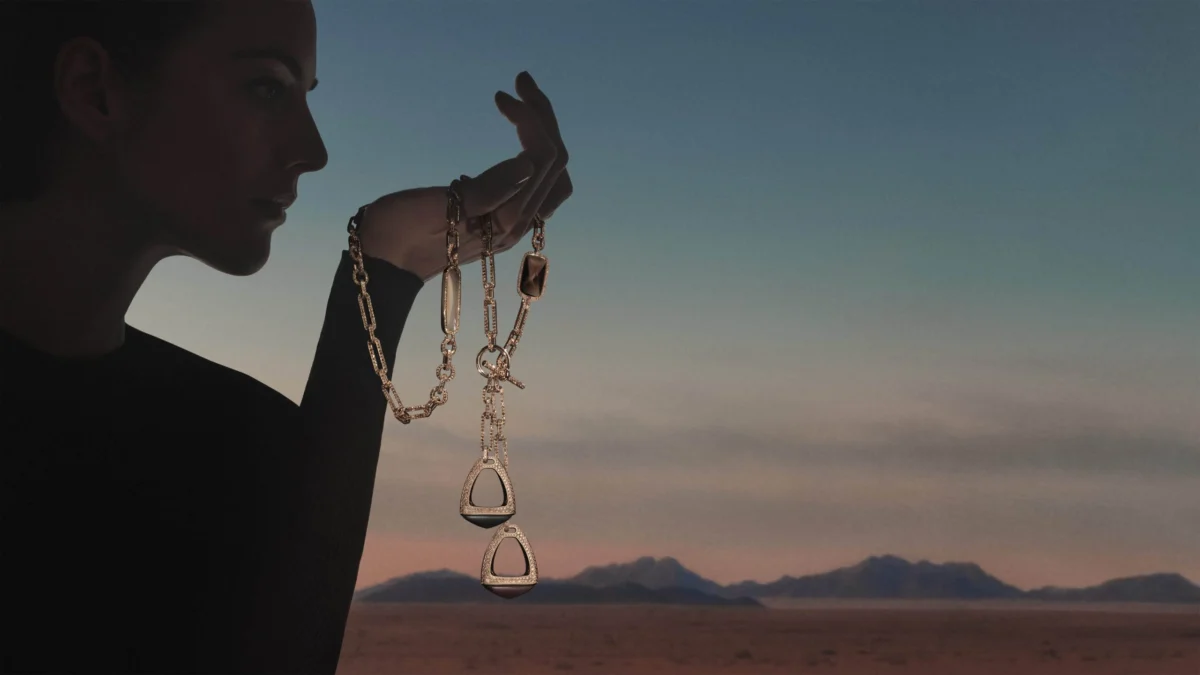
The global high jewellery sector has entered a transformative era in 2026, where the intrinsic value of rare gemstones is increasingly matched by the depth of the narratives they represent. Leading French houses, including Dior, Boucheron, Chaumet, Van Cleef & Arpels, FRED, Hermès, and Louis Vuitton, have shifted their creative strategies to position storytelling as a central pillar of luxury. By weaving together ancient civilizations, botanical wonders, and founder legacies, these maisons are converting historical archives into contemporary luxury narratives that resonate with a global audience seeking both authenticity and investment-grade artistry. This strategic pivot comes at a time when the high jewellery market is projected to reach unprecedented valuations, driven by a demand for pieces that offer emotional resonance alongside material scarcity.

Van Cleef & Arpels and the Revival of Egyptomania
Van Cleef & Arpels has returned to one of its most enduring sources of inspiration with the Fascinating Egypt collection. This 180-piece series marks a century-long dialogue between the maison and the aesthetics of Ancient Egypt, a fascination that first took hold in the 1920s following the 1922 discovery of Tutankhamun’s tomb. During that era, the "Egyptomania" trend influenced the Art Deco movement, leading the maison to create vanity cases and brooches featuring scarabs, lotus flowers, and papyrus motifs.

In the 2026 collection, the house avoids literal replication, instead using Egypt as a springboard for the imagination. The collection is characterized by the use of signature techniques, most notably the Mystery Set, patented by the maison in 1933. This technique allows gemstones to be set without visible prongs, creating a seamless "carpet" of color. In Fascinating Egypt, this is applied to sculptural depictions of deities and pharaohs, utilizing a palette of lapis lazuli, turquoise, carnelian, and emeralds. Each piece is further authenticated with a hieroglyphic cartouche containing the maison’s monogram, bridging the gap between ancient symbolism and modern brand identity. Analysts suggest that by revisiting such a globally recognized cultural touchstone, Van Cleef & Arpels is tapping into a "heritage-as-value" model that appeals to collectors in both established Western markets and emerging Asian economies.

Hermès and the Metaphorical Horse
Under the creative direction of Pierre Hardy, Hermès has unveiled its ninth High Jewellery collection, titled Into the Horsescope. Since its founding in 1837 as a harness and saddle maker, the horse has been the central protagonist of the Hermès story. However, Hardy’s 2026 approach is distinctly abstract. Rather than literal depictions of the animal, the 90-piece collection explores the horse as a metaphor for movement, tension, and grace.

The collection elevates functional equestrian objects—bits, stirrups, lassos, and even the humble blacksmith’s nail—into objects of high art. For instance, the Sellette wrist jewel is a direct reference to an 18th-century miniature saddle found in the Émile Hermès Collection, reinterpreted through the use of titanium, gold, and diamonds. The use of black jade to evoke the texture of a horse’s hoof and brown diamonds to mimic the warmth of a coat demonstrates a sophisticated material narrative. This collection represents a broader trend in the industry where "craft-centric storytelling" replaces overt branding, focusing instead on the house’s origins as a maker of functional tools.

FRED and the Legacy of the Sunshine Jeweller
As Maison FRED approaches its 90th anniversary, it has concluded a significant trilogy of high jewellery with the Monsieur Fred Golden Light collection. The collection is a tribute to founder Fred Samuel, often referred to as "The Sunshine Jeweller" due to his lifelong obsession with the light of the French Riviera and his Argentine roots.

The centerpiece of this 2026 unveiling is the Soleil d’Or diamond, a historic 101.57-carat fancy intense yellow diamond. Discovered in 1977, the stone has been held in the maison’s archives for decades and is being set into a high jewellery creation for the very first time. The collection uses a chronological narrative, tracing the light of the Riviera from the deep blue tanzanites of midnight to the emerald-green rays of sunrise. This release highlights the importance of "Founder Narratives" in 2026, where the personal history of a brand’s creator provides a unique emotional anchor that mass-produced luxury cannot replicate.

Boucheron and the Value of the Human Spirit
In a market increasingly influenced by technological precision and artificial intelligence, Boucheron’s 2026 Carte Blanche: Human Being collection offers a philosophical counter-narrative. Creative director Claire Choisne has posed a fundamental question: what remains precious in an artificial world? Her answer is the human touch, emotion, and the imperfections of creativity.

The collection is anchored by a universal form—the cluster necklace—which serves as the base for five distinct sets. Each set explores different facets of humanity through staggering technical complexity. The Rain set, for example, features 4,800 diamonds suspended in rock crystal droplets filled with plant-based resin, a process that creates the illusion of frozen movement. The Flower set involves 1,200 hours of micro-painting on rose quartz, a traditional art form that defies the speed of modern manufacturing. By documenting that over 14,000 hours of craftsmanship went into the collection, Boucheron is positioning "human labor" as the ultimate luxury. This aligns with a growing consumer sentiment that values "slow luxury" and artisanal transparency over industrial perfection.

Dior and the Fantastical Venice
Victoire de Castellane, who has led Dior Joaillerie since 1999, continues her exploration of Christian Dior’s legacy with the Diorissima collection. Unveiled in Venice, the collection draws parallels between the "La Serenissima" and the house’s couture history. The collection is structured as a dreamlike triptych: botanical, aquatic, and celestial.

Technical innovation is at the forefront of Diorissima, specifically the doublet technique. This involves layering two thin slices of different stones—such as opal and chrysoprase—to create depth and shifting color gradients that would be impossible with a single gemstone. The 141-piece collection serves as a "collage" of shapes and materials, paying homage to artists like Matisse and Picasso, whom Christian Dior himself admired. This reflects a strategy of "Couture-Jewellery Integration," where the codes of high fashion are seamlessly translated into the medium of hard stones and precious metals.

Chaumet and the Sensory Journey of Naturalism
Chaumet’s 2026 collection, A Journey Through Nature, reinforces its historical identity as the "naturalist jeweller" of the Place Vendôme. Founded in 1780, Chaumet has long been associated with the French imperial court, famously creating the "Consular Sword" for Napoleon Bonaparte. The 2026 collection moves away from imperial grandeur toward a sensory exploration of botany.

Divided into chapters such as Botanic Freshness and Spicy Sweetness, the 46-piece collection uses gemstones to evoke scents and tastes. Mint leaves are represented by Colombian emeralds, while the warmth of cinnamon is captured through golden sapphires. Notably, the collection features 25 bee brooches, a motif that has been a symbol of the house since the Napoleonic era. Chaumet has also emphasized its commitment to the Kimberley Process and ethical sourcing, reflecting a 2026 industry standard where "ethical storytelling" is just as important as the aesthetic narrative.

Louis Vuitton and the Evolution of the Monogram
Louis Vuitton continues to expand its high jewellery footprint with the Idylle Blossom collection. This collection focuses on the Monogram Flower, a motif created by Georges Vuitton in 1896 to prevent counterfeiting of the brand’s trunks. In 2026, this leather-goods symbol has been fully elevated into the realm of high jewellery through the use of the LV Monogram Star-cut diamond.

This specialized diamond cut, which mirrors the four-pointed star of the monogram, represents a major investment in proprietary gemstone technology. By centering an entire collection on a specific diamond cut, Louis Vuitton is creating a "branded gemstone" narrative that ensures the piece is instantly recognizable even without a logo. This strategy has proven highly effective in securing the brand’s position among traditional "Big Three" jewellers.

Market Context and Strategic Implications
The shift toward narrative-driven high jewellery in 2026 is not merely an artistic choice but a calculated response to a changing luxury landscape. According to recent market data, the high jewellery segment has shown greater resilience to economic volatility than entry-level luxury goods. Investors and ultra-high-net-worth individuals (UHNWIs) are increasingly viewing these pieces as "wearable assets."

The integration of heritage and storytelling serves three primary functions:

- Differentiation: In a crowded market, a unique historical narrative (like FRED’s Riviera light or Van Cleef’s Egyptomania) provides a clear identity.
- Value Retention: Pieces associated with significant historical milestones or founder legacies tend to command higher prices at auction houses like Christie’s and Sotheby’s.
- Emotional Connection: Modern luxury consumers are looking for "meaningful consumption." A story about the human spirit (Boucheron) or a sensory journey (Chaumet) provides a deeper level of engagement than a simple transaction.
As these French maisons continue to mine their archives and push the boundaries of craftsmanship, the definition of high jewellery in 2026 has evolved. It is no longer just about the stone; it is about the story the stone tells. This synthesis of history, art, and technical mastery ensures that French high jewellery remains the global benchmark for luxury in the mid-2020s and beyond.
