
 By Nila Kartika Wati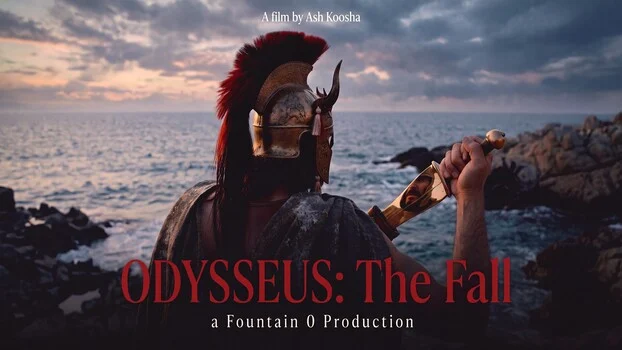
Christopher Nolan’s The Odyssey opens today, a monumental cinematic event shot entirely on IMAX 70mm with a reported budget of $250 million, embodying the pinnacle of traditional filmmaking spectacle. Yet, merely three days before its grand theatrical debut, a starkly contrasting production emerged, signaling a potential paradigm shift in the film industry: an AI studio announced its own 135-minute Odyssey, crafted largely by a single individual over three months for a budget in the mid five figures. This juxtaposition of two vastly different approaches to storytelling, both tackling the epic theme of Homer’s Odyssey, has ignited a fervent debate about the future of cinema, artistic integrity, and the role of artificial intelligence in creative endeavors.
The Traditional Epic: Nolan’s Vision and the Grandeur of IMAX
Christopher Nolan, a director renowned for his commitment to practical effects, intricate narratives, and the immersive power of large-format filmmaking, brings his latest magnum opus, The Odyssey, to global audiences. Known for pushing the boundaries of cinematic presentation, Nolan’s choice of IMAX 70mm is not merely a stylistic preference but a philosophical statement. This format, utilizing film stock significantly larger than standard 35mm, captures unparalleled detail, color fidelity, and a truly panoramic scope, aiming to transport viewers into the film’s world with an almost visceral sense of presence. The reported $250 million budget reflects the immense scale and complexity inherent in such an undertaking: the logistics of transporting massive IMAX cameras to diverse, often challenging, real-world locations; the extensive post-production required for such high-resolution footage; and the assembly of a vast crew of hundreds, if not thousands, of skilled professionals across various departments—from cinematography and sound design to visual effects, set construction, and costume creation.
Nolan’s films often feature practical stunts and meticulously constructed environments, a deliberate choice that resonates deeply with audiences seeking authenticity in an increasingly digital age. His previous works, such as Dunkirk and Oppenheimer, have been celebrated for their commitment to capturing reality on film, minimizing reliance on green screens and computer-generated imagery where possible. This approach fosters a unique relationship between the audience and the cinematic experience, one built on the tangible efforts of human craftsmanship. For The Odyssey, a narrative steeped in ancient mythology and human struggle, the tactile quality of IMAX 70mm is intended to lend an unparalleled weight and gravitas to the epic journey, offering a sensory experience that transcends mere visual information. The theatrical release strategy, emphasizing the unique, communal experience of watching a film on the largest screens available, further underscores the traditional values Nolan champions.
The Algorithmic Epic: Fountain 0 and the Dawn of AI Filmmaking
In stark contrast, Odysseus: The Fall emerges from Fountain 0, a London-based entity that confidently positions itself as "the leading AI movie studio." This production represents a radical departure from established filmmaking norms. Directed by Ash Koosha, the 135-minute feature was primarily created by Koosha himself over a period of three months, with a budget reportedly in the mid five figures—a sum that would barely cover a single day’s catering on a major Hollywood production. Koosha not only directed but also cast his own face as Odysseus, leveraging twelve human likenesses sourced from his personal network to populate the narrative. The imagery was rendered using Kling, an AI video generation tool, signifying a reliance on sophisticated algorithms to conjure visuals that traditionally require extensive camera work, set design, and human performance capture.
Fountain 0’s model bypasses the traditional distribution channels of theatrical release, opting instead for a direct-to-consumer rental model later this summer on its own website, priced at $9.99. This strategy highlights the disruptive potential of AI in democratizing content creation and distribution, allowing a single individual or a small team to produce feature-length films without the massive financial and logistical overheads historically associated with cinema. Ash Koosha is not a newcomer to this nascent field; his previous feature, made for approximately $2,000, achieved the distinction of being the first fully AI-generated film to screen at the prestigious Tribeca Film Festival. This earlier success lends credibility to Fountain 0’s claims and suggests a trajectory towards refining AI’s capabilities in narrative storytelling, moving beyond mere technological novelty.
Chronology of a Confrontation: Two Visions, One Myth
The timing of these two "Odyssey" releases is no mere coincidence but a deliberate provocation from Fountain 0, designed to draw a sharp contrast between the past, present, and potential future of filmmaking.
- Ancient Roots (circa 8th century BCE): Homer’s Odyssey, an epic poem recounting Odysseus’s arduous ten-year journey home after the Trojan War, establishes a timeless narrative template for heroism, perseverance, and the human condition. Its enduring appeal has inspired countless adaptations across various media for millennia.
- Early 2020s: Rise of Generative AI: Rapid advancements in artificial intelligence, particularly in machine learning models capable of generating text, images, and increasingly, video, begin to capture the imagination of artists and technologists. Tools like Kling emerge, offering unprecedented creative power to individuals.
- Late 2023/Early 2024: Fountain 0’s Production: Ash Koosha undertakes the intensive three-month production of Odysseus: The Fall, leveraging AI tools to generate a full-length feature film with minimal human intervention beyond conceptualization and prompt engineering. His previous success at Tribeca provides a foundation for this ambitious project.
- Mid-2024 (Three Days Prior to Nolan’s Premiere): Fountain 0 strategically announces Odysseus: The Fall, complete with a teaser trailer, deliberately positioning its release in immediate proximity to Christopher Nolan’s highly anticipated The Odyssey. This move immediately frames the two films as a direct comparison, challenging audiences and critics to consider the implications.
- Mid-2024 (Today): Christopher Nolan’s The Odyssey premieres globally, a culmination of years of traditional, large-scale production, representing the zenith of human-centric filmmaking.
- Mid-to-Late Summer 2024: Odysseus: The Fall becomes available for rental on Fountain 0’s proprietary platform, offering an alternative viewing experience and distribution model.
This compressed timeline underscores the accelerating pace of technological change and its immediate impact on established industries.
The Chasm of Reception: "Rancid Slop" vs. Cinematic Grandeur
The initial reception to Odysseus: The Fall has been predictably polarizing, leaning heavily towards outright condemnation. Terms like "rancid slop" and "AI parasite" quickly became common refrains across social media and early critical commentaries. The specific complaints echo familiar criticisms leveled against nascent AI-generated media: stilted and unnatural dialogue, a pervasive lack of emotional depth in the characters’ faces (often described as "dead eyes" or existing within the "uncanny valley"), and an overall aesthetic that feels "described rather than filmed." This suggests a fundamental disconnect between the algorithmic generation of images and the nuanced, lived-in texture that audiences have come to expect from human-directed and performed cinema. The absence of genuine interior life, the subtle micro-expressions, and the authentic human interaction that skilled actors and directors bring to a scene are glaringly absent, replaced by approximations that, for many, fail to cross the threshold of believable human experience.
Conversely, Nolan’s The Odyssey is met with anticipation for its expected visual fidelity, narrative complexity, and the immersive experience of IMAX 70mm. Audiences anticipate a film crafted by human hands, driven by human intention, and performed by human actors, offering an emotional resonance that current AI productions struggle to replicate. The contrast highlights a fundamental question: what truly constitutes a "cinematic experience," and can a machine, however sophisticated, replicate the essence of human creativity and empathy?
Ash Koosha’s Counter-Narrative: AI as a Tool for Democratization
Amidst the chorus of criticism, Ash Koosha’s defense of his work and the broader role of AI in creative fields offers a compelling counter-narrative. He articulates a vision where AI is "a threat to nothing except distance, the distance between a person with a story and the means to tell it." This perspective positions AI not as a replacement for human creativity but as a powerful democratizing tool. For countless aspiring filmmakers, the barriers to entry—the astronomical costs of equipment, crew, and post-production, coupled with the gatekeeping nature of traditional studios—are insurmountable. AI, in Koosha’s view, levels the playing field, empowering individuals with urgent stories to tell, regardless of their financial backing or industry connections.
Koosha firmly believes that "a tool has never made a film worth watching. A person with something urgent to say has made every one of them, and that won’t change." This statement underscores his belief that human intention, narrative drive, and artistic vision remain paramount. AI, for him, is merely an advanced paintbrush or a sophisticated camera, allowing the artist to realize their vision with unprecedented efficiency. His previous achievement—a $2,000 AI-generated feature that premiered at Tribeca—serves as concrete evidence of this potential. While details of that film, reportedly titled The Art of Loving, remain less publicized, its selection by a major film festival like Tribeca suggests a recognition of its innovative approach, even if its artistic merit was still debated. This track record makes it difficult to dismiss Koosha’s current venture as merely a "stunt" designed to chase headlines; rather, it appears to be a genuine exploration of AI’s artistic capabilities and its potential to reshape the economics of filmmaking.
Intriguingly, Koosha has also expressed hope that Nolan’s film is a commercial and critical success, and even suggested that his own version might paradoxically send people toward the traditional blockbuster. This could be interpreted as a strategic move to leverage the cultural conversation around The Odyssey, or a genuine acknowledgement of the distinct artistic merits of human-led productions. It also hints at a future where AI-generated content might not necessarily compete directly with blockbuster cinema but could carve out its own niche, potentially serving as an entry point for audiences into broader narrative themes.
Broader Implications: A Tipping Point for Filmmaking
The simultaneous emergence of these two Odyssey films forces a critical examination of several fundamental aspects of the film industry and artistic creation:
- The Definition of "Filmmaking": If a single person, using AI, can generate a 135-minute feature, what constitutes "filmmaking"? Does it require a crew, physical cameras, and actors, or can it be redefined as the algorithmic realization of a vision?
- Economic Disruption: The cost disparity—$250 million versus mid five figures—is staggering. If AI tools continue to improve, enabling the creation of "merely mediocre" films for almost nothing, the traditional economic models of Hollywood and independent cinema could face unprecedented pressure. This raises questions about talent development, job security for crew members, and the sustainability of high-budget productions.
- Audience Expectations and Authenticity: Audiences are currently vocal in their rejection of AI’s current limitations. They can discern the difference between a film made by a crew dragging cameras to real places and one generated by typing prompts. This preference for human authenticity, for the "texture of something filmed" over "something described," is a powerful signal to the industry. However, as AI tools advance, and the uncanny valley narrows, how will audience perception evolve?
- Artistic Integrity and Authorship: Who is the author of an AI-generated film? The person who inputs the prompts, the developers of the AI model, or the AI itself? This blurs traditional notions of artistic credit and intellectual property. The debate over AI’s role in art raises ethical questions about originality, creativity, and the human element in artistic expression.
- Democratization vs. Devaluation: While AI offers unprecedented access to filmmaking for individuals, there’s a risk of devaluing the craft and expertise accumulated over a century of cinema. Will a glut of easily produced, but potentially uninspired, AI content dilute the artistic landscape?
The uncomfortable question isn’t whether this particular AI Odyssey is good—it plainly isn’t, based on current reactions. The more profound and challenging question is what the argument sounds like when the next iteration of AI-generated cinema is merely mediocre instead of outright bad, and still costs almost nothing to make. This scenario could dramatically alter the landscape for independent filmmakers who struggle to secure funding, for studio executives grappling with spiraling production costs, and for audiences navigating an increasingly complex and technologically mediated entertainment ecosystem.
The clash between Nolan’s The Odyssey and Fountain 0’s Odysseus: The Fall is more than just a marketing stunt; it is a profound cultural moment, a stark illustration of the rapidly accelerating technological revolution meeting the enduring legacy of human artistry. It compels the industry, creators, and audiences alike to confront fundamental questions about the nature of storytelling, the value of human craft, and the very definition of cinema in the age of artificial intelligence. The answers to these questions will undoubtedly shape the future of film for decades to come.
