
 By Nila Kartika Wati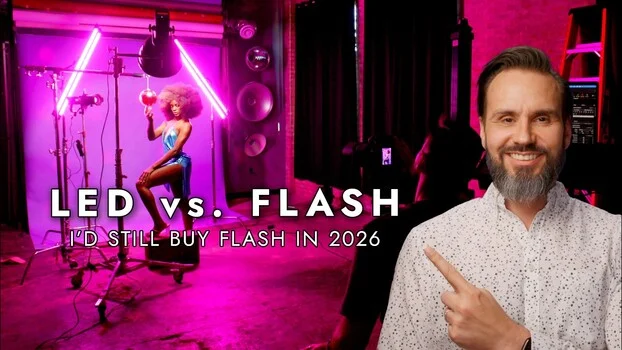
Choosing the appropriate lighting system represents one of the most foundational and consequential decisions for photographers establishing or upgrading their studio kit. While technological advancements have undeniably narrowed the performance gap between traditional flash and modern continuous LED lighting solutions, a definitive chasm persists. Understanding the inherent strengths and limitations of each system under various real-world conditions is paramount for photographers to make informed investments and optimize their creative workflows.
The ongoing discourse received significant illumination from veteran photographer John Gress, who recently presented a compelling case for why a flash system continues to hold an edge as the primary setup for many professionals, even as both technologies rapidly evolve. Gress’s perspective is particularly noteworthy given his extensive experience, having incorporated continuous light into his own portrait work for approximately a decade. His central argument, distilled from practical application, points to the significant limitations of LED lighting when faced with the unpredictable variables of location photography.
The Historical Trajectory of Photographic Lighting
For much of photography’s history, continuous lighting sources, such as incandescent bulbs, tungsten, and later HMI (Hydrargyrum medium-arc iodide) lamps, were the standard for both still and motion picture production. These lights offered the advantage of a "what you see is what you get" preview, allowing photographers and cinematographers to precisely sculpt light and shadow before capture. However, they were often hot, power-hungry, and limited in their ability to deliver intense bursts of light necessary for stopping motion or overpowering ambient conditions.
The advent of electronic flash (strobe) revolutionized still photography. Developed in the mid-20th century, flash units provided an instantaneous, high-power burst of light that could freeze action, deliver consistent color temperature, and operate efficiently on battery power. For decades, studio flash systems, characterized by their high watt-second ratings, robust modifiers, and precise control, became the undisputed king of professional still photography.
The 21st century witnessed the rapid rise of LED technology. Initially celebrated for its energy efficiency, low heat output, and compact form factor, LEDs quickly found their way into various lighting applications, including photography. Early photographic LEDs, however, often suffered from limited power output, inconsistent color rendering (low CRI/TLCI scores), and problematic spectral spikes. Over the past decade, significant research and development have addressed many of these issues, leading to high-power, color-accurate LED panels and fixtures that promise the best of both worlds: continuous light with high output and relatively low power consumption compared to older continuous sources. This technological convergence is precisely what fuels the current debate, yet as Gress highlights, fundamental differences remain.
Overpowering Ambient Light: The Location Photography Imperative
One of Gress’s most critical observations pertains to the challenges of location work. When a photographer steps out of a controlled studio environment, they are immediately confronted with ambient light sources that can significantly impact the final image. This is particularly true in corporate settings or outdoor scenarios.
In an office environment, photographers often grapple with existing fluorescent tubes or commercial LED fixtures. These lights frequently possess undesirable color casts, typically green or yellow, which can contaminate shadow areas or introduce an overall color imbalance in the photograph. While modern cameras offer white balance adjustments, these often work best on a global level and struggle to correct for multiple distinct color temperatures within the same scene. A powerful flash system, by virtue of its instantaneous, high-intensity output, can effectively overpower and neutralize these ambient sources. By exposing for the flash, the photographer can drastically reduce the influence of the unwanted ambient light, ensuring clean, consistent color rendering.
Conversely, a continuous LED setup often struggles in such scenarios. To achieve a similar effect of overpowering ambient light, an LED unit would need to produce an exceptionally high, continuous output, which translates to significantly higher power draw, increased heat, and often larger, heavier units. Even then, the constant presence of the LED light source means it is always competing with the ambient, rather than simply dominating it for a fraction of a second.
The challenge intensifies outdoors. The sun, a colossal and ever-present light source, can reach luminosities far exceeding what most portable LED units can produce at a practical working distance. A sunny day can easily register over 100,000 lux (lumens per square meter), a figure that even the most powerful portable LEDs struggle to match, let alone exceed, from several feet away. While an LED might serve as a fill light or for subtle accentuation, it is generally insufficient to act as a primary light source that dramatically shapes or overpowers direct sunlight. Flash, with its ability to deliver thousands of watt-seconds of power in an instant, can generate enough output to compete with the sun, allowing photographers to control contrast, create dramatic effects, and achieve desired exposures even in bright conditions. This capability is crucial for fashion, portrait, and editorial work conducted outdoors.
The Art of Freezing Motion: Flash Duration vs. Shutter Speed
The debate sharpens considerably when the requirement shifts to freezing motion. Capturing a dancer mid-jump, the delicate flutter of fabric, or a spray of water demands a mechanism to stop movement with absolute precision. Gress argues that this is where flash systems exhibit a profound, inherent advantage.
With flash, the key parameter for freezing motion is not solely the camera’s shutter speed but the flash duration itself. Modern studio strobes can emit light bursts with incredibly short durations, often as brief as 1/5,000th of a second (t.5, meaning the time it takes for the light output to fall to 0.5 of its peak) or even shorter, down to 1/10,000th or 1/20,000th of a second in some high-end units (t.1). This instantaneous burst of light effectively freezes any motion occurring during that brief period, regardless of the camera’s shutter speed (as long as it’s within the camera’s sync speed, typically 1/125s to 1/250s). This allows photographers to maintain lower ISO settings (ISO 100-500) and desired apertures, resulting in cleaner image files with minimal noise and maximum dynamic range. The ability to use flash duration as the primary motion-stopping mechanism means the photographer can choose their aperture and ISO based on creative intent and image quality, rather than being dictated by the need for a fast shutter speed.
Conversely, achieving a similar motion-stopping effect with continuous LED lighting necessitates relying entirely on the camera’s mechanical or electronic shutter speed. To freeze fast action like a dancer, shutter speeds often need to be extremely high – Gress suggests upwards of 1/2,000s or even 1/3,200s. Such high shutter speeds, especially in a studio setting where light levels are controlled, inherently demand significant compromises:
- Higher ISO: To compensate for the extremely short exposure time, the camera’s ISO setting must be dramatically increased. This introduces digital noise, particularly in shadow areas, and can reduce overall image quality and dynamic range.
- Wider Aperture: Alternatively, or in conjunction with higher ISO, a wider aperture (smaller f-number) might be required to gather sufficient light. While wider apertures offer creative possibilities like shallow depth of field, they might not always be desirable for situations requiring greater depth of field, such as group portraits or product photography.
- Combination of Both: More often than not, photographers are forced to increase both ISO and open up the aperture, pushing the limits of their camera’s sensor and lens.
While advanced post-processing tools like Topaz Photo AI, and the integrated noise reduction features in software like Capture One and Adobe Lightroom, can recover detail and reduce noise from high-ISO captures, Gress correctly points out the practical implications. Each pass through such a pipeline adds valuable time to the post-production workflow and introduces decisions that compound across an entire shoot. This can lead to increased turnaround times, potential inconsistencies across images, and an additional layer of technical intervention that might detract from the original raw file’s integrity. For a professional workflow, efficiency and minimizing post-processing overhead are critical.
The Unsung Factor: Client Comfort and Experience
Beyond technical specifications and creative control, Gress draws attention to a often-overlooked yet critical aspect of studio photography: client comfort. This "comfort angle" can significantly impact the dynamic of a shoot and, consequently, the authenticity of the final images.
Gress recounts his personal experience working with a 720W LED light in a 90 cm softbox at arm’s length for his YouTube videos, noting how long it took him to acclimate and stop squinting into the camera. This personal anecdote underscores a broader issue: the intense, continuous gaze of a powerful LED light can be genuinely uncomfortable for subjects, particularly those who are not professional models and are unaccustomed to being photographed. Imagine a corporate executive, a family member, or a first-time model sitting under a 1,200W output source positioned just a few feet from their face for an extended period. The constant glare can cause squinting, eye strain, and a tightening of facial expressions, leading to unnatural or strained poses.
The photographer then finds themselves in a delicate balancing act, attempting to elicit genuine expressions while simultaneously managing the subject’s discomfort. This can create a stressful environment, detract from the subject’s natural demeanor, and ultimately compromise the quality of the portraits. The shoot becomes a struggle between achieving desired image quality and ensuring the subject’s well-being.
Flash, by its very nature, largely sidesteps this issue. The light is emitted in an instantaneous burst, lasting mere fractions of a second. While the peak intensity is high, the total duration of exposure to that intensity is so brief that it typically does not cause the same level of sustained discomfort or reflexive squinting. Subjects can relax between shots, their eyes adjust to ambient light, and they are less likely to feel overwhelmed by a constant, powerful glare. This subtle difference can significantly enhance the client experience, foster a more relaxed atmosphere, and ultimately lead to more authentic and compelling portraits.
Where Continuous LED Lighting Shines
Despite Gress’s strong advocacy for flash as a primary system, he is careful to acknowledge the significant advantages and appropriate applications for continuous LED lighting. These areas are where LED truly excels and often surpasses flash in practicality and efficiency.
-
Video Production: This is the most obvious and indisputable domain for continuous lighting. Video inherently requires a constant light source to maintain consistent illumination throughout a moving sequence. LEDs, with their stable output, consistent color temperature, and often silent operation (no fans in many models), are ideal for filmmaking, vlogging, and all forms of motion capture. The ability to see the light’s effect in real-time is indispensable for videographers.
-
Product Photography (Static Subjects): For photographing inanimate objects, especially in a controlled studio environment, continuous LED light offers immense benefits. The "what you see is what you get" preview allows product photographers to meticulously sculpt shadows, highlight textures, and fine-tune reflections with immediate visual feedback. This iterative process of adjusting light and observing the result in real-time can significantly streamline the workflow compared to flash, where test shots are often required to confirm lighting placement. The absence of motion eliminates the primary drawback of LED in this context.
-
Hybrid Shooting: As the lines between photography and videography increasingly blur, many professionals are now engaged in "hybrid shooting," delivering both still images and video content from the same assignment. For these individuals, a versatile LED setup can serve as a foundational lighting system, seamlessly transitioning between the two mediums. While it might necessitate compromises for high-speed stills, its utility for video often outweighs this for hybrid shooters.
-
Color-Gel Work and Creative Effects: The continuous nature of LED lighting makes it exceptionally well-suited for experimenting with color gels and other creative lighting effects. Photographers can instantly see the impact of different colored gels, gobos (templates for projecting patterns), or diffusion materials without the need for multiple test shots. The emergence of RGBWW (Red, Green, Blue, Warm White, Cold White) LED panels further expands creative possibilities, allowing for precise color mixing and dynamic lighting effects directly from the fixture.
-
Modeling Lights and Focus Aids: Even in a flash-centric studio, continuous LED lights play a crucial supporting role as modeling lights. Many modern studio strobes now incorporate powerful LED modeling lights, allowing photographers to preview the light’s direction and shadow patterns before firing the flash. Additionally, lower-power LEDs are invaluable as focus assist lights, particularly in low-light conditions, helping camera autofocus systems lock onto subjects more effectively.
Technological Convergence and Future Outlook
The evolution of both flash and LED technologies is ongoing. LED units are becoming increasingly powerful, more color-accurate (with CRI and TLCI ratings consistently above 95), and more energy-efficient. Battery technology is also advancing, making higher-output portable LEDs more practical. Features like bi-color and RGB capabilities are becoming standard, offering unprecedented creative control.
Concurrently, flash technology continues to innovate. High-Speed Sync (HSS) allows flashes to be used at shutter speeds far exceeding the camera’s native sync speed, further enhancing their outdoor capabilities. TTL (Through-The-Lens) metering systems have become incredibly sophisticated, simplifying exposure calculations. Faster recycle times, smaller form factors, and more intuitive wireless control systems are also continually being developed.
Despite these advancements and the narrowing gap in certain performance metrics, the fundamental physical principles governing light emission still create a distinction. Flash delivers immense power in an instant, ideal for overpowering ambient light and freezing motion. LED delivers consistent, controllable light over time, ideal for video and situations where real-time preview is paramount.
Investment and Workflow Implications
The choice between flash and LED carries significant implications for a photographer’s investment strategy and daily workflow.
- Cost: While entry-level LED panels can be relatively inexpensive, high-power, color-accurate LED units comparable to professional strobes can be equally, if not more, expensive. The ecosystem of light modifiers (softboxes, beauty dishes, grids) is largely interchangeable, but specialized modifiers exist for each.
- Learning Curve: Continuous light offers a more intuitive "what you see is what you get" experience, potentially shortening the learning curve for beginners. Flash, with its reliance on light meters, ratios, and understanding flash duration, can initially be more challenging but offers greater ultimate control.
- Maintenance and Longevity: LEDs generally have a longer lifespan and are more durable than flash tubes, which require eventual replacement. However, flash units are often built to be robust and field-serviceable.
- Workflow Efficiency: As Gress highlighted, the need for extensive post-processing to correct high-ISO noise from LED shoots can significantly impact workflow efficiency. Flash, by delivering cleaner files upfront, can reduce time spent in the digital darkroom.
Conclusion: Versatility for the Unpredictable
John Gress’s analysis provides a pragmatic and experienced-driven perspective on a critical equipment decision. While acknowledging the undeniable strengths of continuous LED lighting in specific applications like video, static product photography, and hybrid workflows, his core assertion remains consistent: for a primary studio setup, especially one intended for diverse and often unpredictable scenarios like location work and capturing motion, a flash system offers superior versatility.
The ability of flash to overpower challenging ambient light conditions, its inherent capacity to freeze fast action without compromising image quality, and its contribution to a more comfortable client experience cumulatively position it as the more robust and adaptable choice for a wide array of professional photographic demands. Ultimately, as Gress suggests, if a photographer possesses both systems, leveraging their individual strengths for appropriate tasks is ideal. However, when faced with the singular decision of establishing a foundational lighting kit, understanding these distinct advantages is crucial for making an investment that maximizes creative potential and workflow efficiency across the broadest spectrum of photographic assignments.
