
 By Layla Zulfa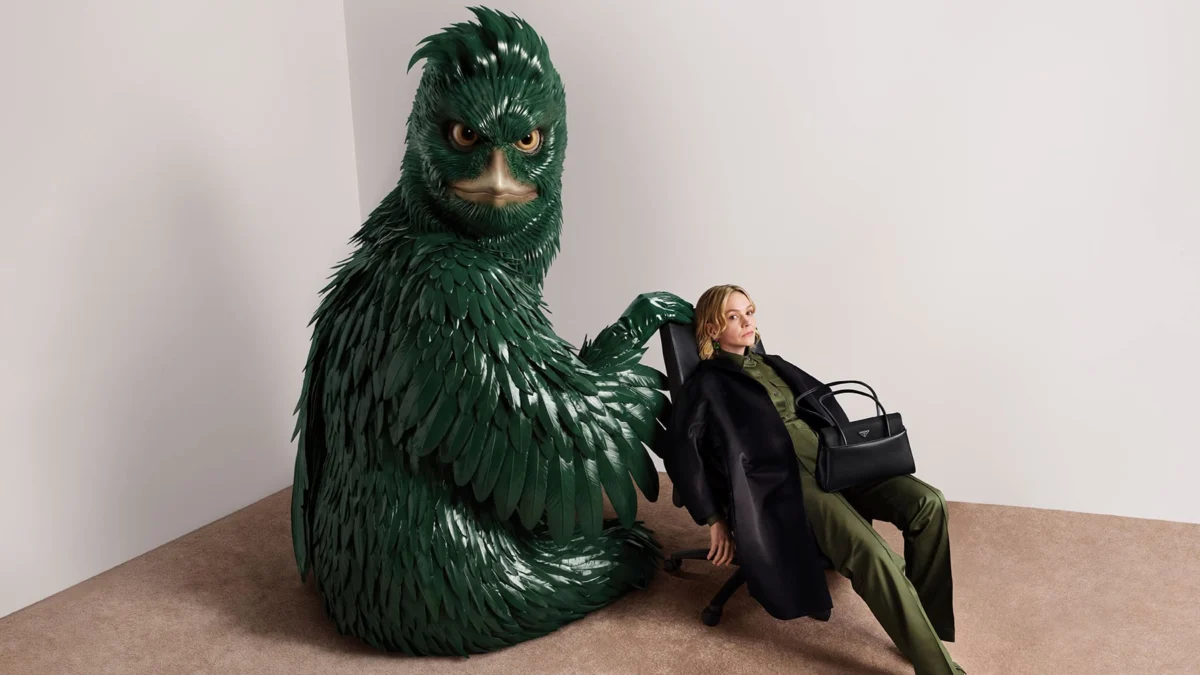
The global fashion community and digital culture enthusiasts alike have been captivated by Prada’s Spring/Summer 2026 advertising campaign, titled "I, I, I, I AM… PRADA." Unveiled recently, the campaign, a collaboration with acclaimed American artist Jordan Wolfson, swiftly achieved viral status, not only for its distinctively unsettling yet mesmerising imagery but also for the subsequent clarification regarding the strategic, albeit post-production, integration of Artificial Intelligence. This development has ignited a fervent discussion across the industry and beyond, probing the evolving boundaries of creativity, technology, and luxury branding.
The Campaign’s Unveiling and Immediate Impact
Prada’s "I, I, I, I AM… PRADA" campaign images, featuring models in various states of digital alteration and surreal environments, began circulating widely across social media platforms and fashion news outlets in the days following its release. The visuals were instantly polarising: some viewers found them profoundly artistic and thought-provoking, while others expressed discomfort, labelling them "creepy" or "disturbing." This deliberate aesthetic provocation is a hallmark of Wolfson’s work and, by extension, Prada’s consistent engagement with avant-garde artistic expressions.
The campaign’s rapid virality underscored a growing public fascination with the intersection of high fashion and emerging technologies. Initial speculation regarding the creation methods ranged from sophisticated CGI to experimental photography. However, it was the subsequent statement from Prada representatives, clarifying that AI was employed "only in post-production," that truly galvanised the debate. This distinction proved crucial, differentiating the campaign from scenarios where generative AI might be perceived as the primary creative force, instead positioning it as a sophisticated tool for artistic refinement and enhancement. The specific nature of the post-production AI applications, while not fully detailed, likely involved advanced image manipulation, textural rendering, and perhaps even the subtle distortion of human forms or environments to achieve the desired uncanny effect that characterises Wolfson’s signature style.
Jordan Wolfson: A History of Provocation and Technology
The choice of Jordan Wolfson as a collaborating artist for such a high-profile campaign is deeply resonant with Prada’s established brand identity and Wolfson’s artistic trajectory. Known for his often controversial and technologically ambitious works, Wolfson consistently explores themes of identity, media, and the human condition through various mediums, including video, sculpture, and robotics. His art frequently confronts viewers with uncomfortable truths, employing uncanny valley aesthetics and psychological tension.
Works such as "Colored Sculpture" (2016), an animatronic figure that dances, speaks, and interacts with the audience in unsettling ways, or his virtual reality piece "Real Violence" (2017), which simulated a violent act, have cemented his reputation as an artist unafraid to push boundaries. His consistent use of cutting-edge technology to achieve emotionally charged and often disturbing effects makes him a natural, albeit challenging, partner for a brand like Prada, which frequently seeks to merge art with commerce in a culturally significant way. Wolfson’s involvement suggests that the "unsettling" quality of the campaign was not an accidental byproduct of technology but a deliberate artistic choice, amplified by the precise application of AI in the refinement stages. His previous engagements with luxury brands have been limited, making this collaboration particularly noteworthy and elevating its artistic credentials within the fashion sphere.
Prada’s Artistic Pedigree and Vision
Prada, under the visionary leadership of Miuccia Prada, has long transcended the traditional role of a fashion house, positioning itself as a cultural institution deeply intertwined with contemporary art, architecture, and intellectual discourse. The Fondazione Prada, established in 1993, stands as a testament to this commitment, hosting groundbreaking exhibitions and cultural projects that foster dialogue between art, science, and philosophy. This history provides crucial context for understanding the brand’s embrace of Wolfson’s challenging aesthetic and the strategic use of AI.
Prada’s advertising campaigns have historically been characterised by intellectual depth and a willingness to experiment with unconventional narratives and visual language. From the stark realism of early campaigns to more abstract and conceptual approaches, the brand has consistently sought to provoke thought rather than merely sell products. This long-standing tradition of artistic collaboration and intellectual curiosity makes the "I, I, I, I AM… PRADA" campaign a logical, albeit daring, extension of its brand philosophy. It underscores Prada’s role not just as a purveyor of luxury goods but as a cultural barometer, unafraid to engage with emerging technologies and the complex questions they raise about human perception and creativity. The brand’s consistent investment in artistic collaborations is exemplified by previous partnerships with renowned photographers and artists, each contributing to a rich tapestry of visual storytelling that often challenges conventional notions of beauty and desire in fashion.
The Nuance of AI’s Role: Beyond Generative Creation
The distinction between generative AI, which can create original content from scratch based on prompts, and AI used in post-production for refinement and enhancement is critical to understanding Prada’s campaign. The brand’s representatives were keen to clarify that AI was not the primary creative engine, generating the core concepts or imagery, but rather a sophisticated tool employed in the final stages of production. This implies that Wolfson’s artistic vision and the initial photographic or conceptual groundwork were human-led, with AI serving as an advanced digital brush to achieve specific textures, distortions, or seamless composites that might be difficult or impossible through traditional means.
This nuanced application of AI aligns with a broader trend in various creative industries, where AI is increasingly viewed as an assistant or enhancer rather than a replacement for human ingenuity. For instance, in film production, AI is used for visual effects, de-aging actors, or generating intricate background elements. In graphic design, AI tools assist with layout, colour palette selection, and image optimisation. Prada’s clarification attempts to sidestep the ethical minefield surrounding AI’s role in authorship and the potential for job displacement, by framing it as a technological evolution in existing production workflows. This approach allows the brand to leverage the cutting-edge capabilities of AI while firmly attributing creative ownership to the human artist, Jordan Wolfson, and the brand’s creative directors.
Historical Parallels: Art, Technology, and Initial Resistance
The conversation surrounding AI’s role in Prada’s campaign echoes historical debates about new technologies entering the artistic domain. The initial resistance to photography in the 19th century, with critics questioning its artistic merit compared to painting, provides a compelling parallel. Similarly, the advent of cinema, television, and later digital art forms (like those explored by Andy Warhol in the 1960s with screen printing and later digital media) each faced skepticism about their ability to convey genuine artistic expression.
Andy Warhol, a pioneer in embracing commercial tools and mass media for fine art, famously blurred the lines between high art and popular culture. His use of silkscreen printing, a mechanical reproduction technique, challenged notions of artistic originality and authenticity. In a similar vein, Jordan Wolfson, through his use of robotics, virtual reality, and now AI, continues this tradition of leveraging contemporary technological advancements to push artistic boundaries and comment on the digital age. The Prada campaign, therefore, can be viewed as a modern iteration of this ongoing dialogue: a testament to how tools once perceived as threats to human creativity ultimately become integral to its evolution, expanding the palette available to artists and designers. This historical perspective suggests that the current apprehension around AI in art may simply be another phase in technology’s relentless integration into creative practices.
Industry Reactions and Expert Commentary
The "I, I, I, I AM… PRADA" campaign has garnered significant attention from various industry stakeholders. Fashion critics have largely applauded Prada for its bold artistic statement and willingness to engage with complex contemporary issues. Many see it as a strategic move that reinforces Prada’s position as an intellectual leader in luxury, distinguishing it from competitors who might adopt AI more superficially. Marketing strategists are keenly observing the campaign’s engagement metrics, recognising its success in generating widespread discussion and media coverage, which translates into invaluable brand visibility. The polarised reactions, far from being detrimental, are often viewed as a sign of effective, thought-provoking advertising in an increasingly saturated media landscape.
Art commentators, while acknowledging the commercial context, are engaging with the campaign as a valid extension of Wolfson’s oeuvre, highlighting how luxury fashion can serve as a platform for profound artistic exploration. However, some voices within the creative community have expressed concerns about the "creepiness" and potential normalisation of highly manipulated imagery, questioning the long-term psychological effects on consumers. Nonetheless, the consensus leans towards recognising Prada’s move as a calculated risk that has paid off in terms of cultural relevance and brand differentiation. Industry analysts predict that this campaign will set a precedent for other luxury brands to experiment more boldly with advanced technologies, not just for efficiency but for artistic expression and narrative depth.
The Broader Implications for Luxury Advertising
Prada’s Spring/Summer 2026 campaign is poised to have several significant implications for the future of luxury advertising. Firstly, it underscores the increasing importance of narrative and artistic depth over mere product display. In an era of digital saturation, brands must find innovative ways to capture attention and foster emotional connections. The "unsettling but mesmerising" quality of Prada’s campaign demonstrates that discomfort, when artistically crafted, can be a powerful tool for engagement and memorability.
Secondly, it highlights the potential for AI to move beyond mere efficiency tools in marketing (e.g., targeted ads, chatbots) and into the realm of creative augmentation. By clarifying AI’s post-production role, Prada has offered a blueprint for how brands can integrate advanced technology without sacrificing human authorship or artistic integrity. This could lead to a surge in demand for artists and creative professionals who possess a deep understanding of both traditional aesthetics and cutting-edge digital tools. Thirdly, the campaign reinforces the luxury sector’s unique position to act as a patron of contemporary art and technology, driving innovation and shaping cultural discourse in ways that mass-market brands often cannot. The high production values and artistic risks associated with such campaigns require significant investment, which luxury brands are uniquely positioned to provide, further solidifying their role as cultural trendsetters.
Ethical Considerations and the Future of Creative Authorship
The "I, I, I, I AM… PRADA" campaign inevitably reignites critical discussions surrounding ethical considerations in AI-assisted creative works. Questions of authorship, originality, and the potential for deepfakes or hyper-real manipulations continue to challenge the creative industries. While Prada’s clarification about AI’s post-production role addresses some concerns by emphasising human artistic direction, the broader debate about the transparency of AI use remains pertinent. Consumers and regulatory bodies are increasingly demanding clarity on when and how AI is used to generate or modify content, particularly in areas like advertising where persuasion is key.
The campaign also subtly touches upon the "uncanny valley" phenomenon, where images or representations that are almost, but not quite, human evoke feelings of unease or revulsion. Wolfson’s work often intentionally explores this space, using technology to blur the lines between reality and artifice, prompting viewers to question what they are seeing and how it impacts their perception of humanity. The integration of AI in this context amplifies the effect, making the figures appear simultaneously familiar and alien, forcing a deeper engagement with the art itself and the underlying message about contemporary existence in an increasingly digitised world. This intentional discomfort is not just a stylistic choice but a commentary on the very nature of perception and reality in the age of advanced algorithms.
Conclusion
Prada’s Spring/Summer 2026 campaign, "I, I, I, I AM… PRADA," stands as a pivotal moment in the ongoing narrative of fashion, art, and technology. Co-created with the provocative artist Jordan Wolfson and employing AI in a carefully defined post-production capacity, the campaign has not only achieved significant viral reach but has also spurred a crucial global conversation. It underscores Prada’s unwavering commitment to artistic innovation and intellectual engagement, positioning the brand at the forefront of cultural discourse. By navigating the complex terrain of AI integration with nuance and artistic intent, Prada has demonstrated that technology, even when initially met with apprehension, can serve as a powerful catalyst for creative expression, pushing the boundaries of what is possible in luxury advertising and reaffirming the enduring relevance of human artistry in an increasingly automated world. The campaign ultimately serves as a compelling case study for how high fashion can continue to evolve, challenge, and inspire, leveraging the tools of tomorrow to tell stories that resonate deeply today.
