
 By Nila Kartika Wati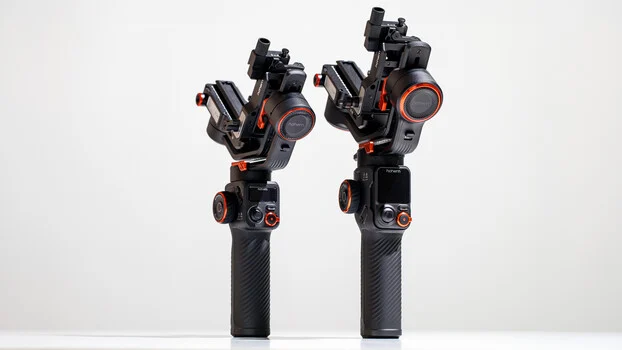
Hohem, a recognized global leader in intelligent imaging and stabilization technology, has consistently distinguished itself by empowering creators through a steadfast commitment to precision engineering and smart design. The company has also been at the forefront of innovation, notably pioneering AI tracking capabilities within gimbal technology. The recent introduction of the Hohem iSteady MT3 and its more robust counterpart, the MT3 Pro, represents a significant stride in the brand’s overarching vision: to deliver an all-rounder, multipurpose gimbal meticulously engineered for professionals who demand unparalleled flexibility across a myriad of dynamic shooting scenarios.
Hohem’s Legacy and the Evolution of Gimbal Technology
Hohem’s journey in the stabilization market is marked by a consistent drive to push technological boundaries. From its inception, the company has channeled its resources into research and development, aiming to create tools that are not only mechanically precise but also intuitively smart. This dedication has positioned Hohem as a significant player, particularly in the competitive landscape of camera gimbals. The evolution of gimbal technology itself has been rapid, transitioning from bulky mechanical stabilizers to sophisticated motorized systems that integrate advanced algorithms for silky-smooth footage. The advent of AI tracking marked a pivotal moment, transforming gimbals from mere stabilization tools into intelligent filmmaking companions capable of autonomously keeping subjects in frame. Hohem’s early adoption and continuous refinement of AI tracking cemented its reputation as an innovator, directly addressing a critical need for solo creators and streamlined production workflows. This chronological development underscores a broader industry trend: the increasing demand for integrated, smart solutions that reduce operational complexity while enhancing creative possibilities. The MT3 series is a direct outcome of this trajectory, building upon years of accumulated expertise and market understanding.
Core Design and Engineering: A Dual Approach to Versatility
At the heart of both the iSteady MT3 and MT3 Pro lies a shared fundamental concept: a sophisticated stabilization system engineered for remarkable scalability. This allows the gimbals to seamlessly adapt, whether paired with a lightweight smartphone, a compact mirrorless camera, or a more elaborate professional setup replete with external accessories. This design philosophy directly counters the limitation of single-use tools, instead offering a platform that evolves with the creator’s diverse workflow.
The Hohem iSteady MT3 Pro, positioned as the more capable variant, presents a formidable package for demanding professionals. Unfolded, it measures 338 mm x 150 mm x 199 mm and weighs 1,070 g. Its substantial payload capacity of up to 2.5 kg ensures it can comfortably support a wide array of modern camera systems, including popular mirrorless cameras paired with versatile zoom lenses, as well as smartphones and action cameras. The robust grip handle, notably thicker and wrapped in textured rubber, provides a secure and comfortable hold, particularly beneficial for users with larger hands or when managing heavier loads. An integrated expansion port on the right side of the handle further augments its usability, allowing for the attachment of accessories such as the included bi-directional twist (briefcase) handle. This accessory significantly enhances stability during low-angle shots and aids in overall weight distribution, although it requires secure tightening to prevent accidental detachment. The MT3 Pro’s advanced camera attachment system features a two-piece Arca-Swiss compatible plate. This ingenious design allows for rapid camera removal and mounting onto a tripod without necessitating a complete rebalancing of the gimbal—a critical time-saver in fast-paced production environments. Furthermore, its compatibility with standard Arca-style plates facilitates seamless integration with existing camera cages and L-brackets, enhancing workflow efficiency for users already invested in such quick-release systems.
In contrast, the Hohem iSteady MT3 serves as a streamlined, scaled-down iteration, prioritizing portability without compromising core functionality. Measuring 317 mm x 149 mm x 149 mm and weighing a mere 765 g, it boasts a respectable 1.4 kg payload capacity. This makes it an excellent lightweight alternative for creators utilizing smaller mirrorless cameras, smartphones, or action cameras, provided their setup remains within the specified limit. The MT3 shares the comfortable textured rubber grip, though its handle is comparatively slimmer, potentially suiting users with smaller hands better over extended sessions. Its mounting system employs a single Arca-Swiss compatible plate, which, while functional, requires rebalancing if the camera is removed and then remounted.
Both gimbals benefit from several shared engineering enhancements. Teflon™ coating applied to the gimbal arms effectively reduces friction, facilitating smoother and more precise balancing. A dedicated fine-tuning knob allows for millimeter-level adjustments along the tilt axis, enabling meticulous balancing. While this is a welcome addition, the absence of geared adjustments across all axes represents an area for potential future refinement. An interesting design observation relates to the maximum roll-axis position, which prevents full folding without re-adjustment when extended past the 3.1 mark on the roll axis scale. This suggests a deliberate design choice, possibly explaining the absence of auto-locking motors. Hohem has thoughtfully incorporated rubber padding on the pan-axis motor to prevent the roll axis arm from accidental contact, and crucially, the roll motor’s low positioning ensures an unobstructed view of the camera’s rear screen.
The stabilization prowess of the MT3 series is largely attributed to Hohem’s proprietary iSteady 10.0 stabilization system. This latest iteration boasts a claimed 40% improvement in motor strength compared to previous generations. This enhanced torque translates directly into practical advantages: the gimbals can sustain heavier payloads, manage cameras equipped with longer focal lengths, and accommodate accessory-laden setups (e.g., microphones, cages, fill lights) without immediately overwhelming the motors or compromising stability. This reinforces their positioning as versatile tools capable of handling professional-grade demands.
A cornerstone of the MT3 series’ versatility is its 4-in-1 compatibility concept. Both models are meticulously designed to support mirrorless cameras, smartphones, action cameras, and compact vlog cameras. The transition between a camera and a smartphone is facilitated by an included phone holder, which is easy to mount and enables quick rotation between horizontal and vertical orientations—a critical feature for creators producing content across diverse platforms like YouTube, TikTok, and Instagram. This flexibility makes the MT3 series particularly attractive to content creators who frequently switch between different camera configurations within a single production day. Furthermore, the 2nd-Gen Fast Switch (Multi 5.0) design allows for a rapid four-step transition from horizontal to vertical shooting, streamlining the workflow for multi-platform content creation. Both gimbals offer an expansive controllable range: infinite 360° pan, a -45° to 45° roll, and a -90° to 180° tilt, providing ample freedom for dynamic camera movements and creative framing.
Integrated Intelligence: The AI Tracking Advantage
A key differentiator and a significant leap forward for the MT3 series is the seamless integration of an RGB and CCT fill light alongside a built-in 2 MP AI camera dedicated to subject tracking. This integrated AI system eliminates the need for external tracking modules or additional accessories, thereby simplifying setup, reducing potential points of failure, and mitigating the risk of misplacing components—a common frustration for field-based creators. The AI tracking in both models can be intuitively controlled via gesture recognition: an "OK" gesture initiates tracking, an open palm stops it, and a double-L gesture allows for framing adjustments. This hands-free control further streamlines solo operations.
The MT3 Pro offers a clear advantage in its AI tracking capabilities. It supports a significantly wider range of subjects, including humans, pets, vehicles, and various objects, making it highly adaptable for diverse shooting scenarios. Its extended recognition distance of 0.5 m to 5 m and a tracking distance of up to 7 m provide greater operational flexibility, particularly when working with telephoto lenses or in larger environments. The MT3 Pro’s detachable 1.4" OLED touchscreen display serves as a crucial interface, acting not only as a remote to control gimbal parameters but also as a dedicated screen for selecting subjects for AI tracking. This low-latency Bluetooth connection allows it to function as a long-range (up to 10 m) secondary live view monitor, directly displaying the feed from the built-in AI camera. This feature is invaluable for solo operators, allowing them to monitor tracking and framing from a distance, or even attach the remote to the bi-directional twist handle for enhanced control during low-angle shots. It is important to note, however, that while the AI camera tracks the subject, its influence on the camera’s autofocus is limited, and users should be aware of potential framing differences between the remote’s live view and the actual camera’s field of view, especially with longer focal lengths.
The MT3, while more constrained, still delivers effective AI tracking performance. Its AI tracking is limited to human subjects only, with a shorter recognition range of 0.5 m to 3.5 m and a maximum tracking distance of 5 m. Despite these limitations, the MT3’s tracking remains highly effective for its target audience of solo creators, vloggers, and those operating in controlled shooting environments where human subject tracking is the primary requirement. Its smaller 0.4" non-detachable OLED screen, navigated by physical buttons, provides access to its parameters.
Both gimbals allow for adjustable motor strength settings, though with differing levels of granularity. The MT3 Pro offers finer control, with strength adjustments ranging from 1 to 100, alongside easily selectable follow speed presets and distinct "smooth follow" and "tight follow" modes. The MT3 provides a more simplified approach with only four steps of strength customization and no responsiveness customization. For optimal performance, users are recommended to utilize the auto-calibration feature, which effectively optimizes motor parameters for the mounted payload.
Battery life is a critical consideration for professional use. The MT3 Pro is equipped with a robust 4,350 mAh battery, rated for up to 20 hours of operation. The MT3, while smaller, still offers substantial endurance with a 2,600 mAh battery providing up to 17 hours of operation. These figures are derived from controlled indoor testing environments (25°C, 60% humidity, motors at full power, AI tracking disabled, maximum payload, stationary gimbal). Real-world usage will naturally introduce variations, but from extensive testing, both batteries are sufficient for a full day of typical professional usage with power to spare. A design choice that impacts usability is the non-detachable nature of the batteries. While contributing to a more solid and integrated build quality, this can be restrictive during extended shoots where quick battery swaps are impossible, necessitating reliance on power banks or downtime for charging.
For users opting for the MT3 Pro Kit, an additional layer of expandability is offered by the inclusion of the Spot Mini Motor. Weighing a mere 90 g, this compact motor provides three levels of speed control for precise focus or zoom pulls, adding an essential tool for cinematic control without significantly increasing the overall weight of the setup.
Workflow Integration and Real-World Impact
In practical, real-world applications, the integrated AI tracking camera proves to be a game-changer, seamlessly enhancing the gimbal’s utility with minimal setup. A simple flick of a switch activates the system, making it instantly accessible. For creators who frequently film themselves, pairing the MT3 Pro with its detachable remote control screen significantly streamlines the workflow, as AI tracking can be initiated remotely via gesture control. The tracking performance across both gimbals is generally reliable. The MT3 Pro’s advanced tracking, particularly when combined with its detachable screen, offers a distinct advantage. It allows users to visually select and monitor subjects on the remote screen without needing to remain directly behind the camera. Its ability to track multiple subject types up to 7 meters is especially beneficial when using telephoto lenses, though at such distances, the subject on the remote’s screen can appear quite small. A practical tip for optimal tracking is to initiate the process with the subject closer to the gimbal before increasing distance, facilitating easier selection and continuous, accurate tracking.
However, a notable observation for MT3 Pro users relying on the touchscreen display’s remote live view for framing is the potential for framing discrepancies between the remote and the actual camera feed, particularly when shooting above 35mm. This occurs because the AI camera possesses a wider field of view than the mounted lens, meaning a subject perfectly tracked by the AI camera might not be perfectly centered in the camera’s frame. The current absence of a framing calibration option for AI tracking necessitates manual joystick adjustments if precise framing is required. Conversely, the fully featured touchscreen display on the MT3 Pro greatly simplifies the gimbal balancing process by providing an intuitive balance indicator, which removes much of the guesswork typically associated with fine-tuning a gimbal’s balance on uneven surfaces.
Physical controls on both the MT3 and MT3 Pro are designed for intuitive operation. The multifunctional roller wheel situated on the left side of the grip handle is particularly effective. On the MT3 Pro, a double-tap defaults to switching between follow focus and tilt control, while a triple-tap toggles between RGB and CCT lighting modes. Crucially, these controls are fully customizable within the MT3 Pro’s touchscreen menu, allowing creators to tailor the interface to their specific shooting styles and preferences. While the MT3’s control wheel maintains a fixed layout, its responsiveness and intuitive nature ensure it remains highly functional for essential control adjustments.
One of the most compelling attributes of the MT3 system is its seamless device interchangeability, which often negates the need for recalibration when switching camera types. The entire camera mounting assembly on the tilt axis can be effortlessly removed and replaced directly with the included smartphone holder. This system is also cross-compatible between the MT3 and MT3 Pro, offering exceptional flexibility for creators who might utilize both gimbals simultaneously, provided payload limits are respected. When transitioning to a lighter mobile phone setup, an auto-calibration run is recommended to prevent vibrations caused by excessive motor power. The phone holder itself is well-designed, offering easy rotatable orientation, though space for additional accessories like mic receivers or SSDs might be limited. The ability of the gimbal to support a smartphone with such sensitivity and without compromise is highly commendable, effectively allowing a smartphone to serve as a reliable B or C camera in remote locations.
The MT3 Pro Kit’s included briefcase handle, while highly functional for low-angle shooting and allowing the detachable screen to be mounted for enhanced control, might be perceived as an accessory solution rather than a fully integrated native feature. The included Spot Mini Motor in the MT3 Pro Kit offers convenient basic focus pulls and zoom control but presents some operational nuances. During use, it occasionally exhibits a tendency to slip, particularly during clockwise rotation. Since the motor’s start and stop points cannot be preset, it may continue rotation beyond the lens’s physical limits, causing gear slippage. A quick calibration via a long press of the speed button can help mitigate this. The motor’s attachment directly to the camera plate is a thoughtful design choice, enabling vertical orientation use and simplifying dismantling, albeit restricting its use to Hohem’s proprietary plate.
In summation of real-world experience, both the MT3 and MT3 Pro deliver strong, predictable, and easily controllable stabilization. The AI tracking is reliably dependable when needed, adding substantial value to the overall workflow. While certain areas could benefit from further refinement, both gimbals stand as highly capable tools for everyday professional use.
Market Positioning and Creator Empowerment
The Hohem iSteady MT3 and MT3 Pro unequivocally distinguish themselves as genuinely capable, all-rounder, multipurpose gimbals designed to scale effectively across a diverse spectrum of creators and professional workflows. Their universal support for mirrorless cameras, smartphones, and action cameras, coupled with robust stabilization, integrated AI tracking, and flexible mounting options, positions them as exceptionally practical tools in the contemporary content creation landscape.
The Hohem iSteady MT3 is ideally suited for entry-level professionals, solo creators, vloggers, and users of lightweight mirrorless camera setups. Its emphasis on portability, combined with modern features such as advanced AI tracking and rapid vertical switching, makes it an excellent choice for those seeking high performance without the burden of a heavier rig. It represents an accessible gateway to professional-grade stabilization and intelligent tracking.
Conversely, the Hohem iSteady MT3 Pro is engineered for hybrid shooters and seasoned professionals requiring a higher payload capacity, broader AI tracking subject support, and enhanced workflow flexibility, particularly through its detachable touchscreen remote. Its expandability with accessories like the Spot Mini Motor further caters to those demanding comprehensive control and future-proofing for evolving production needs.
A particularly compelling aspect of this product launch is Hohem’s clear and logical pricing strategy. With an approximate price difference of $100-$120 separating each tier, users are empowered to make a judicious selection based precisely on their payload requirements and desired feature depth, without incurring costs for unnecessary functionalities. This transparent pricing structure underscores Hohem’s commitment to providing value-driven solutions tailored to specific creator needs. The MT3 series, therefore, offers a well-balanced, modular approach to camera stabilization, presenting a highly compelling choice for creators seeking a singular, versatile gimbal capable of adapting to virtually any shooting scenario. For those looking to further hone their filmmaking prowess to complement such advanced gear, resources like "Introduction to Video: A Photographer’s Guide to Filmmaking" offer valuable tutorials that align perfectly with the capabilities of a versatile gimbal setup.
