
 By Jia Lissa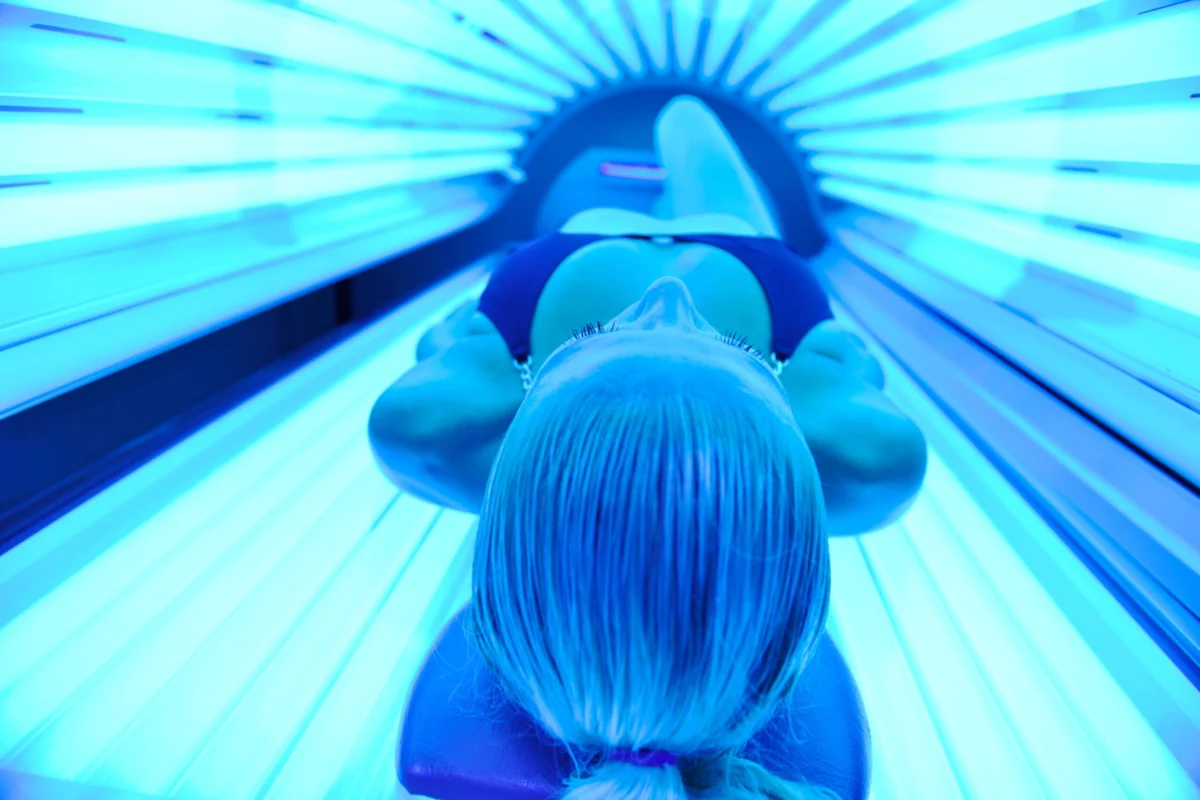
The U.S. Food and Drug Administration (FDA) has announced the withdrawal of a proposed rule that would have prohibited individuals under the age of 18 from using indoor tanning devices. This decision marks a significant shift from the agency’s previous stance and comes after years of consideration and extensive public feedback. The proposed rule, initially put forth in 2015, aimed to safeguard young Americans from the well-documented health risks associated with artificial ultraviolet (UV) radiation exposure, primarily the elevated risk of developing skin cancer.
Background and Initial Proposal
The FDA’s original proposal stemmed from a growing body of scientific evidence linking indoor tanning to serious health consequences. Tanning beds emit UV radiation, predominantly UVA rays, at intensities far greater than natural sunlight. This exposure has been conclusively established as a carcinogen. The World Health Organization’s International Agency for Research on Cancer (IARC) classifies tanning devices as Group 1 carcinogens, placing them in the same category as substances like tobacco smoke, formaldehyde, and asbestos.
For years, dermatologists and public health advocates have warned about the dangers of indoor tanning, particularly for adolescents whose skin is more vulnerable to UV damage. Studies have consistently shown that early and frequent use of tanning beds significantly increases the likelihood of developing melanoma, the deadliest form of skin cancer, as well as non-melanoma skin cancers like basal cell carcinoma and squamous cell carcinoma.
The FDA’s Rationale for Withdrawal
In a statement provided to Allure, an FDA spokesperson explained the agency’s decision to withdraw the proposed rule, stating it was done "in order to reconsider the best means for addressing the issues covered by the Proposed Rule and related issues regarding access to sunlamp products." This reconsideration was prompted by a substantial influx of public comments, totaling over 8,100. These comments represented a broad spectrum of opinions, encompassing concerns about the dangers of UV radiation and the vulnerability of young people, as well as arguments supporting personal choice, parental autonomy, and the potential compliance burdens on small businesses.
The notice of withdrawal was formally signed by Health and Human Services Secretary Robert F. Kennedy Jr. His personal history, including reports of him frequenting indoor tanning salons, has drawn attention in light of this policy reversal. When questioned by The Atlantic about his personal habits and public health advocacy, Kennedy stated, "I’m not telling people that they should do anything that I do. I just say ‘Get in shape.’" This comment suggests a distinction between personal lifestyle choices and public health mandates.
Acknowledgment of Risks, But a Shift in Approach
Crucially, the FDA’s statement did not retract its acknowledgment of the scientific consensus on the link between tanning beds and skin cancer. "Withdrawal of the proposed restrictions does not mean that exposure to UV radiation does not cause skin cancer. It is well established that exposure to UV radiation (including through sunlamp products) can lead to skin cancer," the agency affirmed.
However, the agency’s subsequent recommendation for "users of sunlamp products to discuss the potential risks with their physician before using sunlamp products" has been met with criticism. Health professionals argue that characterizing the risks as merely "potential" downplays the scientifically confirmed dangers.
Expert Reactions and Concerns
The decision has elicited strong reactions from medical professionals and organizations dedicated to skin health. The American Academy of Dermatology (AAD), through its president Dr. Susan C. Taylor, released a statement expressing disappointment. "Exposure to UV radiation from indoor tanning devices is associated with an increased risk of melanoma, as well as non-melanoma skin cancers, including squamous cell carcinoma and basal cell carcinoma," Dr. Taylor stated.
Dermatologists further emphasize the insidious nature of tanning bed technology. Dr. Dendy Engelman, a board-certified dermatologist in New York City, explained that tanning beds predominantly emit UVA radiation, which, while less likely to cause immediate sunburn compared to UVB rays, is more damaging in the long term. "UVA radiation ages you more readily, breaks down collagen more readily, and it’s more oncogenic, meaning cancer-causing," she noted. This design preference in salons, where the goal is to encourage repeat business rather than immediate tanning, exacerbates the risk.
Emerging Research Underscoring Dangers
Recent scientific findings have further amplified concerns about indoor tanning. Research published in Science Advances by Northwestern Medicine and the University of California, San Francisco, revealed that the danger posed by tanning beds may be even greater than previously understood. Prior estimates suggested that indoor tanners were approximately 75% more likely to develop melanoma, with a single tanning session increasing the risk by 20%. However, this new study indicated that tanning bed usage could triple the risk of skin cancer, representing a 200% increase. Through the analysis of 182 skin biopsies, researchers demonstrated that UV radiation from tanning beds induces unique and more damaging DNA mutations than previously recognized.
"The takeaway is simple: Tanning beds don’t just age your skin, they biologically shift your cells toward cancer," Dr. Mona Gohara, a dermatologist and clinical professor at Yale School of Medicine, commented on the findings.
Implications of the FDA’s Decision
The divergence between established scientific evidence and the FDA’s policy shift has raised significant concerns about public health messaging. Dr. Kavita Mariwalla, a double board-certified dermatologist in Long Island, New York, expressed worry about the confusion this might create. "When the FDA, the organization tasked with determining the safety of medications and devices for the United States, backs off this proposal, it gives two signals," she stated. "The first is that it’s not an important issue and the second is that tanning isn’t dangerous enough for the FDA to get involved—both could not be farther from the truth."
Current Regulatory Landscape and Enforcement Challenges
Currently, there is no overarching federal ban on minors using tanning beds. However, numerous individual states have implemented their own restrictions. States like California, New York, Virginia, Illinois, and Texas have outright bans for minors. Other states, such as Alabama, Washington, and Oregon, have bans with exceptions for physician prescriptions, while states like Idaho, Michigan, and Utah require parental consent or supervision.
Despite these state-level regulations, enforcement remains a significant challenge. Dr. Engelman noted, "In a lot of states, high schoolers can just go tanning on the way home from school and their parents don’t even know." She further elaborated on her experience, particularly in the South, where tanning salons that are legally obligated to request identification and parental consent for minors often fail to do so.
Parental Responsibility and Societal Pressures
The burden of preventing adolescent tanning often falls on parents, a task that is becoming increasingly complex in the modern era. Dr. Mariwalla, a mother of three, observed, "it’s hard to parent in 2026 and sometimes on the list of things you’re willing to go to battle on, tanning beds fall at the bottom." This sentiment is echoed by Dr. Engelman, who draws parallels to the challenges of regulating smartphone and social media use among children. The pressure for peer acceptance and the normalization of tanning, amplified by social media trends, can make parental oversight difficult.
The desire for a governing body to take a definitive stance on clearly dangerous activities for young people is palpable among health professionals. "It would be great to have bans on the things we know for a fact are particularly dangerous for young people, to have a governing body with an emphasis on health helping us to keep our kids safe," Dr. Engelman stated.
Escalating Skin Cancer Rates and Persistent Myths
The stakes of this public health issue are considerable, as skin cancer rates continue to climb. Dr. Mariwalla highlighted that skin cancer has reached "epidemic rates in the United States," and despite advancements in treatment and public awareness campaigns, melanoma death rates have remained stagnant for years. The American Cancer Society projects a further increase in new melanoma cases in the coming year.
The impact of UV exposure during adolescence is particularly concerning, as teen skin is more susceptible to damage, significantly increasing the risk of adult skin cancer diagnoses, including deadly melanoma.
Despite the overwhelming scientific evidence, pervasive myths about tanning persist. Common misconceptions include the idea that tanning stimulates vitamin D production and that a "base tan" offers protection against sunburn. A 2025 survey by the AAD revealed that younger adults may not fully grasp these dangers, especially with the influence of social media trends that glamorize tanning. The proliferation of misinformation online underscores the critical need for clear, authoritative guidance from regulatory bodies like the FDA.
Dr. Mariwalla concluded, "The [FDA’s] decision sends the wrong message—especially to young people—that tanning beds are safe, when they’re not. The same way we do not want our teens to smoke, we do not want them to go to a tanning bed." The withdrawal of the proposed rule leaves a critical gap in federal protection against a known carcinogen for a vulnerable population.
