
 By admin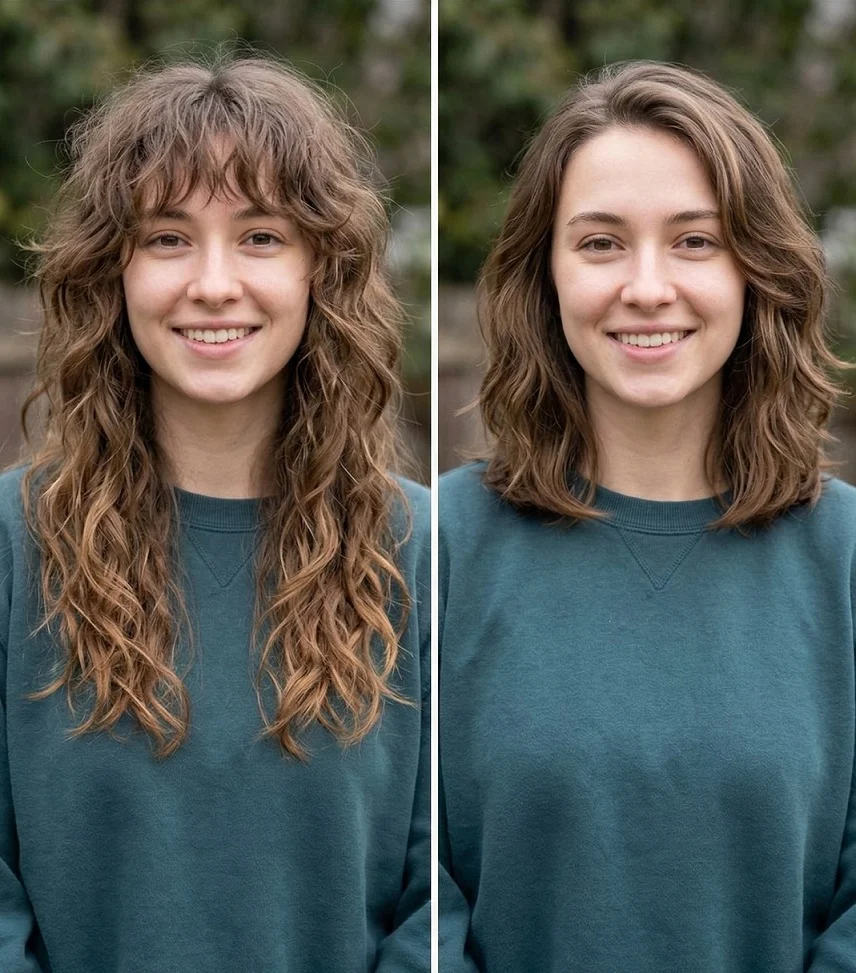
The long-held reliance on rigid face shape categories for hairstyle selection is being challenged by advancements in artificial intelligence, offering a more nuanced and personalized approach to beauty. For decades, individuals have navigated a landscape of advice dictating which hairstyles are "best" for oval, round, square, or heart-shaped faces. However, this traditional system, rooted in mid-20th-century salon practices, often falls short of capturing the unique complexities of individual facial structures, leading to frustration and a feeling of not fitting neatly into predefined boxes.

The genesis of the traditional face shape system can be traced back to the salon training manuals of the 1950s through the 1970s. In an era devoid of digital imaging, stylists relied on mirrors, rulers, and simplified rules of thumb to guide clients. This led to the categorization of faces into a limited number of archetypes: oval, round, square, heart, oblong, and diamond, with variations like pear, rectangle, and triangle sometimes added. While these categories served as a rudimentary starting point for conversation and general guidance, they inherently oversimplified the intricate geometry of the human face. The system, much like universal clothing sizing, often fails to account for the vast spectrum of individual differences, leaving many feeling that their unique features don’t align with the prescribed outlines.
The limitations of this conventional approach become apparent when individuals attempt to apply the advice. A round face, for instance, might be advised to incorporate height, but this generic recommendation overlooks crucial details such as the prominence of cheekbones, the size of the forehead, or the delicate nature of certain features. Similarly, the assumption that everyone possesses straight, medium-textured hair is a significant oversight. Hair texture, whether thick, coarse, curly, or wavy, dramatically influences how a haircut drapes and behaves, irrespective of the underlying face shape. This lack of consideration for these critical elements can lead to styles that, while theoretically aligned with a face shape, fail to harmonize with the wearer’s actual features or hair type.

Moreover, the traditional system can foster a false sense of confidence or, conversely, unnecessary anxiety. The notion that individuals with oval faces can "wear anything" might seem liberating, but the reality often proves more complex when a cut becomes unmanageable or simply doesn’t feel right after a few days. Conversely, rigid rules can prematurely shut down possibilities, such as the common misconception that short hair is unsuitable for round faces. Ultimately, the most flattering hairstyle is one that not only complements one’s features but also aligns with their personal style and character. The pursuit of a universally "ideal" symmetrical, oval silhouette, often implied by these rules, also overlooks the beauty found in asymmetry and the deliberate highlighting of unique attributes like a strong jawline or prominent cheekbones. Studies on facial attractiveness, while acknowledging a general preference for symmetry, also highlight that the definition of beauty remains fluid and subjective, suggesting that breaking conventional molds can be equally, if not more, appealing.
The emergence of Artificial Intelligence (AI) in hairstyle recommendation represents a significant paradigm shift, moving beyond simplistic categorization to a data-driven, multi-faceted analysis. AI algorithms approach facial structure not as a label but as a complex geometric entity, analyzing over twenty distinct measurable cues. These include not only length-to-width ratios but also the precise distances between facial features, their relative proportions, and how they interact with both bone structure and soft tissue. This holistic approach allows AI to identify patterns and correlations between specific facial metrics and a vast library of real-world hairstyles, meticulously cataloged from actual individuals. Instead of prescribing a singular "best" style, AI presents a curated selection of potential options that are statistically more likely to complement an individual’s unique facial architecture.

This advanced analysis considers a range of specific facial details that traditional charts simply overlook. These include, but are not limited to:
- Forehead Height and Width: The proportion of the forehead relative to the rest of the face can significantly impact how a hairstyle frames the face.
- Cheekbone Prominence and Width: High or wide cheekbones can influence the balance and structure of a hairstyle.
- Jawline Shape and Strength: A defined or softer jawline can be accentuated or softened by different cuts.
- Chin Length and Projection: The length and forward projection of the chin play a role in facial harmony.
- Eye Spacing and Size: The distance between the eyes and their relative size can affect the overall perception of facial balance.
- Nose Length and Width: The proportions of the nose are another factor contributing to facial symmetry and character.
- Lip Fullness: The shape and fullness of the lips can be enhanced or complemented by various hairstyles.
- Facial Symmetry: While perfect symmetry is rare, AI can analyze degrees of asymmetry and suggest styles that create a sense of balance.
- Overall Facial Length-to-Width Ratio: This fundamental measurement, while considered in traditional methods, is integrated with numerous other factors by AI.
- Depth of Features: AI can analyze the perceived depth or flatness of certain facial features, which influences how a hairstyle interacts with the face.
- Brow Ridge Prominence: The prominence of the brow ridge can affect how a hairstyle frames the eyes and forehead.
- Ear Size and Placement: While often overlooked, the size and position of the ears can subtly influence the overall look of a hairstyle, especially with shorter cuts.
- Temples Width: The width of the temples contributes to the overall shape and balance of the upper face.
- Hairline Shape: The natural hairline, whether straight, rounded, or with widow’s peaks, can be a key consideration for bangs and hairline styles.
These detailed measurements allow AI to move beyond broad categories and offer recommendations that are tailored to the nuanced interplay of an individual’s specific features.

Real-world experiences underscore the shortcomings of traditional methods and the efficacy of AI-driven solutions. Consider Madison, a photo editor with a round face and thick hair. Traditional advice suggested voluminous, layered styles. While long layers served her adequately, she desired a change to a shorter cut. Her apprehension was understandable, given her long-standing preference for extended hair. However, after utilizing an AI-powered quiz and hairstyle try-on tool, she received a recommendation for a compact, side-parted bob with controlled weight at the ends. The realistic virtual preview provided the reassurance she needed, making the prospect of a significant haircut less daunting and ultimately paving the way for her new look.
Similarly, Kelsey, a social media content creator with an oval face, found herself adrift in a sea of generic advice. From shags to textured lobs and trendy bangs, no style truly resonated beyond the initial wash. By using an AI application, she uploaded her photo and virtually tried on a dozen styles she admired. The system generated previews, and while she was initially drawn to a medium-length wolf cut, she had reservations about shorter pieces potentially sticking out when she styled her hair up. The AI then suggested a medium-length cut with minimal layering, which immediately felt right and became a staple in her rotation. These instances highlight how AI can provide personalized solutions that traditional charts, focused on broad archetypes, fail to deliver.

Debra S. Wilson, a reader, shared her long-standing struggle with determining the best hairstyle, from bangs to lengths and styles. She expressed her gratitude for a system that allowed her to "step back and evaluate myself. To see what it really looks like, not a reverse image in the mirror." This sentiment captures the essence of AI’s advantage: providing a clear, objective visualization of how different styles might actually appear on an individual, moving beyond subjective interpretations or the limitations of a mirror.
The process of leveraging AI for hairstyle selection typically involves a few straightforward steps. Users can opt for an interactive quiz that gathers information about their face shape, hair type, lifestyle, and preferences, alongside a photo analysis. Alternatively, they can directly browse an extensive gallery of hairstyles and utilize a virtual try-on feature. The key is uploading a clear, front-facing photograph with a neutral expression, with hair ideally tied back to ensure accurate facial feature analysis. The AI then processes this information, generating personalized recommendations or allowing users to experiment with various styles, from short cuts and long lengths to blunt edges and layered designs. Advanced features often include 360-degree previews, allowing users to visualize the chosen style from all angles, providing a comprehensive understanding of its potential impact. This ability to compare multiple options and save favorites for future salon consultations empowers individuals to make informed decisions.

While AI offers a revolutionary approach, it’s important to acknowledge that traditional face shape guidelines can still serve a purpose. They are useful for initial broad considerations, offering a basic framework for understanding facial proportions. They can also be helpful for identifying general styles that tend to harmonize with certain proportions. However, their utility diminishes significantly when attempting to account for the intricate details of individual features, hair texture, and personal style. Traditional methods are less useful for precise recommendations, for understanding how various features interact, or for exploring styles that deviate from conventional "rules." In essence, knowing one’s face shape can be akin to understanding basic grammar; it provides a foundation, but mastering the art of communication, or in this case, personal style, requires a deeper, more nuanced understanding.
Once individuals have identified styles they love through virtual try-ons, the next crucial step involves consulting with a professional hairstylist. Saving screenshots of preferred looks and noting recurring patterns in length, shape, and finish provides a valuable visual aid. Discussing these preferences with a stylist allows for expert evaluation of how the chosen styles will translate to the individual’s specific hair texture, density, and current condition. Asking clarifying questions about daily maintenance and styling requirements ensures a realistic expectation of achieving the desired look. Virtual previews, therefore, serve as an excellent starting point, laying the groundwork for a productive and informed salon consultation where the stylist’s real-world expertise can refine the chosen styles.

Frequently Asked Questions: Face Shape and Hairstyle Matching
Do face shape hairstyle rules actually work?
Traditional face shape rules provide broad guidelines but often fail to account for crucial details like feature placement and hair texture. AI, by contrast, conducts a multi-faceted analysis using numerous measurements, leading to far more precise and personalized recommendations.

What’s the best hairstyle for my face shape?
There isn’t a single "best" hairstyle for any given face shape. A truly flattering haircut depends on over twenty different aspects of an individual’s facial structure and hair characteristics, extending far beyond a simple shape label. Virtual try-on tools allow users to evaluate which hairstyles complement their features, while AI-driven quizzes can offer more personalized advice by considering a multitude of factors.
How do I know my face shape?
Instead of forcing oneself into a specific category, the most effective approach is to utilize virtual hairstyle try-on tools. By testing various styles on your own photo, you can visually determine which hairstyles suit you best, bypassing the need for rigid, category-based selections.

Can round faces wear short hair?
Absolutely. The traditional restrictions that once dictated against short hair for round faces have become obsolete. Modern virtual hairstyle try-on applications allow individuals with round faces to experiment with pixie cuts, jaw-length bobs, and other short styles to discover what looks most flattering for their unique features.
Is an oval face shape really ideal?
No single face shape is inherently superior to another. The key to an attractive hairstyle lies in its ability to complement an individual’s unique features, regardless of their face shape. Labels do not dictate what will or will not work; personalized analysis and virtual experimentation are far more reliable indicators.

How does AI choose hairstyles for face shape?
AI algorithms measure angles, distances, and proportions across an individual’s face. This detailed analysis goes beyond just the overall shape, considering the interplay of various facial features to recommend options that are a genuine fit for that person’s unique facial structure.
In conclusion, while face shape remains a contributing factor in the complex equation of hairstyle selection, it is merely one piece of a larger, more intricate puzzle. The advent of AI-powered analysis is revolutionizing how individuals approach their hair, moving away from restrictive, generalized rules towards a personalized, data-driven approach that celebrates the unique geometry of each face. By embracing these advanced technologies, individuals can confidently explore styles that truly enhance their features, ensuring that their hairstyle is a personal statement, not just a compliance with an outdated chart.
