
 By Layla Zulfa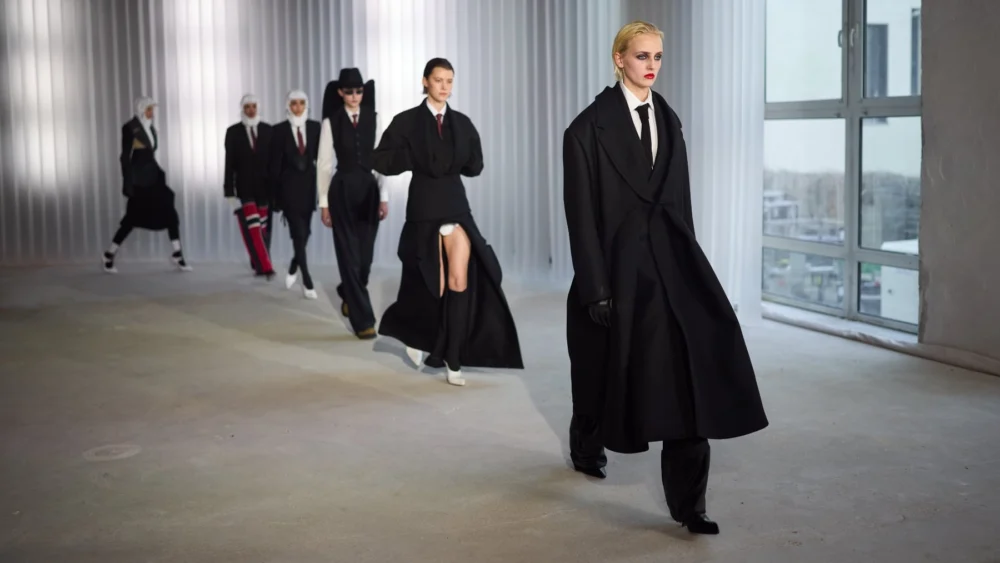
PARIS – The seventh day of Paris Fashion Week concluded with a stark juxtaposition of creative expressions, offering both a much-needed injection of playfulness and a sobering reflection on the challenges facing heritage luxury brands. While recent seasons have seen fashion often veer into the overly serious and conceptually dense – sometimes perceived as a veneer for less robust design – this particular day served as a potent reminder of the industry’s diverse approaches to innovation, legacy, and commercial viability. The collections presented by Jean-Paul Gaultier and Alexander McQueen offered two distinctly different perspectives on how iconic houses navigate their pasts while attempting to chart their futures.
Paris Fashion Week: A Global Epicenter of Style and Commerce
Paris Fashion Week (PFW), a semi-annual series of fashion shows held in Paris, France, with spring/summer and autumn/winter events, stands as one of the "Big Four" global fashion weeks, alongside those in New York, London, and Milan. Historically, it has been the ultimate arbiter of trends and a crucial platform for both established luxury houses and emerging designers. Beyond the artistic spectacle, PFW is a multi-billion-euro industry event, attracting buyers, journalists, celebrities, and industry executives from around the globe. Its significance lies not only in showcasing clothing but also in setting the cultural agenda, driving luxury sales, and influencing the broader fashion ecosystem. The shows are meticulously planned events, often involving months of preparation, significant financial investment, and a deep understanding of brand identity and market positioning.
Jean-Paul Gaultier: A Legacy Reimagined Through Play
The presentation by Jean-Paul Gaultier, a house renowned for its audacious spirit and its founder’s "enfant terrible" moniker, was a vibrant demonstration of creative freedom and a direct engagement with its rich archives. This collection marked Duran Lantink’s sophomore outing as a guest designer for the Puig-owned label, continuing a unique model adopted by the house since Jean-Paul Gaultier’s retirement from ready-to-wear in 2014 and haute couture in 2020. Rather than appointing a permanent creative director, Gaultier has embraced a rotating guest designer system for its haute couture collections, allowing fresh perspectives to interpret its iconic codes. Lantink, an Amsterdam-based designer known for his upcycling and deconstruction techniques, was a compelling choice for this experimental approach.
Duran Lantink’s Vision: Embracing the Archive with Audacity
The core philosophy of Lantink’s collection was succinctly captured in the show notes, penned by Gert Jonkers: "The feeling of freedom to live, to work, to make love, to design and to get dressed requires the desire and determination to play. Always." This ethos permeated every aspect of the presentation, which saw Lantink delve directly into the extensive Gaultier archive. Unlike his debut collection, which offered a more subtle reinterpretation, this season was a bold and explicit dialogue with the brand’s history, filtered through Lantink’s distinctive lens of sculptural form, provocative sexuality, and a touch of the kinky.
The collection was a pastiche of Gaultier’s most recognizable motifs, twisted and recontextualized. Distorted tailoring, a hallmark of Gaultier’s original subversive approach to classic forms, was prominent. Sportswear elements were integrated with an irreverent flair, challenging traditional notions of elegance. Fabrics such as rich burgundy velvet added a luxurious yet unconventional texture, while Aran knits, often associated with traditional ruggedness, were transformed into unexpected, often exaggerated, silhouettes. The infamous "pointy breasts," a signature Gaultier design popularized by Madonna’s conical bra, made a triumphant return, re-envisioned as an integral part of a "redesigned body" – a concept that pushed the boundaries of conventional figure presentation.
Lantink’s vision extended to creating new, provocative anatomical suggestions. A skirt featuring a frontal protrusion, playfully dubbed in critical circles as a "boner" substitute, exemplified the collection’s daring spirit and its exploration of the body as a site for both emphasis and invention of erogenous zones. The cast, a diverse array of "characters" ranging from a cowboy to a policeman to a chanteuse, further amplified the theatricality and narrative depth, each embodying a facet of Gaultier’s long-standing fascination with subversion and identity play. These were not merely clothes but potent silhouettes designed to transform the wearer, turning the body into a magnet of attention and challenging societal norms.
Critical Reception and Strategic Implications
The visual impact of Lantink’s collection was undeniable, powerful, and undeniably daring. It showcased a designer confidently engaging with a legendary archive while injecting his unique, boundary-pushing aesthetic. However, critical analysis suggested that the most compelling pieces were those where the archive’s influence was less overtly felt, allowing Lantink’s individual vision to shine more independently. This observation underscores a recurring challenge for guest designers at heritage brands: balancing homage with innovation.
The Jean-Paul Gaultier brand operates under a unique business model, where its primary revenue stream is derived from its highly successful perfume division, owned by Spanish beauty and fashion conglomerate Puig. This financial stability grants the design team, and particularly guest designers like Lantink, an extraordinary degree of creative freedom. Unlike many luxury houses under immense pressure to deliver commercially viable ready-to-wear collections season after season, Gaultier can afford to experiment, push artistic boundaries, and prioritize conceptual integrity over immediate mass market appeal. This strategic positioning allows the brand to remain a relevant and exciting force in haute couture and avant-garde fashion, serving as an incubator for daring ideas. The kudos for daring is well-deserved, reflecting the brand’s commitment to artistic exploration in an increasingly commercialized industry.
Alexander McQueen: Navigating a Post-Founder Landscape
In stark contrast to Gaultier’s vibrant declaration of play, the presentation by Alexander McQueen offered a more subdued and, by many accounts, challenging narrative. The house of McQueen has been in a period of significant transition and re-evaluation following the departure of Sarah Burton in September 2023, who had served as creative director for 13 years after the tragic passing of its founder, Lee Alexander McQueen, in 2010. Burton, a protégé of Lee, had successfully steered the brand, maintaining its distinctive aesthetic of dark romanticism, exquisite tailoring, and theatricality while also achieving commercial success. Her exit marked the end of an era and plunged the house into an uncertain future regarding its creative direction.
The Enduring Shadow of a Visionary
Lee Alexander McQueen was not merely a designer; he was a visionary, a provocateur, and a storyteller whose collections were often profound, challenging, and deeply personal expressions of art, politics, and social commentary. His work was characterized by razor-sharp tailoring, a fascination with the macabre, historical references, and a radical approach to silhouette and narrative. He communicated his radical ideas about the state of the world through the powerful, often confrontational, language of fashion. His shows were spectacles of emotional intensity and intellectual depth, cementing his legacy as one of the most influential designers of his generation. The immense shadow cast by his genius makes creative succession an extraordinarily difficult task.
The Day Seven Offering: A Study in Subtlety or Subtraction?
The collection presented on day seven was met with a largely muted reception. Described as a "short and dolly affair," with a discernible "touch of the 1960s," it lacked the characteristic intensity and conceptual rigor associated with the McQueen name. There was a perceived attempt at a "twisted take on bon ton" – a polite, understated elegance often associated with a refined, somewhat conservative style – but critics noted that it "never really got there." The collection struggled to establish a clear, compelling identity, leaving many observers questioning where the essence of McQueen lay within the garments.
Questions of Identity and Direction
The central critique revolved around the difficulty of detecting the brand’s foundational DNA. Was it in the sharpness of the cuts, a hallmark of Lee McQueen’s tailoring mastery? Or in a subtle attempt at perversion, a nod to his dark, subversive streak? The consensus suggested that these elements, if present, were too diluted to register meaningfully. This collection, rather than building upon or reinterpreting the brand’s rich legacy, appeared to drift, resulting in what one might describe as "mere clothing" – garments that lacked the profound narrative, emotional resonance, or transformative power that defined Lee Alexander McQueen’s work. This assessment is particularly poignant for a brand that, under its founder, consistently pushed the boundaries of fashion as art.
Implications for Brand Future
The challenges facing Alexander McQueen are emblematic of a broader issue within the luxury industry: how to sustain the creative vision and commercial viability of an iconic brand after the departure or death of its visionary founder. For brands like McQueen, whose identity was so intrinsically linked to a singular, powerful artistic voice, finding a successor who can both honor the past and forge a compelling future is an immense undertaking. The brand, now under the Kering luxury group, faces critical decisions regarding its next creative director and strategic direction. The lukewarm reception to this collection underscores the urgency of defining a new, strong creative vision that can re-establish McQueen’s unique position in the highly competitive luxury market, balancing artistic integrity with commercial appeal, and, crucially, rekindling the radical spirit that once defined it.
Broader Industry Reflections: Heritage, Innovation, and Commercial Pressures
The contrasting narratives from Jean-Paul Gaultier and Alexander McQueen on the seventh day of Paris Fashion Week offer valuable insights into the current state of the luxury fashion industry. Gaultier’s guest designer model, underpinned by robust perfume sales, demonstrates a viable path for heritage brands to remain creatively experimental and relevant, transforming into platforms for artistic dialogue rather than solely commercial enterprises. It allows for a dynamic engagement with an archive, where playfulness and subversion can thrive without the immediate pressure of mass market sales for clothing.
Conversely, McQueen’s struggles highlight the immense pressure on brands to maintain a distinct identity and artistic vision, particularly when navigating leadership transitions. The challenge of translating a founder’s profound conceptual framework into a contemporary, compelling collection without their direct influence is monumental. It raises questions about the balance between preserving a brand’s heritage and evolving it for a new generation, and whether commercial considerations can sometimes overshadow the artistic audacity that defined these houses in the first place.
As Paris Fashion Week continues to unfold, these contrasting stories serve as a powerful reminder of the industry’s ongoing evolution, its complex relationship with legacy, and the perpetual search for both profound creativity and sustainable commercial success in a rapidly changing global landscape. The future of these iconic houses will depend on their ability to strategically balance their rich histories with innovative, forward-looking creative direction.
