
 By admin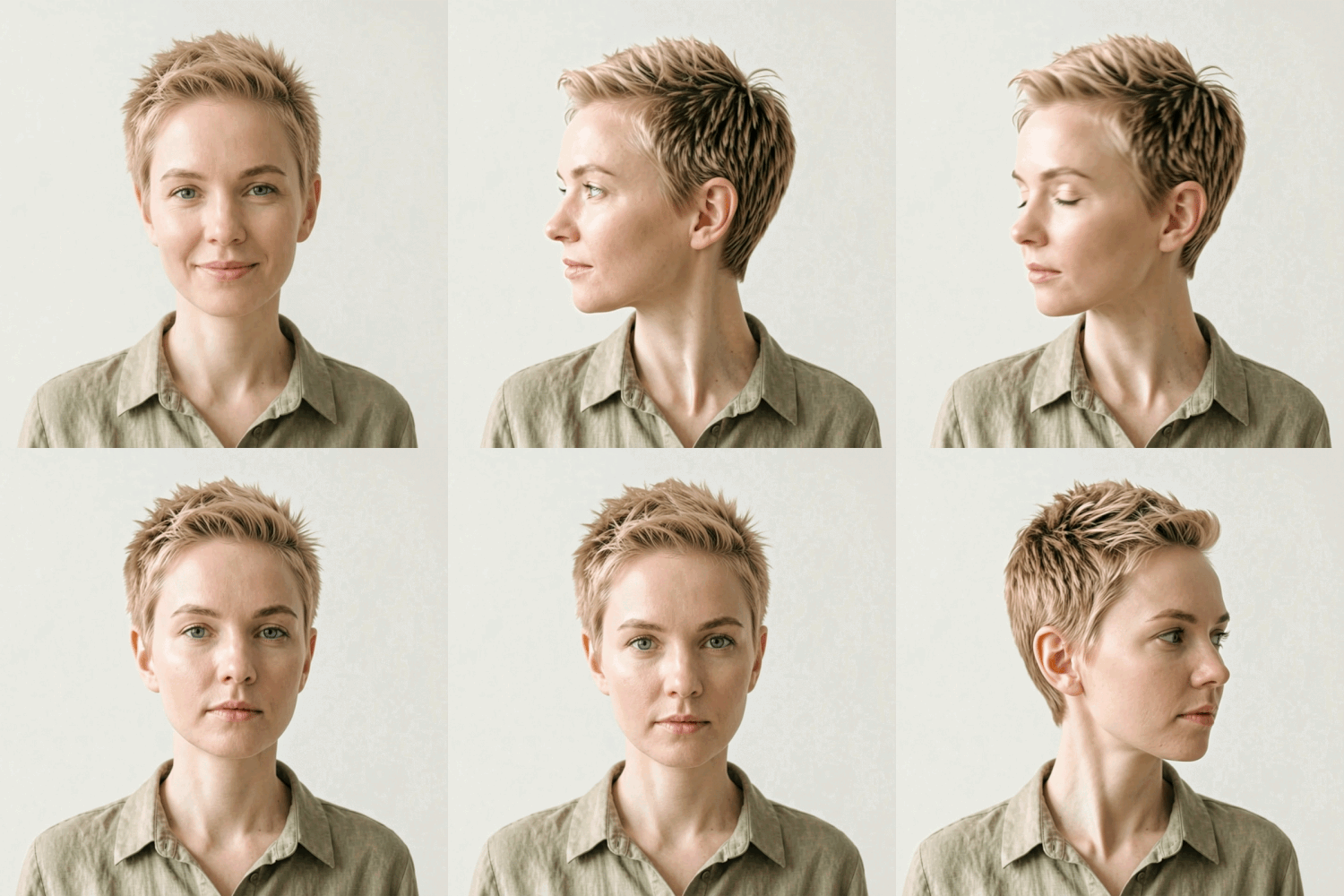
The rapid evolution of Artificial Intelligence has ushered in an era where sophisticated algorithms can perform tasks once confined to human expertise. From composing eloquent essays and meticulously planning intricate travel itineraries to debugging complex lines of code, tools like ChatGPT have demonstrated remarkable versatility. However, a burgeoning question arises: can these all-purpose AI image generators accurately guide users through the nuanced decision of a significant hairstyle change, such as opting for bangs? Recent developments indicate a growing trend of AI image generation tools, including those powered by Gemini (like Nano Banana) and DALL-E (integrated with ChatGPT), making inroads into the beauty and personal styling sector. While the promise of virtually trying on new hairstyles using these platforms is alluring, the practical outcomes reveal a significant disparity between the envisioned capabilities and the actual user experience.
A comparative analysis highlights this discrepancy. While crafting detailed prompts for ChatGPT to visualize a single hairstyle can consume considerable time – reportedly up to two hours in some experiments – dedicated virtual hairstyle application platforms, such as HairHunt, can offer a complete hairstyle preview within mere seconds. This stark contrast underscores a crucial point: the pervasive notion that "AI can do anything" does not equate to AI excelling at every conceivable task. This article delves into a detailed comparison between general-purpose AI image generators and specialized virtual hairstyle application platforms, examining the distinct functionalities and inherent limitations of each, with a particular focus on the offerings from TheRightHairstyles.com and its accompanying app, HairHunt, available on iOS and Android.
The Ascendancy of "AI Can Do Anything" and Its Emerging Limitations
The past few years have witnessed an unprecedented surge in AI-driven image generation. Technologies like DALL-E, which leverage diffusion models to translate textual descriptions into photorealistic visuals, have become increasingly sophisticated. However, when it comes to the precise application of hairstyles, particularly those requiring intricate detail and personal accuracy, these tools often falter. Nano Banana, utilizing Gemini’s image generation capabilities, allows users to modify their photographs based on written requests. Similarly, ChatGPT now enables users to upload selfies and request alterations to their appearance. While these advancements are undeniably impressive and continue to evolve at a rapid pace, they also present a subtle but significant pitfall.

The challenge emerges when users attempt to utilize these general-purpose AI tools for highly specific aesthetic decisions, such as visualizing a particular haircut. For instance, requesting a "layered bob" from ChatGPT might yield a visually appealing image, but it often falls short of accurately reflecting how that style would look on the individual. The inherent limitations become apparent when one considers the complex array of factors that contribute to a successful hairstyle visualization: precise lighting conditions, optimal camera angles, realistic hair texture, faithful preservation of skin tone, accurate shadow casting, and clean, natural-looking ear lines. Furthermore, there is a significant risk that the generated output may not accurately represent the user’s likeness, potentially resembling a different individual wearing a wig. These tools are primarily engineered for impressive creative output and aesthetic novelty, rather than for providing reliable guidance for significant personal decisions like a major haircut. This fundamental mismatch in design purpose becomes evident when users seek practical, decision-making assistance.
For individuals contemplating a substantial hair transformation, consulting resources that offer informed perspectives on suitable styles can be a valuable precursor to any technological intervention. Articles discussing "best hairstyles for a major hair change" can provide a foundational understanding of what might be aesthetically and practically viable before engaging with any AI-driven visualization tool.
What General AI Tools Achieve versus What Users Truly Require
General AI image generation tools are fundamentally designed for creative expression and the creation of novel imagery. They interpret textual prompts to synthesize entirely new visual representations. When platforms like DALL-E or Nano Banana process a user’s photograph, they are not merely overlaying a new hairstyle onto an existing image. Instead, they are generating a new image where a synthesized hairstyle is incorporated, often resulting in a creative interpretation rather than a faithful preview of the user with that specific style. The outcome is more akin to artistic rendition than a practical pre-salon consultation tool.
In contrast, the requirements for making an informed hairstyle decision are far more specific and practical. Users need to visualize their own face with distinct hairstyles accurately applied, possess the ability to rapidly compare multiple options, and receive consistent, reliable results that accurately depict their own features. An AI photo editing tool designed for artistic endeavors fundamentally addresses a different problem than one intended for decision support. The former aims to generate art, while the latter aims to facilitate a personal choice. When evaluating the efficacy of hair try-on tools, this distinction is paramount. It separates a creative playground from a functional fitting room.

The Five Primary Drawbacks of Employing ChatGPT or Nano Banana for Hairstyle Try-Ons
The inherent differences between general AI image generators and specialized beauty applications become starkly apparent when examining the specific challenges encountered when attempting to use the former for hairstyle visualization. These limitations consistently favor dedicated beauty apps designed for practical hair decisions.
Problem 1: The Perils of Prompt Engineering
General AI tools necessitate users to meticulously articulate their desired outcome through descriptive text. Crafting a prompt that accounts for every visual nuance required for a realistic hairstyle preview can be an arduous and time-consuming process. A hypothetical prompt might read: "Generate a realistic photograph of myself with a layered bob haircut, maintaining natural shadows, the same lighting conditions as the original photo, clean edges around the ears, consistent face proportions, no filter effects, and hair color matched to my original." While this sentence might seem straightforward, its effectiveness is not guaranteed, and its creation can take a significant amount of time. Furthermore, achieving satisfactory results often requires a level of expertise in "prompt engineering" that the average user may not possess.
In practical testing, the effort invested in crafting prompts for general AI tools can be disproportionately high. A highly detailed prompt for ChatGPT might extend to 63 words, whereas the equivalent "prompt" in a dedicated app like HairHunt simply involves selecting a hairstyle, a process that takes mere seconds. The disparity in the quality and relevance of the results generated by these different approaches is often substantial.
Problem 2: The Inconsistency Conundrum
Consistency is often a secondary consideration for AI tools primarily focused on creative output and novelty. While platforms like Nano Banana can produce visually striking images, the facial features of the user may appear to change with each generated iteration. This lack of consistency is a significant impediment to making reliable styling decisions.

In contrast, dedicated hair try-on applications are engineered to maintain the user’s facial features with remarkable stability. When the same bob cut was tested across ChatGPT, Nano Banana, and HairHunt multiple times, only HairHunt consistently presented the same facial structure and likeness. This reliability stems from the fundamental technical approach of these specialized apps, which overlay hairstyles onto the user’s unaltered photograph, a process fundamentally different from the generative nature of broad AI image tools.
Problem 3: The Absence of Curated Selections
While general AI tools offer the theoretical ability to generate "any hairstyle," this broad scope often lacks the practical guidance necessary for informed decision-making. There are typically no integrated categories such as "best for round faces," no real-time trending styles, and no curated selections specifically designed to aid in real-world styling choices. This approach is akin to asking a general contractor to also serve as an interior designer – they possess the skills but lack the specialized focus and aesthetic curation.
Dedicated hair applications, on the other hand, typically offer a library of hundreds of hairstyles. These styles are carefully selected based on their achievability, realism, and relevance to current salon trends and conversations. This structured approach is a primary reason why hair-specific apps consistently outperform general AI tools in practical application for styling decisions.
Problem 4: The Limitations of Two-Dimensional Rendering
The capacity for a 360-degree hair preview is a significant differentiator between general AI image generators and purpose-built beauty technology. While tools like ChatGPT might provide a single frontal view, platforms such as TheRightHairstyles offer comprehensive 360-degree previews. This allows users to observe how a chosen hairstyle catches the light, how layers fall from various angles, and how the overall length and shape frame the face from multiple perspectives, offering a much more holistic understanding of the potential look.

Problem 5: Entertainment Versus Decision Support
Platforms like Nano Banana are often integrated with features akin to social media photo filters, offering an entertaining user experience. Similarly, ChatGPT’s image generation capabilities can produce breathtaking and creative visuals. However, neither of these tools inherently prioritizes the most critical question for a user contemplating a hair change: "Will this actually work in real life?" Virtual hair try-on applications are specifically designed to function as decision support tools, offering consistent results, realistic previews, and the ability to share images that can then be used to communicate preferences to a professional stylist.
The Distinctive Approach of Hair-Specific Platforms
TheRightHairstyles.com has been a trusted resource for women seeking to visualize hairstyles since its inception in 2013, predating the widespread integration of AI into the beauty industry. This long-standing history is significant, as the platform was not conceived by AI enthusiasts experimenting with image models but rather by individuals focused on the practicalities of hair styling and decision-making.
In collaboration with the HairHunt app, TheRightHairstyles has been meticulously developed around the user’s hair decision journey. This specialized focus transforms both tools from mere creative novelties into genuine hair transformation resources. This singular distinction addresses the majority of the aforementioned challenges, ensuring consistency, realism, and reliability in the virtual try-on experience.
A Comparative Analysis: HairHunt & TheRightHairstyles Versus Competitors
A candid assessment of the strengths and weaknesses of various tools reveals distinct roles and trade-offs.

ChatGPT with DALL-E: These platforms are undeniably powerful, capable of generating highly creative and visually appealing images. However, achieving consistent and accurate results for hairstyles necessitates significant prompt engineering efforts. Each generation produces a novel image, meaning the user’s facial likeness may vary between attempts. Consequently, these tools are best suited for creative inspiration and fantasy edits rather than for practical pre-salon preview planning.
Nano Banana (Google/Gemini): This tool offers impressive image editing capabilities that respond to natural language commands. While the visual output can be striking, the inherent issue of consistency in AI-generated images remains a challenge. The platform also lacks curated hairstyle options, still requiring users to compose detailed textual descriptions. Despite these limitations, it serves as an entertaining tool for general image manipulation.
HairHunt by TheRightHairstyles: With over 300,000 virtual try-ons completed and a user base exceeding 980,000, HairHunt offers a distinct advantage. Users receive near-instantaneous results, typically within 10 seconds, by simultaneously selecting both a hairstyle and hair color for a comprehensive preview. The 360-degree hair preview feature stands out as a key differentiator, providing a more complete visual understanding of the chosen style compared to most competing tools.
When preparing for a consultation with a professional stylist, a shareable screenshot from HairHunt is considerably more valuable than a generated AI image that may not accurately represent the user’s likeness. The platform is readily accessible across iOS, Android, and the web.

The following table illustrates how these tools compare across critical factors relevant to making a real-world hair decision:
| Feature | ChatGPT (with DALL-E) | Nano Banana (Gemini) | YouCam Makeup (Example of a competitor) | HairHunt (TheRightHairstyles) |
|---|---|---|---|---|
| Primary Function | Image Generation | Image Editing | Makeup & Hair Simulation | Dedicated Hair Try-On |
| Accuracy of Preview | Low to Moderate | Low to Moderate | Moderate to High | High |
| Consistency | Low | Low | Moderate | High |
| Speed of Preview | Slow (hours) | Moderate | Moderate | Very Fast (seconds) |
| Ease of Use | Difficult (prompting) | Moderate | Easy | Very Easy |
| Curated Styles | None | None | Moderate | Extensive |
| 360° View | No | No | Limited | Yes |
| Realism | Variable | Variable | Moderate | High |
| Decision Support | Poor | Poor | Moderate | Excellent |
| Creative Output | Excellent | Excellent | Moderate | Limited |
Strategic Deployment: General AI Versus Hair-Specific Platforms
It is crucial to recognize that this is not an either/or scenario. Both general AI tools and specialized hair applications have distinct and valuable roles, serving entirely different purposes.
General AI tools are best utilized for generating fantasy images, engaging in creative projects, or visualizing oneself as a fictional character. These platforms excel when the primary objective is entertainment and the creation of imaginative visuals, rather than obtaining a practical preview for real-world application.
Dedicated AI hairstyle applications, such as HairHunt, are indispensable for making actual haircut decisions. They are invaluable for preparing for salon consultations, enabling side-by-side comparisons of realistic options, and mitigating the anxiety associated with committing to a dramatic aesthetic change.

Experiencing TheRightHairstyles: A Ten-Second Transformation
The process of virtually trying on hairstyles with the HairHunt app is designed for speed and simplicity.
Step 1: Begin by visiting TheRightHairstyles.com or downloading the HairHunt application from the iOS App Store or Google Play Store.
Step 2: Explore a curated library of over 100 distinct hairstyles. For users uncertain about where to begin, an interactive quiz can guide them towards styles that are best suited to their face shape.
Step 3: Upload a clear, front-facing photograph with adequate natural lighting. The system will then process the image, delivering a personalized preview of the chosen hairstyle within approximately 10 seconds.

Step 4: Utilize the 360-degree hair preview feature to examine the hairstyle from all angles. This allows for an assessment of how layers fall to the sides and how the length appears from the back, providing a comprehensive view.
Step 5: Save the generated image of your virtual hairstyle transformation. This visual representation can then be taken to a professional stylist, serving as a clear and precise communication tool.
While a user might still be in the process of refining their third prompt for ChatGPT, they could have already experimented with over 20 different styles on HairHunt and narrowed down their choices to a select few. This illustrates the fundamental difference between iterative prompt engineering and instantaneous visual simulation in the realm of AI-powered hair visualization.
Frequently Asked Questions: Hair-Specific AI vs. General Tools
Users often seek clarity when comparing AI tools for hairstyle decisions. Here are direct answers to common inquiries:

Can ChatGPT show me with a specific hairstyle?
ChatGPT can generate images, but the results are highly variable and demand extensive prompt engineering. The outputs often appear overly polished, filtered, or even cartoonish, as general AI prioritizes aesthetic appeal over precise personal representation.
Is Nano Banana good for trying hairstyles?
Nano Banana is a powerful creative tool for general image editing, but it lacks curated hairstyle options and struggles with the precise placement of highlights or the reliable addition of specific bang styles.
Why do I need a dedicated hair app?
A dedicated hair app empowers the user to be the decision-maker. Instead of composing detailed descriptions and hoping for consistent results, users can simply tap on a style and instantly see their face with that exact cut.
Which is more accurate, ChatGPT or HairHunt?
For realistic hair previews on an individual’s actual face, dedicated tools significantly outperform general AI. Accuracy in AI hairstyle visualization depends on preserving facial features, ensuring style consistency, and enabling side-by-side comparisons of different cuts.

Does HairHunt take 30 minutes?
No. The claim of a 30-minute processing time is outdated and likely stems from early iterations or misunderstandings, possibly referencing the time spent on prompt engineering with general AI tools. Current results are delivered in approximately 10 seconds.
Can I use ChatGPT for a salon consultation?
It is not recommended. Users would need to continually adjust prompts, manage inconsistent facial renderings, and hope the final output is sufficiently clear and accurate to present to a stylist.
Are AI hair apps better than inspiration photos?
They serve complementary purposes. AI hair apps facilitate seeing styles on one’s own face for decision-making, while inspiration photos are excellent for browsing real-world examples and gathering broader aesthetic ideas.
Is my photo stored?
The HairHunt app and TheRightHairstyles platform process images securely. Depending on their privacy policy, images are either deleted after processing or stored temporarily.

What’s the difference between AI hair filters and AI hair try-on?
AI hair filters apply visual effects over an existing image. Dedicated hair apps, in contrast, simulate structured hairstyles placed onto the user’s preserved, unchanged face, offering a more realistic simulation.
Can AI show how a haircut looks from the side or back?
Most general AI tools generate a single 2D angle. Dedicated hair platforms with 360-degree preview capabilities, like TheRightHairstyles, allow users to visualize how layers, length, and movement appear from multiple perspectives.
Why do general AI haircuts look fake or “too perfect”?
General AI tools often prioritize aesthetic enhancement, which can involve smoothing skin, adjusting proportions, or improving lighting. While beneficial for creative imagery, this can be detrimental when trying to assess the realistic appearance of a haircut in everyday life.
Can I try different hair colors at the same time as the cut?
Yes, HairHunt allows users to simultaneously select both hairstyle and hair color for an instant preview. The platform currently includes a range of basic and pastel colors, with ongoing updates to its palette.

I want a big change, but I’m not sure where to start. Can AI help?
Absolutely. A dedicated AI hairstyle app is an excellent starting point when considering a significant hair transformation. Users can upload their photo, explore the style library, and identify looks that resonate visually before committing to a salon appointment.
It is time to bypass the complexities of prompt engineering and experience a new look in mere seconds. By uploading a photograph to the virtual hairstyle try-on app, users can explore over 100 hairstyles specifically designed for real hair decisions. Try different looks now by visiting TheRightHairstyles.com.
