
 By admin
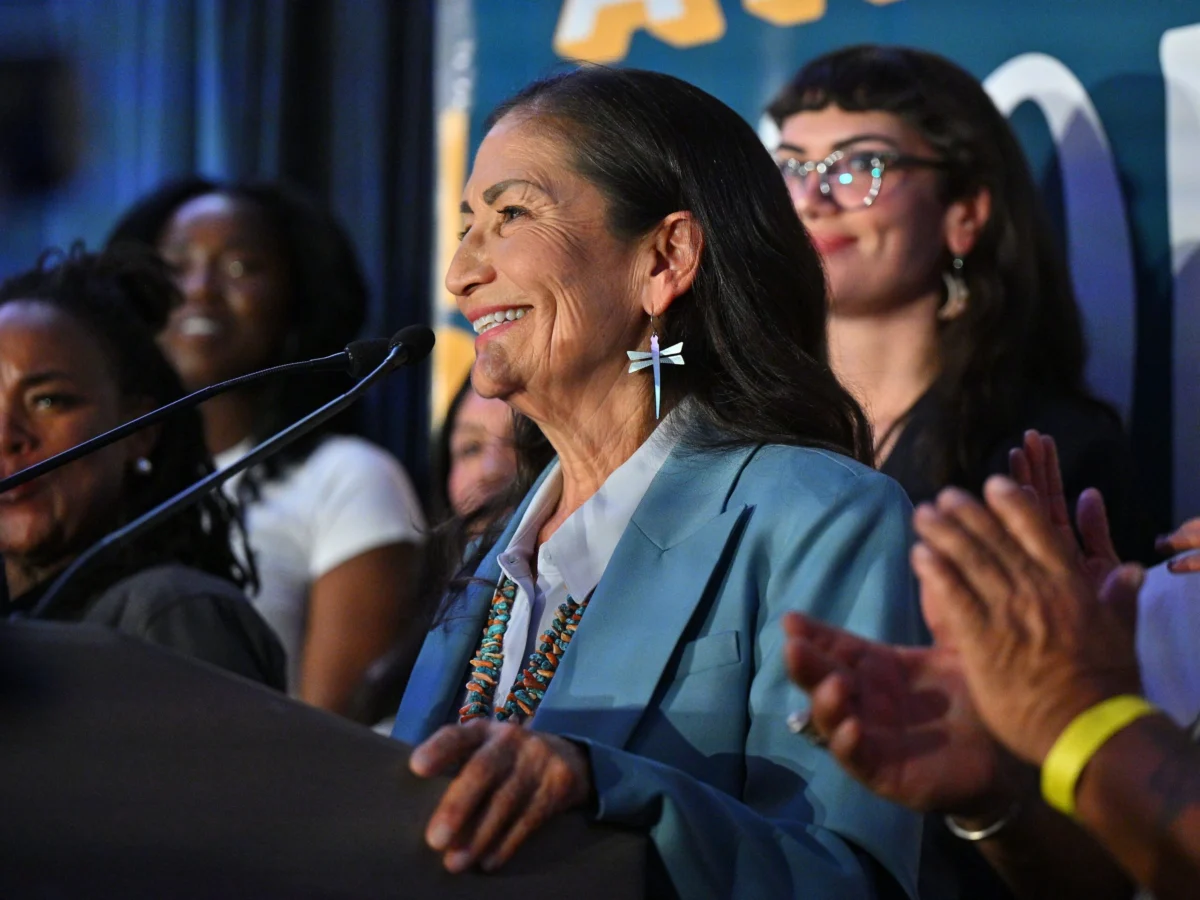
Last night, the 2026 midterm election results delivered plenty of historic firsts, marking a watershed moment for diversity and representation in American politics. The electoral landscape, shaped by a confluence of evolving demographics and persistent calls for inclusive governance, saw a particularly powerful and symbolic surge for Native American representation. Democrat Deb Haaland, already a trailblazer as the former Secretary of the Interior, made history by becoming the first Native American woman to be elected as Governor of New Mexico. Concurrently, Peggy Flanagan, the incumbent lieutenant governor of Minnesota, achieved her own groundbreaking victory, becoming the first Native woman to secure a U.S. Senate seat in her state. The potential for a third monumental win for the Indigenous community remained on the horizon, with Alaska’s Mary Peltola leading the race for a Senate seat at the time of this publication, underscoring a broader, undeniable shift in the nation’s political fabric.
The significance of these victories extends far beyond mere numerical representation. They represent decades of tireless advocacy, community organizing, and a persistent struggle to break through systemic barriers that have historically marginalized Indigenous voices in corridors of power. As the race results were officially called yesterday evening, both Haaland and Flanagan emerged to celebrate their historic appointments, not only with words of gratitude and commitment but also with intentional visual statements. Each politician chose to wear exquisite, statement earrings crafted by Indigenous artists—a thoughtful and powerful move to uplift, honor, and spotlight the unique beauty, resilience, and cultural continuity found within their own communities. This sartorial choice was particularly fitting, given that many Native artists utilize earrings not merely as adornment but as profound cultural identifiers, serving as stylish vessels to keep their traditional materials, motifs, and narratives vibrantly alive.
A Historic Electoral Landscape: The 2026 Midterms and Indigenous Advancement
The 2026 midterm elections unfolded against a backdrop of intense national debate on issues ranging from economic stability and healthcare access to environmental policy and civil rights. For many, the elections were seen as a crucial barometer of the nation’s political mood, offering an opportunity to redefine leadership and legislative priorities. While national headlines often focused on the balance of power in Congress, the quiet revolution brewing within various states, particularly concerning Indigenous representation, proved to be one of the most compelling narratives.
For Native American communities, these elections were more than just about policy; they were about visibility, sovereignty, and self-determination. Despite being the original inhabitants of the land, Indigenous peoples have historically been severely underrepresented in federal and state governments. Prior to 2026, the number of Native Americans holding significant elected office remained disproportionately low compared to their population size. This election cycle, however, saw a concerted effort by Indigenous activists and political organizations to mobilize voters and support candidates who reflect the diverse experiences and aspirations of Native nations. The victories of Haaland and Flanagan are not isolated incidents but rather the culmination of years of groundwork, increased political engagement, and a growing recognition of the vital contributions Indigenous leaders can bring to governance.
Deb Haaland: From Cabinet to Governor’s Mansion
Deb Haaland’s journey to the New Mexico Governor’s mansion is a testament to her unwavering dedication and impressive political acumen. A member of the Laguna Pueblo, Haaland first garnered national attention as one of the first two Native American women elected to Congress in 2018. Her tenure in the U.S. House of Representatives was marked by her fierce advocacy for Indigenous rights, environmental protection, and public lands. Her impactful work led to her historic appointment as Secretary of the Interior under President Joe Biden’s administration in 2021, making her the first Native American to hold a cabinet-level position. In this role, she championed initiatives addressing climate change, tribal land management, and the protection of sacred sites, while also confronting the painful legacy of federal Indian boarding schools.

Her decision to run for Governor of New Mexico, a state with a significant Indigenous population and a rich multicultural heritage, was seen as a natural progression of her commitment to local communities. Throughout her gubernatorial campaign, Haaland articulated a vision for New Mexico that prioritized economic development, educational reform, and robust healthcare access for all residents, with a particular emphasis on addressing the unique challenges faced by tribal communities. Her victory, celebrated in Albuquerque, New Mexico, solidified her status as a formidable political force and a symbol of hope for Indigenous peoples nationwide. Her speech echoed themes of unity and opportunity: "I believe that no matter where you come from, how much money you have, or what challenges you’ve faced, every New Mexican deserves the chance to thrive."
For her celebratory appearance, Haaland chose to wear a striking pair of titanium dragonfly earrings created by Pat Pruitt, a renowned Laguna and Chiricahua Apache artist based in New Mexico. This choice was deeply symbolic. Dragonflies, in many Indigenous traditions, represent taking flight, change, transformation, adaptability, and the ability to overcome adversity. By wearing Pruitt’s design, Haaland not only spotlighted one of the Native community’s most celebrated artists but also subtly communicated her aspirations for her governorship: a period of dynamic positive change and renewed vitality for New Mexico.
Pruitt, known for his contemporary interpretations of traditional Indigenous aesthetics, has built a reputation for crafting sleek, modern jewelry from materials like titanium and stainless steel. His signature dragonfly earrings, a blend of ancestral motifs and contemporary design, first debuted in 2015. "The first version of the dragonfly earrings debuted in 2015, heavily influenced by the work of fashion designer Pilar Agoyo (Ohkay Owingeh/Cochiti/Kewa Pueblos) and my mentor, Greg Lewis (Laguna Pueblo)," Pruitt explained. "The design brought together the traditional double-cross motif Greg taught me and the bold, black dragonfly imagery Pilar was incorporating into her work at the time. Titanium has since become my material of choice, allowing me to produce the earrings in a variety of colors." Haaland’s choice underscored the vibrant intersection of art, culture, and political identity.
Peggy Flanagan: Minnesota’s First Native Woman Senator
In Saint Paul, Minnesota, Peggy Flanagan, a member of the White Earth Band of Ojibwe, etched her name into history as the first Native woman to win a U.S. Senate seat from her state. Flanagan’s political career has been characterized by her steadfast commitment to social justice and her effective leadership as Lieutenant Governor of Minnesota. Prior to her statewide office, she served in the Minnesota House of Representatives, where she championed policies aimed at improving education, healthcare, and economic opportunities for all Minnesotans, with a particular focus on addressing disparities affecting Indigenous communities and communities of color.
Her Senate campaign resonated with voters who sought a leader with a proven track record of fighting for marginalized communities. Flanagan’s authenticity, coupled with her deep understanding of both state and federal policy, made her a compelling candidate. Her victory speech, delivered to an energized crowd at an election night watch party, was imbued with passion and a promise of continued advocacy. "You fought for me," she declared, "and I’m going to fight for you." This sentiment encapsulated her career-long commitment to grassroots activism and responsive governance.
For this pivotal moment, Flanagan chose to wear a long, elegantly dangling pair of dentalium shell earrings, paired with a sophisticated burgundy suit. Like Haaland’s choice, Flanagan’s accessories were a deliberate and profound homage to Indigenous craft and cultural heritage. Dentalium shells hold immense meaning and importance within many Native communities, particularly across the Pacific Northwest and Great Lakes regions.

These long, tubular shells, derived from dentalium, a type of marine mollusk, are prized for their curved, tusk-like shape and milky luminescence. Historically, dentalium shells were used as currency, symbols of wealth, and adornment, predating European colonization by millennia. Their value was, and in many Indigenous cultures, remains, comparable to or even exceeding that of precious gems like diamonds, largely due to their increasing scarcity and the intricate process of acquiring and working with them. Today, contemporary Indigenous artists, such as Jamie Okuma with her signature tiered styles and Tania Larsson with her striking necklaces, continue to innovate with dentalium, ensuring its legacy endures in modern fashion. Flanagan’s choice was a powerful affirmation of Indigenous resilience, economic history, and artistic excellence, brought into the national political spotlight.
The Broader Impact of Indigenous Representation
The twin victories of Haaland and Flanagan are more than individual triumphs; they signify a turning point in the broader struggle for Indigenous political empowerment. For generations, Native Americans have faced systemic disenfranchisement, including barriers to voting, inadequate representation, and a lack of understanding of tribal sovereignty in federal and state policy-making. These elections demonstrate a growing political consciousness and mobilization within Indigenous communities, coupled with an increasing recognition by the broader electorate of the value that Indigenous perspectives bring to governance.
The presence of Native women in such prominent roles has profound implications for policy. Both Haaland and Flanagan have consistently advocated for policies that address environmental justice, tribal treaty rights, healthcare disparities, educational equity, and economic development in tribal nations. Their lived experiences and deep understanding of Indigenous issues will undoubtedly shape legislative agendas, fostering more inclusive and effective governance. Their voices will be critical in debates concerning land management, water rights, and the protection of cultural heritage, ensuring that tribal perspectives are not just heard but actively integrated into decision-making processes.
Furthermore, these victories serve as powerful symbols of inspiration for future generations of Indigenous youth. Seeing leaders who look like them, who share their heritage and understand their struggles, can dismantle barriers of aspiration and encourage greater participation in civic life. The breaking of these political ceilings sends a clear message: Indigenous voices belong in every sphere of American society, including its highest offices.
Consistent Cultural Expression on the Campaign Trail
The intentional use of Indigenous fashion by Haaland and Flanagan on election night was not an isolated incident but a consistent thread throughout their political careers. Both women have long understood the power of cultural expression as a form of political statement.
Peggy Flanagan, for instance, has been celebrated for her vibrant and intentional wardrobe choices during her campaigns. She has frequently worn printed Jamie Okuma suits, known for their fusion of traditional Indigenous artistry with contemporary design, and shapely Copper Canoe Woman earrings. Her commitment to showcasing Indigenous artists is so well-known that an entire Instagram account, "@peggyflanagansearrings," is dedicated to documenting her fabulous earring choices, highlighting the breadth and depth of Native American jewelry design.

Similarly, Deb Haaland has consistently embraced her Pueblo heritage through her attire. During her 2021 swearing-in ceremony as Secretary of the Interior, she notably donned a traditional ribbon skirt, a powerful symbol of Indigenous identity, resilience, and connection to ancestral lands. These choices are not mere fashion statements; they are acts of cultural affirmation, asserting Indigenous identity and sovereignty in spaces where they have historically been erased or minimized. They reclaim narratives, educate the public, and proudly display the rich tapestry of Native American cultures.
Looking Ahead: Policy, Progress, and Persistent Advocacy
The implications of these historic wins for policy and future political landscapes are vast. With Deb Haaland as Governor, New Mexico is poised to see an intensified focus on tribal consultation, resource management that respects Indigenous stewardship, and programs designed to uplift the state’s diverse communities. Her experience at the federal level will undoubtedly bring a sophisticated understanding of intergovernmental relations to the statehouse.
In the U.S. Senate, Peggy Flanagan will bring a unique and vital perspective to national debates. Her advocacy for equitable healthcare, affordable education, and climate action will be informed by the specific needs of Indigenous communities, ensuring these critical issues are addressed with a holistic and culturally sensitive approach. Her presence will also enrich discussions on tribal sovereignty and self-determination at the federal level, potentially leading to more robust legislative protections and support for Native nations across the country.
These victories represent a significant step forward in the long march towards full and equitable representation for Native Americans. They underscore a growing recognition that diverse voices lead to more comprehensive, empathetic, and effective governance. As Haaland and Flanagan embark on their historic tenures, their leadership will undoubtedly pave the way for more Indigenous candidates to seek and win public office, further enriching the democratic process and ensuring that the promise of America extends to all its original peoples. The 2026 midterm elections will be remembered not just for who won, but for the profound shift they heralded in the ongoing journey toward a more inclusive and representative nation.
