
 By admin
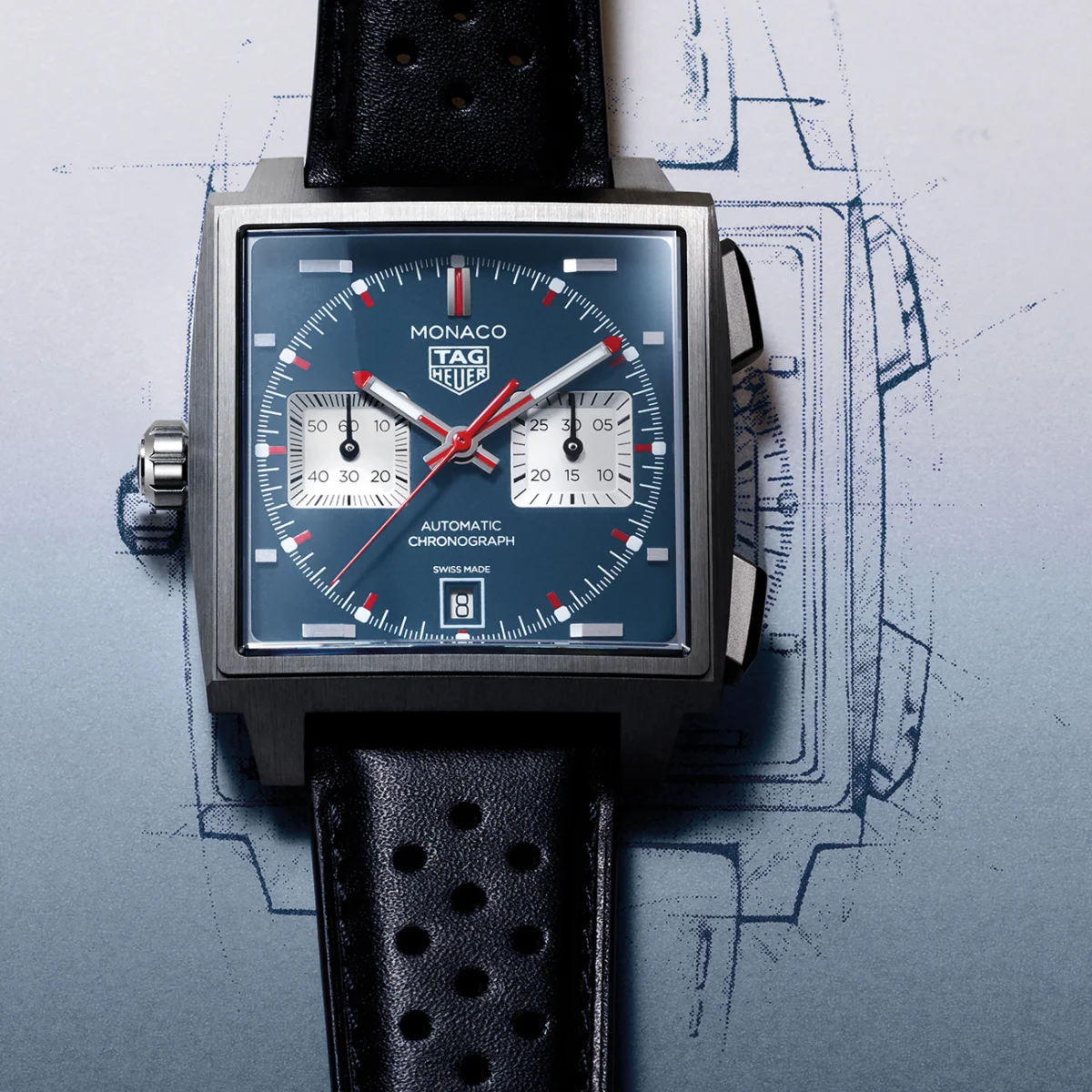
The landscape of high horology witnessed a significant shift at Watches and Wonders Geneva this year, centered largely on the booth of TAG Heuer. While the industry often moves in incremental steps, the unveiling of the Monaco Evergraph represented a departure from traditional mechanical constraints. Housed within the iconic square silhouette that has defined the brand since 1969, the Evergraph is more than a commemorative edition; it serves as a manifesto for the brand’s future under the guidance of Chief Product Officer Maria Laffont. The introduction of the Calibre TH80-00 movement has been described by industry analysts as a "seismic" event, signaling TAG Heuer’s intent to move beyond the limitations of 18th-century mechanics into the realm of modern material science and compliant engineering.
The Monaco Evergraph maintains the aesthetic "chassis" of a classic performance watch while fundamentally replacing the "engine" with a system that mirrors the efficiency of a hydrogen fuel cell. By collaborating with the specialized movement manufacturer Vaucher, TAG Heuer’s internal research division, TAG Heuer Lab, has produced an automatic chronograph that eschews the traditional architecture of levers and springs. In their place are two flexible bistable components—a breakthrough in compliant mechanisms that allows for near-instantaneous transitions during the start, stop, and reset functions. This engineering choice reduces mechanical wear, eliminates the need for complex lubrication in specific high-friction areas, and provides a tactile responsiveness that conventional chronograph modules struggle to match.

A New Architectural Standard: The Calibre TH80-00 and TH20-11
The technical narrative of TAG Heuer’s current era is defined by a dual-track approach to innovation. On one hand, the Evergraph pushes the boundaries of what is possible in movement design; on the other, the brand continues to refine its heritage-inspired movements. Concurrently with the Evergraph, TAG Heuer released the Calibre TH20-11. This in-house automatic movement serves as a direct spiritual successor to the legendary Calibre 11 of 1969, the movement that powered the first automatic square chronograph.
Unlike the original 1969 movement, which was a modular construction combining a Buren base with a Dubois-Depraz chronograph module, the TH20-11 is a fully integrated, column-wheel-driven engine. It retains the signature left-handed winding crown—a feature famously associated with Steve McQueen’s choice of the Monaco during the filming of the 1971 movie Le Mans. The integration of these two movements into the 2024 lineup demonstrates a strategic effort to satisfy both the avant-garde enthusiast and the traditional collector. The use of Grade 2 titanium for the new Monaco cases further underscores this shift toward performance, offering a strength-to-weight ratio that improves the ergonomics of a watch historically known for its "bold and boxy" presence.
The Strategic Tenure of Maria Laffont
Since joining TAG Heuer as Vice President of Design and Product in March 2021, Maria Laffont has overseen a period of rapid-fire successes that have repositioned the brand within the LVMH portfolio. Her leadership has been characterized by a willingness to experiment with materials and forms that were previously considered outside the brand’s core identity.
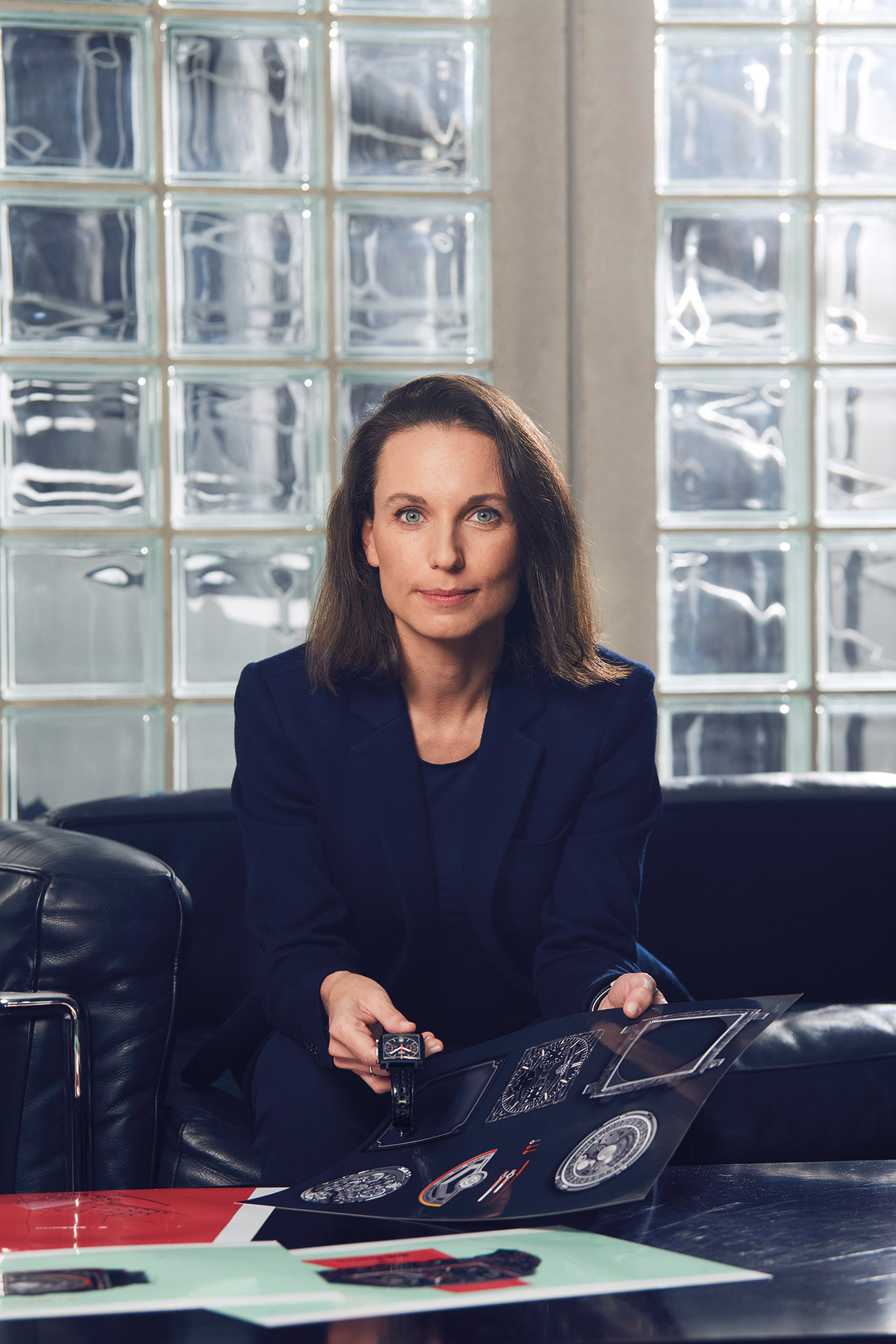
A timeline of Laffont’s key milestones reveals a consistent focus on elevating the brand’s technical prestige:
- 2023: The launch of the Carrera Chronograph "Glassbox" 39mm, which reimagined the vintage hesalite crystal aesthetic using modern sapphire, becoming a commercial and critical darling.
- 2024: The introduction of the Carrera Date Plasma Diamant d’Avant-Garde, featuring lab-grown diamonds integrated into the case and dial—a move that challenged traditional notions of "precious" materials in watchmaking.
- 2025 (Developmental Cycle): The rollout of the TH-Carbonspring oscillator, featured in the Monaco Flyback Chronograph and Carrera Chronograph Tourbillon Extreme Sport, showcasing the brand’s investment in carbon-composite technology.
Laffont’s philosophy centers on the idea that TAG Heuer is a "watchmaker of performance." In various industry forums, she has emphasized that while heritage provides the foundation, innovation provides the momentum. This is evident in her approach to the Monaco collection, where the goal was not just to make a "lighter" watch, but a more "ergonomic" one. Subtle design changes, such as the sloping caseback and the refined, square-edged bezel, are intended to make the 39mm square case more wearable for a broader demographic of enthusiasts.
Chronographs as the Brand’s Defining Complication
For TAG Heuer, the chronograph is not merely a feature; it is the brand’s identity. The maison’s history is inextricably linked to the world of competitive racing, where every fraction of a second carries the weight of victory or defeat. Laffont notes that the brand’s focus on chronographs this year is a deliberate return to its roots as a timekeeper for athletes and high-stakes moments.

The current strategy involves a tiered approach to the complication:
- Quartz Chronographs: Accessible, reliable, and high-performance entry points for the broader market.
- Automatic Chronographs: The core of the collection, utilizing the TH20 series movements.
- The Evergraph: A new category of high-tech, compliant-mechanism chronographs.
- Split-Seconds (Rattrapante): The "king" of complications, representing the pinnacle of the brand’s mechanical capability.
By diversifying the technology behind the chronograph, TAG Heuer is attempting to insulate itself from market fluctuations while appealing to different segments of the luxury watch market. The Evergraph, specifically, is positioned as a "halo" product—a demonstration of savoir-faire intended to boost the brand’s overall equity without necessarily displacing existing models.
Technical Deep Dive: The Science of Compliant Mechanisms
The most significant takeaway from the Evergraph launch is the use of "bistable compliant" components. In traditional watchmaking, mechanical energy is transmitted through a series of rigid parts—gears, levers, and springs—that rely on precise contact points and lubrication. Over time, friction leads to wear, and the "feel" of the pusher can degrade.
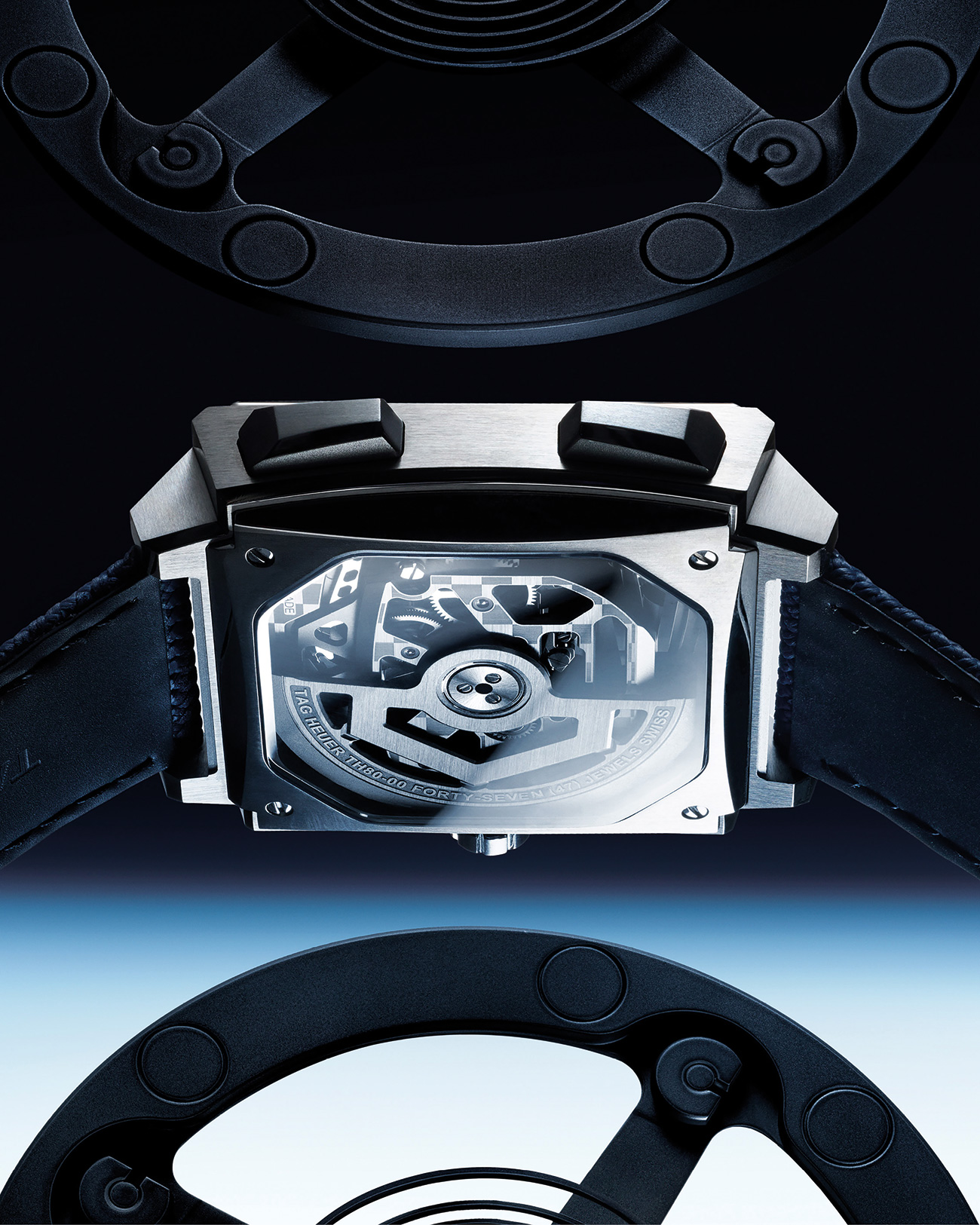
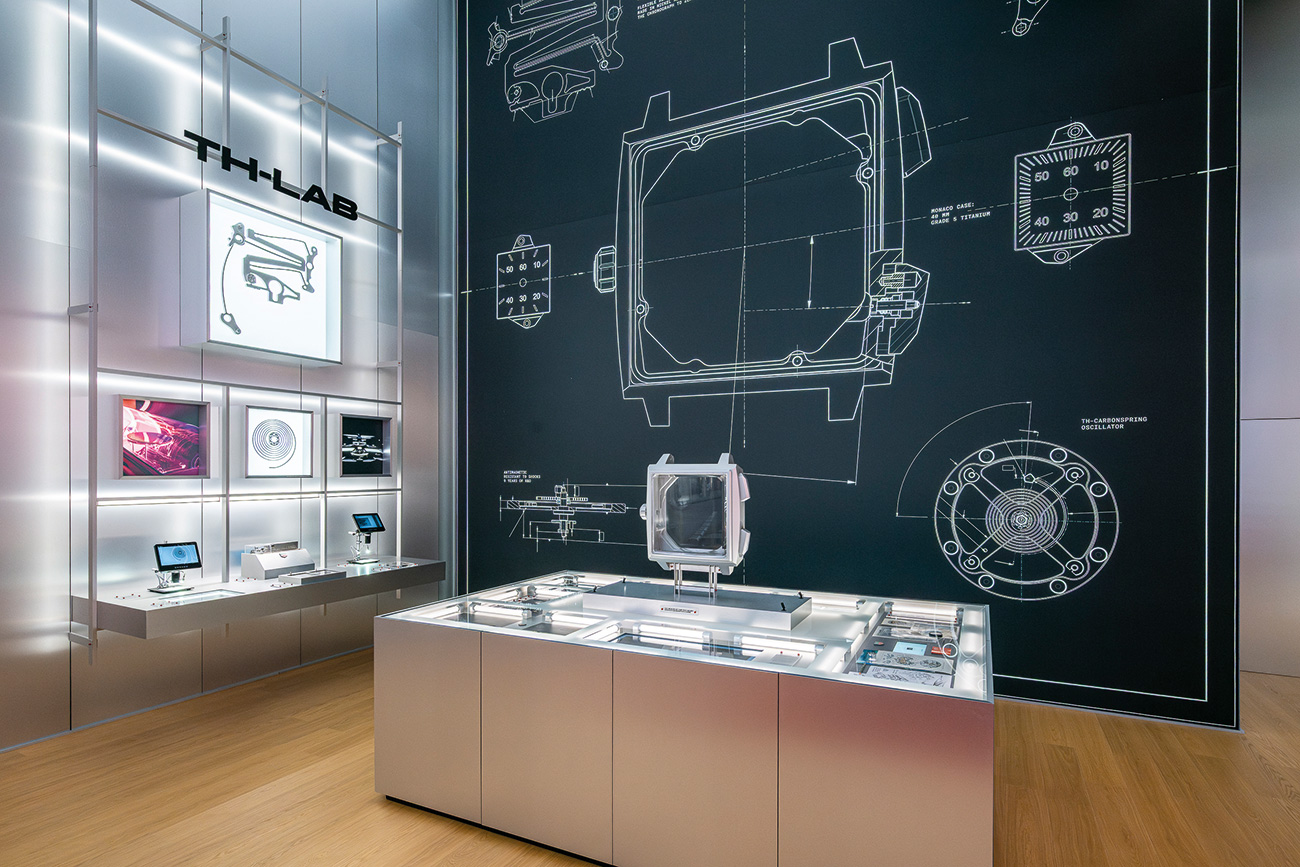
The TH80-00 movement utilizes the elasticity of materials to create motion. These flexible components are engineered to have two stable states (bistable), meaning they "snap" into position with minimal energy loss and zero mechanical play. This technology, developed within the TH-Lab in La Chaux-de-Fonds, represents a convergence of aerospace engineering and micro-mechanical watchmaking. It allows for a thinner movement profile and a significantly more durable chronograph engagement system. While currently exclusive to the Monaco collection due to the square geometry of the movement, the implications for future Carrera or Aquaracer models are substantial.
Market Implications and Brand Perception
The luxury watch industry has seen a cooling of the "hype" market in recent years, leading brands to focus more on internal value and technical differentiation. TAG Heuer’s pivot toward high-concept engineering like the Evergraph and the Plasma diamond series is a calculated move to move "upmarket" in the eyes of collectors.
Industry analysts suggest that the Evergraph’s pricing—while distinct from the standard Monaco line—does not signal an immediate price hike for the entire brand. Instead, it serves as a "technological beacon." When a brand demonstrates it can reinvent the fundamental mechanics of a chronograph, it lends a sense of legitimacy to its more affordable offerings. This "halo effect" is critical for TAG Heuer as it competes with other LVMH stablemates like Zenith and Hublot, as well as independent powerhouses.
The aesthetic refinements mentioned by Laffont—such as the curved horizontal indices that act as light-catching pointers and the transition from round to square lume dots—show a meticulous attention to detail that mirrors the brand’s higher-end competitors. These "subtle details," as Laffont calls them, are what transform a tool watch into a luxury object.
Conclusion: The "Orchestra" of Innovation
Maria Laffont often describes the process of watch development as an "orchestra," where the Chief Product Officer acts as the conductor, harmonizing the inputs of designers, engineers, and master watchmakers. This collaborative spirit is what allowed for the creation of the Evergraph. By fostering a constant dialogue between the TH-Lab and the creative teams, TAG Heuer has managed to produce a timepiece that feels both familiar and revolutionary.
As the brand moves toward the middle of the decade, the focus remains on "Avant-Garde"—the very "Heuer" in TAG Heuer. The Monaco Evergraph is a testament to the belief that even the most venerable icons can be improved through a relentless pursuit of performance. Whether through the use of titanium for ergonomics, lab-grown diamonds for aesthetics, or compliant mechanisms for mechanical longevity, the message from La Chaux-de-Fonds is clear: heritage is not a finish line, but a starting point for the next era of precision timekeeping.
