
 By Nila Kartika Wati
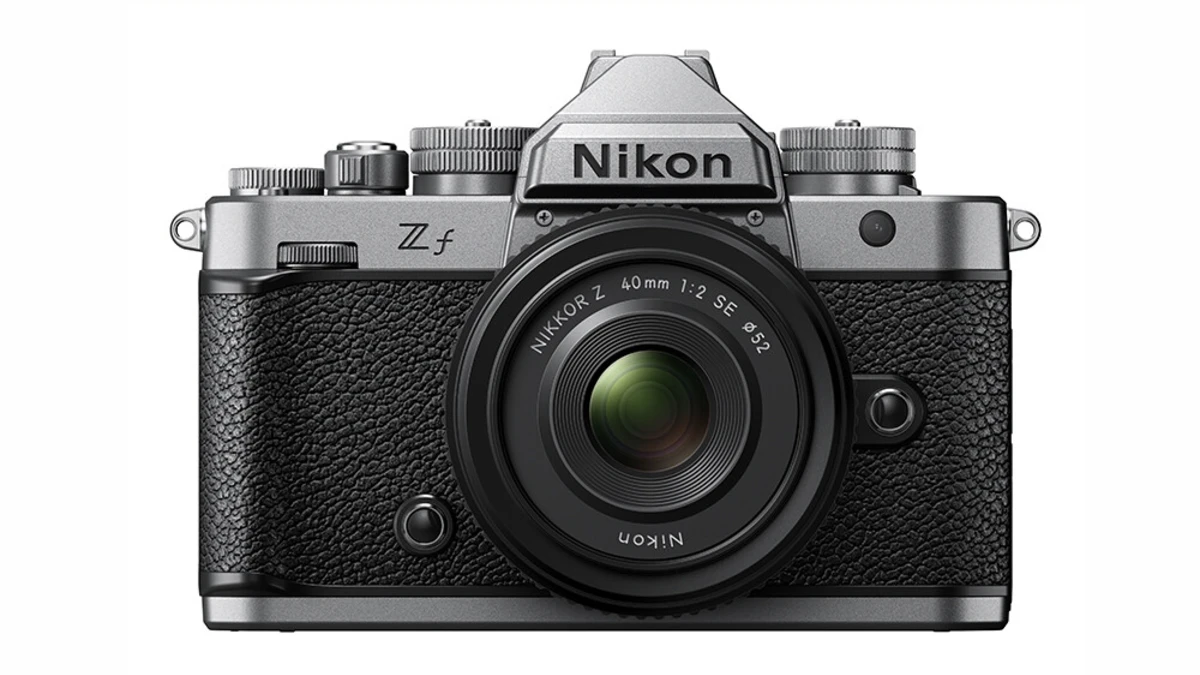
A growing sentiment among professional hybrid photographers and videographers points towards a desire for expanded internal video recording capabilities in the Nikon Zf. Specifically, there is a prominent call for Nikon to integrate N-RAW video recording into its retro-styled full-frame mirrorless camera through a firmware update. This request stems from the Zf’s unique market position, its shared sensor technology with other Nikon cameras already offering N-RAW, and the evolving demands of modern content creation workflows.
The Nikon Zf’s Distinctive Market Position
Since its launch, the Nikon Zf has carved out a unique niche within the crowded mirrorless camera market. It combines a visually striking retro aesthetic, reminiscent of Nikon’s classic FM2 film camera, with contemporary full-frame digital imaging technology. This blend has resonated strongly with a segment of photographers and videographers who value both form and function, seeking a tool that evokes a sense of nostalgia while delivering modern performance.
Professionals, often equipped with high-end dedicated cameras such as the Nikon Z9 for stills, Red Komodo for cinematic video, or Canon C70 for interview setups, frequently find themselves in a workflow where primary production tools are strictly dictated by commercial requirements. In such scenarios, cameras are viewed as investments, their value directly tied to their income-generating potential. The Zf, with its 24.5-megapixel sensor, while highly capable, typically falls below the resolution demands for high-end advertising stills work and offers video capabilities that, while excellent, are often surpassed by more specialized tools in terms of advanced features like higher frame rates, internal RAW recording, or dedicated video ergonomics.
Despite these objective professional distinctions, the Zf has garnered a fervent following among working artists. Its appeal often transcends purely technical specifications, tapping into a desire for a camera that encourages creative exploration without the psychological weight of a "work-first" mindset. Many professionals report using the Zf for personal projects, street photography, travel, and behind-the-scenes (BTS) content on professional sets. Its non-intrusive appearance, often mistaken for a film camera, allows for discreet shooting in public spaces, a practical advantage over more imposing professional bodies that can attract unwanted attention from security personnel or passersby.
Technical Foundation and the N-RAW Advantage
The core of the argument for N-RAW integration in the Zf lies in its technical specifications, particularly its sensor. The Nikon Zf shares its 24.5-megapixel full-frame CMOS sensor with other cameras in Nikon’s lineup, notably the recently introduced Nikon Z5II and Z5IIC. Both the Z5II and Z5IIC, positioned as entry-level to mid-tier full-frame mirrorless options, offer internal N-RAW video recording capabilities. This fact strongly suggests that the Zf, possessing the same sensor, should theoretically be capable of handling similar data throughput for N-RAW video.
N-RAW is Nikon’s proprietary RAW video format, offering significant advantages for professional videographers. Unlike compressed video formats such as H.264 or H.265, N-RAW captures a far greater amount of image data directly from the camera’s sensor. This preserves maximum dynamic range, color depth, and detail, providing extensive flexibility in post-production for color grading, exposure adjustments, and noise reduction. For filmmakers, shooting in RAW is often a critical requirement, as it allows for a more cinematic look and greater creative control, enabling footage to be seamlessly integrated into complex professional workflows. The format’s efficiency, particularly compared to some other RAW codecs, has also been lauded by users of high-end Nikon bodies like the Z9 and Z8.
Currently, the Zf offers internal 4K H.265 footage with N-Log, which was a significant advancement for its price bracket at the time of its release. N-Log provides a flatter color profile for better grading potential than standard profiles, but it still represents a compressed format. The leap to N-RAW would unlock a fundamentally different level of video quality and post-production latitude, aligning the Zf’s video capabilities more closely with its professional potential.
The Chronology of Nikon’s N-RAW Integration
Nikon first introduced internal N-RAW recording with the flagship Z9 mirrorless camera in October 2021, followed by its implementation in the Z8 in May 2023. This marked a significant commitment from Nikon to professional video features within its mirrorless ecosystem. Subsequently, the inclusion of N-RAW in the Z5II and Z5IIC, announced as part of their feature sets, demonstrates a strategic expansion of this capability to more accessible price points.
- October 2021: Nikon Z9 launched with groundbreaking internal 8K N-RAW recording.
- May 2023: Nikon Z8 launched, inheriting the Z9’s advanced video features, including N-RAW.
- Early 2024 (Approx.): Nikon Z5II and Z5IIC are introduced, bringing 4K 30fps N-RAW capabilities to Nikon’s entry-level full-frame mirrorless cameras.
- Late 2023: The Nikon Zf is released, featuring a 24.5MP sensor and advanced video features like 4K H.265 with N-Log, but notably without N-RAW.
This chronology highlights a clear trend within Nikon’s product development: the democratization of advanced video features, particularly N-RAW, across different tiers of its Z-mount mirrorless lineup. The Zf’s omission of N-RAW, despite its shared sensor technology with N-RAW-capable models, stands out within this evolving strategy.
Inferred Statements and Technical Considerations
While Nikon has not issued a specific statement regarding N-RAW for the Zf, their product releases provide implicit insights into their strategic thinking. The inclusion of N-RAW in the Z5II and Z5IIC suggests that the 24.5MP sensor and associated processing architecture are indeed capable of handling the demands of internal RAW video, albeit at a maximum of 4K 30fps. This performance profile aligns well with many professional needs, particularly for B-roll, secondary camera roles (B-cam/C-cam), or projects where 4K 24/30fps is sufficient.
The main technical considerations for implementing N-RAW via firmware typically revolve around:
- Processor Power: The camera’s image processor must be robust enough to handle the massive data streams of uncompressed or lightly compressed RAW video. Given the Zf’s Expeed 7 processor, similar to the Z9/Z8, this hurdle is likely minimal for 4K 30fps.
- Heat Management: Recording high-bitrate RAW video generates significant heat. The camera’s internal design and thermal dissipation capabilities are crucial to prevent overheating and ensure sustained recording times. While the Zf is not designed as a dedicated video workhorse like the Z9, 4K 30fps N-RAW might be manageable within its thermal limits, perhaps with some recording duration caveats.
- Storage Write Speeds: The camera’s memory card slot(s) and internal bus speeds must be fast enough to write RAW data continuously. The Zf features a single SD card slot (UHS-II compatible) and a microSD slot. While SD cards can handle 4K H.265, sustained N-RAW recording would likely require the fastest available UHS-II cards, and potentially benefit from CFexpress, which the Zf does not have. However, the Z5II also uses SD cards for N-RAW, indicating this is not an insurmountable barrier.
Given these points, the argument that a firmware update could unlock 4K 30fps N-RAW for the Zf appears technically plausible, drawing parallels with how other camera manufacturers have added significant features post-launch via firmware.
Broader Impact and Implications
Integrating N-RAW into the Nikon Zf would have several significant implications for users, Nikon’s product ecosystem, and the broader hybrid camera market:
For Users and Workflow:
For hybrid shooters, particularly those already invested in Nikon’s Z-mount system, adding N-RAW to the Zf would profoundly enhance its utility. It would transform the Zf from a primarily "fun" or "personal" camera into a viable professional tool for video applications.
- Unified Workflow: Professionals using Z9s or Z8s for primary video work could use the Zf as a robust B-cam or C-cam, capturing footage in the same N-RAW format, simplifying post-production and ensuring consistent image quality across multiple cameras.
- Enhanced Creative Freedom: For personal projects, casual B-roll, or documentary-style shooting, the ability to capture RAW footage without external recorders would offer unparalleled creative flexibility and image fidelity.
- Reduced Gear Burden: Eliminating the need for external RAW recorders, often bulky and power-hungry, would align with the Zf’s ethos of portability and unobtrusive shooting.
For Nikon’s Product Strategy:
The business implications for Nikon are multifaceted, balancing potential market cannibalization with enhanced brand appeal and value proposition.
- Market Segmentation: The Zf is positioned at a premium price point within the mid-tier segment, typically above the Z5II/Z5IIC and close to or overlapping with the Z6III. Adding N-RAW to the Zf would differentiate it further, not necessarily cannibalizing sales from the Z6III (which offers higher resolution N-RAW and other professional video features) but potentially expanding the Zf’s appeal to a new segment of hybrid shooters.
- Competitive Edge: In a fiercely competitive market, offering internal RAW video in a stylish, full-frame body like the Zf could give Nikon a unique selling proposition, attracting users who prioritize both aesthetics and advanced video capabilities.
- Demonstrating Responsiveness: A firmware update of this magnitude would signal Nikon’s commitment to its user base and its willingness to enhance existing products, fostering brand loyalty.
- Revenue Generation: While a free firmware update is ideal for users, Nikon could also explore a paid upgrade path for N-RAW functionality, similar to some other manufacturers, generating additional revenue from existing Zf owners.
Industry Trends:
The demand for internal RAW video in increasingly compact and affordable bodies is a significant industry trend. Manufacturers like Blackmagic Design have built their reputation on accessible RAW workflows, and other companies are steadily integrating similar capabilities. By extending N-RAW to the Zf, Nikon would reinforce its position as a leader in hybrid camera development, catering to the evolving needs of modern content creators who demand professional-grade video tools in versatile form factors.
Conclusion
The call for N-RAW video integration in the Nikon Zf via a firmware update is more than a mere wish list item; it represents a convergence of technical feasibility, user demand, and strategic opportunity. The Zf, with its unique blend of retro charm and modern performance, has already captured the hearts of many professionals seeking a balance between creative joy and technical capability. Unlocking its full video potential with N-RAW would not only elevate the Zf’s standing as a versatile hybrid camera but also underscore Nikon’s commitment to empowering its users with advanced tools across its entire mirrorless lineup. As the hybrid camera market continues to evolve, responsiveness to such specific, technically plausible requests can significantly strengthen a brand’s relationship with its professional community and solidify its competitive position. The ball, it seems, is now in Nikon’s court.
