
 By admin
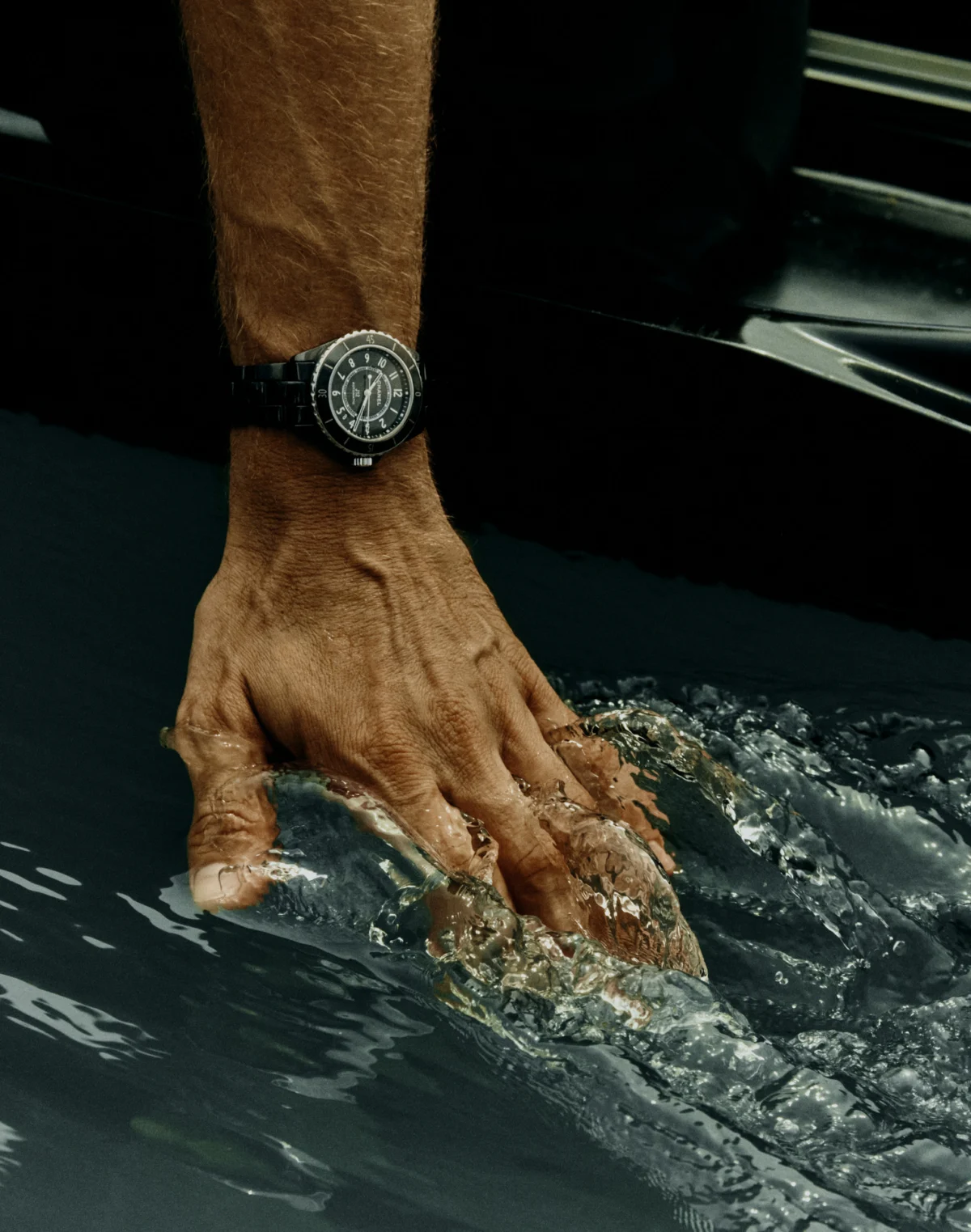
The luxury sector has spent centuries experimenting with a kaleidoscope of pigments and rare dyes, yet it has never truly escaped the gravity of black. Across the disparate worlds of haute couture, high jewelry, horology, and automotive engineering, the use of black serves a specific, paradoxical function: it strips luxury back to its fundamental components—material, form, and the meticulous craftsmanship that often remains hidden beneath more vibrant surfaces. While black can initially appear to flatten detail or conceal complexity, closer inspection reveals that it actually heightens the perception of texture, finish, and structural integrity.
In the contemporary market, the dominance of black is not merely an aesthetic choice but a statistical reality. According to the T-Fashion Runway Index, black appeared in 54.1 percent of 13,370 Fall/Winter 2026 womenswear looks analyzed across the global fashion capitals. This prevalence was most pronounced in Paris, where black featured in 56.5 percent of runway presentations, closely followed by New York at 56.4 percent. Even in cities known for more eclectic color palettes, such as London and Milan, black maintained a commanding presence at 50.7 percent and 49.6 percent, respectively. This data underscores a fundamental truth in the luxury economy: black remains the primary language of authority, discretion, and timelessness.

A Historical Trajectory of Status and Power
The association of black with high status is rooted in a rigorous historical chronology. The Victoria and Albert Museum (V&A) traces the fashionable ascent of black to the Spanish court of the 16th and 17th centuries. During this era, achieving a deep, consistent, and "fast" black dye was an incredibly expensive and technically demanding process, often requiring multiple immersions in costly imported dyestuffs like logwood. Consequently, wearing a rich black textile became a visual shorthand for dignity, wealth, and sovereign power.
As industrial processes evolved, black transitioned from a marker of literal cost to a symbol of conceptual depth. In the 20th century, designers like Cristobal Balenciaga utilized the color to redefine the female silhouette, using the "void" of black to emphasize architectural volume rather than surface decoration. This historical legacy continues to inform modern luxury, where the color is used to communicate a range of conflicting yet complementary meanings: restraint and excess, mourning and rebellion, tradition and avant-garde technology.
Technical Mastery and Material Innovation
In the modern era, the advantage of black in luxury design lies in its ability to adapt its character based on the medium. The industry has moved beyond simple pigments to explore how light interacts with different black surfaces. Polished ceramic, for instance, reflects light with a liquid-like brilliance, while matte automotive finishes absorb it, creating a sense of density and aggression.
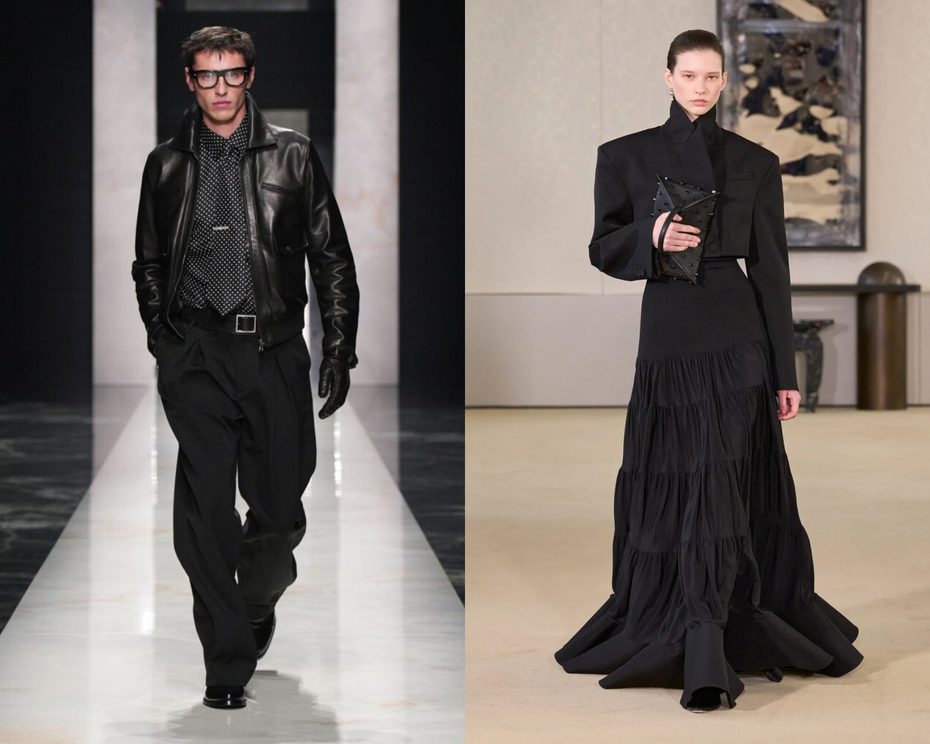
This reliance on materiality means that black leaves craftsmanship unusually exposed. When color is removed from the equation, the eye becomes hyper-aware of proportions and the precision of finishes. Whether it is the 35-step manufacturing process of a gold nib or the 1,300°C heat required to stabilize high-resistance ceramic, the "luxury" of black is often found in the industrial or artisanal rigor required to achieve it.
Balenciaga and the Architecture of Shadow
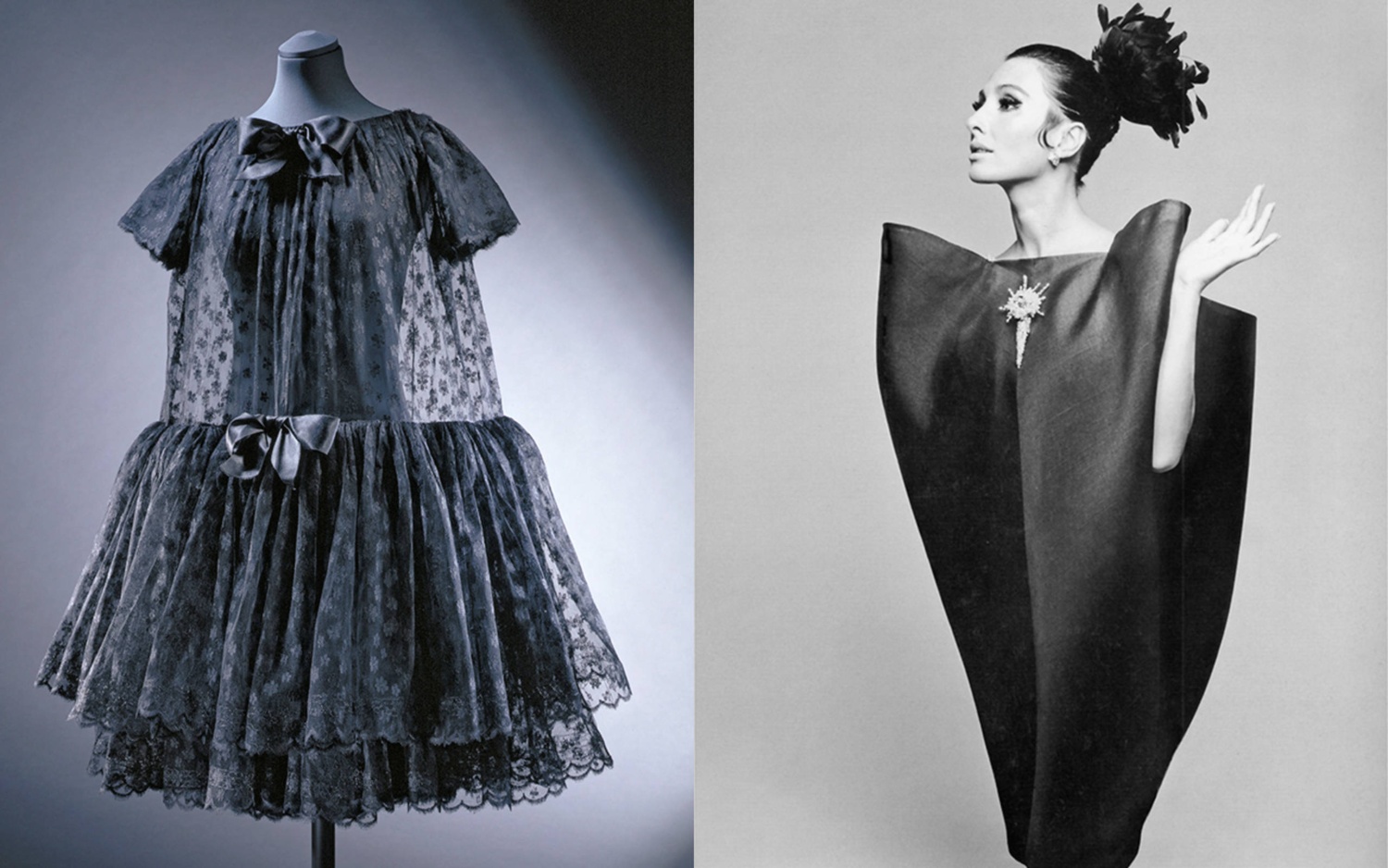
Cristobal Balenciaga’s mastery of black is perhaps best exemplified by his Fall/Winter 1965–66 evening dress, currently preserved in the collection of The Metropolitan Museum of Art. This garment serves as a case study in how black can reveal complexity through layers of different textures. By combining a structured foundation with cream silk, sheer black chiffon, and an outer layer of black lace finished with tiered ruffles, Balenciaga created a garment where the "color" was actually a play of shadows.
The use of horsehair to reinforce the ruffles allowed the silhouette to maintain its volume, a nod to the traditional flamenco dresses of Balenciaga’s Spanish heritage. In this context, black does not hide the dress; it forces the viewer to focus on the movement of the fabric and the structural engineering of the garment. It demonstrates that darkness can, counterintuitively, make the intricacies of construction easier to perceive.
Chanel J12: The Engineering of Monochrome
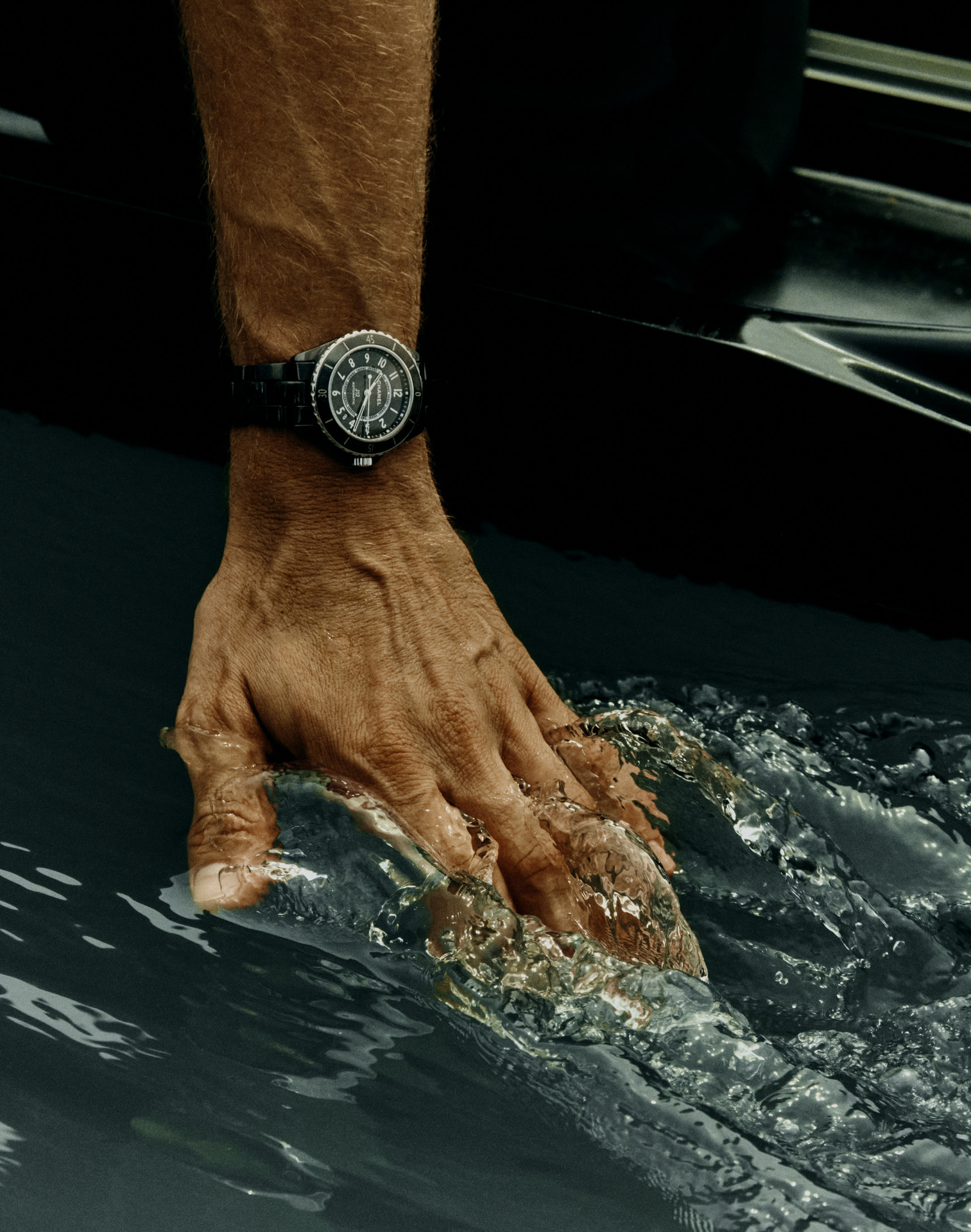
When Chanel launched the J12 in 2000, it signaled a pivotal shift in the watchmaking industry, moving black from the realm of aesthetics into the realm of high-performance engineering. At a time when the luxury watch market was dominated by stainless steel and yellow gold, the J12 introduced high-resistance ceramic as a primary material.
The production of the J12’s black finish is a feat of material science. The ceramic is heated to temperatures exceeding 1,300°C, ensuring that the color is baked into the material itself rather than applied as a superficial coating. Chanel asserts that this ceramic is seven times more resistant to abrasion than steel, making the watch’s deep black hue a permanent technical feature rather than a fading trend. This approach transformed the color into a technical proposition, where the value lies in the durability and tactile quality of the surface.
High Jewelry and the Power of Contrast
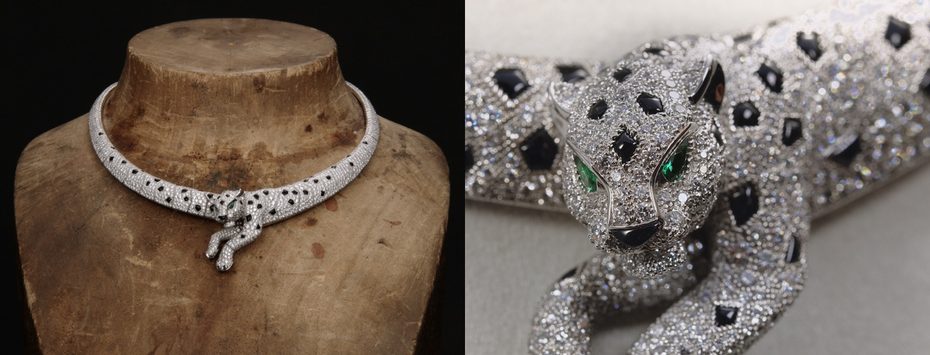
In the world of high jewelry, black is frequently employed not for its own sake, but as a foil to amplify the brilliance of gemstones. The Panthère de Cartier collection, a motif that has defined the maison since 1914, utilizes onyx and black nephrite jade to provide graphic definition. In a Panthère de Cartier necklace featuring 385 brilliant-cut diamonds, the black onyx used for the animal’s spots and nose creates a sharp, lifelike contrast against the white gold and diamond pavé.
This use of black serves a theatrical purpose. By absorbing light, the black elements make the surrounding diamonds appear brighter and the emerald eyes of the panther more intense. Here, the same color that communicates restraint in fashion is used to intensify the spectacle of high-value gems, proving that black is the ultimate enhancer of light.
The Rebellion of the Rolls-Royce Black Badge
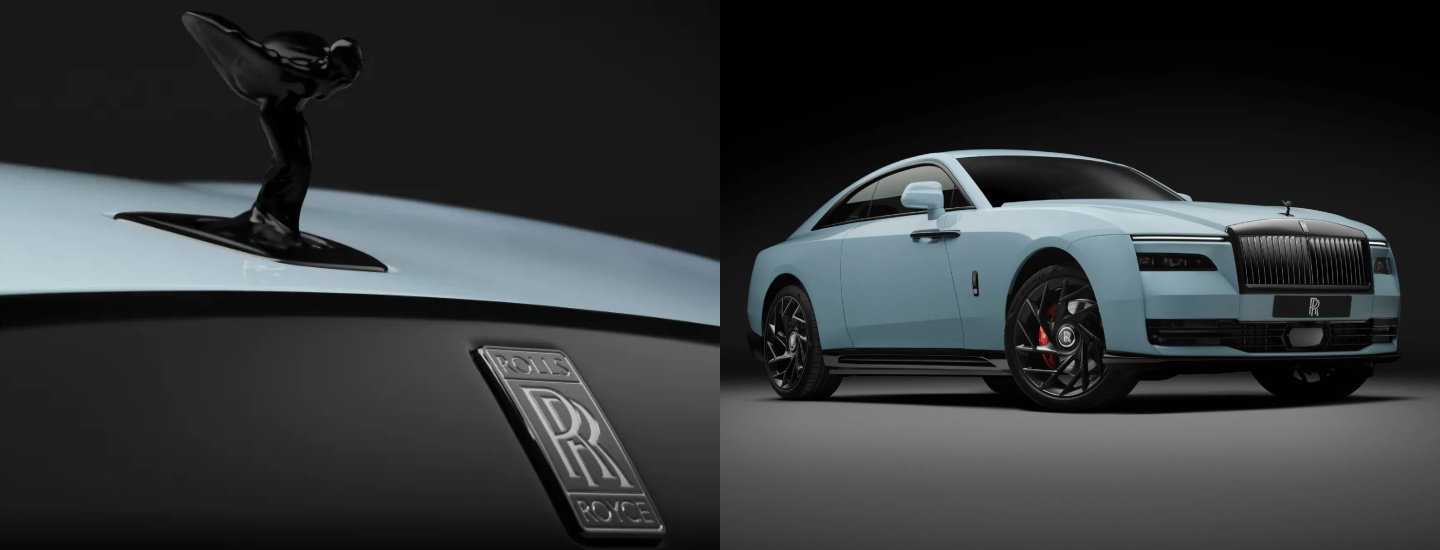
Rolls-Royce has perhaps done more than any other automotive manufacturer to weaponize black as a symbol of rebellion. The Black Badge Spectre Series II represents a departure from the brand’s traditional focus on ceremonial elegance. Through the use of an "Iced Black" treatment, the marque transforms traditionally polished elements—such as the Pantheon grille, door handles, and the iconic Spirit of Ecstasy—into satin-like matte surfaces.
The shift is not merely visual; it is psychological. The Black Badge series is designed for a younger, more assertive demographic of luxury consumers. This is supported by performance data: the Spectre Series II’s "Infinity Mode" unlocks 500 kW of power, while "Spirited Mode" raises torque to 1,100 Nm, making it the most powerful Rolls-Royce in history. In this instance, black is used to signal a "darker" alter ego for the brand, trading traditional chrome for an aesthetic of high-velocity aggression.
Authority and Discretion: Montblanc and Leica
For other heritage brands, black remains the color of quiet authority and professional discretion. The Montblanc Meisterstück 149, introduced in 1952, has become the definitive writing instrument for heads of state and captains of industry. Its body, crafted from deep black precious resin shaped under temperatures of 280°C, provides a somber backdrop for the gold nib and the white star emblem. The black color lends the object a sense of "visual seriousness," appropriate for a tool used to sign historic treaties and consequential contracts.
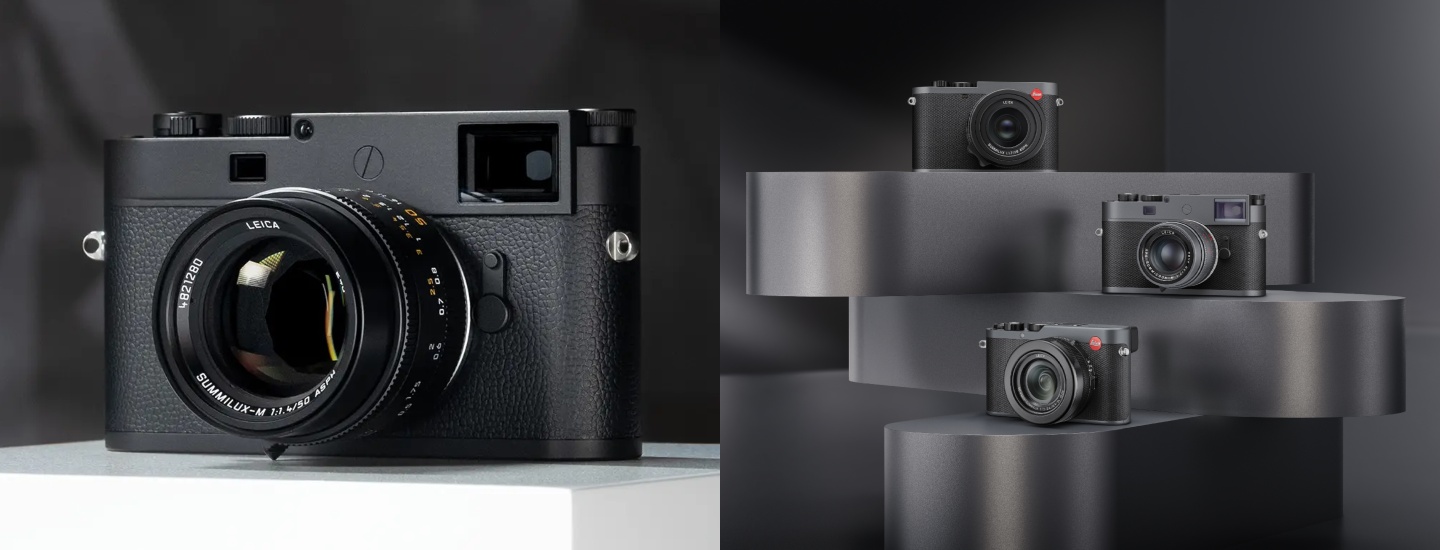
Similarly, the Leica M11 Monochrom takes the concept of discretion to its logical limit. The camera features an all-black, scratch-resistant finish and deliberately omits the famous red Leica logo—a move that reduces branding at the very moment most luxury brands are seeking to amplify it. Internally, the camera is designed to shoot exclusively in black and white. This "luxury of less" appeals to a niche of purists who value the object for its technical capabilities and its inconspicuousness. Here, black functions as a gatekeeper; the value of the object is recognized only by those with the specific knowledge to identify it.
Industrial Refinement and Architectural Form
The use of black in industrial design often serves to elevate functional objects into the realm of architecture. The RIMOWA Original Trunk, made from anodized aluminum, utilizes black to emphasize its signature vertical grooves. By moving away from the metallic brightness of raw aluminum, the black finish relies on the interplay of light and shadow to articulate the suitcase’s surface. The 90-liter Trunk, which weighs 6.1kg and carries a lifetime guarantee, demonstrates how monochrome design can make industrial forms appear more refined and permanent.
This architectural approach is echoed in the Steinway Ultra Black Model D. Limited to just eight concert grands, the Ultra Black edition treats the body, soundboard, and hardware in variations of deep black. By removing the traditional brass accents and high-contrast branding, Steinway allows the silhouette of the 274cm-long instrument to dominate the space. The result is an object that feels less like a musical instrument and more like a permanent monument to craftsmanship.
Analysis of Implications: The Future of the Monochrome
The persistence of black in the luxury sector suggests that as the world becomes increasingly saturated with digital imagery and fleeting trends, there is a growing demand for objects that feel grounded in material reality. Black provides a "reset" for the senses. It is a recession-proof color that maintains its resale value and its cultural relevance across generations.
Furthermore, the rise of "quiet luxury" and "stealth wealth" movements has reinforced black’s position as the preferred palette for the global elite. By choosing objects that prioritize form and texture over overt logos and bright colors, consumers are signaling a level of sophistication that transcends simple displays of wealth.
In conclusion, the true luxury of black lies in what it leaves exposed. When the distraction of color is removed, there is nowhere for a flaw to hide. A poorly stitched seam, a rough ceramic finish, or a misaligned automotive panel becomes immediately apparent against a black backdrop. Therefore, the continued dominance of black is, in effect, a continued commitment to the highest standards of execution. As long as craftsmanship remains the cornerstone of luxury, black will remain its most essential and enduring canvas.
