
 By admin
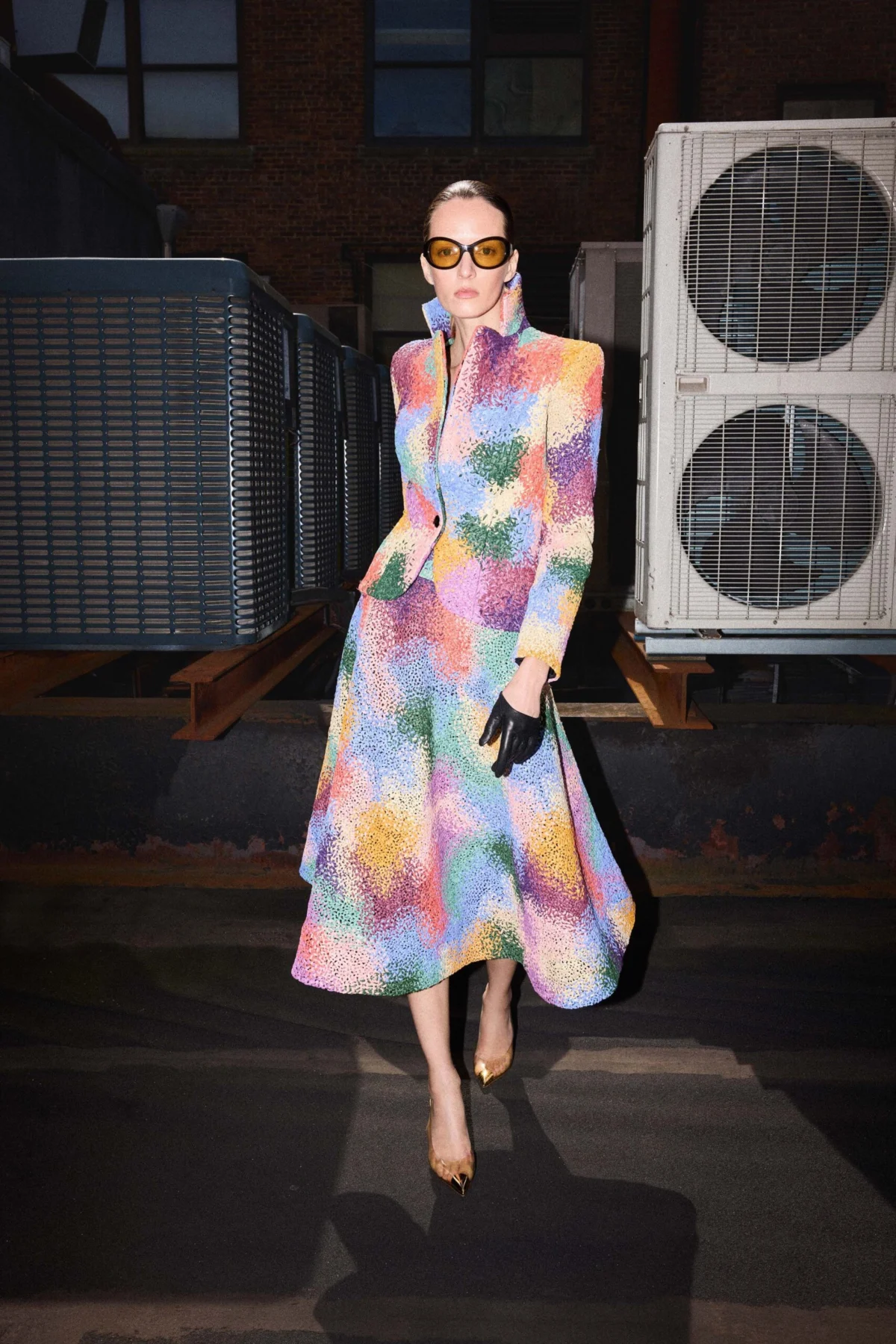
Renowned fashion designer Naeem Khan has recently revealed a profound expansion of his creative practice, transitioning from solely helming a celebrated fashion label to secretly cultivating a parallel career as a fine painter. This artistic duality culminated in his latest spring collection, which demonstrably drew direct inspiration from his painterly explorations, signaling a significant evolution for the brand and its visionary founder. Khan, known globally for his intricate embellishments and glamorous designs, has been developing his painting skills for "the last couple of years," noting that his artwork "has really been taking off." He operates under the collective name KACE alongside collaborator Stanley Casselman, a partnership that underscores a deeper foray into the fine art world.
This unveiling represents more than just a seasonal collection; it marks a deliberate confluence of Khan’s established design aesthetic with a newfound artistic language. The synergy between his two creative realms offers a fresh perspective on wearable art, challenging the traditional boundaries between runway and gallery. The spring collection, therefore, is not merely a display of garments but a curated exhibition of textile art, reflecting the color palettes, textural experiments, and conceptual frameworks that have defined Khan’s recent artistic output.
The Genesis of KACE: A Designer’s Secret Artistic Journey
Naeem Khan’s journey into fine art was a deliberately private endeavor for several years, allowing him the space to develop his painterly voice away from the high-stakes environment of the fashion industry. This period of artistic incubation ultimately led to the formation of KACE, a creative partnership with contemporary artist Stanley Casselman. Casselman, an American abstract painter celebrated for his luminous, often textural works that explore light and color, brings a complementary sensibility to Khan’s emerging artistic vision. Their collaboration under KACE suggests a shared aesthetic philosophy, one that likely emphasizes vibrant hues, dynamic compositions, and a tactile quality that resonates deeply with Khan’s textile-focused fashion designs.
The decision to pursue painting in tandem with a demanding fashion career is a testament to Khan’s boundless creativity and his desire to explore new mediums for expression. Running a successful fashion label, particularly in the current global economic climate, is an all-consuming enterprise, requiring constant innovation, strategic business acumen, and an unwavering commitment to seasonal demands. The fashion industry, valued globally at over $1.7 trillion, operates at an accelerated pace, with designers under immense pressure to deliver fresh, commercially viable collections while navigating complex supply chains, evolving consumer preferences, and increasing demands for sustainability. Against this backdrop, Khan’s dedication to developing a new artistic craft in secret highlights a profound personal need for creative exploration beyond the commercial constraints of ready-to-wear.
While specific dates for KACE’s inception or public exhibitions remain understated, Khan’s statement that his artwork "has really been taking off" implies a period of successful development, possibly involving private sales, gallery representations, or quiet showings that preceded this public announcement via his spring collection. This strategic revelation positions his art not as a mere hobby, but as a significant, independently flourishing endeavor that now directly informs his primary design work.
Naeem Khan’s Illustrious Fashion Legacy: A Foundation for Artistic Expansion
Before delving into the specifics of the collection, it is crucial to contextualize Naeem Khan’s established position in the fashion world. Born in India, Khan grew up surrounded by the rich textile traditions of his heritage, working alongside his grandfather, who designed clothing for Indian royal families. He later apprenticed under the legendary American designer Halston, a period that profoundly shaped his understanding of drapery, elegance, and the art of dressing a woman’s form.
Khan launched his eponymous label in 2003, quickly establishing a reputation for exquisite eveningwear, opulent embellishments, and a distinct glamour that resonated with a high-profile clientele. His designs are characterized by meticulous handwork, intricate beadwork, sequin artistry, and luxurious fabrics, often drawing inspiration from global cultures, particularly his Indian roots. Over the years, his creations have graced red carpets worldwide, adorned numerous celebrities, and notably been worn by former First Lady Michelle Obama on several significant occasions, including a state dinner. This history underscores his mastery of traditional craftsmanship and his ability to translate intricate details into garments of undeniable sophistication and impact.
This background provides critical context for his current artistic expansion. Khan’s inherent understanding of color, texture, and form, honed over decades in fashion, naturally lends itself to painting. The transition, therefore, is not a radical departure but a logical extension of his existing creative lexicon, allowing him to explore these elements on a different medium before translating them back into textiles.
The Spring Collection: Where Canvas Meets Couture
The spring collection serves as a direct, tangible manifestation of Naeem Khan’s dual artistic identity. His stated desire to infuse "even more creative" elements into his signature glitzy finishings reflects a designer emboldened by new artistic discoveries. The collection’s overarching theme, as Khan articulated, directly follows "the colors of my paintings," implying a cohesive palette and emotional resonance derived from his KACE works. He emphasized, "I took the same process—but with clothing," highlighting a direct transfer of artistic methodology from canvas to fabric.
Artistic Techniques Translated into Textile Innovation:
-
The Opening Statement: Hand-Dyed Raffia as Wearable Watercolor: The collection commenced with a striking blazer and skirt ensemble crafted from hand-dyed raffia. This choice of material, traditionally associated with more rustic or artisanal crafts, was transformed to mimic the ethereal quality of watercolors in soft pastel hues. The laborious process of hand-dyeing raffia to achieve graduated color effects speaks to the intensive handwork and textile innovation at play. This technique evokes the fluid, translucent washes characteristic of watercolor painting, demonstrating a nuanced understanding of how color saturation and blending can be achieved on a three-dimensional, textured surface. It’s a testament to the atelier’s skill in manipulating materials to achieve a painterly illusion, setting an immediate tone for the collection’s artistic undercurrents.
-
Beaded Florals and Fringed Stems: Dimensional Artistry: A sheer mini dress, the second look presented, exemplified Khan’s signature embellishments elevated by a new artistic sensibility. Adorned with hand-beaded colorful florals, some featuring delicate fringed stems, the garment became a vibrant, tactile canvas. The "fringed stems" add a three-dimensional quality, creating movement and depth reminiscent of brushstrokes or sculpted elements in a painting. This approach showcases an even bolder exploration of his renowned handwork, pushing beyond flat surface decoration to create intricate, relief-like patterns that dance with light and motion.
-
Laser-Cut Petals: Precision and Poetic Form: A statement-making cherry blossoms gown highlighted the fusion of traditional motif with modern fabrication techniques. Crafted using laser-cut fabric petals, the gown embodied both delicate beauty and meticulous precision. Laser cutting allows for incredibly intricate and consistent shapes, transforming fabric into sculptural elements. The cherry blossom, a symbol of ephemeral beauty and renewal, gains a new dimension when rendered through this sophisticated textile engineering, turning the dress into a blooming work of art.
-
Feathers and Ombré: Textural and Chromatic Play: The collection further explored texture and color transitions with pieces like a pastel-blue mini dress covered in feathers, radiating a "party-ready" allure. The luxurious texture of feathers, combined with the soft hue, creates a dreamy, ethereal effect. Similarly, a beaded fringe mini dress showcased a stunning ombré effect, transitioning seamlessly from sky blue to silver. The ombré technique, a gradual blending of colors, is inherently painterly, and its application to shimmering beads and dynamic fringe creates a garment that mimics the play of light and shadow found in an abstract painting. These pieces not only provide visual spectacle but also invite tactile engagement, echoing the textural qualities often found in Casselman’s work.
-
Composition and Scale: The Museum-Worthy Masterpiece: Perhaps the most compelling illustration of Khan’s artistic principles translating into fashion was a simple black top coat embellished with white pearls. The pearls were strategically applied, graduating from sparse distribution to more heavily bunched clusters at the waist, meticulously designed to create an hourglass effect. This piece is a masterclass in "composition and scale," demonstrating a painter’s understanding of visual weight, negative space, and strategic placement to manipulate perception. Khan’s statement that it’s "a piece so fanciful it could be on display at a museum" directly positions this garment as an object of fine art, transcending its function as clothing. This particular piece embodies the convergence of design, craft, and artistic theory, making a strong case for fashion as a legitimate art form.
Industry Reactions and Broader Implications
The unveiling of Naeem Khan’s spring collection, deeply imbued with his fine art pursuits, is poised to generate significant interest across both the fashion and art worlds.
Fashion Critics and Industry Observers: Fashion critics are likely to laud Khan’s innovative approach, recognizing his willingness to push creative boundaries and introduce a fresh perspective to his established brand. The collection’s emphasis on intricate handwork, innovative textile manipulation, and a cohesive artistic vision will reinforce his position as a master craftsman and an evolving creative force. This move could also inspire other designers to explore interdisciplinary art forms, fostering a richer, more diverse creative landscape within the industry. In an era where fashion houses are constantly seeking unique selling propositions and authentic narratives, Khan’s artistic venture provides a compelling story of personal growth and creative synergy.
The Art Market and Cross-Pollination: From the art world’s perspective, the entry of a renowned fashion designer like Naeem Khan, particularly in collaboration with an established artist like Stanley Casselman (KACE), adds an intriguing dimension. It challenges the traditional gatekeeping often associated with fine art, demonstrating that creative talent can flourish across disciplines. This cross-pollination could lead to increased dialogue between the two fields, potentially attracting new collectors to KACE’s artwork and drawing art enthusiasts to Khan’s fashion. Exhibitions showcasing both KACE’s paintings and Khan’s inspired fashion pieces could become a compelling new format for presenting creative work.
Brand Evolution and Market Positioning: For the Naeem Khan brand, this artistic expansion offers a significant opportunity for evolution. It elevates the brand’s perception from a purveyor of luxury fashion to a holistic artistic entity. This enhanced positioning could attract a more sophisticated clientele who appreciate the intellectual and artistic depth behind the garments. In a competitive luxury market, differentiation through artistic integrity and a compelling narrative can be a powerful driver of brand loyalty and premium value. The "secret" nature of the art development adds an element of intrigue and authenticity, suggesting a genuine passion rather than a calculated commercial move.
The Intersection of Art and Fashion: A Historical Perspective: Naeem Khan’s artistic journey is not an isolated phenomenon but rather part of a long and rich history of designers drawing inspiration from or directly engaging with fine art. From Elsa Schiaparelli’s collaborations with Salvador Dalí in the Surrealist movement to Yves Saint Laurent’s iconic Mondrian dress, the dialogue between art and fashion has consistently pushed creative boundaries. More recently, designers like Raf Simons (with Sterling Ruby) or Virgil Abloh (with various contemporary artists) have explored direct collaborations. Khan’s approach, however, appears more deeply personal, integrating his own artistic practice directly into his design ethos, positioning him as a creator who embodies both disciplines rather than merely referencing or collaborating. His work exemplifies the notion of clothing as "wearable art," where the garment itself is a canvas for artistic expression.
Conclusion
Naeem Khan’s spring collection represents a pivotal moment in his illustrious career, serving as a vibrant testament to his burgeoning talent as a fine painter and the profound impact this new passion has had on his design philosophy. By seamlessly weaving the colors, textures, and conceptual approaches of his KACE artworks into his signature embellished aesthetic, Khan has presented a collection that is not only visually stunning but also deeply resonant with artistic intention. This integration signals a new chapter for the designer, one where the boundaries between fashion and fine art become increasingly fluid, and where the garment transcends its functional purpose to become a genuine object of artistic expression. As Khan continues to navigate both the bustling world of high fashion and the contemplative realm of fine art, his multifaceted creativity is poised to captivate audiences and inspire a deeper appreciation for the intricate relationship between canvas and couture.
