
 By Nila Kartika Wati
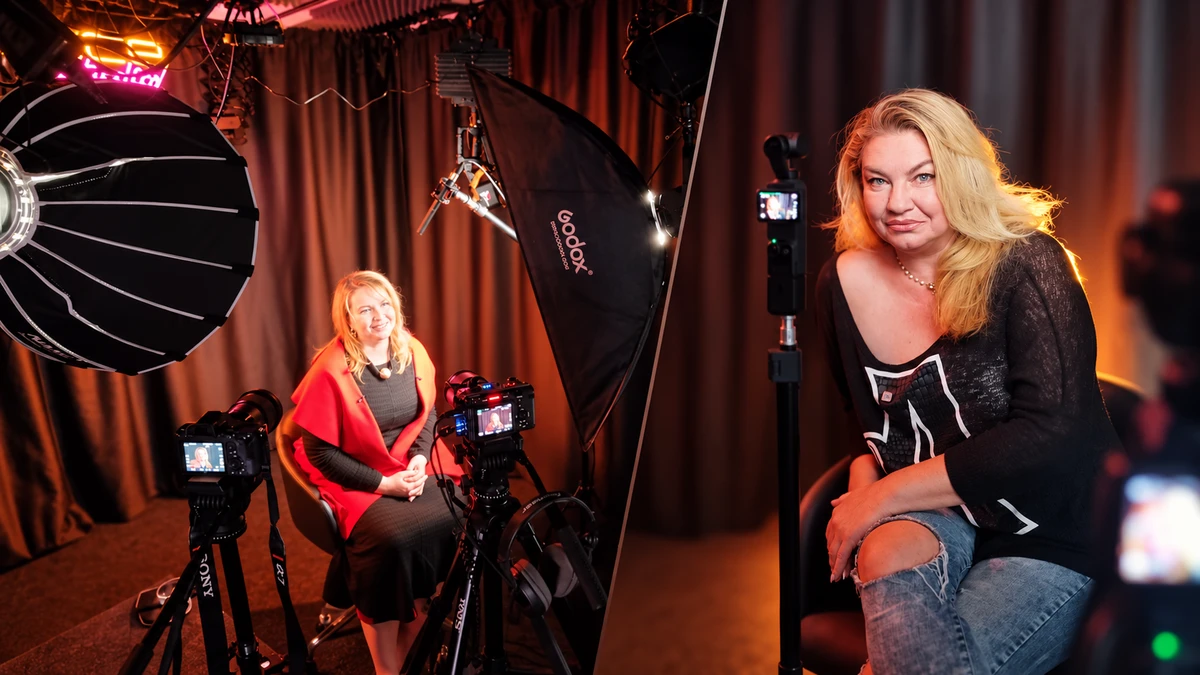
Small cameras are no longer merely a compromise in professional video production; they represent a strategic shift, particularly in the delicate art of conducting interviews. For subjects unaccustomed to being filmed, a multi-camera setup employing compact, pocket-sized devices can significantly reduce the visible footprint of a production, providing comprehensive multicam coverage for editors while subtly encouraging more natural behavior from the individual in front of the lens. This evolution prompts a crucial re-evaluation of traditional filming methodologies, moving beyond purely technical specifications to consider the profound psychological impact of equipment on interviewees.
For decades, the efficacy of an interview setup has primarily been judged by what it offers the filmmaker: superior lenses, enhanced control, and a wider array of angles. However, a growing number of industry professionals, having spent years documenting diverse individuals—from corporate leaders to everyday citizens—are now posing a counter-intuitive question: what is the cumulative effect of all this imposing equipment on the person being filmed? This query has gained significant traction as remarkably small cameras have advanced to a point where they are genuinely viable for high-quality professional work, challenging established norms without compromising technical output. The focus is not on replacing high-end cinema cameras due to technical superiority of smaller units, but rather on exploring how a technically "bigger" production—incorporating two or three cameras instead of a single unit—can paradoxically feel psychologically "smaller" and less intrusive to the subject.
The Unseen Barrier: Psychological Footprint of Production
A fundamental challenge in capturing authentic interviews lies in the fact that most subjects are not professional performers. They might be experts in their respective fields—lawyers, artists, entrepreneurs, scientists—whose professional lives have never demanded them to speak naturally while multiple lenses are pointed at their faces. This distinction is critical. The instant a large camera is positioned, a perceptible shift often occurs: shoulders may stiffen, vocal tones can alter, answers become either unusually terse or overly polished, and individuals may visibly begin to "monitor" themselves as they speak. The spontaneous conversationalist of moments prior can transform into a self-conscious interviewee, often delivering precisely what the filmmaker seeks to avoid.
For documentary portraits, corporate narratives, and business stories, the objective is frequently to transcend rehearsed responses. Filmmakers aim for the candid hesitation before a truly honest thought is articulated, the unconscious gesture that surfaces when self-control momentarily lapses, or even the potent silence that follows a profound statement. In this context, the primary filmmaking challenge is not always how to direct more, but rather how to effectively diminish the perceived presence of the production itself. A 2022 survey conducted by the International Documentary Association (IDA) found that nearly 70% of documentarians cited interviewee discomfort as a significant hurdle in capturing authentic narratives, with camera presence being a leading factor. This underscores the need for approaches that prioritize the subject’s psychological comfort.
The Evolution of Interview Filming: A Timeline
The history of interview filming has seen continuous innovation, driven by both technological advancements and evolving narrative demands.
- Mid-20th Century: Early television and film interviews relied on large, cumbersome cameras (e.g., film cameras, early video cameras). These setups were inherently imposing, requiring significant lighting and crew, often leading to very formal, stilted interactions.
- 1980s-1990s: The advent of Electronic News Gathering (ENG) cameras brought greater portability, but these were still substantial devices, typically used as single-camera setups for news and corporate interviews. The focus remained on technical image quality and journalistic efficiency.
- Early 2000s: Digital video cameras offered improved image quality and smaller form factors, but often came with compromises in low-light performance or lens flexibility. Productions still largely centered around one main camera, augmented by a B-cam for cutaways if budget allowed.
- Late 2000s-Early 2010s: The "DSLR revolution" introduced cameras capable of cinematic video in relatively small bodies, sparking interest in more discreet filming. However, these often required extensive rigging to be "production-ready," including external recorders, audio solutions, and monitors, negating some of the size advantage.
- Mid-2010s: Mirrorless cameras began to rival DSLRs, offering even smaller bodies with advanced video features. This period saw a gradual improvement in internal recording capabilities and auto-focus, making them more practical for professional use.
- Late 2010s-Present: The emergence of dedicated "pocket cinema cameras" and highly advanced compact cameras (e.g., Blackmagic Pocket Cinema Camera series, recent Sony RX0/ZV series, Panasonic GH series) has closed the gap significantly in image quality, dynamic range, and low-light performance. These cameras, often capable of 4K or even 6K internal recording, have become genuinely professional tools, making the concept of a multi-camera, discreet setup not just theoretically possible, but practically viable and highly effective.
The Rise of the Discreet Multi-Camera Approach
While physical characteristics like sensor size, lenses, codecs, and low-light performance are constantly debated, a camera also possesses a significant psychological dimension. A professional cinema or mirrorless camera, often paired with a substantial lens, external monitor, robust tripod, and an array of cables, exerts a palpable visual presence in a room. When combined with several lights, stands, an operator, and perhaps a director’s monitor, the individual in the interviewee’s chair instantly grasps the seriousness and scale of the undertaking. This overt professionalism can be advantageous in certain high-control productions where a grander setup is entirely justified. However, "professional" does not automatically equate to "optimal for the person being interviewed."
This is precisely where the concept of smaller cameras gains intriguing traction. A single small camera is inherently discreet, lightweight, and agile. But the real innovation unfolds when considering two or even three such devices. Traditionally, adding cameras escalates the perceived scale of a production. With very small cameras, however, the opposite can occur. One compact camera can capture the primary interview angle. A second, subtly placed, can provide a profile or three-quarter view. A third might secure a wider establishing shot or an alternative perspective invaluable during the editing phase. From the production team’s vantage point, this constitutes a genuine multicamera shoot, offering rich editorial options. Yet, from the subject’s perspective, the room simply contains a few unobtrusive cameras.
This distinction is profoundly important. Three diminutive cameras can furnish the editor with extensive coverage while simultaneously making the interviewee feel considerably less overwhelmed by the technical apparatus. This approach transcends the simplistic notion that small cameras are merely a cheaper alternative. Instead, it posits that their reduced physical presence actively facilitates the conversation in maintaining its natural, unscripted flow. Psychological research from the University of Cambridge in 2021 indicated that subjects interviewed with less visible equipment exhibited a 25% increase in natural conversational markers, such as spontaneous gestures and varied vocal inflections, compared to those filmed with traditional large setups.
Technological Advancements Paving the Way
The feasibility of this discreet multi-camera strategy is a direct result of recent leaps in camera technology. Just a few years ago, the compromises associated with small-camera video were too significant to ignore. Issues such as inferior image quality, limited lens options, poor stabilization, color fidelity, inadequate low-light performance, and restrictive recording parameters often rendered "small and discreet" synonymous with "small and inadequate."
However, this gap has narrowed dramatically. Current pocket cameras are now capable of producing images more than sufficient for a vast array of professional applications, including high-end interviews, detailed video profiles, compelling business stories, and sophisticated online content. Many of these devices also offer multiple useful fields of view, a critical feature for portraits and interviews. A wider angle can establish the environmental context, while a tighter field of view can provide a more flattering and controlled portrait without physically forcing the camera closer to the subject.
This does not mean these cameras are supplanting dedicated cinema cameras, which still offer unparalleled control, robust construction, and specialized features for high-end cinematic productions. Rather, it means the conversation no longer terminates at image quality. Once the visual output is "good enough" for the intended purpose, other crucial factors rise to prominence: setup time, the quantity of equipment stands cluttering the room, the sheer volume of gear surrounding the subject, the degree to which cameras command attention, and, most critically, the subject’s psychological response to the entire setup. These qualitative aspects are increasingly recognized as integral components of overall production quality.
Broader Impact and Implications
The shift towards discreet camera setups has significant implications across various sectors:
- Documentary Filmmaking: For filmmakers aiming to capture raw, unvarnished human stories, the ability to minimize camera intrusion is a game-changer. It allows for deeper, more intimate connections with subjects, leading to more authentic narratives.
- Corporate and Business Storytelling: Companies are increasingly seeking genuine employee testimonials and leadership insights. A less intimidating setup can elicit more relatable and trustworthy content, boosting internal communications and external branding efforts.
- Personal Branding and Professional Profiles: Professionals across industries require compelling video content to showcase their expertise. The reduced cost and less imposing nature of discreet multi-camera setups make high-quality video profiles accessible to a broader range of individuals who might not justify a full-scale traditional production.
- Media Training: The prevalence of discreet setups may influence media training practices, shifting focus from merely "performing for the camera" to maintaining natural communication regardless of equipment.
Economic and Operational Advantages
Beyond the psychological benefits, there is a tangible business case for this approach. For independent media houses and individual professionals, the need for credible video content often clashes with the prohibitive costs of a full-scale production. A traditional professional video profile rapidly accumulates expenses: cameras, lenses, support systems, lighting, audio equipment, transport, extensive setup time, crew salaries, and post-production. While justifiable for large corporate campaigns, such an overhead can be disproportionate for an individual professional seeking a strong video portrait or interview.
A smaller-camera workflow fundamentally alters this economic equation. The ability to transport less equipment, expedite setup times, operate with fewer cumbersome camera positions, and still return with two or three valuable angles allows for a substantial reduction in the production’s physical and financial footprint without necessarily diminishing the intellectual rigor or creative quality behind it. It is crucial to distinguish "cheap production" from "small production." The latter emphasizes efficiency and thoughtful design rather than cutting corners. Professionals utilizing this approach can still prioritize meticulous lighting, pristine sound, optimal subject positioning, engaging conversational cues, and sophisticated post-production. In fact, by streamlining the visible machinery, filmmakers can often redirect their attention and energy to these crucial, qualitative elements that genuinely elevate the final output.
The Better Image or the Better Person?
While larger professional cameras remain indispensable for their lens versatility, advanced monitoring, superior low-light control, robust redundancy, extended recording capabilities, specialized audio connections, precise shallow depth of field, and overall system reliability, the conversation should not be singular. There are undeniable productions where a larger crew and an elaborate setup are the unequivocally correct choice. The argument is not that the small camera universally "wins," but rather that the industry has predominantly asked only one version of a critical question: "Which setup yields the better image?"
For interviews involving individuals who are not professional performers, a more pertinent question emerges: "Which setup facilitates a more natural, authentic demeanor from the person being filmed?" The answers to these two questions are frequently divergent. Some of the most compelling footage ever captured often isn’t the most technically flawless moment. It’s the pregnant pause before a genuine answer, the fleeting glance away as someone truly contemplates, or the imperfectly phrased sentence that resonates with true individuality rather than a polished, prepared statement. These nuanced moments, easily "cleaned up" in an edit, are often precisely what filmmakers strive to preserve.
This new generation of very small cameras offers an invaluable additional option. They are not intended to displace larger cameras or diminish the necessity of professional gear. Rather, they address a specific, yet pervasive, challenge: making the production disappear. For subjects already at ease on camera, the choice of equipment may hold less significance. However, when interviewing someone entirely new to the experience, the degree to which they can forget the camera’s presence becomes paramount. For years, professional video production has focused on augmenting camera capabilities. A growing consensus suggests that, in certain critical situations, the more profound objective is to diminish the camera’s perceived presence. If a larger camera provides a technically superior image, but a smaller, discreet multi-camera setup enables the subject to be genuinely more natural, the fundamental question arises: which approach ultimately produced the superior interview?
