
 By admin
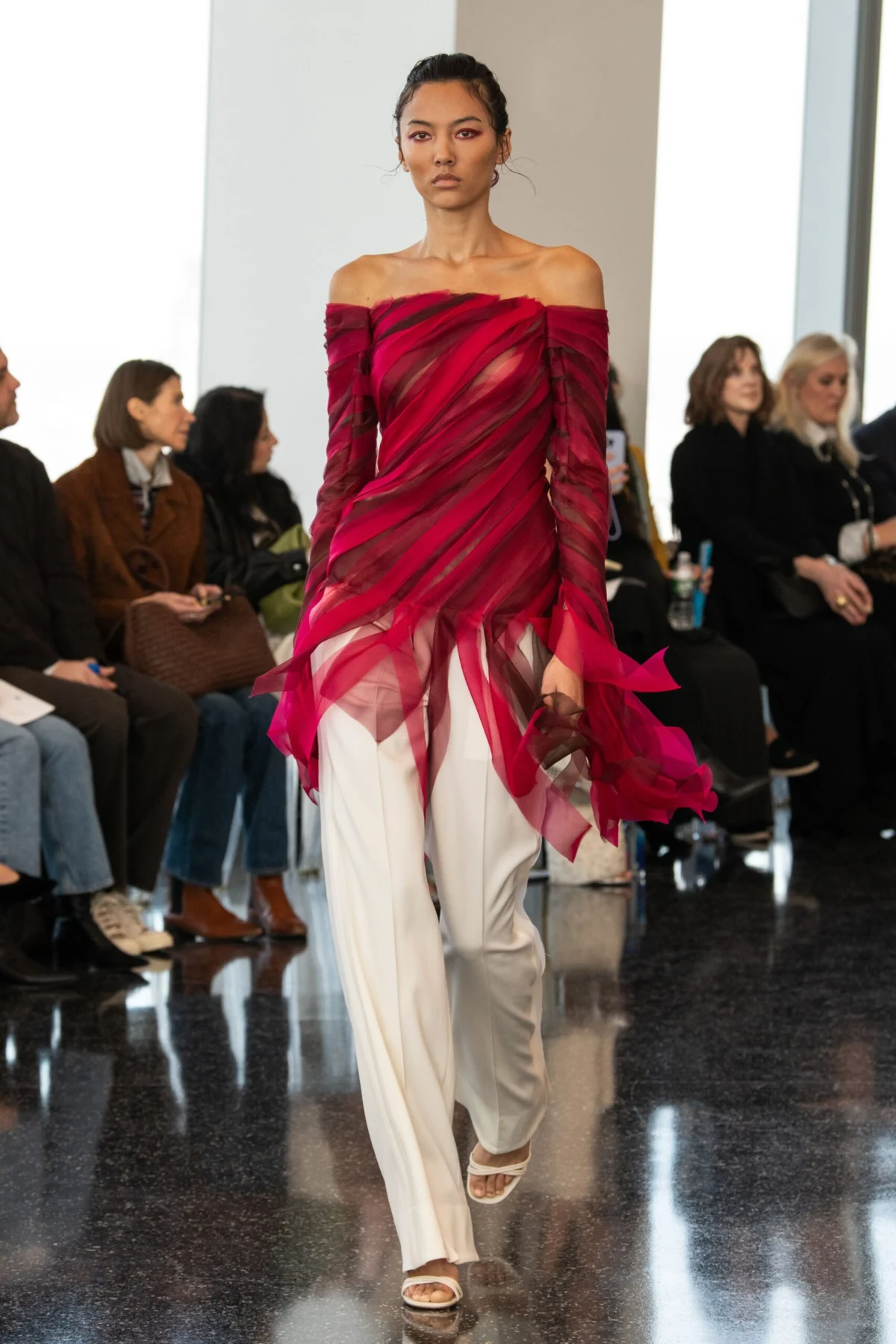
J. Mendel, the esteemed house of luxury, recently staged its highly anticipated return to the fashion calendar with a collection that debuted under the creative direction of Jonathan Cohen. The presentation, held yesterday on the breathtaking 102nd floor of One World Trade Center, marked the first collection reviewed by Vogue Runway since 2022 and signaled a strategic move to infuse the brand’s uptown glamour with a downtown sensibility. While the panoramic views from the iconic skyscraper provided an undeniably grand backdrop, industry observers noted that the sheer scale and modernity of the location starkly highlighted the perceived "narrow remit" of a company often described as "caught in amber," navigating the delicate balance between its rich heritage and the demands of contemporary luxury.
A Legacy Unfurled: The Storied History of J. Mendel
The J. Mendel name carries a profound historical weight, rooted in an artisanal tradition that spans over a century and a half. The brand’s origins trace back to 1870 in St. Petersburg, Russia, where it was founded as a prestigious house specializing in furs. In the twilight years of the Russian Empire, fur was not merely a garment but a symbol of status, wealth, and imperial elegance, and J. Mendel quickly established itself among the elite, catering to the aristocracy and the discerning clientele of the imperial court. The craftsmanship involved in their fur creations was unparalleled, blending luxurious materials with intricate design, solidifying their reputation as masters of the trade.
From Imperial Russia to Parisian Chic
The geopolitical upheavals of the early 20th century, particularly the Russian Revolution, prompted a significant relocation for many established Russian luxury houses. J. Mendel was among them, successfully transitioning its operations to Paris, the undisputed global capital of fashion and haute couture. This move in the mid-20th century allowed the brand to immerse itself in the vibrant Parisian fashion scene, adapting its heritage of fur expertise to the evolving tastes of European high society. In Paris, J. Mendel continued to thrive, collaborating with leading designers and cementing its position within the exclusive circle of luxury fashion. The meticulous techniques perfected in St. Petersburg were seamlessly integrated into the demanding standards of French haute couture, ensuring the brand’s continued prestige and desirability.
The American Chapter and the Rise of Ready-to-Wear
A pivotal moment in the brand’s trajectory occurred in 1981 when Gilles Mendel, a fifth-generation member of the founding family, established a branch in New York City. This expansion marked a strategic recognition of the burgeoning American luxury market, which was rapidly gaining influence and presenting new opportunities for European brands. Under Gilles Mendel’s leadership, the New York operation quickly garnered a loyal following among the city’s socialites and discerning clientele, becoming synonymous with sophisticated fur creations.
However, the late 20th and early 21st centuries brought about significant shifts in the fashion industry and broader consumer sentiment. The escalating anti-fur movement, fueled by ethical concerns and growing environmental awareness, led to a dramatic decline in the popularity and acceptance of fur garments. Many luxury brands found themselves at a crossroads, needing to adapt or risk obsolescence. J. Mendel, under Gilles’s guidance, bravely confronted this challenge by officially introducing a ready-to-wear collection in 2002. This was a monumental pivot, transforming the brand from a specialized furrier into a full-fledged fashion house offering a broader range of luxury apparel. The transition was a testament to the brand’s resilience and foresight, recognizing the need to diversify its offerings while retaining its commitment to exquisite craftsmanship.
This era of adaptation coincided with the height of the "socialite" phenomenon in New York City, a period characterized by a distinct aesthetic of opulent glamour. Figures like Tinsley Mortimer, Byrdie Bell, and Muffie Potter Aston epitomized this style, frequenting high-profile events such as the Frick Young Fellows Ball. J. Mendel’s ready-to-wear, particularly its feathered and intricately embroidered dresses and luxurious tippets, became a staple for these occasions, adding a touch of romantic elegance and aspirational sophistication. The brand’s prominence during this period was further cemented when Natalie Portman graced the January 2011 cover of Vogue in a palest pink, hand-pleated silk chiffon gown from the label, a moment that captured the ethereal beauty and refined artistry for which J. Mendel had become celebrated. The image of Portman in that exquisite dress resonated deeply, becoming an iconic representation of the brand’s feminine allure.
Navigating a Shifting Landscape: The Post-Gilles Mendel Era
The luxury landscape continued to evolve rapidly, marked by the rise of digital influence, the accelerating pace of fashion cycles, and a renewed emphasis on sustainability and authenticity. In 2018, Gilles Mendel, who had steered the brand through its most significant transformation, stepped away from his direct association with the company. This departure initiated a period of re-evaluation for J. Mendel, as it sought to define its identity and trajectory in a highly competitive and dynamic market without its long-standing familial creative head. The search for a new vision that could honor its illustrious past while forging a relevant future became paramount. This led to the appointment of Jonathan Cohen as resident creative director, tasked with revitalizing the brand’s aesthetic and commercial appeal, culminating in the collection unveiled at One World Trade Center.
A New Horizon: Jonathan Cohen’s Vision at One World Trade Center
Jonathan Cohen’s debut collection for J. Mendel represents a critical juncture for the brand, a deliberate attempt to recalibrate its image and expand its market reach. Cohen, an experienced designer with a keen eye for detail and a nuanced understanding of luxury, was brought in to inject fresh energy while respecting the brand’s foundational principles of exquisite craftsmanship and refined elegance. His role as "resident creative director" suggests a focused mandate to work within the existing framework of the atelier, leveraging its unique capabilities while gradually introducing a more contemporary perspective.
The Symbolic Stage: Uptown Glamour Meets Downtown Grit
The choice of the 102nd floor of One World Trade Center as the venue for this pivotal collection was undeniably strategic and highly symbolic. Traditionally associated with "uptown glamour," J. Mendel’s decision to stage its show "downtown and into the clouds" at a landmark synonymous with resilience, modernity, and American ambition, spoke volumes. It was an intentional juxtaposition, aiming to communicate a desire to transcend traditional boundaries and embrace a more forward-looking identity. The sheer height and architectural marvel of the building, offering breathtaking panoramic views of the sprawling metropolis, served as a powerful metaphor for aspiration and innovation. The grandeur of the setting, however, presented a unique challenge: to create a collection that could not only hold its own against such a monumental backdrop but also resonate with the symbolic weight of the location, bridging the gap between historical luxury and contemporary relevance. For some, the contrast between the brand’s perceived traditionalism and the cutting-edge modernity of the venue underscored the brand’s ongoing journey of self-definition.
Bridging Eras: Inspiration from Portman to Spears
Cohen’s design philosophy for this collection appears to be an intricate tapestry woven from diverse inspirations, attempting to bridge different eras and aesthetics. He explicitly referenced the indelible image of Natalie Portman in the J. Mendel silk chiffon gown on the Vogue cover, noting, "I just always remember that dress being so beautiful and I loved how easy it looked." This acknowledgment speaks to a respect for the brand’s legacy of effortless elegance and sophisticated femininity.
However, Cohen also revealed a more unexpected and contemporary muse: Britney Spears. This influence manifested in "pretty in pink" Look 15, which was notably "cut ultra-short and skin-baring." This dual inspiration—from classic Hollywood grace to pop culture audacity—highlights Cohen’s ambition to expand J. Mendel’s appeal. It suggests a deliberate effort to retain the brand’s core DNA of luxury and beauty while introducing elements of youthfulness, boldness, and a more overt sensuality that might resonate with a younger, fashion-forward demographic. The challenge lies in harmoniously integrating these seemingly disparate influences without diluting the brand’s established identity.
The Collection’s Narrative: Evening to Day(ish)
Cohen’s stated remit for J. Mendel is to "work backwards from evening into day(ish) wear." This strategic directive reflects a broader industry trend towards versatile, adaptable luxury that can transcend specific occasions. In an era where consumers seek pieces that offer both investment value and practical utility, moving beyond purely formal eveningwear is a commercial imperative for many heritage brands.
The collection’s opening look exemplified this approach: slim trousers paired with a flowy top crafted from bias-cut chiffon strips in shades of red. This ensemble, inspired by the couture-like inner finishing of garments observed in the J. Mendel atelier, was designed to be suitable for a "dressy lunch or cocktail." It demonstrated a thoughtful balance between relaxed comfort and sophisticated polish, signaling a new direction for daytime luxury that retains an air of specialness without being overtly formal. The technique of bias-cutting chiffon, a hallmark of exquisite draping, showcased the atelier’s technical prowess, transforming an internal detail into an external design feature.
Among the collection’s offerings, some elements met with mixed reception. The "fur-paneled separates," while perhaps a nod to the brand’s heritage, were described as feeling "heavy." This perception could be attributed to a design challenge inherent in integrating traditional fur elements into modern silhouettes without appearing anachronistic or cumbersome. In contrast, "flowy pieces in printed pleated chiffon" were noted as "more viable," suggesting a greater resonance with contemporary aesthetics that prioritize lightness, movement, and a less structured form of elegance. These pieces offered a vibrant and dynamic counterpoint to the more traditional elements, hinting at a path forward that embraces fluidity and visual interest.
Artistry and Innovation: Crafting the Future of Luxury
A standout element of the collection, and arguably its most forward-looking, was a leather jacket featuring "pretty puckered pockets." What made this piece particularly innovative was its construction: it was created using a specialized "fur machine." This application meant that the seams were fused rather than stitched, effectively eliminating traditional seam allowances and rendering the jacket as "weightless as possible."
The Ingenuity of the Furrier’s Hand
This transposition of a furrier’s specialized artisanship to other materials, specifically leather, is a truly exciting development. It demonstrates a creative re-imagining of existing technical capabilities, leveraging the unique tools and skills perfected over generations in fur craftsmanship for contemporary applications. Traditionally, fur machines are designed to create nearly invisible seams that allow the fur to flow seamlessly, minimizing bulk and maximizing drape. Applying this technique to leather not only results in an exceptionally light and supple garment but also opens up new possibilities for design and fabrication that are distinct from conventional leatherworking. This approach represents a clever way for J. Mendel to honor its heritage of artisanal excellence while simultaneously pushing the boundaries of material innovation. It suggests a pathway for the brand to differentiate itself in the luxury market through unique, technically advanced constructions.
Challenges and Opportunities in Design
Despite these innovative strides, the collection was observed to be "burdened by the too-tight fit of some of the looks and more broadly by a sense of the past." This critique points to the inherent tension in revitalizing a heritage brand: the struggle to balance a celebrated past with the demands of modern aesthetics and comfort. While Cohen’s access to J. Mendel’s "skilled atelier" is undoubtedly a unique advantage, offering unparalleled craftsmanship and technical expertise, the challenge lies in directing this immense talent towards designs that feel undeniably current and relevant. The "too-tight fit" suggests a disconnect with contemporary preferences for ease of wear and relaxed silhouettes, even within the luxury segment. The lingering "sense of the past" indicates that while innovation was present, it might not have fully overshadowed the traditional perception of the brand.
Industry Analysis and Future Implications
The J. Mendel collection under Jonathan Cohen serves as a microcosm for the broader challenges and opportunities facing many established luxury houses today. The Vogue Runway review’s characterization of the brand as "caught in amber" underscores a critical dilemma: how does a brand with such a rich, specific heritage evolve without losing its essence, yet avoid becoming an anachronism?
The "Caught in Amber" Conundrum
The "caught in amber" metaphor speaks to a brand preserved in a particular time, its identity deeply intertwined with a past aesthetic and clientele. For J. Mendel, this past is one of opulent fur, socialite glamour, and formal eveningwear. While this history is a source of prestige, it can also limit its appeal to a new generation of luxury consumers who prioritize versatility, sustainability, and a more understated, often gender-fluid, approach to high fashion. The industry’s shift away from overt displays of wealth towards "quiet luxury" and "stealth wealth" further complicates the positioning of brands rooted in more flamboyant expressions of affluence. Cohen’s task is not just to design clothes, but to redefine what J. Mendel represents in the 21st century.
Relevance in the Modern Luxury Market
To make J. Mendel "more relevant," as suggested by the critique, requires grounding the "flightier ‘champagne wishes and caviar dreams’" aspects of its brand identity in "real life." This implies a need to connect with the raw, dynamic energy of contemporary urban living, specifically the "raw concrete energy of NYC." This doesn’t necessarily mean abandoning glamour, but rather reinterpreting it through a lens of functionality, modernity, and adaptability.
Strategies for achieving this could include:
- Expanding "Day(ish) Wear": Further developing sophisticated yet practical separates, outerwear, and accessories that integrate the brand’s artisanal techniques into everyday luxury.
- Embracing Modern Silhouettes: Moving towards more relaxed, flowing, or architecturally precise forms that align with contemporary comfort and style preferences.
- Narrative and Storytelling: Articulating a clear brand story that resonates with modern values, perhaps highlighting the sustainability of enduring craftsmanship, the unique human skill behind each garment, or the brand’s commitment to responsible sourcing (if applicable).
- Digital Engagement: Leveraging digital platforms to connect with new audiences, showcasing the brand’s heritage and innovation in a compelling, accessible manner.
- Collaborations: Exploring partnerships with contemporary artists, designers, or cultural figures that could inject fresh perspectives and broaden appeal.
Charting a Course for J. Mendel’s Next Chapter
Jonathan Cohen’s debut collection is a foundational step in what will undoubtedly be a complex and continuous process of brand evolution. His access to a highly skilled atelier, capable of advanced fabrication techniques such as those demonstrated with the leather jacket, provides a significant competitive advantage. The ability to translate the intricate craftsmanship of furriery to other materials offers a unique selling proposition in a market saturated with luxury goods.
The challenge for Cohen and J. Mendel will be to consistently direct this artisanal prowess towards creating collections that feel authentically modern and compelling, capturing the "raw concrete energy of NYC" while retaining the refined elegance that is the brand’s heritage. Industry analysts will be keenly observing whether Cohen can successfully navigate the tension between J. Mendel’s storied past and the imperative to forge a relevant, forward-looking identity, ensuring its place in the dynamic landscape of global luxury fashion for decades to come. The collection signals an earnest attempt to break free from the amber, but the full journey of transformation is only just beginning.
