
 By admin
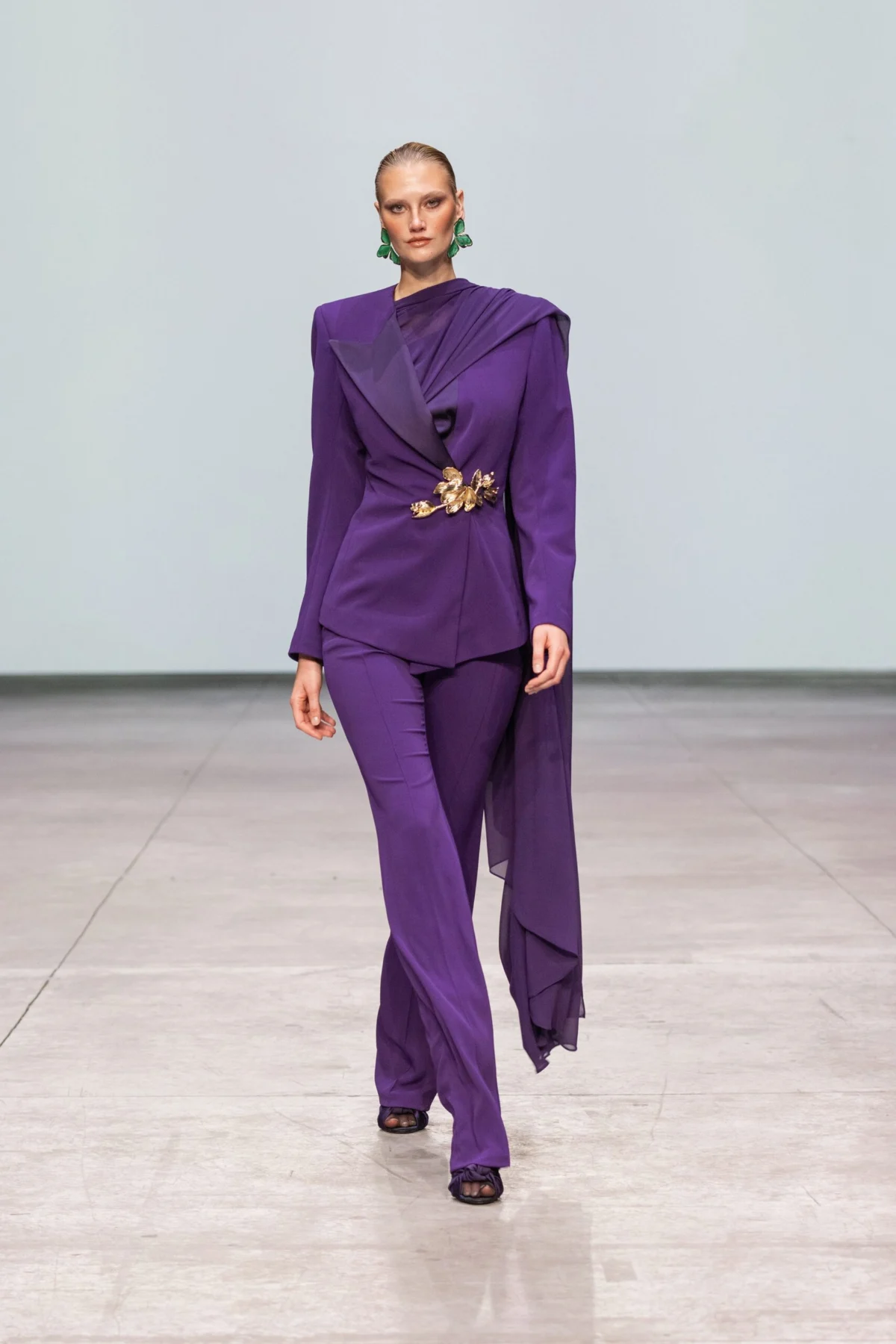
Alfredo Martínez unveiled his Spring 2027 collection, a presentation that sought to weave together disparate threads of inspiration, from the intricate stages of sleep to the profound poetry of Sor Juana Inés de la Cruz. While the conceptual framework, divided into three distinct chapters, aimed for a narrative depth rooted in dreaming, its direct translation into the garments remained elusive to some observers. Yet, this conceptual ambiguity ultimately took a backseat to the undeniable strength and allure of the clothing itself, which exuded a timeless glamour equally at home in 1987 as it is in the contemporary fashion landscape.
Conceptual Tapestry: Dreams, Poetry, and the Subconscious
Martínez articulated that the different stages of sleep served as the foundational premise for his latest offering. This choice hinted at a journey through the subconscious, perhaps reflecting the varying moods and transitions inherent in a dream state. To further intellectualize this abstract concept, the Guadalajara-born designer also referenced the seminal work of Sor Juana Inés de la Cruz, specifically her philosophical poem "Primero Sueño" (First Dream). Written in the late 17th century, "Primero Sueño" is a complex and monumental Baroque poem, considered one of the pinnacles of Latin American literature. It recounts the soul’s attempt, while the body sleeps, to transcend its earthly limitations and achieve universal knowledge, ultimately failing but gaining profound insight from the attempt.
Translating such a dense, philosophical narrative into tangible fashion is an ambitious undertaking. The poem’s themes of intellectual striving, nocturnal journeys, and the interplay between light and shadow could theoretically manifest in layered textures, ethereal silhouettes, or a progression of color palettes. However, the runway presentation’s division into three chapters, while visually distinct, did not immediately clarify how these specific stages of sleep or the abstract journey of Sor Juana’s soul directly informed the cuts, fabrics, or aesthetic evolution of the garments. This intellectual high-wire act, while commendable in its ambition, perhaps aimed for a subtlety that was lost in the immediacy of the runway spectacle, pushing the interpretation to the viewer rather than providing a direct visual correlation.
A Resplendent Reverie: The 1980s Revival
Despite the nuanced conceptual backdrop, the collection’s true power resonated through its undeniable homage to a very specific, and highly influential, moment in fashion history: 1987. This wasn’t a random chronological marker; it pointed directly to the high-octane glamour and assertive silhouettes that defined the late 1980s. The influence of Yves Saint Laurent, a titan of 20th-century fashion, particularly his work during that period, was unmistakable and expertly reinterpreted by Martínez.
In 1987, Saint Laurent was at the zenith of his powers, consistently delivering collections that celebrated female strength and elegance. His designs were characterized by sharp tailoring, exaggerated shoulders, luxurious fabrics like velvet and silk, and a bold use of color, often in rich, jewel tones. The era was defined by "power dressing," a sartorial movement that saw women adopting strong, masculine-inspired silhouettes – broad shoulders, structured jackets, and tailored suits – to project authority and confidence in an increasingly competitive professional world. Martínez channeled this spirit with remarkable fidelity, integrating the precise lines, defined waists, and commanding presence that were hallmarks of YSL’s late-80s aesthetic. The collection’s garments, from tailored jackets to evening gowns, echoed the era’s dedication to impeccable construction and an almost architectural approach to the female form. This deliberate nod to a golden age of fashion demonstrated Martínez’s deep understanding of sartorial history and his ability to distill its essence into a contemporary context, making the designs feel both nostalgic and remarkably current.
The Theatricality of Telenovelas: Heroines, Villains, and Drama
Further deepening the collection’s narrative and cultural resonance was another powerful cultural staple of the 1980s: Latin American telenovelas. These dramatic soap operas, with their intricate plots, larger-than-life characters, and lavish production values, captivated millions across the globe. Martínez openly embraced this source of inspiration, particularly the "drama" inherent in these narratives. "I really went all in on the drama this time, the kind of drama you see in soap operas, because I love it. It’s part of who I am, but I don’t bring it out that often," Martínez explained, offering a rare glimpse into his personal connection to this vibrant cultural phenomenon.
Telenovelas of the 1980s were renowned for their strong female protagonists, who navigated tumultuous romances, family betrayals, and social challenges with unwavering resolve. Crucially, they were also celebrated for their villains – often equally, if not more, compelling than the heroines. These antagonists were typically impeccably dressed, their elegance serving as a visual manifestation of their commanding personalities and often their ruthless ambition. Their wardrobes were characterized by luxurious fabrics, bold accessories, and a sense of calculated glamour that perfectly matched their on-screen personas. Martínez tapped into this specific aesthetic, drawing on the idea that clothing can be a powerful tool for projecting power, status, and an unwavering sense of self, regardless of moral alignment. The collection’s pieces embodied this theatricality, designed to make a statement, to command attention, and to convey a sense of a woman who is always ready for her close-up, whether she is the wronged heroine or the cunning antagonist. This fusion of high fashion with popular culture offered a relatable and compelling layer to the collection, grounding its glamour in a widely understood cultural lexicon.
Evolving Muses: From Specific Icons to the "Dream Woman"
Martínez’s design process has often been anchored by specific muses. In previous collections, he has explicitly drawn inspiration from iconic women whose lives and styles resonated with his aesthetic vision. For Fall 2022, his muse was the multifaceted Paloma Picasso, known for her bold jewelry designs, distinctive style, and artistic lineage. For Fall 2025, he turned to the avant-garde Mexican artist and poet Carmen Mondragón, also known as Nahui Olin, a figure celebrated for her bohemian spirit, defiance of social norms, and powerful artistic expression. These muses provided concrete starting points, allowing him to explore specific facets of femininity through their individual stories.
This season, however, Martínez shifted his focus from specific historical figures to a more amorphous, yet profoundly relatable, concept: "a certain kind of woman," or perhaps, "a dream woman." This collection presented not actual individuals, but rather a series of "images, situations, and scenes" – vignettes of modern femininity. What unified these disparate scenarios was a singular, unwavering desire: to look spectacular, regardless of life’s unpredictable turns. Martínez articulated this vision with poignant examples: "There’s the woman who’s about to get divorced and is going to look spectacular; there’s the woman who’s just finished crying but still needs to look amazing when she goes out to face people; and there’s the woman who just accomplished something incredible and is feeling on top of the world. There are all these different kinds of women."
This evolution in his muse selection signifies a maturation in Martínez’s creative process, moving beyond individual biographical narratives to explore universal emotional states and the role of fashion as a form of armor, celebration, and self-expression. The collection thus became a wardrobe for the resilient, the triumphant, the heartbroken, and the ambitious – women who understand that their outward presentation can be a powerful extension of their inner strength, an act of defiance, or a declaration of self-worth. It’s a concept that resonates deeply in an era where women navigate complex professional and personal landscapes, always striving for agency and self-possession.
Signature Silhouettes and a Renewed Palette
If there is one aspect of Alfredo Martínez’s design acumen that has solidified his position in the Mexican fashion scene, it is his unparalleled ability to dress women who aspire to look incredibly polished and powerful. In Mexico, he has earned the reputation as the undisputed king of sharp, structured shoulders and perfectly tailored pencil skirts. These two elements are not merely design choices; they are his most recognizable signatures, instantly identifying a Martínez creation. Both silhouettes were prominently featured throughout the Spring 2027 collection, serving as the backbone of its glamorous aesthetic. The structured shoulders, often subtly padded or meticulously sculpted, provided an assertive, confident line, embodying the "power dressing" ethos. The pencil skirts, tailored to perfection, hugged the body with sophisticated precision, balancing the strong upper silhouette with an elegant, elongated lower half.
The collection’s palette further reinforced its distinct mood and 1980s glamour. It masterfully navigated between the timeless sophistication of black, the regal depth of violet, and a spectrum of greens, ranging from the vibrant zest of chartreuse to the serene tranquility of seafoam. These colors were not arbitrarily chosen; black provided a grounding elegance, violet added a touch of dramatic luxury often associated with opulence, while the greens offered a refreshing, yet equally rich, counterpoint. Gold accents, whether in hardware, embroidery, or subtle metallic threads, were strategically deployed to heighten the sense of luxury and reinforce that unmistakable, opulent glamour of the 1980s. The combination of these hues and the designer’s signature silhouettes created a cohesive visual language that was both commanding and exquisitely beautiful.
The Orchid’s Bloom: A New Floral Chapter
A notable and particularly interesting development within this collection was Alfredo Martínez’s venture into floral motifs, a rarity in his previous bodies of work. Known more for his architectural lines and clean, often minimalist, aesthetic, the introduction of blossoms marked a deliberate expansion of his design vocabulary. For Spring 2027, he chose orchids, a flower renowned for its exotic beauty, delicate structure, and symbolic associations with luxury, love, and strength.
The orchids took center stage in one of the show’s three distinct chapters, signaling a shift in mood and texture. They appeared on fluid dresses and separates, departing from the more rigid structures seen elsewhere in the collection. These pieces felt softer, more ethereal, yet crucially, did not sacrifice any of the inherent strength or distinctive character that defines Martínez’s oeuvre. The integration of orchids allowed for a moment of organic elegance, a gentle counterpoint to the collection’s more pronounced tailoring. This exploration demonstrated the designer’s willingness to push his own boundaries, introducing a new dimension of femininity and grace while maintaining the core identity of his brand. The juxtaposition of structured power with delicate floral beauty created a dynamic tension, enriching the overall narrative of the "dream woman" who embodies both resilience and vulnerability.
Martínez’s Mastery: Evolution and Reinvention
Over the years, Alfredo Martínez has demonstrated an exceptional mastery of one of the most challenging aspects of sustained creative success in fashion: knowing how to revisit and evolve his own design codes. This ability allows him to reinterpret his established signatures in fresh, compelling ways, ensuring his work remains relevant and exciting without falling into repetitive patterns. This season, he once again proved this skill with a collection that was rich in drama, saturated with glamour, and populated by characters worthy of a grand telenovela.
His consistent success lies in a meticulous understanding of construction, a keen eye for proportion, and an unwavering commitment to making women feel powerful and beautiful. Martínez occupies a unique space in the fashion industry, particularly within Mexico, where his structured, sophisticated aesthetic has garnered a loyal following. His designs are not merely garments; they are statements, enabling women to project confidence and refined taste.
The initial conceptual ties to the stages of sleep and Sor Juana Inés de la Cruz’s "Primero Sueño" may not have been overtly apparent in every stitch or silhouette. However, the collection’s true strength, as with all of Martínez’s most impactful work, ultimately resided where it matters most: in the clothes themselves. They offered a cohesive vision of sophisticated power, blending historical glamour with contemporary sensibility. This collection stands as a testament to Alfredo Martínez’s enduring influence and his ability to craft fashion that is both aspirational and deeply resonant with the modern woman, solidifying his position as a designer who understands the theatricality of life and the transformative power of exceptional clothing. His continued evolution, demonstrated by the introduction of new motifs and a nuanced exploration of female archetypes, ensures his sustained relevance and impact on the global fashion stage.
