
 By admin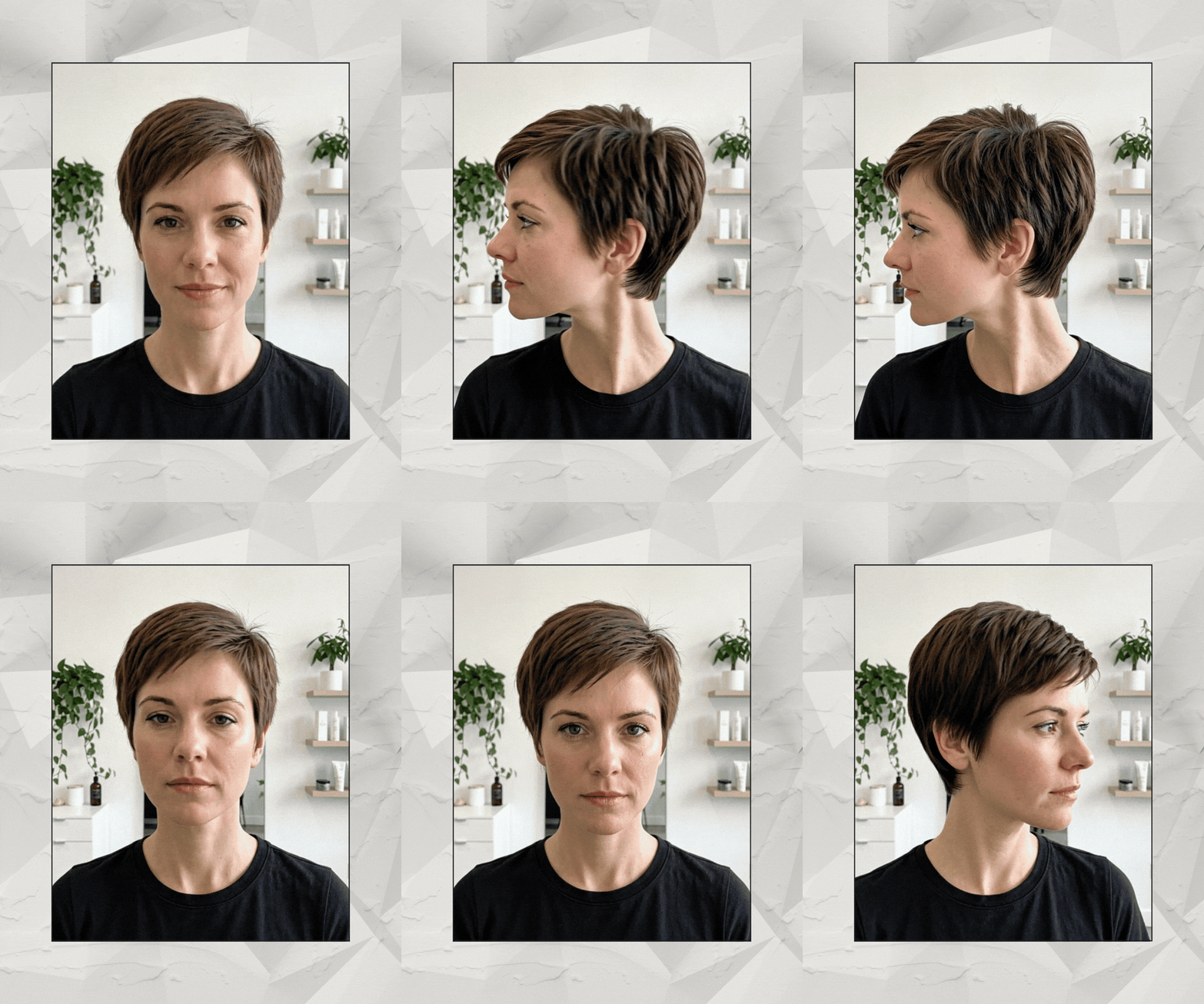
Navigating the world of hairstyling can often feel like a perplexing quest. Many individuals find themselves leaving salons with a new cut that, while technically well-executed, fails to harmonize with their facial features. This common experience, where a hairstyle might seem "off" – making a face appear heavier, older, or simply unfamiliar – often sparks the question: "Is this truly the best hairstyle for my face shape?" While celebrity trends and the allure of a fresh look are powerful motivators, the fundamental principles of face geometry are frequently overlooked in the pursuit of a fashionable haircut. The key to transforming a salon visit from a gamble into a pleasant anticipation lies in selecting a hairstyle that is thoughtfully tailored to one’s unique face shape, thereby subtly reshaping how the face is perceived at first glance.
The Paramount Importance of Face Shape Over Fleeting Trends
Hairstylists are trained not only in the technical aspects of cutting hair but also in the nuanced science of face geometry. This knowledge is crucial because proportions possess the ability to manipulate visual perception. For instance, adding volume around the chin can beautifully balance the lower half of a heart-shaped face, while side-swept bangs can introduce a diagonal line to offset the strong, straight jawline characteristic of a square face.

The disconnect between what is trending and what is flattering is a pervasive issue. A hairstyle that looks stunning on one person can, due to differing facial proportions, have the opposite effect on another, making them appear older or washed out. This phenomenon is frequently observed when a style gains traction online, only to fall short of expectations when replicated in the mirror. Such mismatches not only result in wasted time, patience, and financial investment but also lead to considerable disappointment. According to Appointible, the average cost of a women’s haircut in the United States can range from $40 to $100, underscoring the financial implications of an ill-suited style. Therefore, prioritizing one’s face geometry over transient hair trends is not an act of vanity but a strategic approach to achieving optimal aesthetic results.
Decoding Your Unique Facial Architecture: Methods for Determining Face Shape
Understanding one’s face shape is the foundational step in selecting a flattering hairstyle. Fortunately, there are several accessible methods to achieve this:
- Mirror Tracing: This straightforward technique involves standing before a mirror with a dry-erase marker and carefully tracing the outline of your face. Once traced, you can step back and analyze the resulting shape, comparing its length and width.
- Photo Analysis: A clear, front-facing photograph of your face can also serve as a valuable tool. By examining the widest points of your face – typically the forehead, cheekbones, or jawline – and comparing them to the overall length, you can deduce your face shape.
- AI Face Shape Detectors: For a more objective and rapid assessment, artificial intelligence tools are increasingly available. These digital applications analyze facial features, measuring key points without the potential for human bias, offering a quick and precise determination of face shape. Combining two or more of these methods can provide a more comprehensive and accurate understanding.
A Comprehensive Guide to Common Face Shapes and Their Characteristics
Oval Face: Characterized by a length that is slightly greater than its width, with soft, subtly rounded contours at the forehead and jawline. The absence of dominant features contributes to its reputation for versatility, making it adaptable to a wide array of hairstyles. Celebrities like Bella Hadid and Jessica Alba exemplify the balanced appeal of this face shape.

Round Face: This shape is defined by nearly equal proportions of length and width, featuring fuller cheeks and a gently curved chin. Hairstyles for round faces are most effective when they draw attention either upwards or downwards, elongating the face rather than emphasizing its width. Selena Gomez and Chrissy Teigen often employ such strategies.
Square Face: The defining features of a square face are a pronounced jawline and a forehead that is roughly the same width as the jaw. Angles tend to carry more visual weight than curves in this shape. Bob haircuts for square faces often incorporate softness around the jawline to mitigate harsh lines. Angelina Jolie and Olivia Wilde demonstrate how softening the jawline can bring overall facial harmony.
Heart Face: In a heart-shaped face, the forehead is typically the widest point, tapering down to a narrower chin. Achieving balance involves redirecting focus away from the temples and introducing visual fullness to the lower half of the face. Reese Witherspoon and Scarlett Johansson offer clear examples of how this can be achieved.

Oblong/Rectangle Face: Individuals with an oblong or rectangular face shape will notice similar widths across the forehead, cheekbones, and jawline, with the face’s length significantly exceeding its width. Styles that add width can visually balance these proportions, as exemplified by Sarah Jessica Parker and Liv Tyler.
Diamond Face: This shape is distinguished by prominent cheekbones, with a narrower forehead and chin. Hairstyles that help to soften these sharp transitions are particularly flattering. Rihanna and Vanessa Hudgens showcase how to wear styles that complement a diamond face shape with effortless grace.
Strategic Styling: Hairstyles That Enhance Versus Those That Diminish Each Face Shape
Regardless of your specific face shape, certain cuts will naturally enhance your features, while others may inadvertently detract from them. A well-considered hairstyle leverages proportion to guide these choices.

Oval Faces: The Pinnacle of Versatility
- What Works: Oval faces are exceptionally adaptable, allowing for a vast range of hairstyles. Lobs, pixies, long layers, and blunt bobs are generally very flattering. Experimentation with various textures and precise cuts can harmonize beautifully with balanced features.
- What to Skip: Heavy, straight bangs can visually shorten an oval face. Similarly, one-length cuts that are excessively long may elongate the face more than desired.
- Guiding Principle: Consider yourself fortunate; you have a broad spectrum of options.
Round Faces: Elongating Through Verticality
- What Works: Styles that extend below the chin, side-swept bangs, volume concentrated at the crown, and sharper, more angular lines are highly effective. These elements create verticality and direct the eye downwards, elongating the face.
- What to Skip: Chin-length bobs that end at the widest point of the face can inadvertently widen it. Flat center parts and one-length cuts can drag the face horizontally, diminishing its length.
- Guiding Principle: Emphasize vertical lines, not circularity.
Square Faces: Softening Angularity
- What Works: Gentle waves, side parts, face-framing layers, and wispy, airy bangs are excellent for interrupting strong lines in a flattering manner. The best hairstyles for square faces often introduce movement and softness.
- What to Skip: Blunt, jaw-length bobs, slicked-back styles, and harsh center parts can accentuate the width of the jawline.
- Guiding Principle: Soften the edges without sacrificing the face’s inherent structure.
Heart Faces: Balancing Top and Bottom
- What Works: Cuts that fall at or below the chin, side-swept bangs, and volume concentrated around the jawline are beneficial. These elements add visual weight to the lower half of the face, creating a more balanced appearance.
- What to Skip: Styles that add significant height at the crown without corresponding fullness below can emphasize the narrower chin. Short pixies and heavy, blunt bangs can draw undue attention upwards.
- Guiding Principle: Achieve equilibrium between the upper and lower facial regions.
Oblong/Rectangle Faces: Introducing Width and Interrupting Length
- What Works: Shoulder-length cuts, waves, curls, side bangs, and layers that begin around the cheekbones are ideal. These styles add width where it is most beneficial and break up the face’s verticality.
- What to Skip: Extremely long, straight hair, center parts, and excessive height at the crown can further elongate an already long face.
- Guiding Principle: Add width and interrupt the dominant length.
Diamond Faces: Filling in Narrow Zones
- What Works: Side-swept bangs can effectively widen the appearance of a narrower forehead. Chin-length bobs and textured cuts add visual presence and fullness near the jawline.
- What to Skip: Slicked-back styles and excessive volume at the cheekbones can make the face appear even narrower.
- Guiding Principle: Focus on adding fullness to the narrower areas of the face.
The Aging Effect: Common Hairstyle Mistakes That Can Add Years
While a hairstyle may be on-trend, its geometry can sometimes work against an individual, inadvertently making them appear older. Several common mistakes contribute to this effect:
- Incorrect Hair Length: A rounded, cheek-hugging bob can make a round face appear wider, consequently making the face seem heavier than intended.
- Extreme Styling Techniques: For individuals with softer facial features, harsh styles like slicked-back looks, graphic lines, and tight parts can create an incongruous tension that registers as age.
- Heavy Bangs: Thick, substantial bangs can overwhelm shorter or fuller faces, consuming too much vertical space and making the face appear compressed, even if the hair itself is healthy.
- Flat Styles Lacking Volume: Styles devoid of volume can make faces that require lift appear flatter and less structured. This issue is often exacerbated if the grow-out phase of the haircut is not considered.
Ultimately, a haircut is rarely inherently "bad"; it is often simply unsuitable for an individual’s facial geometry. An ill-fitting hairstyle not only misses the mark aesthetically but can also add years to one’s perceived age.
The Power of Preview: Utilizing Technology to Visualize Your Next Hairstyle
The traditional method of selecting a hairstyle – flipping through magazines or showing celebrity photos to a stylist – has long been hampered by its inherent limitations. Flat images fail to convey how a haircut will interact with one’s unique facial structure, cheekbones, or jawline. However, the advent of artificial intelligence has revolutionized this process. Virtual hairstyle try-on tools allow users to upload their photographs and experiment with various styles directly on their own faces. Platforms like TheRightHairstyles offer an extensive library of over 100 hairstyles, complete with 360-degree video previews and a wide spectrum of color options, enabling users to make informed decisions before committing to a cut. This technology allows for precise adjustments, such as testing different lengths to pinpoint the most flattering placement.

Harnessing AI Try-On for Your Most Flattering Cut: A Step-by-Step Guide
- Access the Platform: Visit the website therighthairstyles.com or download the HairHunt app, available on both iOS and Android devices.
- Explore Hairstyle Options: Browse through the extensive collection of over 100 hairstyles. Consider what aspects you wish to alter – perhaps adding length, softening angles, or increasing width. Select styles that align with your specific hairstyle-for-face-shape goals.
- Upload Your Photo: Ensure you upload a clear, front-facing photograph that prominently displays your face. Optimal lighting is crucial to eliminate shadows that could distort your features.
- Engage with 360° Previews: Beyond static images, utilize the 360-degree video feature. This offers a dynamic perspective, revealing how the hairstyle frames your face from multiple angles, providing details often missed in still previews.
- Consult with Your Stylist: Screenshot your favorite looks. While AI tools provide an excellent visualization, remember that they offer a conceptual basis. Your stylist will adapt the chosen style to your hair’s texture, density, and your daily routine.
Pro Tip: For a more personalized recommendation, consider utilizing TheRightHairstyles’ interactive quiz. By answering questions about your face shape, hair type, lifestyle, and preferences, the system can generate a tailored list of over 20 flattering haircut suggestions.
Beyond Face Shape: Additional Factors Influencing Hairstyle Choice
While face shape provides a crucial directional guide, it is not the sole determinant of a perfect hairstyle. Several other factors play a significant role:
- Hair Texture: The inherent texture of your hair—whether curly, straight, wavy, fine, or coarse—profoundly impacts how a haircut will fall and behave. Curls, for example, have a dynamic range of shrinkage and expansion, while straight hair will reveal every subtle line of the cut.
- Hair Density: The thickness of your hair, or its density, influences its ability to hold shape. Denser hair often supports wave patterns more effectively, whereas lower density might require specific styling to maintain form.
- Lifestyle and Maintenance: Your daily routine and the amount of time you are willing to dedicate to styling are critical considerations. A low-maintenance cut that air-dries well might be far more practical than a trend-driven style requiring extensive daily effort.
- Subtle Facial Features: Smaller details such as forehead height, the prominence of your nose, and neck length can also influence the overall harmony of a hairstyle.
By understanding how to choose a hairstyle for your face shape and then leveraging AI previews as a collaborative tool with your stylist, you can achieve a cut that not only looks good but feels right. Your stylist will then integrate all these elements—face shape, hair characteristics, and lifestyle—to create a cohesive and flattering look.

Frequently Asked Questions: Clarifying Face Shape and Hairstyle Choices
How do I determine which hairstyle best suits my face shape?
Begin by identifying your face shape using methods like mirror tracing or photo analysis. Once identified, select hairstyles that balance your face’s proportions. AI hairstyle preview tools can be invaluable for visualization.
What is considered the most flattering hairstyle for a round face?
The most flattering hairstyles for round faces tend to create elongated vertical lines. This can be achieved through long layers that fall below the chin, volume at the crown, or strategically placed side-swept bangs that draw the eye downwards.
Can an ill-chosen haircut make me look older?
Yes, absolutely. Awkward lengths, harsh styles that clash with soft features, and overly heavy bangs on shorter faces can significantly add to perceived age. The geometry of the haircut, even if fashionable, can work against your natural appearance.

Are there AI tools available to help select hairstyles for my face shape?
Yes, platforms like TheRightHairstyles offer extensive hairstyle try-on capabilities. You can explore hundreds of styles and colors, and the 360-degree view allows you to see how the hair frames your facial structure, hairline, and jawline from all angles.
Which face shape is considered universally flattering for all hairstyles?
Oval faces are often cited for their versatility due to their balanced proportions. However, it’s important to remember that even with an oval face, not every style will be equally flattering, nor will every style suit your personal taste or lifestyle.
Should I share AI hairstyle previews with my stylist?
Definitely. Visual references are highly effective in communicating your preferences and expectations to your stylist. They can better understand what you like or dislike about a particular cut and then adapt it to your specific hair texture, density, and daily routine.

A hairstyle that is consciously designed with face shape in mind guides the eye, respects your natural proportions, and saves you from the frustration and expense of another unsuitable cut. For those seeking confidence before committing to a change, utilizing AI preview tools offers a tangible way to visualize potential outcomes.