
 By admin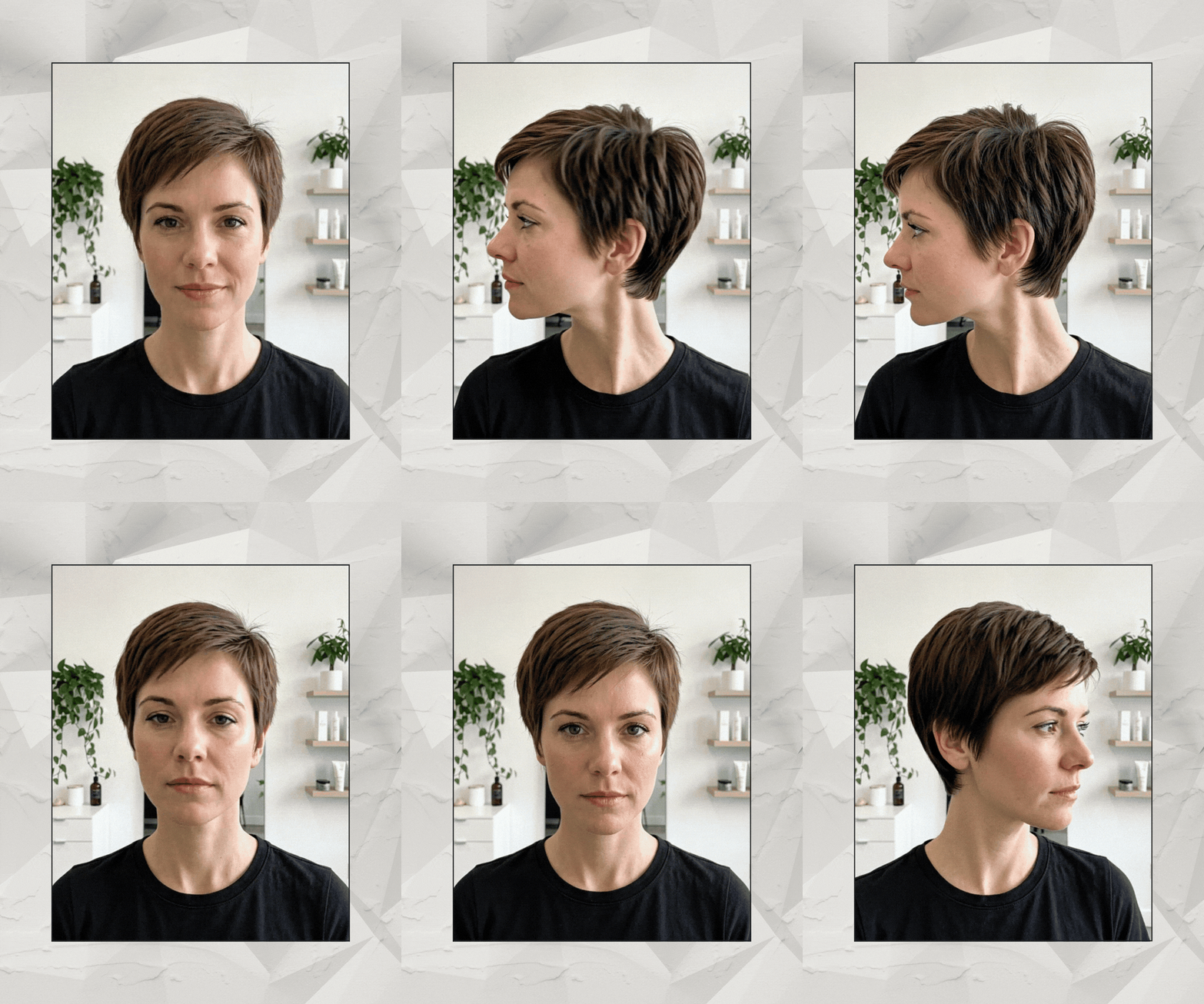
The quest for the perfect haircut often leads to salon chairs with high expectations, only to leave with a sense of unease. While the stylist might have expertly executed the latest trend or a celebrity-inspired style, the result can feel unexpectedly jarring, making one question, "Is this truly the best hairstyle for my face shape?" This common experience highlights a crucial, yet often overlooked, principle in hairstyling: face geometry should precede fleeting trends. A well-chosen hairstyle, tailored to an individual’s unique facial proportions, possesses the power to subtly reshape how one is perceived, transforming a salon visit from a gamble into a confident anticipation of flattering results.
The Primacy of Face Shape Over Hair Trends
Hairstylists are trained not only in cutting techniques but also in understanding the principles of facial anatomy. This knowledge is fundamental because proportions can significantly influence visual perception. For instance, adding volume around the chin can balance the wider forehead of a heart-shaped face, while side-swept bangs can introduce a softening diagonal line to counteract the strong, straight jawline characteristic of a square face. The same trendy cut that looks sensational on one individual can, unfortunately, distort the proportions of another, making their features appear unbalanced or even aged. This discrepancy is frequently observed when styles that look stunning online fail to translate effectively in a mirror. Such mismatches not only result in wasted time, patience, and financial investment—with women’s haircuts in the United States averaging between $40 and $100 according to Appointible—but also lead to widespread disappointment. Therefore, prioritizing face geometry over the latest hair fads is not a matter of vanity, but a strategic approach to achieving a consistently flattering look.
Decoding Your Unique Facial Blueprint: Methods for Determining Face Shape
Identifying one’s face shape is the foundational step towards selecting a hairstyle that enhances natural features. Several practical methods can assist in this discovery. The "mirror tracing" technique involves using a washable marker to outline the reflection of your face in a mirror, allowing for a direct comparison of its overall length and width. Alternatively, "photo analysis" can be employed: take a straight-on photograph and meticulously measure the widest points of your forehead, cheekbones, and jawline, as well as the face’s total length. For a more rapid and objective assessment, AI-powered face shape detectors offer a sophisticated solution, leveraging algorithms to measure facial features without the potential for human bias. Combining two or more of these methods can provide a more definitive understanding of your facial structure.

Oval Face: The Archetype of Versatility
An oval face is characterized by a length that is slightly greater than its width, with gentle, rounded contours at the forehead and jawline. This balanced proportion means no single feature dominates, granting oval faces a remarkable flexibility in accommodating a wide array of hairstyles. From chic lobs and pixie cuts to long, flowing layers and sharp, blunt bobs, most styles tend to harmonize well with this naturally symmetrical shape. Celebrities like Bella Hadid and Jessica Alba exemplify how the inherent balance of an oval face allows various cuts to read harmoniously on camera.
Round Face: Emphasizing Verticality and Elongation
Individuals with round faces often have a facial length and width that are nearly equal, complemented by fuller cheeks and a softly curved chin. The key to selecting flattering hairstyles for this shape lies in creating an illusion of length and drawing attention either upward or downward, thereby avoiding any outward visual expansion. Styles that incorporate vertical lines, such as long layers that fall below the chin, added volume at the crown, or strategically placed side-swept bangs, are particularly effective. Stars like Selena Gomez and Chrissy Teigen frequently utilize these techniques to achieve a more elongated facial appearance.
Square Face: Softening Strong Angles
A square face is defined by a strong, well-defined jawline and a forehead width that is roughly equivalent to the jawline. The angular nature of this face shape means that curves and softness can effectively balance its inherent structure. Bob hairstyles that gently frame the jawline, face-framing layers, and airy, wispy bangs are often recommended to interrupt and soften the strong lines. A side part can also introduce a flattering asymmetry. Celebrities such as Angelina Jolie and Olivia Wilde demonstrate how softening the jawline’s appearance can bring about a harmonious balance.
Heart Face: Balancing Forehead and Chin
The heart-shaped face is distinguished by a broad forehead that tapers towards a narrower, more delicate chin. The primary goal for hairstyles in this category is to create balance by redirecting visual focus away from the temples and adding fullness or presence to the lower half of the face. Hairstyles that extend to the chin or below, incorporate volume around the jawline, or feature side-swept bangs can effectively achieve this equilibrium. Reese Witherspoon and Scarlett Johansson often showcase looks that skillfully balance their facial features.

Oblong/Rectangle Face: Introducing Width and Breaking Length
An oblong or rectangular face shape is characterized by a length that significantly exceeds its width, with relatively uniform widths across the forehead, cheekbones, and jawline. To counteract this elongated appearance, hairstyles that add visual width are most beneficial. Shoulder-length cuts, styles incorporating waves or curls, side-swept bangs, and layers that begin around the cheekbones can all help to break up the face’s length and create a more balanced silhouette. Sarah Jessica Parker and Liv Tyler are notable examples of individuals who effectively use their hairstyles to enhance their oblong features.
Diamond Face: Softening Prominent Cheekbones
A diamond face shape is defined by prominent, wider cheekbones that narrow towards both a smaller forehead and a more pointed chin. The ideal hairstyle for this shape aims to soften these sharp transitions. Side-swept bangs can visually widen the forehead, while chin-length bobs or textured cuts can add desirable presence and fullness around the jawline. Rihanna and Vanessa Hudgens exemplify how strategic styling can beautifully complement the contours of a diamond-shaped face.
Navigating Hairstyle Choices: Enhancing vs. Diminishing Facial Features
Regardless of your specific face shape, certain haircuts can either accentuate your best features or inadvertently detract from them. A well-considered hairstyle leverages proportion to guide the selection process, ensuring the chosen cut works in harmony with your unique facial geometry.
Oval Faces: A Canvas of Possibilities
What Works: Oval faces possess a remarkable versatility, making them amenable to a vast spectrum of hairstyles. Lobs, pixie cuts, long layers, and blunt bobs are consistently flattering. Experimentation with various textures, from sleek and precise to voluminous and layered, is encouraged, as these styles tend to harmonize beautifully with balanced features.

What to Skip: While highly adaptable, certain styles can occasionally disrupt the natural balance. Heavy, straight-across bangs have the potential to visually shorten the face. Similarly, one-length cuts that extend excessively long without layering can sometimes make an oval face appear longer than it is.
Guiding Principle: Embrace the freedom to experiment; the oval face is a forgiving canvas.
Round Faces: The Art of Vertical Illusion
What Works: To create a more elongated appearance, focus on styles that introduce vertical lines. Lengths that fall below the chin, side-swept bangs that sweep across the forehead, and lift at the crown can all contribute to a more streamlined silhouette. Most hairstyles for round faces benefit from this sense of upward or downward movement.
What to Skip: Chin-length bobs that end at the widest point of the cheeks can exacerbate roundness. Flat, center-parted styles and one-length cuts that lie horizontally can have a widening effect, drawing the eye outward.

Guiding Principle: Think in terms of verticality, not circularity.
Square Faces: Embracing Softness and Movement
What Works: To soften the strong angles of a square face, incorporate elements of movement and texture. Soft waves, side parts, face-framing layers that gently sweep across the cheekbones, and airy bangs are excellent choices for interrupting and softening the jawline’s inherent strength. The aim is to introduce a sense of fluidity.
What to Skip: Blunt, jaw-length bobs, tightly slicked-back styles, and severe center parts can inadvertently emphasize the width of the jawline.
Guiding Principle: Soften the edges without masking the face’s underlying structure.

Heart Faces: Balancing the Upper and Lower Zones
What Works: Styles that add visual weight and fullness to the lower half of the face are ideal for heart-shaped features. Cuts that fall to the chin or below, side-swept bangs, and volume concentrated around the jawline can effectively balance a broader forehead.
What to Skip: Styles that add significant height at the crown without corresponding fullness below can draw undue attention upward. Very short pixie cuts or heavy, blunt bangs can also create an imbalance by highlighting the forehead and temples.
Guiding Principle: Strive for equilibrium between the upper and lower facial thirds.
Oblong Faces: Creating Width and Interrupting Length
What Works: To counteract the extended length of an oblong face, styles that introduce width are paramount. Shoulder-length cuts, embracing waves and curls, side-swept bangs, and layers that begin around the cheekbones can all contribute to a more visually balanced appearance.

What to Skip: Ultra-long, straight hair, stark center parts, and excessive height at the crown can further elongate the face, creating a less harmonious effect.
Guiding Principle: Introduce width and break up the vertical lines.
Diamond Faces: Filling the Narrow Zones
What Works: For diamond-shaped faces, styles that add width to the forehead and soften the cheekbones are beneficial. Side-swept bangs can effectively widen the forehead, while chin-length bobs and textured cuts can introduce desirable fullness around the jawline.
What to Skip: Slicked-back hairstyles and styles that create excessive volume at the cheekbone level can accentuate the face’s narrowness in these areas.

Guiding Principle: Focus on filling the narrower zones of the face.
The Subtle Art of Age-Appropriate Hairstyling
A haircut can be fashionable yet still contribute to an unflattering appearance, sometimes even adding years to one’s perceived age. A frequent pitfall is choosing a hair length that terminates at an awkward point, such as a rounded bob that encircles the cheeks, which can make a round face appear wider and heavier than intended. Similarly, individuals with soft, delicate facial features can find extreme hairstyling techniques, such as slicked-back looks, graphic lines, or tight parts, to be too harsh, creating a jarring contrast rather than a harmonious blend. This tension can be unconsciously interpreted as a sign of age.
Thick, heavy bangs can also pose a challenge, particularly for those with shorter or fuller faces, as they can visually compress the face by occupying too much vertical space. Even if the hair itself is healthy, this compression can make the face appear smaller and less balanced. Furthermore, flat hairstyles that lack volume can make faces that require lift appear to sag, diminishing structure and definition. The situation is often exacerbated when the grow-out phase of a haircut is not carefully considered. Ultimately, a haircut is rarely "bad" in isolation; it is often simply ill-suited to an individual’s unique facial geometry. This mismatch can not only miss the mark aesthetically but also have the unintended consequence of adding years.
Leveraging Technology: Previewing Hairstyles Before Commitment
The traditional approach to selecting a new hairstyle often involved poring over Pinterest boards and celebrity photographs, hoping that a shared visual reference would translate accurately in the salon. However, the inherent limitation of static images is their inability to convey how a cut will interact with an individual’s specific cheekbones, jawline, or face length.

This dynamic has been revolutionized by the advent of Artificial Intelligence (AI). Virtual hairstyle try-on tools now allow users to upload a photograph of themselves and experiment with a vast array of styles directly on their own face. Platforms like TheRightHairstyles.com offer this capability, providing access to over 100 hairstyles, a 360-degree video preview, and a comprehensive palette of hair colors. This technological advancement empowers individuals to make more informed decisions, seeing how a potential cut might frame their features from multiple angles before making a commitment.
AI Try-On: A Step-by-Step Guide to Finding Your Most Flattering Cut
- Access the Platform: Navigate to the website therighthairstyles.com or download the HairHunt app, available on both iOS and Android platforms.
- Explore Hairstyle Options: Browse through the extensive library of over 100 hairstyles. Consider what aspects you wish to enhance or alter—perhaps more length, softer angles, or added width. Select styles that align with your face shape goals.
- Upload Your Photo: Provide a clear, front-facing photograph that prominently displays your face. Optimal lighting is crucial to eliminate shadows that might distort your features.
- Utilize 360-Degree Previews: Beyond static images, take advantage of the 360-degree video feature on the website. This offers a more comprehensive view, showcasing how the hairstyle interacts with your face from various angles, revealing details that static pictures might obscure.
- Save and Consult: Screenshot your preferred styles to share with your hairstylist. Remember that these AI previews serve as excellent visual aids and starting points; your stylist will then adapt the chosen look to your specific hair texture, density, and lifestyle needs.
Pro Tip: For a more personalized recommendation, consider taking TheRightHairstyles’ interactive quiz. By answering questions about your face shape, hair type, lifestyle, and preferences, the system can generate a curated list of over 20 flattering haircut suggestions tailored specifically to you.
Beyond Shape: Additional Factors Influencing Hairstyle Choice
While face shape provides a crucial directional guide, it is not the sole determinant of the most flattering hairstyle. Several other factors play a significant role:
- Hair Texture: The natural texture of your hair—whether it’s straight, wavy, or curly—profoundly impacts how a haircut will lay and behave. Curls, for instance, have a unique shrinkage and expansion cycle, while straight hair will reveal every line and angle with precision.
- Hair Density: The thickness of your hair, or its density, is also critical. Denser hair can better support certain styles and hold its shape more effectively, whereas lower density hair might require different techniques to achieve similar results.
- Lifestyle and Maintenance: Practical considerations are paramount. If daily styling feels like a chore, opting for a low-maintenance cut that air-dries well might be a more sensible choice than a trend that demands significant daily effort.
- Individual Features: Subtle details such as forehead height, the prominence of your nose, and neck length can also influence how a hairstyle appears.
Ultimately, understanding your face shape provides a strong foundation, but combining this knowledge with AI previews and a candid discussion with your hairstylist will lead to the most successful and enduring results.

Frequently Asked Questions: Demystifying Face Shape and Hairstyle Selection
Q1: How can I accurately determine which hairstyle suits my face shape?
Start by identifying your face shape using methods like mirror tracing or photo analysis. Once you have a clear understanding of your facial geometry, select a haircut designed to balance your face’s proportions. AI hairstyle preview tools can offer a valuable visual aid in this process.
Q2: What is considered the most flattering hairstyle for a round face?
The most flattering hairstyles for round faces are those that create vertical lines and an illusion of length. Long layers that fall below the chin, added height at the crown, and side-swept bangs are particularly effective in elongating the facial features.
Q3: Can an unsuitable haircut make me look older?
Yes, an ill-chosen haircut can indeed add years to your appearance. Awkward lengths, harsh lines on soft features, and excessively heavy bangs can create an aging effect. The haircut itself might be trendy, but its geometry may work against your natural features.
Q4: Are there AI tools available to help select hairstyles for my face shape?
Absolutely. Platforms like TheRightHairstyles.com offer extensive virtual hairstyle try-on features. You can explore hundreds of styles in various colors and even view them from a 360-degree perspective to see how they frame your hairline, face, and jawline.

Q5: Which face shape is most universally suited to all hairstyles?
Oval faces are often considered the most versatile due to their balanced proportions. However, even with an oval face, not every style will be equally flattering or practical for your lifestyle and personal taste.
Q6: Should I show my hairstylist AI hairstyle previews?
Definitely. Visual references are invaluable for clear communication. AI previews can help your stylist understand your preferences and dislikes regarding specific haircuts, allowing them to better adapt a chosen style to your unique hair texture, density, and daily routine.
A hairstyle that is thoughtfully chosen for your face shape serves to guide the eye, respect your natural proportions, and prevent the need for costly and time-consuming corrections. By leveraging modern AI preview tools, you can gain confidence in your choices before committing, ensuring your next salon visit leads to a result that enhances your natural beauty for years to come.