
 By admin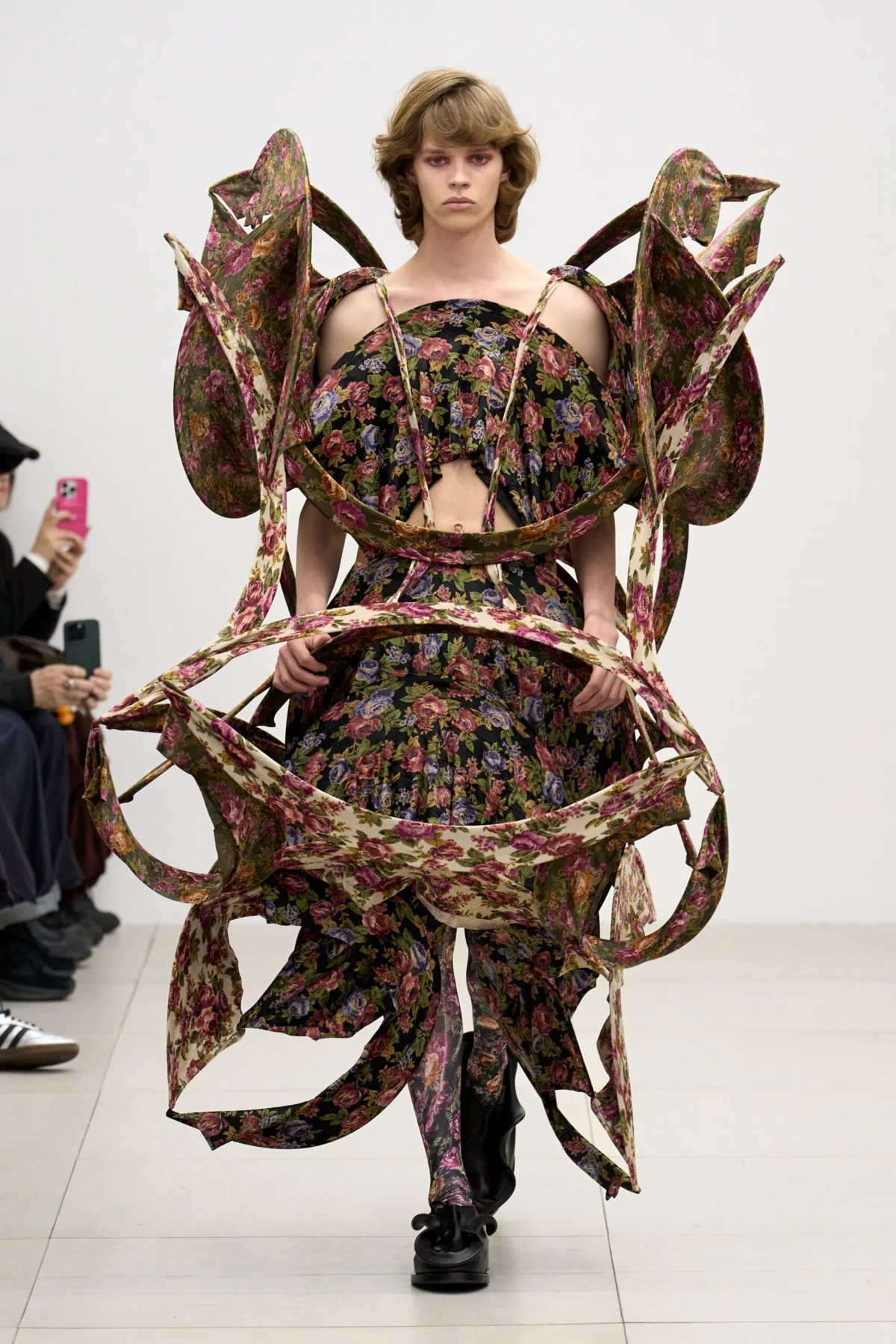
Fresh off a critically acclaimed exhibition dedicated to his pioneering work at London’s prestigious Victoria and Albert Museum (V&A), designer-artist Ryunosuke Okazaki has returned to the runway, presenting a collection that masterfully navigates the intricate space between conceptual art and sartorial reality. This latest showcase marks a significant evolution for Okazaki, whose distinctive sculptural garments have long captivated the art world, as he strategically pivots towards a more accessible yet equally profound vision, introducing pieces designed not just for display but for intimate human interaction and daily wear. The presentation, a testament to his unique design philosophy, provided attendees with a visceral experience, moving beyond the static images of a lookbook to reveal the dynamic interplay of his creations with the human form.
The Evolution of Form: Sculptural Garments Take Center Stage
Okazaki’s signature "extraordinary exoskeletons," previously revered as wearable sculptures in museum settings, found new life on the runway. These intricate pieces, characterized by sweeping curves, sharp spikes, and organic contours, evoke a powerful sense of androgynous grandeur. Far from mere aesthetic statements, they function as a second skin, a protective layer that simultaneously conceals and reveals. The duality is striking: while some forms suggest formidable armor, hinting at resilience and strength, others convey a profound tenderness, their alien joints and sinuous lines artfully exposing the softness and inherent fragility of the human body beneath. This interaction between garment and wearer is genuinely innovative; models were not merely clad in the designs but appeared to merge with them, their limbs curving and wrapping to become integral extensions of the sculptures themselves. This symbiotic relationship challenges conventional notions of dressing, suggesting that "wear" barely scratches the surface of the experience Okazaki creates.
The meticulous craftsmanship behind these pieces, often involving complex 3D printing techniques, laser cutting, and innovative material manipulation, underscores Okazaki’s background as a sculptor. His earlier works often drew comparisons to architectural models or bio-engineered structures, pushing the boundaries of what fashion could be. The V&A exhibition, which ran for several months and attracted thousands of visitors, solidified his reputation as a visionary, showcasing his groundbreaking approach to textile and form. "Okazaki’s work transcends traditional fashion," commented Dr. Alistair Finch, a senior curator at the V&A, in a post-exhibition statement. "He is not merely designing clothes; he is sculpting experiences, creating wearable art that provokes thought and emotion. His ability to fuse advanced technology with profound philosophical concepts is truly remarkable." The public response to the exhibition highlighted a growing appetite for fashion that dares to be more than just clothing, positioning Okazaki at the forefront of this art-fashion convergence.
A Strategic Pivot: Embracing Ready-to-Wear and Market Accessibility
While Okazaki’s artistic integrity remains paramount, his business strategy has shown a discernible shift in recent months. His brand, which initially relied heavily on commissions from art collectors and institutional acquisitions, is now thoughtfully expanding its commercial footprint. Building upon the introduction of specialized bags and shoes in previous seasons—accessories that translated his sculptural aesthetic into tangible, marketable items—this collection marked his most significant foray yet into the realm of ready-to-wear. This strategic evolution is a calculated response to both market demand and the designer’s desire to broaden his audience.
Key pieces signalling this new direction included a striking green turtleneck sweater, subtly structured with removable boning at the shoulders, offering a softer, yet still architecturally informed silhouette. Another notable entry was a tube dress featuring a dramatic, scythe-like shape across the torso, demonstrating his ability to infuse his signature avant-garde sensibility into more conventional garment types. This move is crucial for a brand seeking longevity and broader recognition beyond the elite art circuit. Industry analysts have noted the increasing pressure on conceptual designers to find commercial viability without compromising their artistic vision. "The transition from pure art to commercially viable ready-to-wear is a challenging tightrope walk," explained Anya Sharma, a fashion business consultant. "Okazaki’s approach, introducing elements like structured sweaters and dresses that retain his unique identity, is a smart way to expand his market reach while preserving brand integrity. This could open new avenues for his brand in high-end boutiques and luxury department stores." The deliberate inclusion of these pieces suggests a conscious effort to make his unique aesthetic accessible to a wider demographic, bridging the gap between museum pedestal and everyday wardrobe.
A Tapestry of Symbolism: New Prints and Philosophical Depth
Beyond the evolving silhouettes, the collection introduced a captivating array of new prints, each imbued with layers of meaning that delve into Okazaki’s foundational philosophies. Python and leopard patterns brought the raw power of the animal kingdom to the fore, serving as a direct reference to the animism and profound worship of nature that forms a core tenet of his work. This connection to the primal forces of the natural world speaks to a universal human experience, acknowledging the inherent wildness and beauty that permeates existence.
In stark contrast, heritage patterns like tweed and pinstripes made an unexpected appearance. These traditional motifs, typically associated with classic tailoring and established sartorial norms, felt like an intentional juxtaposition, evoking the fabrics of conventional garments a "whole universe away" from Okazaki’s sculptural creations. This deliberate inclusion highlights a dialogue between the archaic and the futuristic, the familiar and the revolutionary, suggesting a broader commentary on fashion’s cyclical nature and the potential for reinvention.
Perhaps the most poignant narrative was woven into the floral pattern featured in the penultimate look. Okazaki candidly admitted to initially finding this motif old-fashioned and unappealing. "It felt somewhat nostalgic, like the pattern on my grandmother’s futon," he recalled, sharing a deeply personal connection. Yet, this initial rejection transformed into a profound appreciation. He articulated a fascination with the "very human" impulse behind florals, "like a person trying to print nature onto something." This sentiment evolved into a conscious decision to "cherish" that initial feeling of aversion. The designer’s reflection on this process was particularly revealing: "When I actually made it, it became one of my favorite pieces from this collection, and I felt that hatred could transform into life and then into love." This statement encapsulates a powerful message of emotional alchemy, suggesting that beauty and meaning can be found even in what is initially dismissed or disliked, underscoring a theme of transformative acceptance central to his artistic journey.
A Prayer in Fabric: The Hiroshima Legacy and the Quest for Peace
At the heart of Okazaki’s artistic endeavor lies a deeply personal and resonant mission: a prayer for peace, rooted in his upbringing in Hiroshima. This profound motivation informs every aspect of his work, imbuing his designs with a sense of purpose beyond mere aesthetics. This season, by working more intimately with the body, he unlocked a new level of depth in expressing this core message. He explained, "It’s like I moved from a transcendent, conceptual idea of prayer to something more personal; a prayer inherent in everyday life, as a way of getting closer to people."
This shift signifies a maturation of his artistic expression, moving from abstract philosophical statements to a more tangible, human-centric approach. The garments, particularly the exoskeletons that both shield and expose, can be interpreted as metaphors for human vulnerability and resilience in the face of conflict and trauma. Growing up in Hiroshima, a city forever marked by the devastating impact of war, provides a unique lens through which Okazaki views the world. His designs become a silent testament to survival, a hopeful vision for reconstruction, and a continuous plea for harmony. The protective qualities of his forms can be seen as an artistic response to the need for safety and healing, transforming potential threats into objects of beauty and contemplation. This profound personal history adds an unparalleled layer of gravitas to his collections, elevating them beyond the realm of mere fashion into a powerful form of socio-cultural commentary.
The Emotional Resonance: Kidoairaku and the Show’s Soundscape
The immersive experience of the runway show was further amplified by an accompanying musical score that oscillated dramatically, shifting from dark and foreboding passages to moments of serene meditation. This dynamic soundscape was meticulously crafted to reflect the Japanese concept of "kidoairaku," an idiom that succinctly describes the full spectrum of human emotion in four distinct parts: joy (喜 – ki), anger (怒 – do), sadness (哀 – ai), and pleasure/fun (楽 – raku).
Okazaki articulated his commitment to this emotional honesty: "I want to be honest about what I create. And my expression, stemming from a prayer for peace, remains constant whether in fashion or art." The fluctuating emotional landscape of the music mirrored the complex interplay of feelings inherent in human existence, from the initial rejection of the floral pattern to its eventual embrace, and from the perceived threat of armor to the tenderness it ultimately conveys. In a world often grappling with darkness and uncertainty, Okazaki’s "cosmic talent" taps into an additional dimension that kidoairaku, with its finite categories, doesn’t explicitly account for: hope. His work, through its innovative forms, profound symbolism, and unwavering dedication to peace, offers a beacon of optimism, suggesting that even from the deepest wounds, beauty and transformation can emerge. The show’s narrative arc, from confrontation to catharsis, resonated deeply with attendees, underscoring the universal human experience of navigating complex emotions.
Critical Acclaim and Broader Implications
The latest collection has been met with significant critical acclaim, solidifying Okazaki’s position as a leading voice in contemporary design. Fashion critics lauded his ability to maintain his avant-garde edge while demonstrating a newfound commercial acumen. "Okazaki has achieved what many conceptual designers struggle with," noted prominent fashion journalist Isabelle Dubois. "He has managed to translate his deeply artistic vision into pieces that are not only breathtaking but also increasingly wearable, a testament to his growing maturity as a brand." Art critics, too, continue to champion his work, viewing his runway presentations as extensions of his sculptural practice. Dr. Kenji Tanaka, an art historian specializing in contemporary Japanese art, remarked, "His runway shows are performance art, living installations that push the boundaries of artistic expression. Okazaki is a rare talent who truly blurs the lines between disciplines, enriching both."
The implications of Okazaki’s evolving approach are far-reaching. His strategic move into ready-to-wear positions his brand for significant growth, potentially attracting a wider clientele beyond the art market. This expansion could see his designs appearing in more high-end retail environments, increasing his global footprint and influence. Furthermore, his consistent articulation of a peace-driven philosophy, deeply intertwined with his Hiroshima heritage, adds a powerful layer of social consciousness to the fashion industry, inspiring other designers to explore deeper meanings within their work. His ability to transform perceived ‘hatred’ or ‘rejection’ into ‘love’ and ‘life’ through his creative process offers a potent metaphor for societal healing and reconciliation, making his collections not just about aesthetics but about profound human experience.
Ryunosuke Okazaki stands as a unique figure at the confluence of art, fashion, and philosophy. His latest collection is not merely a display of innovative garments but a deeply personal narrative, a strategic business evolution, and a poignant prayer for peace, all woven into a cohesive and unforgettable artistic statement. By embracing both his profound artistic vision and the practicalities of commercial viability, Okazaki is not just designing for the present; he is shaping the future of fashion, demonstrating how clothing can be both a powerful medium for personal expression and a catalyst for broader societal reflection.