
 By admin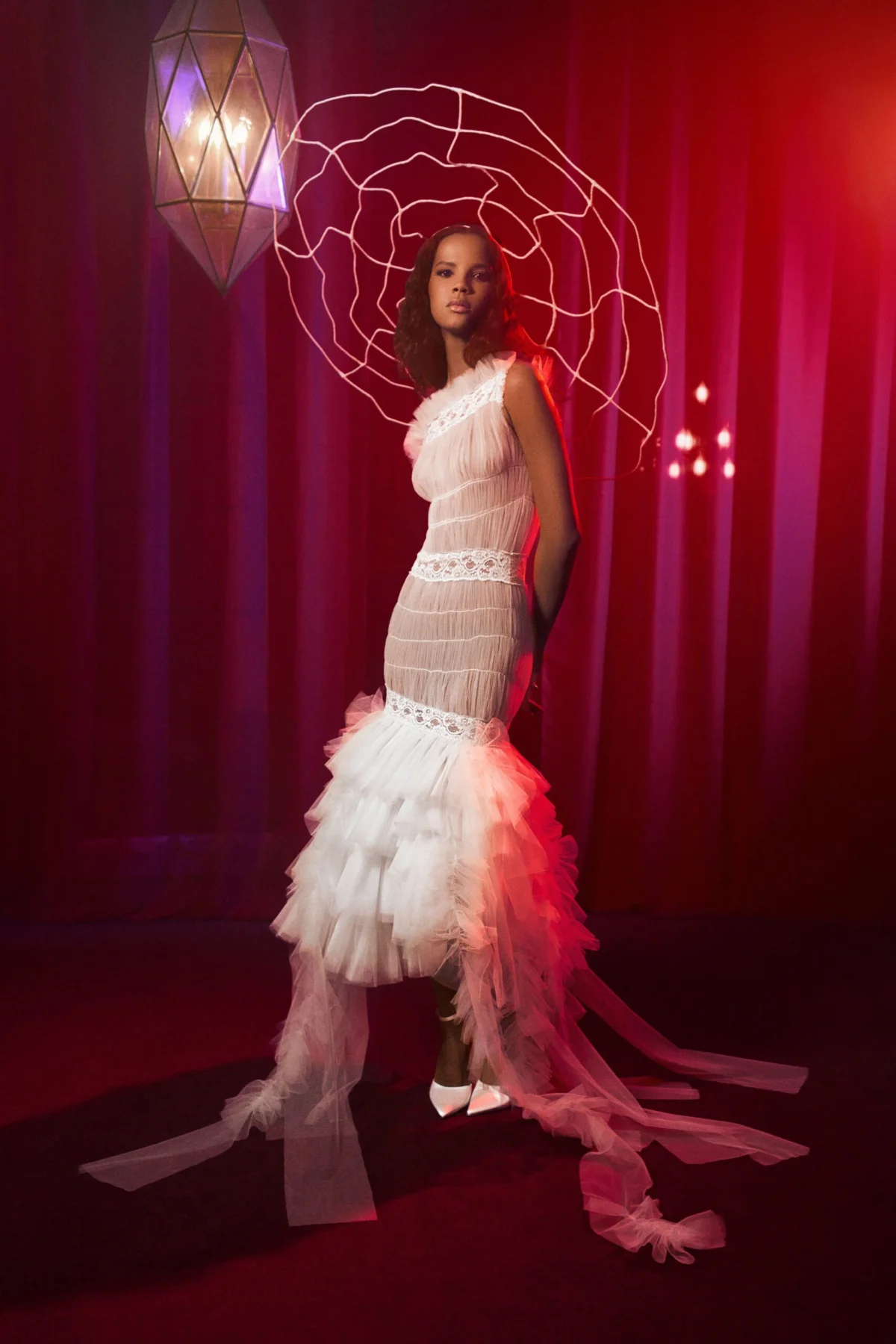
Rodarte, the avant-garde fashion house helmed by sisters Kate and Laura Mulleavy, has once again captivated the industry with its latest Fall collection, presenting a profound exploration of romance intertwined with a darker, more intricate aesthetic. Unveiled to critical anticipation, the collection stands as a testament to the brand’s enduring fascination with nature, art, and the cinematic, most notably manifesting in a pervasive spiderweb motif that serves as both a literal and metaphorical anchor. This latest offering solidifies Rodarte’s reputation for pushing the boundaries of conventional beauty, crafting garments that are simultaneously delicate, ethereal, and imbued with an undercurrent of gothic sensibility.
Since their debut in 2006, Rodarte quickly established itself with a distinct romantic vision. Early collections were characterized by their ethereal beauty, intricate detailing, and a palpable sense of dreamy femininity. However, the Mulleavy sisters’ creative trajectory soon began to reveal a more complex artistic impulse. By their fifth collection, for Spring 2008, a darker, edgier dimension started to emerge, famously introducing their now-iconic cobweb sweaters. This pivotal moment marked a significant evolution, signaling that "prettiness" was never intended to be a final destination but rather a starting point for deeper artistic exploration. The sisters, undeterred by the typical aversion to arachnids, have consistently embraced the intricate beauty and symbolic depth of the spider and its web, evolving into what many now regard as accomplished "arachnologists" of fashion.
The current Fall collection elevates this long-standing fascination to new heights. Central to the line are several anchor pieces featuring delicate, shimmering hand-beaded webs, meticulously embedded into key garments, including the second and final looks presented. These extraordinary creations, crafted from layers of tulle and a multitude of Chantilly lace varieties, exemplify Rodarte’s unparalleled commitment to artisanal craftsmanship. Laura Mulleavy articulated the philosophical underpinning of this motif, explaining that the collection delves into "this idea of webs being spun and just different ways of thinking about it without it being about decay or things that are deconstructed." This statement is crucial, as it reframes the web not as a symbol of entrapment or deterioration, but as an emblem of creation, connection, and intricate artistry—a testament to life’s delicate yet resilient structures.
Complementing the lightness and intricate detail of the web dresses, the collection opens with a striking look featuring a smocked chiffon top banded with lace. This garment possesses a unique fluidity, collapsing elegantly like a slinky, creating a dynamic silhouette. It is grounded by a hem of cascading ruffles and languorous trains, elements that inject a sense of movement and dramatic flair, characteristic of Rodarte’s theatrical approach to design. The interplay between the delicate top and the voluminous lower half creates a captivating visual balance, highlighting the sisters’ mastery of fabric manipulation and silhouette construction.
Beyond the web-centric pieces, the collection’s other undeniable high points are the dramatic and sculptural dresses meticulously crafted from ruched taffeta. These garments showcase a different facet of the Mulleavys’ design prowess, emphasizing structure and volume. Kate Mulleavy revealed her inspiration for these pieces, stating she sought "a midpoint between the Renaissance and the Gothic." This artistic fusion is evident in the rich textures, voluminous drapes, and architectural forms that recall the opulent grandeur of Renaissance portraiture, yet are imbued with the somber, dramatic sensibility of Gothic aesthetics. The Renaissance, a period renowned for its emphasis on humanism, classical forms, and artistic innovation, particularly in Italy from the 14th to 17th centuries, brought forth a fashion characterized by rich fabrics, elaborate ornamentation, and structured silhouettes that celebrated the human form. In contrast, the Gothic era, spanning roughly the 12th to 15th centuries, embraced dramatic verticality, pointed arches, and a sense of solemn majesty, often reflected in clothing through long, flowing lines, dark hues, and an almost ecclesiastical gravity. Rodarte’s interpretation masterfully synthesizes these seemingly disparate influences, creating gowns that possess both the vibrant theatricality of the Renaissance and the mysterious allure of the Gothic.
The Mulleavys clarified that this was not a "narrative collection" in the traditional sense, one that tells a linear story. Instead, their focus was intently on "draping and construction"—the foundational elements of haute couture. This emphasis on technical artistry allows the garments themselves to convey the collection’s mood and conceptual depth, rather than relying on an overt storyline. To further enhance this atmospheric approach, the sisters drew heavily on cinematic influences, specifically employing Suspiria-inspired lighting to craft a deeply evocative mood for the presentation. The 1977 Dario Argento horror masterpiece, known for its vivid, saturated color palette—particularly its striking reds, blues, and greens—and its dreamlike, often unsettling visuals, served as a powerful muse. While the lighting undeniably succeeded in creating a distinctive ambiance, fostering a sense of mystery and heightened emotion, some observers noted that its dramatic intensity occasionally obscured the intricate details of the clothing, preventing certain nuances from being fully appreciated. Laura Mulleavy acknowledged this duality, reflecting that "maybe it was more like thinking about great moments of clothing within film and really beautiful lighting." This statement underscores the designers’ profound connection to cinema, revealing how their memories and creative processes are deeply enmeshed with the lore and visual language of film. Their previous work, including costume design for the critically acclaimed film Black Swan, further illustrates their talent for translating narrative and character into tangible garments, demonstrating a consistent cross-pollination between fashion and film.
The Rodarte brand has consistently carved out a unique niche within the global fashion landscape. Operating as an independent house, Kate and Laura Mulleavy have maintained an unwavering commitment to their singular artistic vision, often eschewing commercial trends in favor of deep conceptual exploration and exquisite craftsmanship. Their designs are not merely clothes; they are wearable art, embodying a philosophy that prioritizes texture, detail, and emotional resonance. This approach has earned them a loyal following among discerning clients and critics alike, who appreciate their ability to merge seemingly contradictory elements—fragility with strength, dreaminess with darkness, and historical reverence with contemporary innovation. The brand’s consistent presence at major fashion weeks, whether in New York or Paris, serves as a platform for these artistic statements, often transforming the runway into an immersive experience that transcends a simple clothing presentation.
The choice of materials in this collection—tulle, Chantilly lace, chiffon, and taffeta—is deliberate and symbolic. Tulle, with its sheer, delicate quality, evokes a sense of fragility and ethereality, perfectly suited for the web motif. Chantilly lace, renowned for its intricate patterns and fine netting, adds layers of sophisticated detail and traditional craftsmanship. Chiffon, known for its flowing drape and light transparency, contributes to the languid, romantic silhouettes, while taffeta, with its crisp hand and lustrous finish, provides the structure and drama required for the sculptural gowns. This careful selection and masterful manipulation of fabrics are hallmarks of Rodarte’s design identity, showcasing their dedication to the tactile and visual richness of textiles.
The implications of this Fall collection extend beyond the immediate aesthetic impact. It reinforces Rodarte’s position as a brand that champions artistry and intellectual depth in fashion. In an industry often driven by rapid cycles and commercial imperatives, the Mulleavy sisters offer a refreshing counter-narrative, proving that highly conceptual and artisanal collections can still resonate powerfully. Their ability to consistently reinterpret and evolve core themes, such as the spiderweb, from a nascent idea in 2008 to a sophisticated, multi-layered motif in this current collection, speaks volumes about their creative longevity and growth. The collection serves as a poignant reminder that fashion, at its highest form, is a medium for storytelling, emotional expression, and a reflection of complex artistic visions. As Rodarte continues to spin its intricate narrative threads, the fashion world watches, captivated by a brand that dares to find beauty in the shadows and strength in the delicate.