
 By admin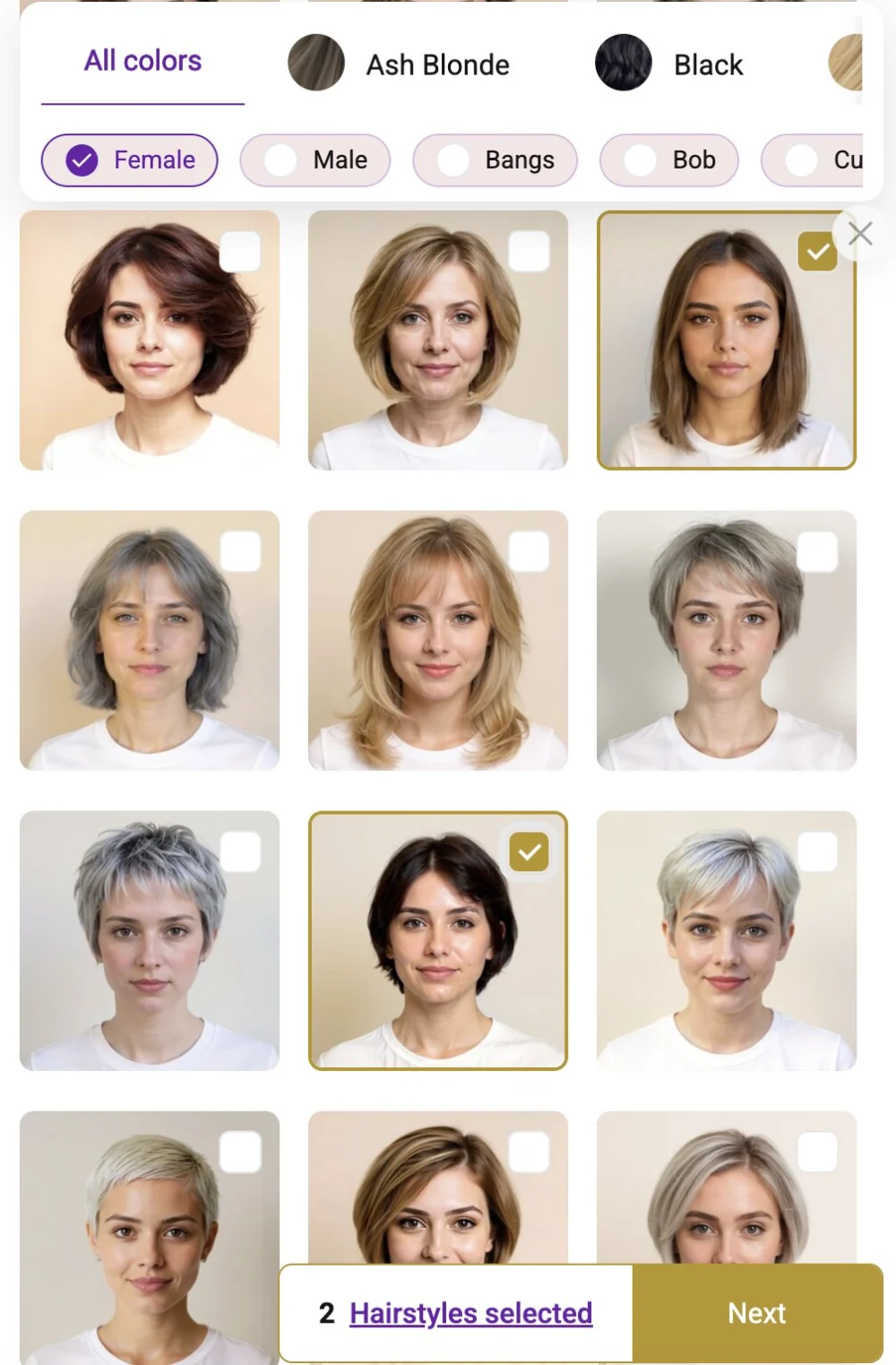
The enduring quest for the perfect hairstyle has long been guided by a seemingly simple, yet often frustrating, system: categorizing faces into distinct shapes. From the universally lauded oval to the often-misunderstood round or square, these classifications have served as a foundational, albeit limited, tool for stylists and individuals alike for decades. However, a growing sentiment suggests that these one-size-fits-all approaches are failing to capture the intricate individuality of human features, leading to a disconnect between prescriptive advice and personal satisfaction. Enter artificial intelligence, a technological innovation poised to redefine how we approach hairstyle selection by moving beyond simplistic labels and embracing a more holistic, data-driven analysis of facial geometry.

The traditional face shape system, a relic of mid-20th-century salon training, emerged from a need for practical, chair-side guidance. In an era devoid of digital imaging, stylists relied on mirrors, rulers, and simplified rules of thumb to assist clients. This era gave rise to the now-familiar archetypes: oval, round, square, heart, oblong, and diamond, with pear, rectangle, and triangle occasionally added to the lexicon. While these categories provided a useful starting point for conversation and offered a basic framework for understanding facial proportions, their inherent limitations have become increasingly apparent in the face of diverse human physiognomy. The system’s fundamental flaw lies in its reductionist nature; it simplifies complex three-dimensional structures into two-dimensional outlines, effectively ignoring the nuanced interplay of individual features that contribute to a person’s unique appearance.
The shortcomings of this antiquated system are manifold. Firstly, it often fails to account for the vast spectrum of individual facial features that extend beyond the overall shape. A round face, for instance, might be advised to seek styles that add height, but this generic advice overlooks critical distinctions such as forehead height, cheekbone prominence, eye spacing, and chin length. A small, delicate round face will respond very differently to a hairstyle than a round face with more prominent features, even though both might fall under the same broad category. This oversight can lead to a feeling of being uncategorizable, a sentiment that resonates with many who find themselves struggling to fit neatly into the prescribed boxes.

Furthermore, traditional face shape advice often operates under the implicit assumption of a uniform hair texture, typically straight and medium-weight. This ignores the significant impact of hair texture—whether thick, fine, curly, or wavy—on how a haircut will ultimately appear and behave. Curls and waves can dramatically alter the silhouette and volume of a style, rendering rigid rules about face shape ineffective. A haircut that might theoretically balance a square jawline could be rendered entirely different by the presence of coarse, curly hair, leading to unexpected and undesirable results.
The psychological impact of these rigid rules is also a significant concern. For individuals with perceived "ideal" face shapes, such as the oval, the often-repeated mantra of "you can wear anything" can create a false sense of liberation. While the initial suggestion might be empowering, the reality of daily wear and maintenance can reveal that not all styles are truly harmonious or practical. Conversely, these rules can inadvertently create anxieties and self-imposed limitations, discouraging individuals from exploring styles that might genuinely flatter them but are deemed "unsuitable" by outdated guidelines. The pursuit of a single, universally "balanced" outline, often represented by the oval shape, neglects the reality that many individuals find beauty in accentuating specific features, such as a strong jawline or striking cheekbones, rather than striving for perfect symmetry. Studies on facial attractiveness, while acknowledging the role of proportion, also highlight that the definition of beauty remains inherently subjective and poorly defined, suggesting that adherence to rigid geometric ideals may not align with personal aesthetic preferences.

This is where artificial intelligence is emerging as a transformative force. AI-powered facial analysis moves beyond simplistic geometric labels by adopting a holistic and data-driven approach. Instead of relying on a few broad measurements, AI algorithms analyze an extensive array of over 20 measurable facial cues. These include intricate details such as length-to-width ratios, the precise distances between key facial features (eyes, nose, mouth), the curvature of the jawline, forehead height, and the prominence of cheekbones. The system analyzes both the underlying bone structure and the soft tissue contours of the face, creating a highly detailed and personalized biometric profile.
The process begins with a user uploading a clear, front-facing photograph. AI algorithms then meticulously scan this image, extracting a comprehensive set of data points that define the unique geometry of the individual’s face. This intricate data is then compared against a vast and continuously evolving digital library of hairstyles, meticulously cataloged and tagged with information about their structural characteristics and their visual impact on diverse facial types. The AI doesn’t simply match a face shape to a style; it analyzes how specific hairstyle elements—such as layering, fringe placement, volume distribution, and length—interact with the individual’s unique facial measurements. This multi-factor analysis allows for the identification of patterns and correlations that are far too complex for manual observation or simplified charts to discern.

The output of this AI-driven analysis is not a definitive pronouncement of what a person "should" wear, but rather a curated selection of potential hairstyles that are statistically likely to complement their specific facial features. This approach empowers users by presenting them with a range of options informed by objective data, rather than subjective rules. It fosters a sense of exploration and discovery, allowing individuals to virtually try on styles and see how they might look before committing to a physical change.
Several key areas highlight how AI surpasses the limitations of traditional methods:

Deeper Feature Analysis Beyond Broad Categories
While traditional charts offer broad classifications, AI delves into specific measurements. For instance, the distance between the eyes, the width of the nose at its base, the angle of the jaw, and the curvature of the chin are all precisely quantified. This granular level of detail allows AI to understand, for example, that two individuals with "round" faces might have vastly different needs based on the relative size and placement of their eyes or the length of their philtrum. This nuanced understanding prevents the application of generic advice and ensures recommendations are tailored to the individual’s unique facial architecture.
Integration of Hair Texture and Density
Recognizing that hair texture is a critical determinant of hairstyle success, advanced AI systems can often incorporate this information. By analyzing pixel data or through user input, the AI can infer hair density and texture. This allows it to predict how a particular style will fall and behave on different hair types, accounting for the way waves might add volume or how fine hair might lie flat. This integration is a significant leap from traditional methods that largely ignore this crucial variable.

Dynamic and Adaptive Recommendations
The AI’s learning capabilities mean its recommendations become more refined over time. As more users interact with the system and provide feedback, the algorithms can identify subtle patterns of what works best for specific combinations of facial features and hair types. This creates a dynamic system that evolves and improves, offering increasingly accurate and personalized suggestions.
Visualization and User Empowerment
Perhaps one of the most significant advantages of AI is its ability to provide realistic virtual try-ons. Through augmented reality or sophisticated image manipulation, users can see how different hairstyles would look on their own face. This visual feedback is invaluable, allowing individuals to experiment without risk and gain confidence in their choices. This capability directly addresses the anxiety and uncertainty often associated with significant hairstyle changes.

Real-world examples underscore the effectiveness of this AI-driven approach. Consider Madison, a photo editor with a round face and thick hair. Traditional advice might have suggested long, layered cuts or styles with added height. While these might have worked to a degree, Madison grew tired of them and sought a shorter style. An AI-powered quiz, considering her specific facial measurements and hair type, suggested a compact, side-parted bob with controlled weight. The realistic preview offered by the AI provided the reassurance she needed to move forward with a style that might have been overlooked or deemed "unsuitable" by conventional wisdom.
Similarly, Kelsey, a social media content creator with an oval face, found herself overwhelmed by the abundance of generic advice for her face shape. After trying various styles that never quite felt right, she utilized an AI hairstyle app. By uploading her photo and selecting styles she admired, the AI generated previews that allowed her to visualize potential looks. While a medium-length wolf cut initially caught her eye, concerns about shorter pieces led her to explore other options. The AI then highlighted a medium-length cut with minimal layering, which resonated with her aesthetic and practical needs, ultimately becoming a staple in her rotation. These testimonials, along with feedback from users like Debra S. Wilson, who expressed relief at moving beyond rigid categorization, highlight a clear shift towards personalized, data-informed styling.

The implications of this technological advancement are far-reaching. For consumers, it promises a more empowering and satisfying journey in finding hairstyles that truly suit them, reducing the likelihood of costly and time-consuming bad hair days. For the beauty industry, AI-powered tools offer a new frontier for client consultation, enabling stylists to offer more precise and personalized recommendations. It also democratizes access to sophisticated styling advice, making expert-level guidance available to a wider audience.
However, it’s crucial to acknowledge that while AI provides powerful tools for analysis and visualization, it does not entirely negate the value of traditional knowledge. Face shape remains a component of the overall puzzle, offering a foundational understanding of proportions. The AI’s strength lies in its ability to integrate this with a multitude of other factors, much like understanding grammatical rules provides a framework for language, but mastery allows for creative deviation and nuance.

The process of leveraging AI for hairstyle selection typically involves a few straightforward steps. Users can either engage with an interactive quiz that gathers information about their hair type, lifestyle, and aesthetic preferences, or they can directly browse a gallery of styles and use virtual try-on features. Uploading a clear, well-lit, front-facing photo with a neutral expression is paramount for accurate analysis. The AI then processes this image, either generating personalized recommendations based on the quiz answers or allowing users to virtually experiment with various styles. Tools that offer 360-degree previews are particularly valuable, providing a comprehensive view of how a hairstyle would appear from all angles. The ultimate goal is to save these preferred looks and present them to a professional stylist, who can then offer their expertise on suitability based on hair texture, health, and the client’s lifestyle, thereby bridging the gap between digital simulation and real-world execution.
In conclusion, the evolution from rigid face shape categories to sophisticated AI-driven analysis represents a significant paradigm shift in the pursuit of personalized beauty. By embracing a more nuanced understanding of individual facial geometry and integrating a wide array of contributing factors, AI is empowering individuals to move beyond labels and discover hairstyles that truly enhance their unique features. This technological advancement not only promises a more effective and enjoyable styling experience but also heralds a future where beauty is defined by individuality, not by conformity to outdated classifications.