
 By Nila Kartika Wati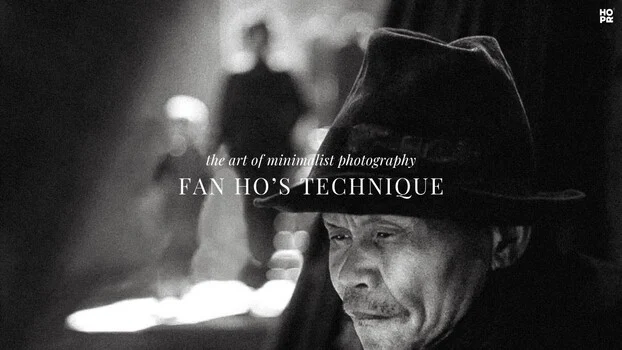
For street photographers grappling with the pervasive challenge of visual clutter, a common frustration arises when compositions feel uninteresting or fail to capture the intended narrative. This often stems from an overabundance of distracting elements within the frame, diluting the impact of the subject. While contemporary visual trends increasingly embrace minimalism as a powerful aesthetic, its foundational principles were meticulously laid decades ago by visionary masters whose work remains profoundly relevant. Among these pioneers, Chinese photographer, film director, and actor Fan Ho stands as an unparalleled figure, whose evocative black and white images immortalized the bustling streetscapes of Hong Kong during the transformative decades of the 1950s and 1960s. Contemporary photography educator Tatiana Hopper, through a recent analytical video, meticulously dissects five distinct techniques inherent in Fan Ho’s oeuvre, offering a practical framework for modern photographers to declutter their compositions and imbue their work with heightened intent and dramatic tension.
The Enduring Legacy of Fan Ho: A Master’s Vision of Hong Kong
Born in Shanghai in 1931, Fan Ho’s journey into photography began at a young age when his father gifted him a Rolleiflex camera. His family’s relocation to Hong Kong in the late 1940s coincided with a period of rapid socio-economic change for the British colony. Emerging from the shadows of World War II and the Chinese Civil War, Hong Kong was a city in flux, experiencing exponential population growth, burgeoning industrialization, and a unique blend of traditional Chinese culture with colonial influences. This vibrant, yet often stark, environment became Fan Ho’s primary canvas. He eschewed studio work, finding his true calling amidst the labyrinthine alleyways, bustling markets, and atmospheric streets, which he famously referred to as his "stage."
Fan Ho’s approach was characterized by an extraordinary degree of patience and meticulous observation. He often spent hours in a single location, waiting for the precise convergence of light, shadow, human activity, and architectural forms to align into what he envisioned as the "picture-perfect scene." This dedication to the moment, coupled with an innate understanding of light’s transformative power, became the hallmark of his style. His photographs from this era are not merely documentary records; they are poetic interpretations, imbued with a sense of timelessness and universal human experience. Through his lens, ordinary people navigating their daily lives—children playing, hawkers selling wares, solitary figures traversing sun-drenched alleys—were elevated to archetypal characters within carefully constructed visual dramas. His work earned him numerous awards and accolades throughout his career, cementing his reputation as one of Asia’s most significant photographic artists, a legacy that continues to be celebrated posthumously through exhibitions and publications worldwide.
Chronology of Influence: Fan Ho’s Era and the Rise of Minimalism
Fan Ho’s most prolific photographic period, from the early 1950s to the mid-1960s, predates the widespread formal recognition of "minimalism" as a dominant artistic movement in photography. However, his work embodies its core tenets decades before they became commonplace. While Western art movements like Abstract Expressionism were gaining traction, and photographers like Robert Frank were challenging conventional documentary styles with raw, gritty realism, Fan Ho cultivated a distinct aesthetic rooted in classical composition and a profound appreciation for negative space.
- 1931: Born in Shanghai, China.
- Late 1940s: Family relocates to Hong Kong; begins photography with a Rolleiflex.
- 1950s-1960s: Most active and influential period as a street photographer in Hong Kong, capturing iconic black and white images. His distinct style emerges, characterized by geometric compositions, interplay of light and shadow, and solitary human figures.
- 1961: Begins a career in film, first as an actor, then director, completing over 40 films.
- 1990s-2000s: Renewed interest in his photographic archive; numerous international exhibitions and publications bring his work to a global audience, solidifying his status as a master.
- 2016: Passes away in San Jose, California, at the age of 84, leaving behind a monumental body of work.
- Contemporary Era: Photography educators like Tatiana Hopper analyze his techniques, making his timeless principles accessible to a new generation of photographers.
Fan Ho’s work can be seen as an early, intuitive manifestation of minimalist principles applied to street photography, where the deliberate removal of non-essential elements serves to amplify the subject’s presence and the emotional resonance of the scene. This contrasts with earlier street photography traditions that often celebrated the chaotic dynamism of urban life through dense, layered compositions.
Deconstructing Fan Ho’s Genius: Five Techniques for Clutter-Free Compositions
Tatiana Hopper’s analysis, informed by extensive study of Fan Ho’s vast portfolio, distills his compositional mastery into actionable techniques. These are not merely stylistic choices but fundamental approaches to visual storytelling that remain acutely relevant in today’s visually saturated environments.
-
Utilizing Light as a Structural Element: Fan Ho’s command over light was perhaps his most defining characteristic. In an era before widespread artificial lighting, he masterfully harnessed natural light—be it the harsh midday sun creating dramatic shadows, the soft glow of dawn or dusk, or shafts of light piercing through narrow alleyways. He used light not just to illuminate but to sculpt, frame, and define his subjects and environments. Shadows became powerful compositional elements, creating leading lines, negative space, and a sense of depth and mystery. By identifying pockets of light and areas of profound shadow, photographers can create natural "stages" within a scene, isolating subjects and drawing the viewer’s eye precisely where intended, effectively minimizing the impact of surrounding visual noise. This technique forces a photographer to develop a keen eye for chiaroscuro, understanding how light and dark can build tension and narrative.
-
Incorporating a Lone Human Subject: Many of Fan Ho’s most iconic images feature a solitary human figure, often small within a vast urban landscape. This deliberate isolation serves multiple purposes. Firstly, it immediately creates a focal point, simplifying the narrative and preventing the eye from wandering. Secondly, the lone figure introduces a powerful sense of scale, emphasizing the grandeur or oppressive nature of the urban environment. Thirdly, it imbues the image with a universal human element—themes of solitude, contemplation, journey, or resilience. By focusing on a single, compelling human presence, photographers can strip away extraneous details and allow the viewer to connect emotionally with the subject’s implied story, even in the busiest settings. This technique demands patience, waiting for the right individual to enter the frame and occupy the designated space.
-
Masterful Application of Negative Space: Fan Ho was a virtuoso in the strategic use of negative space, the areas around and between the primary subject(s) in an image. Rather than being empty or wasted, negative space in his compositions is an active, vital component. It provides breathing room for the main subject, allowing it to stand out emphatically. It guides the viewer’s eye, creates a sense of calm or tension, and can even suggest unspoken narratives or emotions. For instance, a small figure silhouetted against a vast, uncluttered wall creates a powerful statement of isolation or introspection. Understanding how to harness walls, skies, water, or even large shadow areas as deliberate negative space is crucial for stripping away clutter and enhancing the visual impact of the chosen subject. This is a deliberate act of subtraction, focusing on what is not there to emphasize what is.
-
Geometric Precision and Compositional Harmony: Fan Ho possessed an architectural eye, meticulously arranging elements within his frame to create a sense of order and balance. He frequently employed strong geometric forms—lines, triangles, rectangles, and curves—found in urban structures. These weren’t merely backgrounds but integral parts of his compositions, acting as leading lines, framing devices, or abstract patterns that added depth and visual interest without adding clutter. The interplay of these geometric forms with the organic shapes of human figures created a dynamic yet harmonious tension. By consciously seeking out these structural elements in the urban environment, photographers can impose order on chaos, using the built environment to create clean, powerful compositions that guide the viewer’s gaze and provide a strong foundational structure.
-
The Art of Anticipation and Patience: While not explicitly a compositional technique in the traditional sense, Fan Ho’s "street as a stage" philosophy underpins all his minimalist achievements. He understood that compelling moments are often fleeting and that great photographs are as much about waiting as they are about shooting. His patience allowed him to observe the subtle shifts in light, the repetitive patterns of human movement, and the perfect alignment of disparate elements. This anticipation enabled him to capture the "decisive moment" that Henri Cartier-Bresson famously championed, but with a unique minimalist sensibility. For contemporary photographers, cultivating this patience means resisting the urge to snap indiscriminately and instead, committing to a location, observing, and waiting for the optimal conjunction of light, subject, and background to create a truly impactful, clutter-free image.
Tatiana Hopper’s Contemporary Interpretation and Broader Implications
Tatiana Hopper’s video serves as an invaluable bridge, connecting the historical genius of Fan Ho with the practical needs of modern street photographers. In an age dominated by digital photography and the proliferation of images on social media, the temptation to shoot endlessly often leads to a glut of visually confusing or uninspired frames. Hopper’s analysis reminds us that technical prowess, while important, is secondary to a profound understanding of composition and the intentionality behind each shot. Her ability to break down Fan Ho’s complex artistic style into digestible, actionable tips empowers photographers of all skill levels to refine their vision.
The implications of Fan Ho’s enduring appeal, highlighted by contemporary educators like Hopper, are multifaceted:
- Relevance in a Visually Saturated World: In an era where billions of images are uploaded daily, standing out requires more than just a camera. The ability to create compelling, clean, and impactful compositions is more critical than ever. Minimalism, as exemplified by Fan Ho, offers a powerful antidote to visual noise, allowing images to breathe and narratives to resonate more strongly.
- Emphasis on Foundational Skills: While technology evolves, the principles of light, composition, and human observation remain timeless. Fan Ho’s work underscores the importance of mastering these fundamentals rather than relying solely on post-processing or advanced gear.
- Inspiration for Urban Exploration: His photographs encourage photographers to look beyond the obvious, to find beauty and drama in the mundane, and to engage deeply with their environment. The urban landscape, often perceived as chaotic, can be transformed into a source of infinite minimalist compositions with the right eye.
- The Power of Storytelling Through Simplicity: By stripping away the superfluous, Fan Ho demonstrated that a single figure, a solitary shadow, or a geometric interplay can tell a more profound and universal story than a crowded scene. This lesson is vital for photographers aiming for emotional depth over mere documentation.
- Educational Impact: Resources like Hopper’s video democratize access to advanced photographic concepts, making the wisdom of masters like Fan Ho accessible to a global audience, fostering a deeper appreciation for photographic history and craft.
In conclusion, Fan Ho’s inimitable vision of Hong Kong, characterized by its masterful use of light, solitary figures, negative space, and geometric precision, transcends its specific historical context. His work is a testament to the power of intentionality and subtraction in photography. Through the insightful analysis provided by contemporary educators such as Tatiana Hopper, his techniques are not merely historical curiosities but a living, breathing guide for any photographer seeking to elevate their street photography from the uninteresting and cluttered to the compelling and timeless. By embracing these principles, modern photographers can emulate Fan Ho’s command of the scene, transforming ordinary moments into extraordinary visual narratives that resonate with clarity, drama, and enduring beauty.