
 By Nana Wu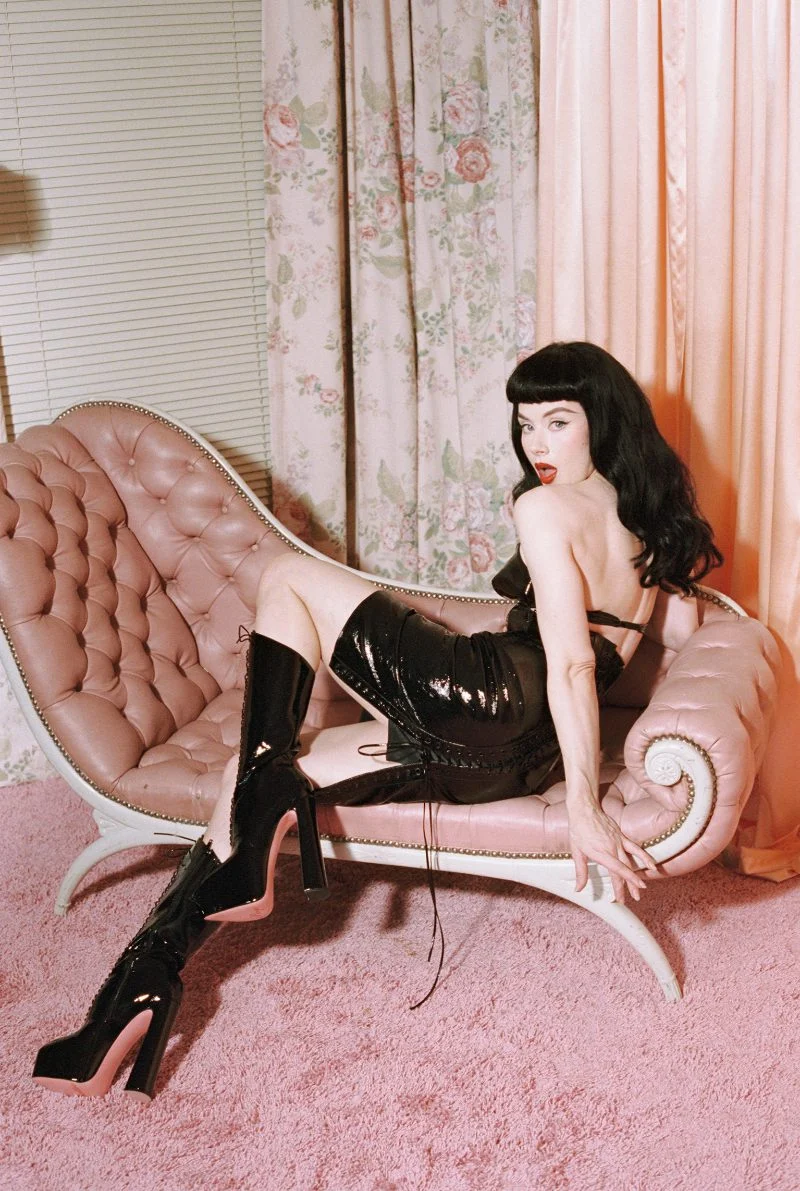
The Los Angeles-based footwear powerhouse Jeffrey Campbell has officially announced a landmark partnership with the estate of Bettie Page, unveiling a limited-edition capsule collection that bridges the gap between mid-century pin-up aesthetics and contemporary high-fashion design. This collaboration, scheduled for a global release on March 12, represents a rare venture into archival licensing for the footwear brand, featuring a meticulously curated selection of apparel and shoes that pay direct homage to the "Queen of Pinups." The collection is distinguished not only by its aesthetic adherence to Page’s iconic 1950s image but also by its focus on her role as a self-taught creative director and stylist—a woman who famously designed her own lingerie, swimsuits, and custom footwear during the height of her career.
A Strategic Partnership Rooted in Archival Authenticity
The genesis of the Jeffrey Campbell x Bettie Page collection began when Mark Roesler, the longtime agent for the Bettie Page estate and CEO of CMG Worldwide, approached the Los Angeles design house. Unlike many contemporary fashion collaborations that rely on surface-level branding, this partnership was granted exclusive access to the private archives of the Page estate. This included vintage photographs, personal correspondence, and, most notably, the original fetish-style footwear that Page commissioned for her private shoots.
Mark Roesler noted that the collaboration serves as a posthumous realization of Page’s own creative ambitions. During her career, Page was known for her meticulous control over her visual output, often crafting the very garments that would define the pin-up era. Roesler stated that Page took immense pride in the design process, viewing it as an essential component of her modeling work. The estate’s decision to partner with Jeffrey Campbell was driven by the brand’s reputation for unconventional design and its independent, women-led corporate structure, which mirrors the autonomy Page sought in her own era.
The Design Philosophy: From Myth to Material
Creative Director Brigitte Campbell, a longtime collector of vintage pin-up memorabilia, spearheaded the design process. The collection was informed by a "surreal" encounter with Page’s actual footwear, allowing the design team to analyze the nuanced details of shoes that had previously only been seen in grainy black-and-white photographs or high-contrast lithographs. By utilizing Page’s actual measurements and vintage references, the brand has produced a series of pumps, platforms, and "sky-high" heels that replicate the dramatic silhouettes of the 1950s.
A signature element of the footwear collection is the inclusion of pink soles, intended to represent what the brand describes as "soft feminine power." This design choice serves as a modern counterpoint to the aggressive heights and sharp silhouettes of the heels, which mirror the poses that made Page a global icon. The collection’s transition into apparel is equally focused on historical accuracy; the inclusion of a "bullet bra" silhouette honors the specific structural fashion of the mid-20th century, while a lace-up leather dress draws directly from Page’s more provocative fetish-wear archives.
Technical Specifications and Scarcity Metrics
In a move that emphasizes collectibility over mass-market saturation, the Jeffrey Campbell x Bettie Page collection is being produced in extremely limited quantities. Each style in the capsule is hand-numbered, with production runs restricted to between 30 and 60 pieces per item. This scarcity model is a deliberate strategy to maintain the exclusivity of the collaboration and to appeal to serious fashion archivists and fans of the Page legacy.
The branding for the collection also features a logo drawn directly from Bettie Page’s personal signature, further cementing the "personal" nature of the project. Jeffrey Campbell, a brand that has historically operated with a lean team of fewer than 20 people, has positioned this release as a tribute to the freedoms modern women-led companies enjoy—freedoms that the brand acknowledges were paved by figures like Page, who challenged the social and creative constraints of her time.
Chronology of the Bettie Page Influence in Fashion
To understand the impact of this collaboration, it is necessary to examine the timeline of Bettie Page’s influence on the fashion industry:
- 1950–1955: Bettie Page rises to prominence in New York City, becoming the most photographed pin-up of the era. She begins designing her own wardrobe, including the iconic "jungle" outfits and custom leather heels.
- 1955: Page appears as the Playmate of the Month in Playboy, cementing the "bullet bra" and fringe bangs as staples of American glamour.
- 1959: Page officially retires from modeling, disappearing from the public eye for decades.
- 1980s–1990s: A resurgence of interest in pin-up culture leads to a "Bettie Page revival." Designers like Thierry Mugler and Jean Paul Gaultier begin incorporating pin-up silhouettes into high-fashion runways.
- 2010s: The rise of "vintage-core" and the "coquette" aesthetic on social media platforms introduces Page’s image to a Gen Z audience.
- March 2024: Jeffrey Campbell announces the official collaboration, moving beyond mere inspiration to an estate-sanctioned archival recreation.
Market Analysis: The Rise of Archival Licensing
The Jeffrey Campbell x Bettie Page collaboration arrives at a pivotal moment in the retail industry. Market data suggests a significant shift toward "archival fashion" and "heritage storytelling." According to recent consumer reports in the luxury and bridge-to-luxury sectors, 64% of younger consumers (Gen Z and Millennials) express a preference for brands that have a "story" or a historical connection. By partnering with the Page estate, Jeffrey Campbell taps into a pre-existing well of cultural capital that spans multiple generations.
Furthermore, the decision to produce limited runs of 30 to 60 pieces aligns with the "drop" culture popularized by streetwear brands, but applies it to the vintage enthusiast market. This creates a high resale value potential and ensures that the items do not contribute to the "fast fashion" cycle of overproduction. Industry analysts suggest that this "loved by few rather than liked by many" philosophy is a defensive maneuver against the homogenization of the footwear market, allowing independent brands like Jeffrey Campbell to maintain a cult-like status.
Broader Implications for Women-Led Design
The collaboration also highlights the evolution of Jeffrey Campbell as a brand. Known for its meteoric rise in the early 2010s with the "Lita" boot, the brand has successfully transitioned from a trend-driven powerhouse to a more curated, design-focused entity. Brigitte Campbell’s leadership emphasizes the "liberties and freedoms" of the modern era, explicitly linking the brand’s ability to produce provocative, independent designs to the trail blazed by Page.
From a sociological perspective, the collection reclaims Page’s image. For decades, her work was often viewed through a male-centric lens. However, by highlighting her role as a designer, stylist, and creative director, this collaboration reframes Page as an early pioneer of female brand-building. The "bullet bra" and "fetish heels" are presented not just as objects of desire, but as tools of self-expression and professional craft.
Official Launch and Availability
The Bettie Page x Jeffrey Campbell capsule collection is set to launch exclusively on the brand’s official website, jeffreycampbellshoes.com, on March 12. Given the restricted production numbers—some styles as low as 30 units—retail experts anticipate a rapid sell-out. The collection will likely serve as a benchmark for future estate-led collaborations, demonstrating how historical figures can be integrated into modern fashion through a lens of authenticity, technical precision, and limited-edition exclusivity.
As the fashion world continues to grapple with the balance between digital innovation and historical preservation, the Jeffrey Campbell x Bettie Page partnership stands as a testament to the enduring power of the pin-up aesthetic. It is a fusion of Los Angeles contemporary edge and mid-century New York glamour, curated by a team that views fashion not just as a commodity, but as a medium for honoring the "myths" that shaped the industry.